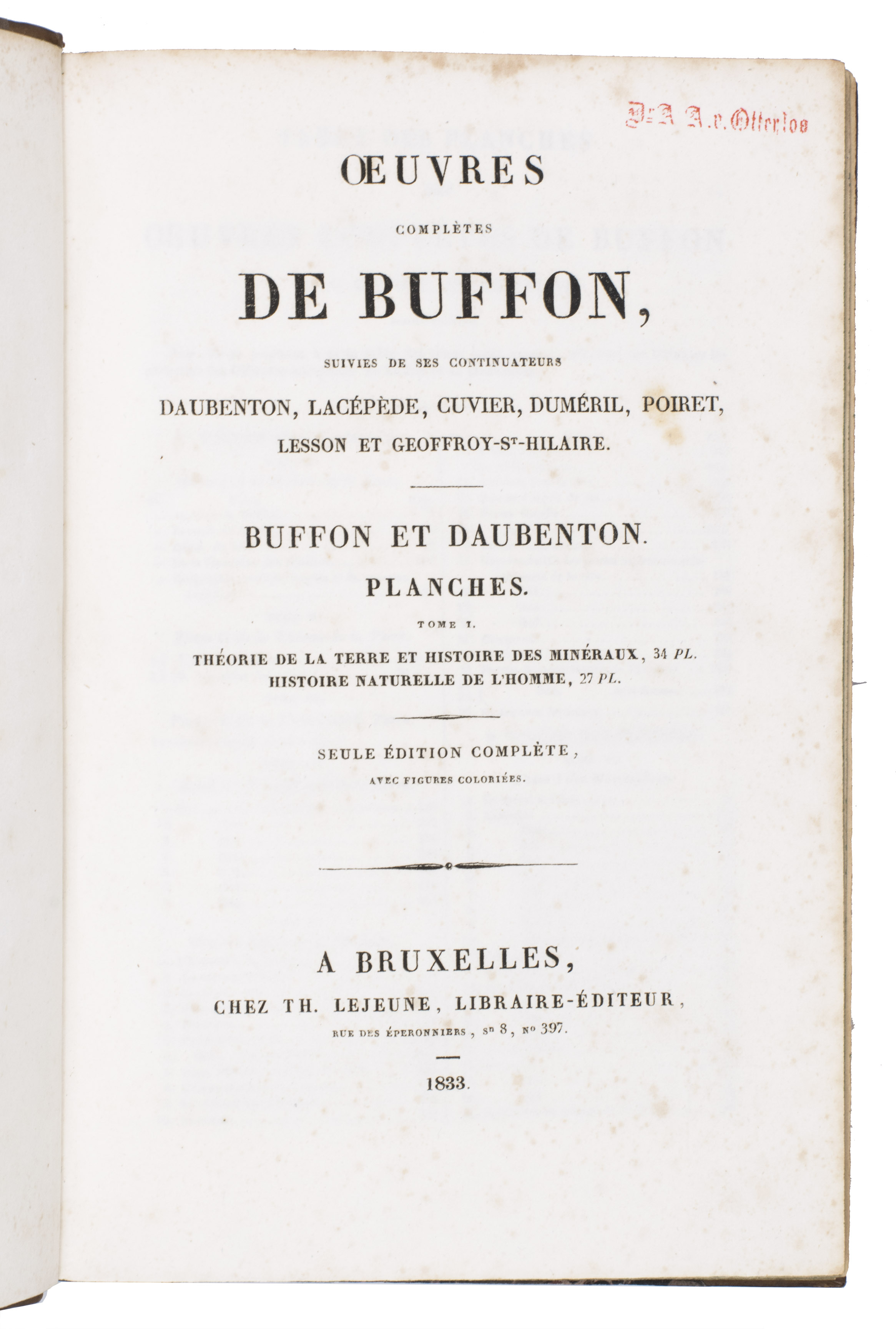
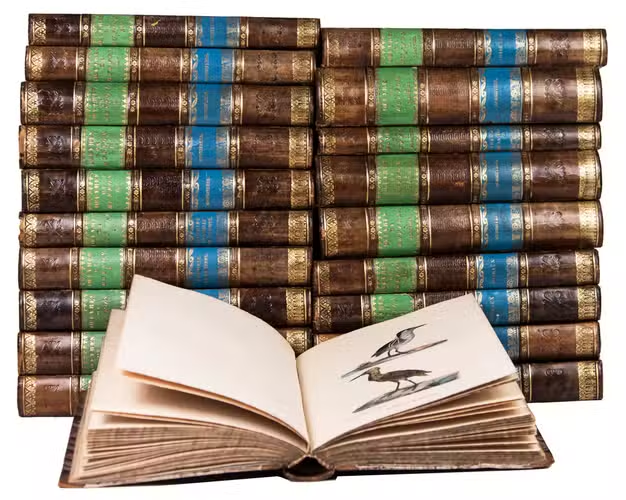
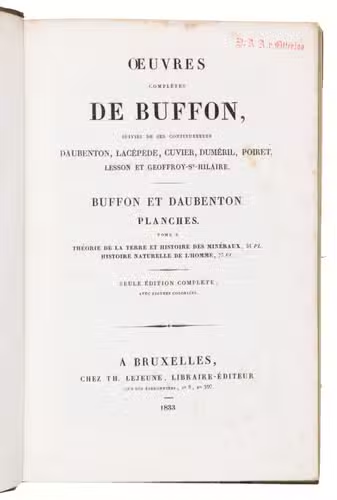
BUFFON, Georges Louis Leclerc, Comte de.
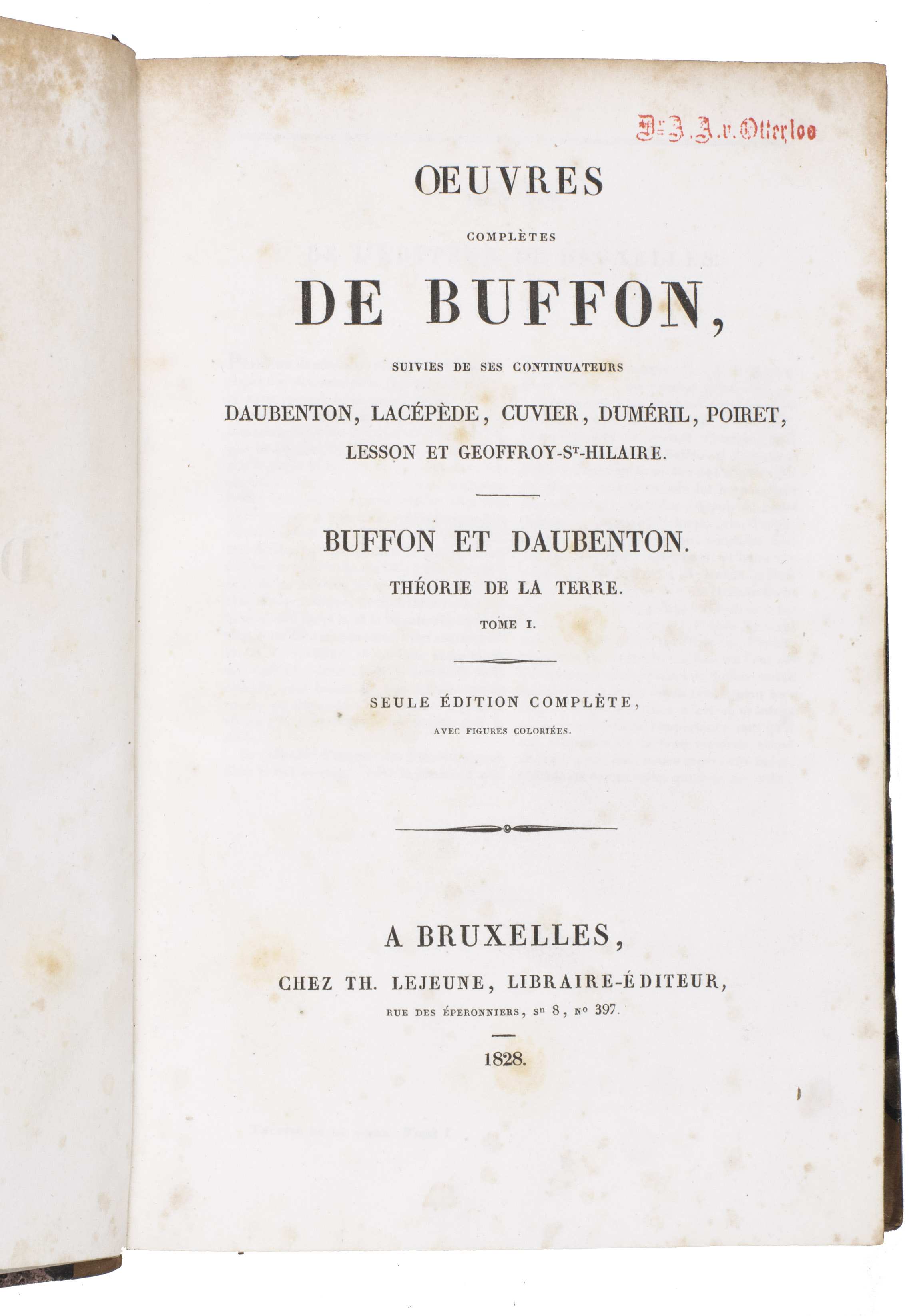
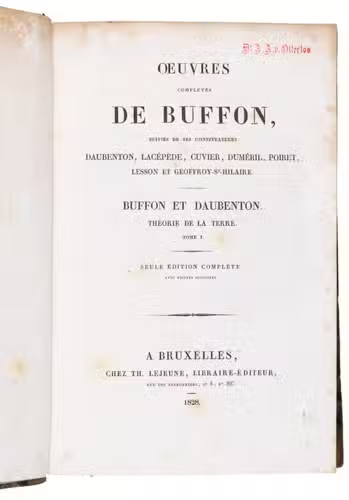
Oeuvres complètes, suivies de ses continuateurs Daubenton, Lacépède, Cuvier, Duméril, Poiret, Lesson et Geoffroy St. Hilaire.
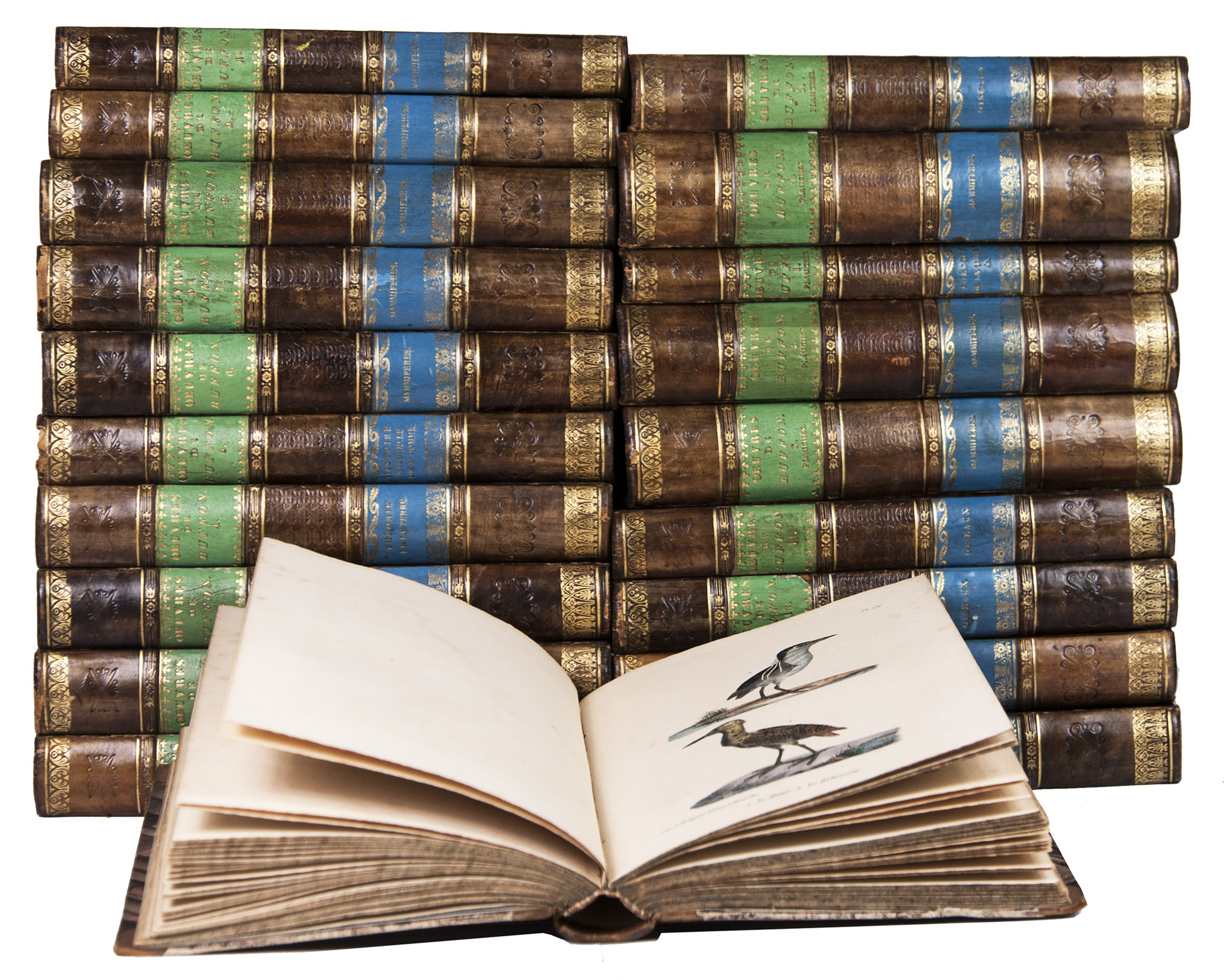
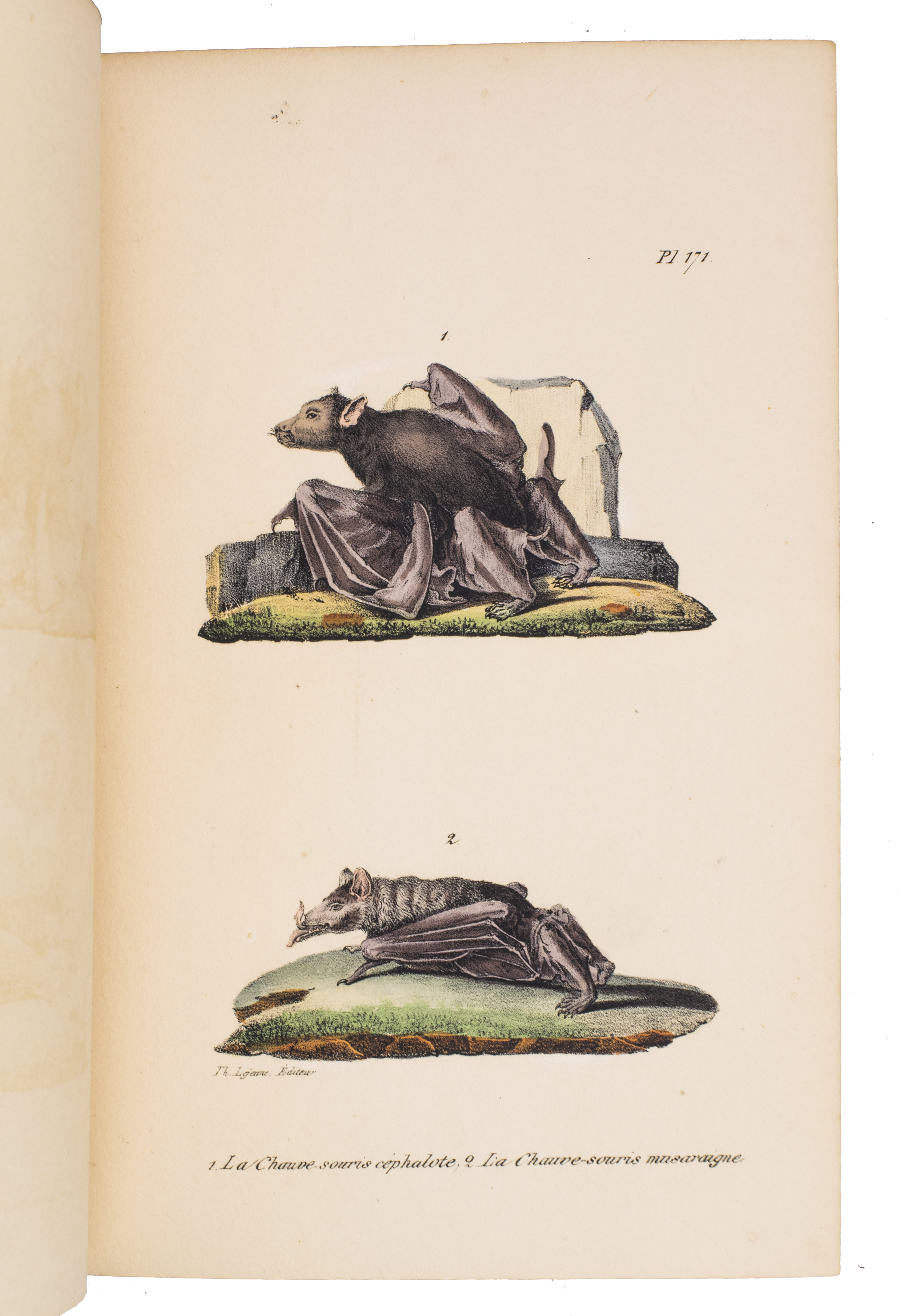
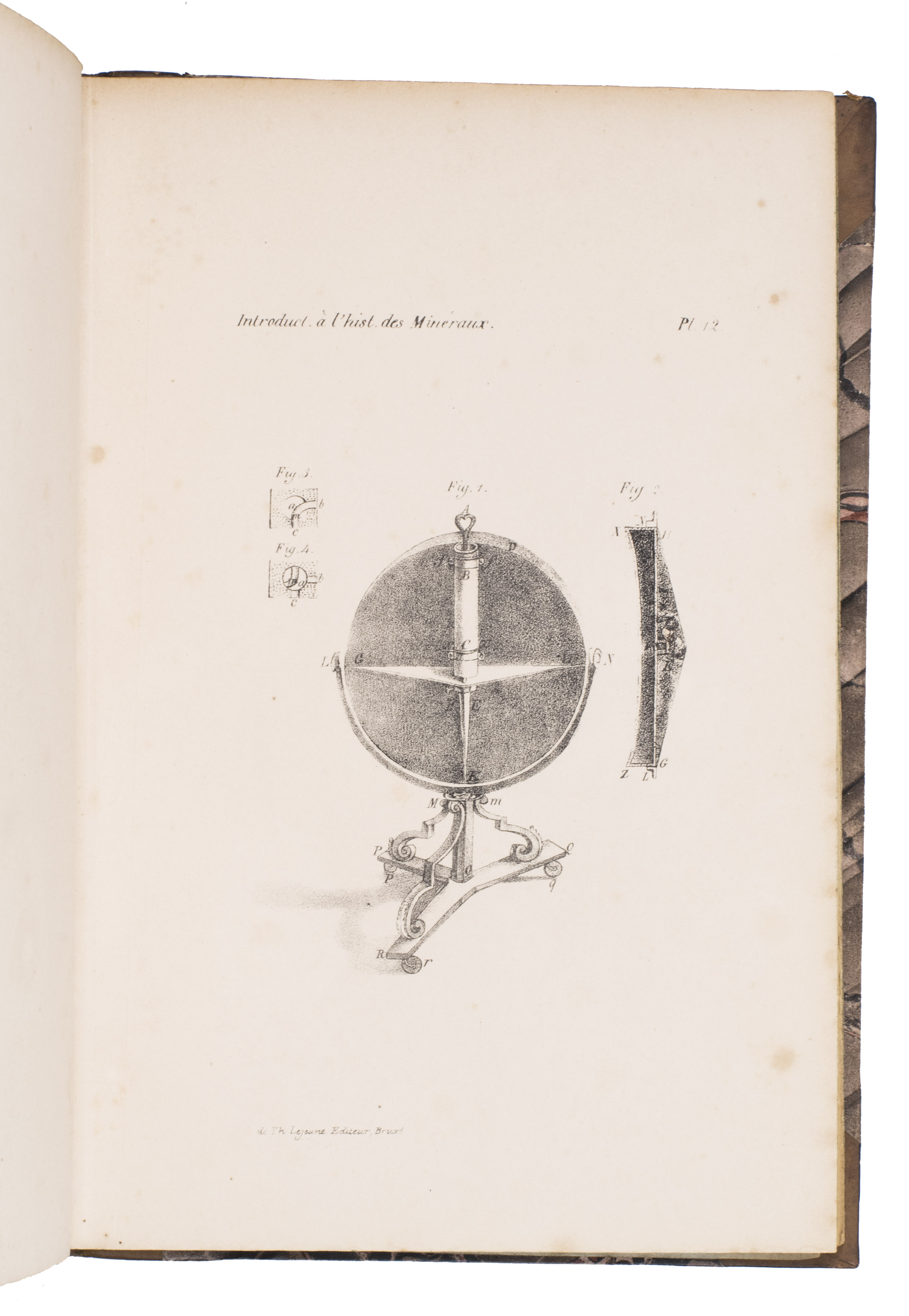
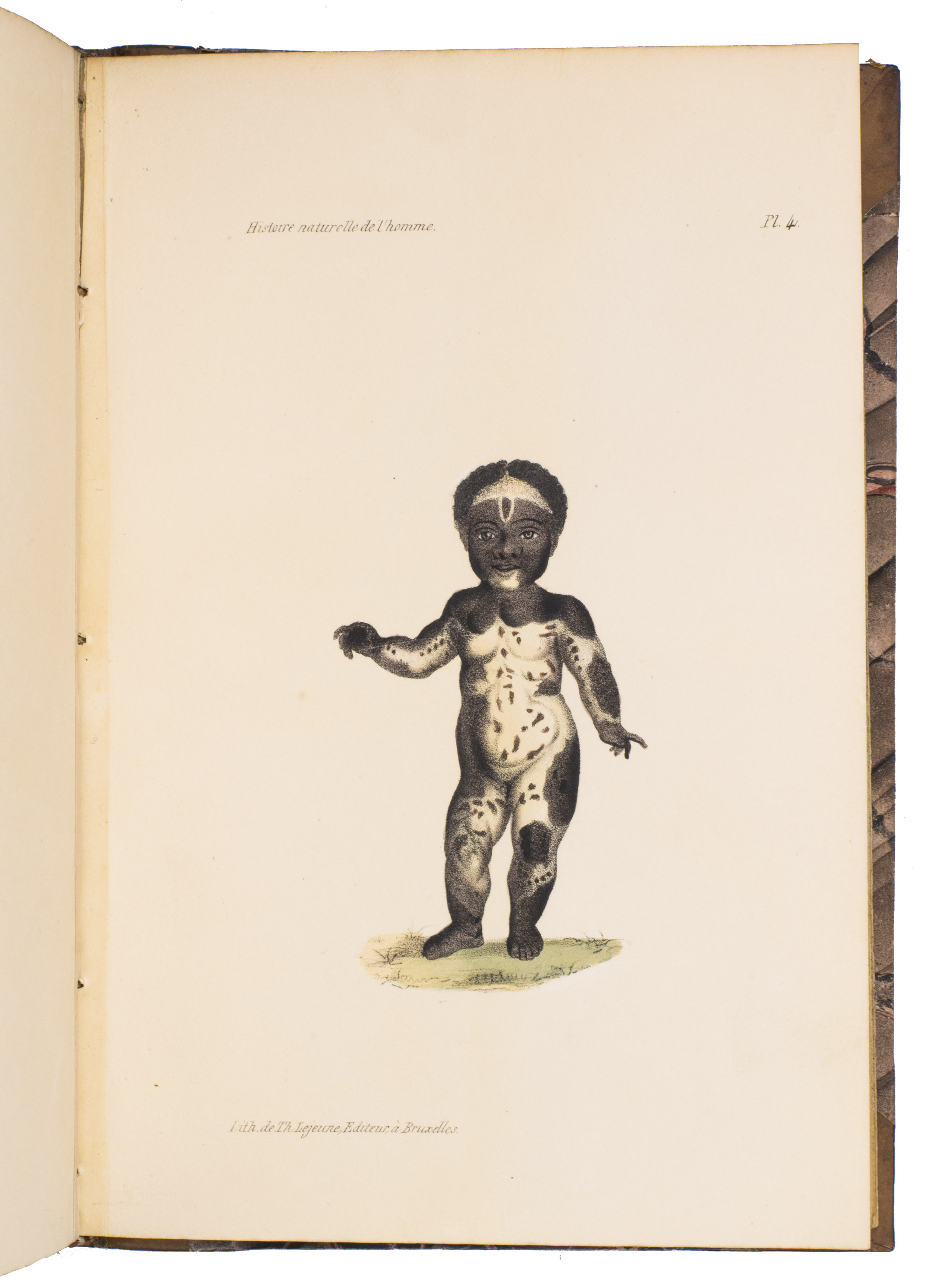
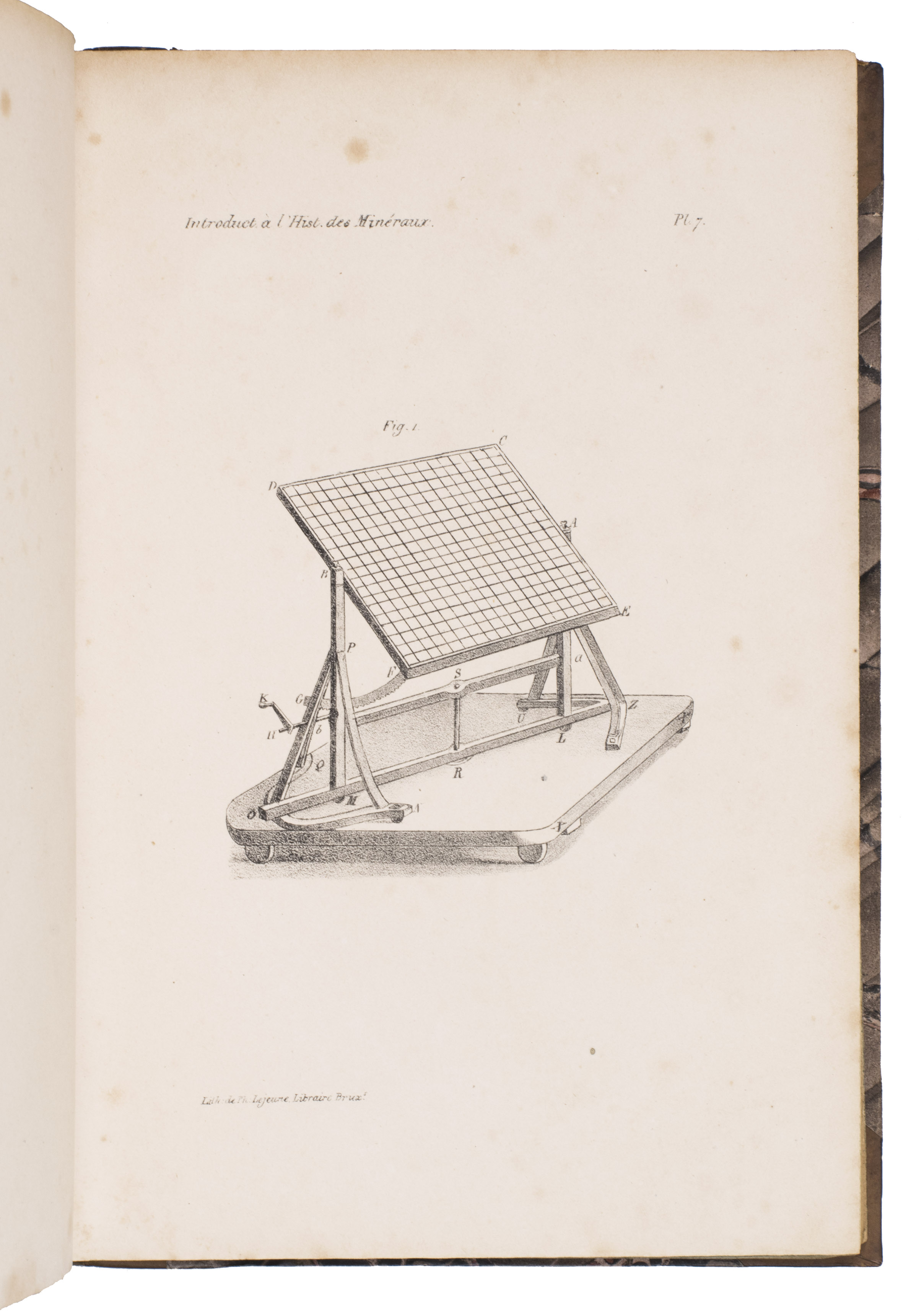
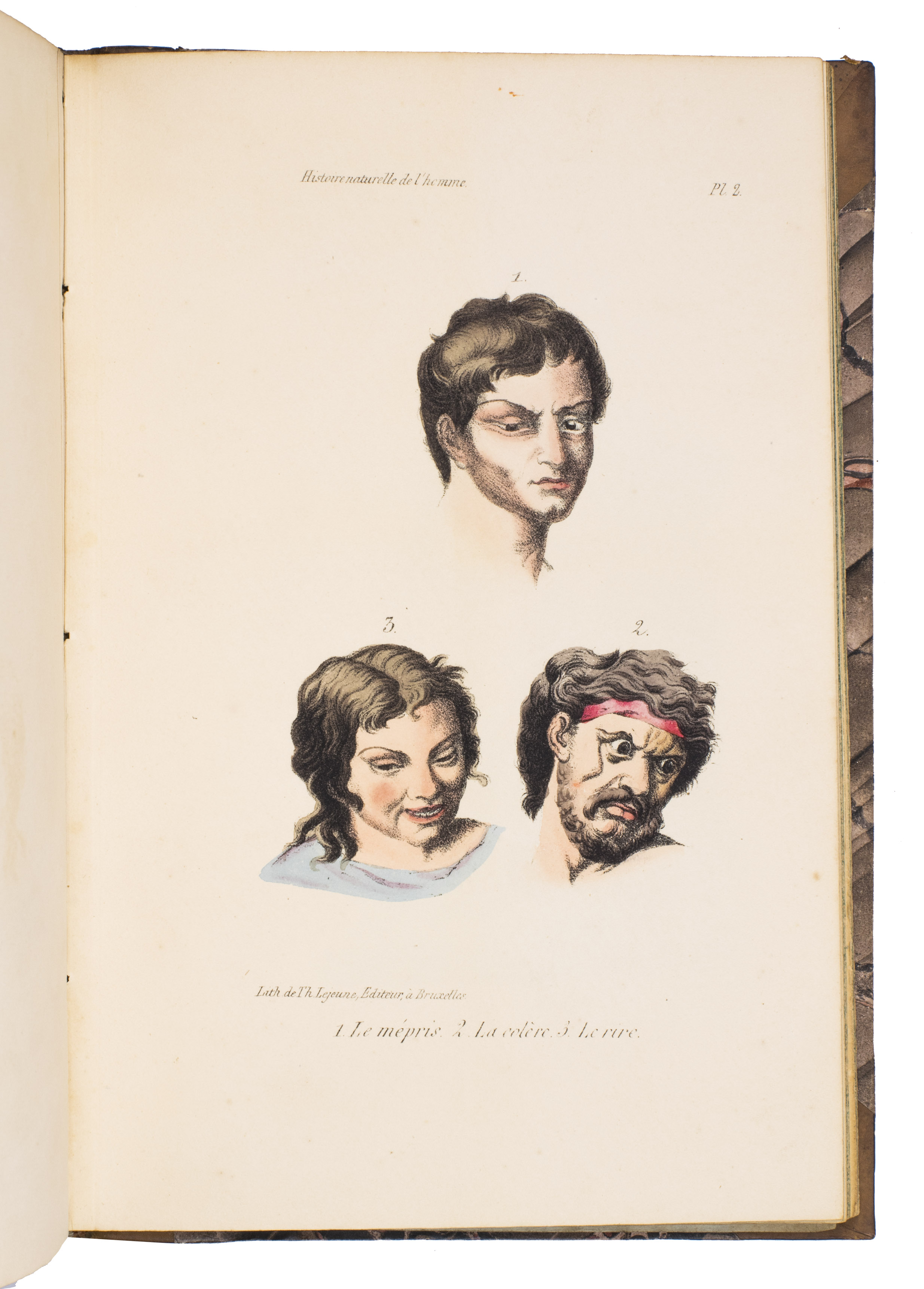
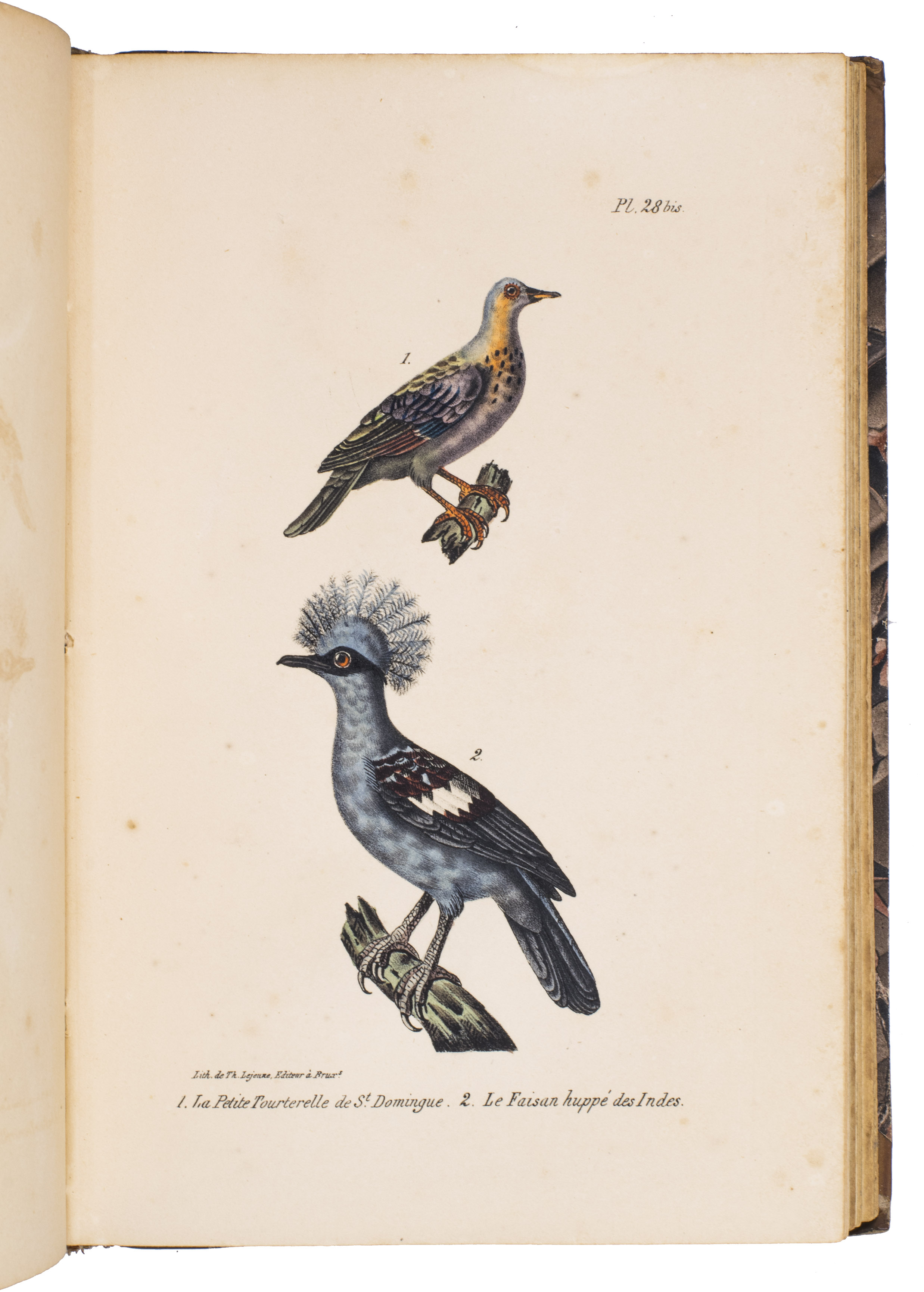
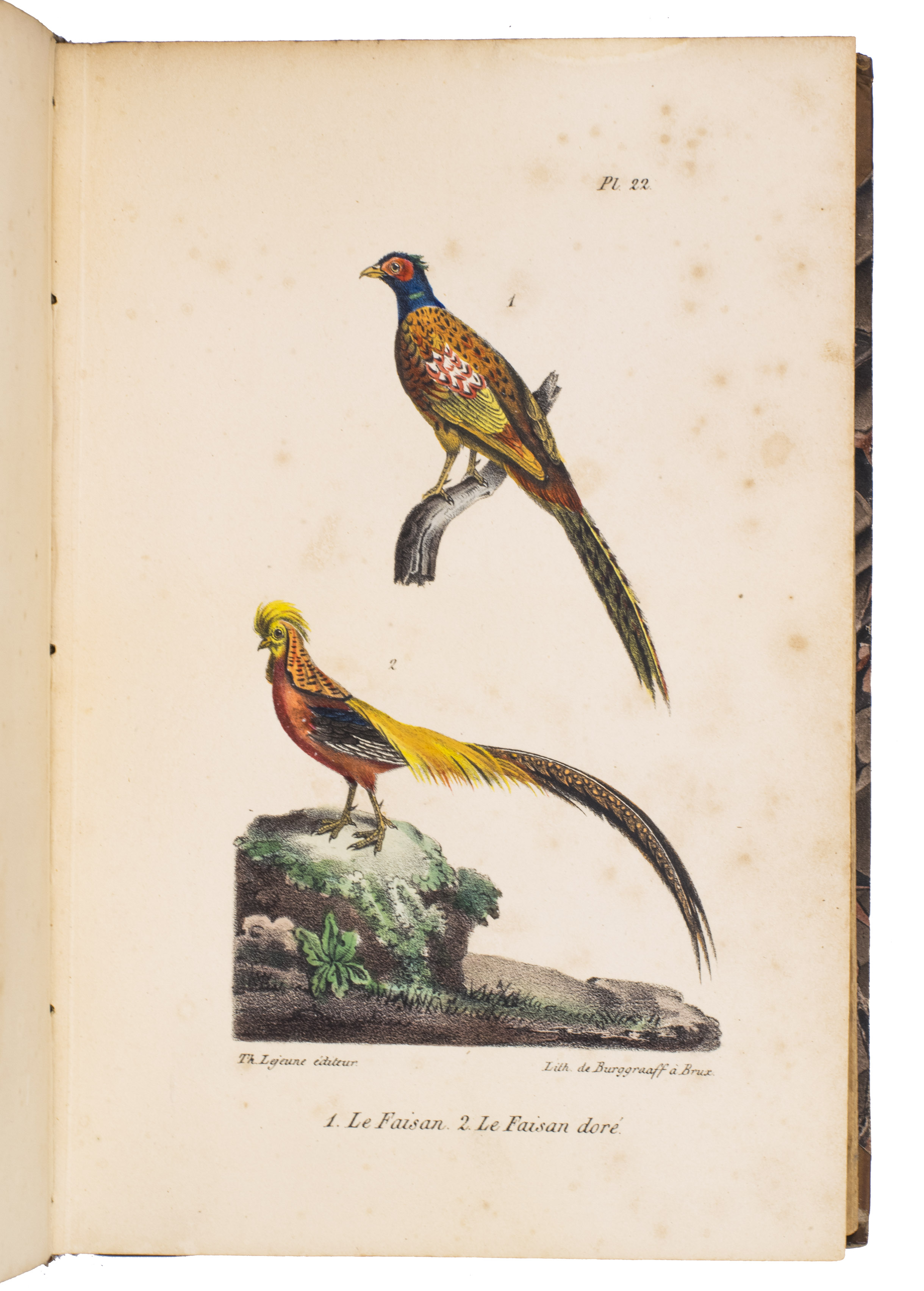
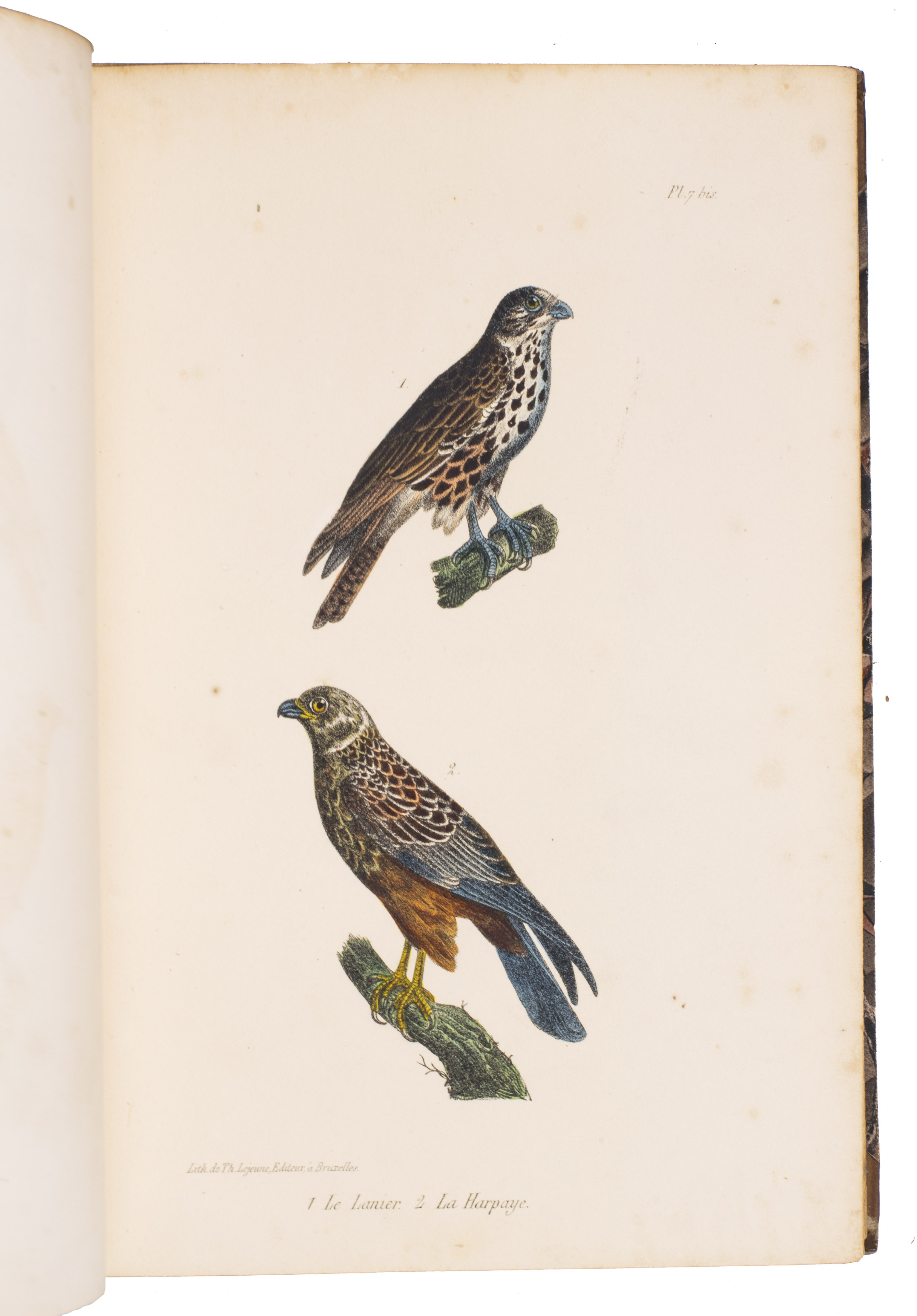
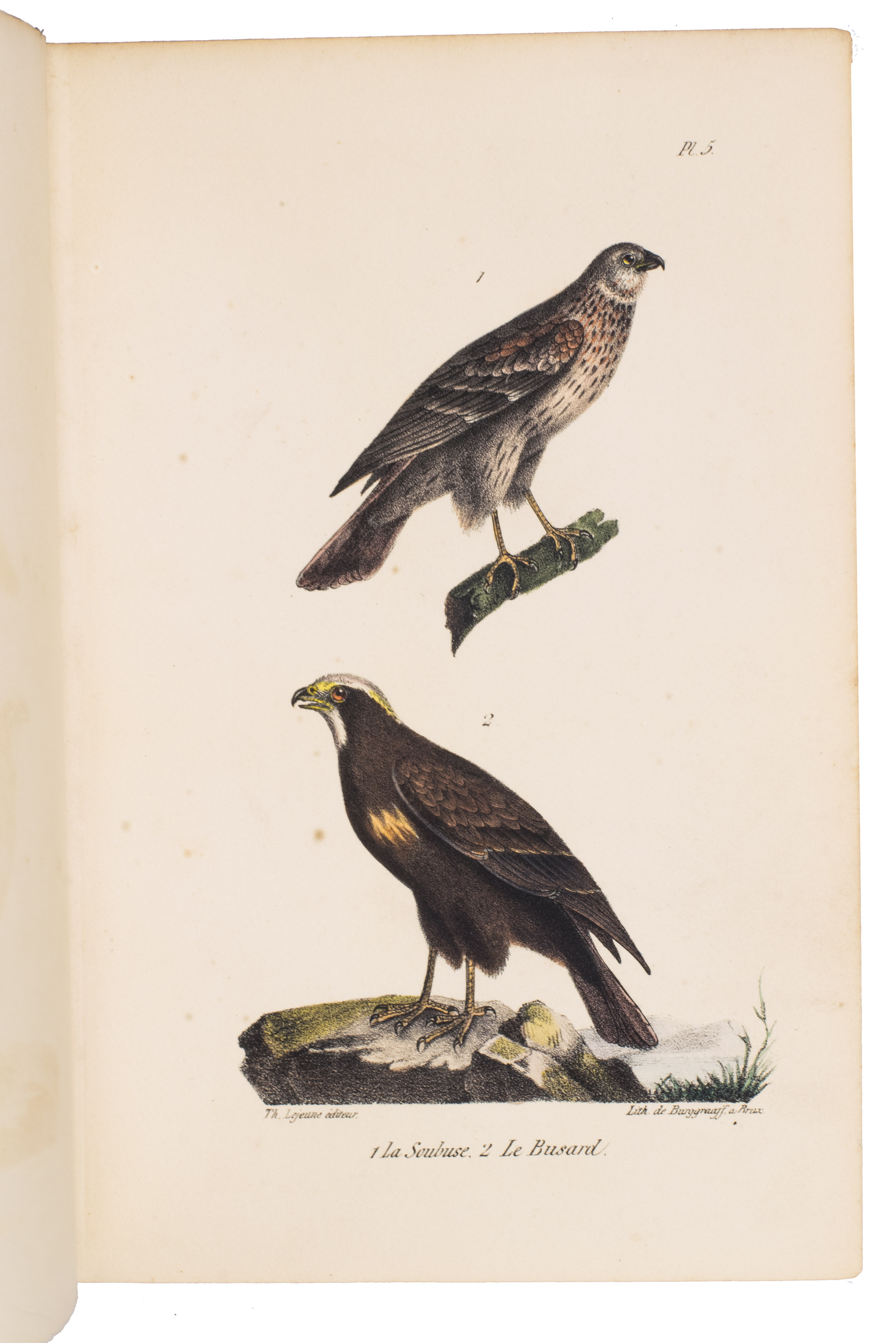
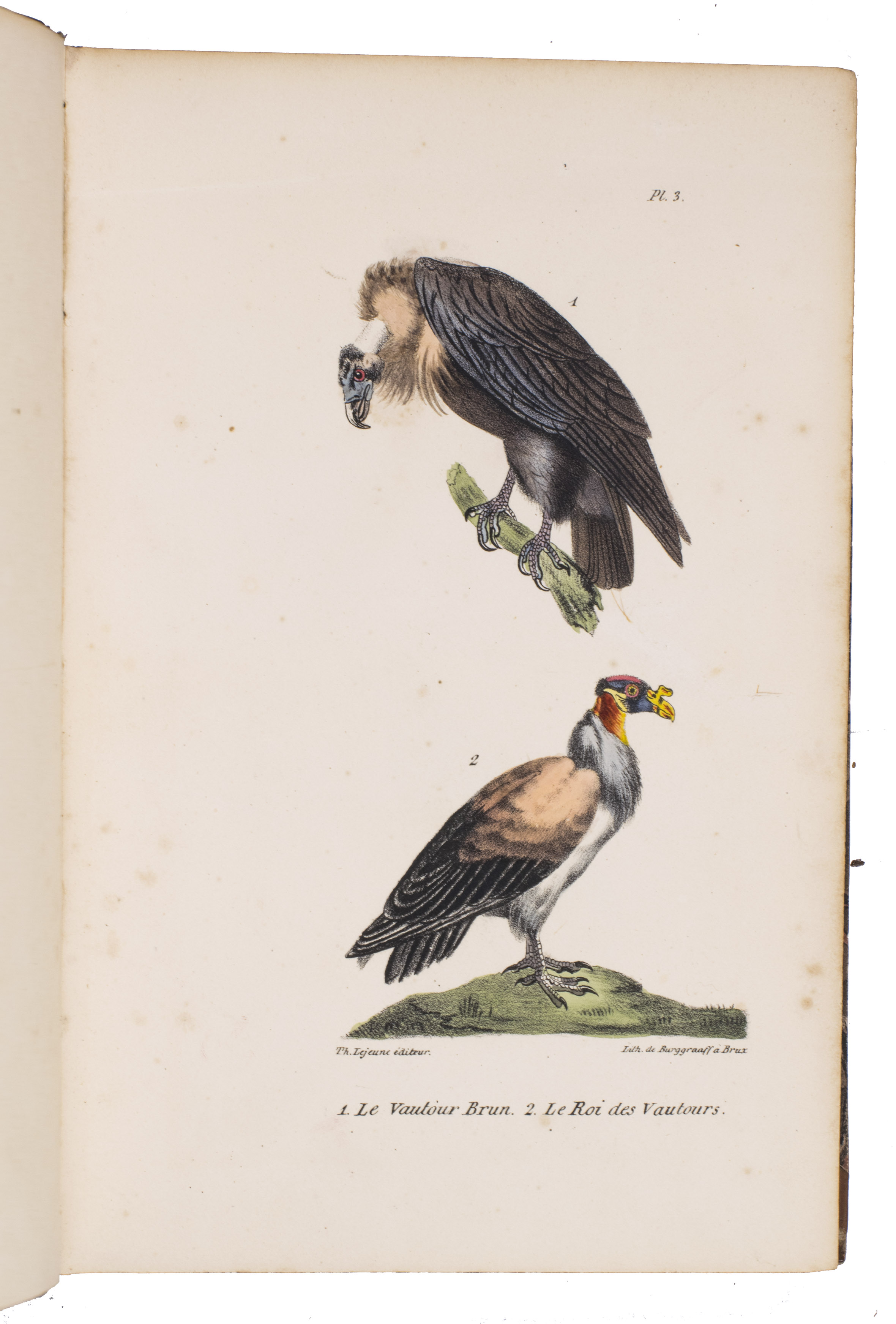
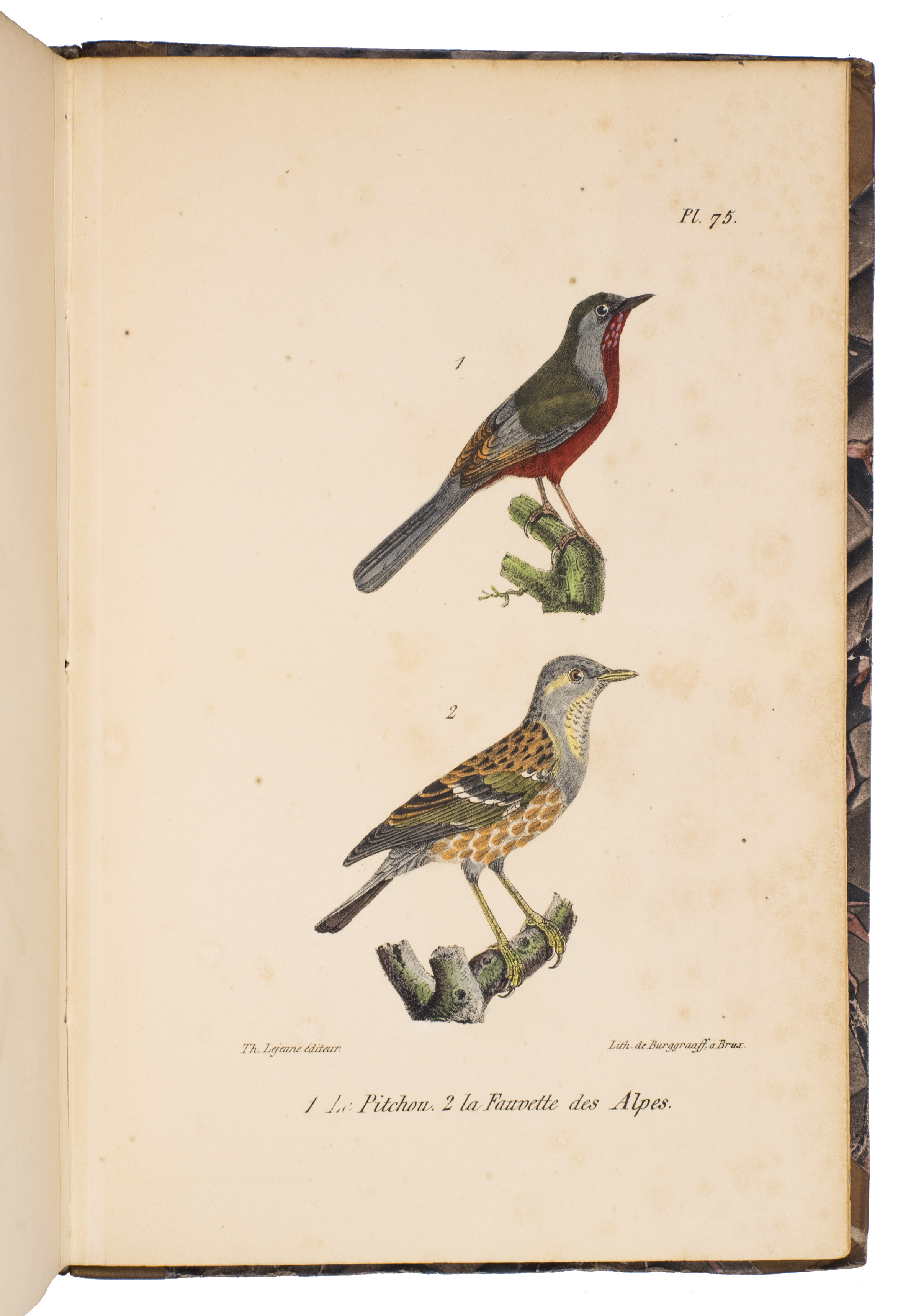
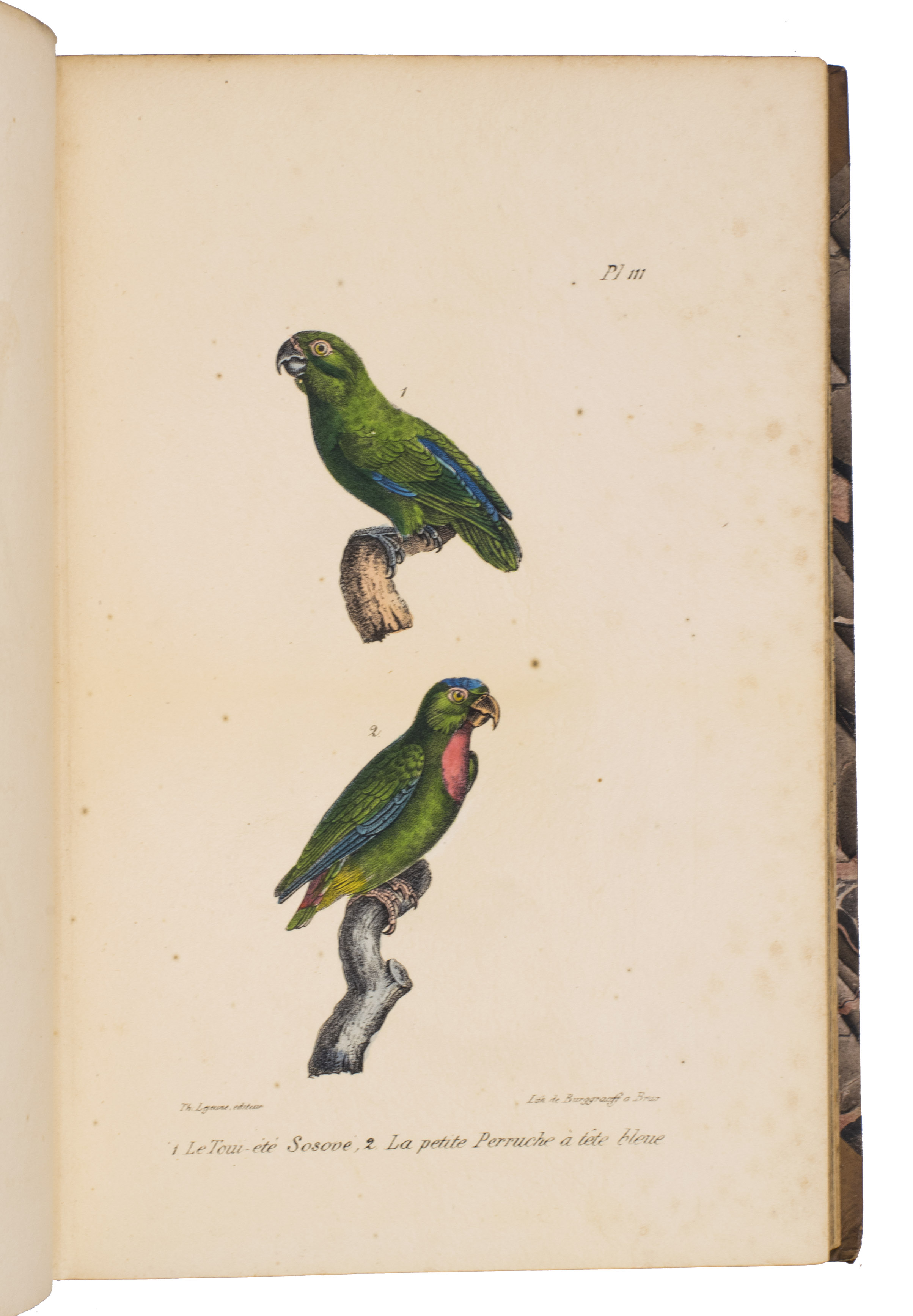
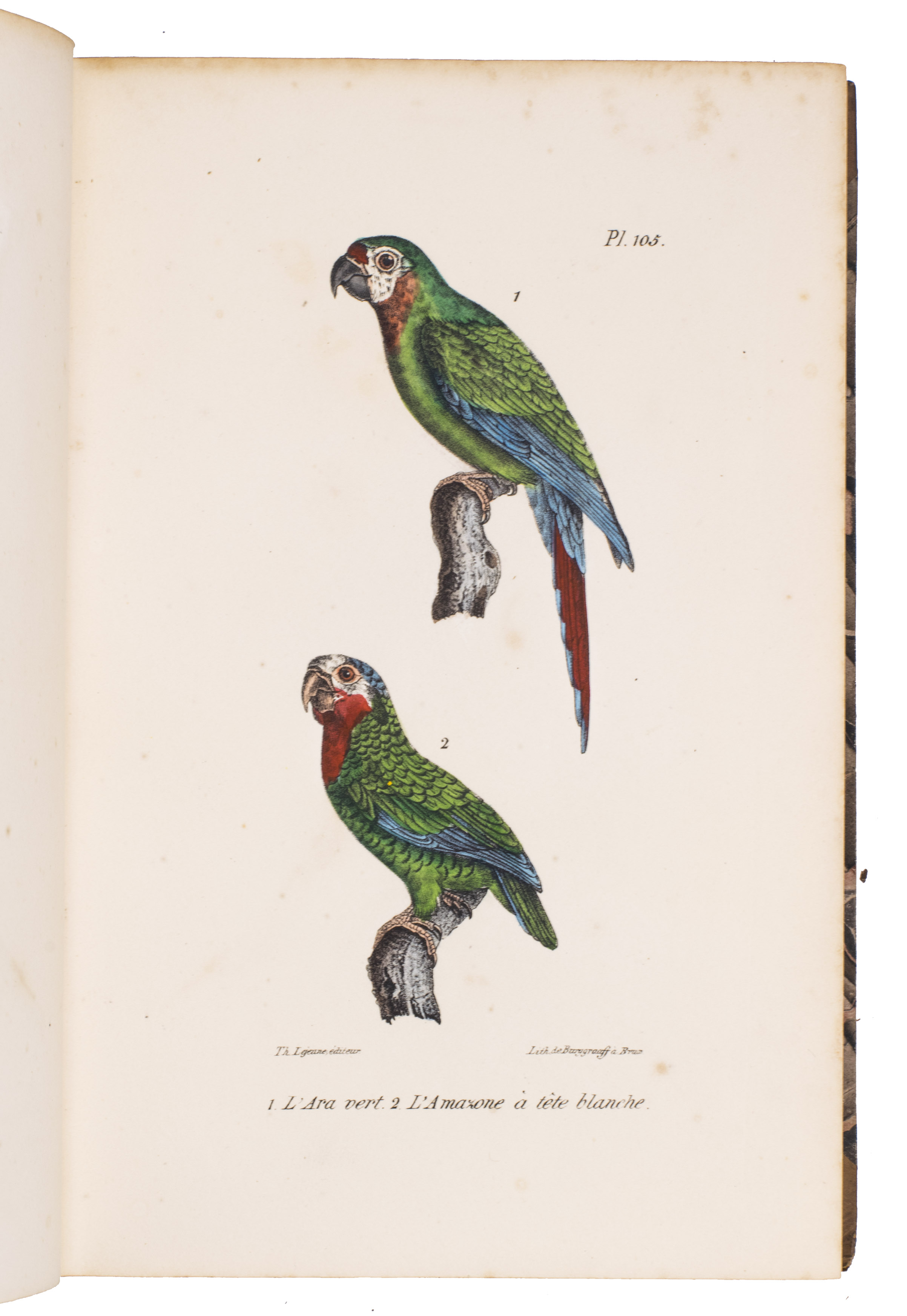
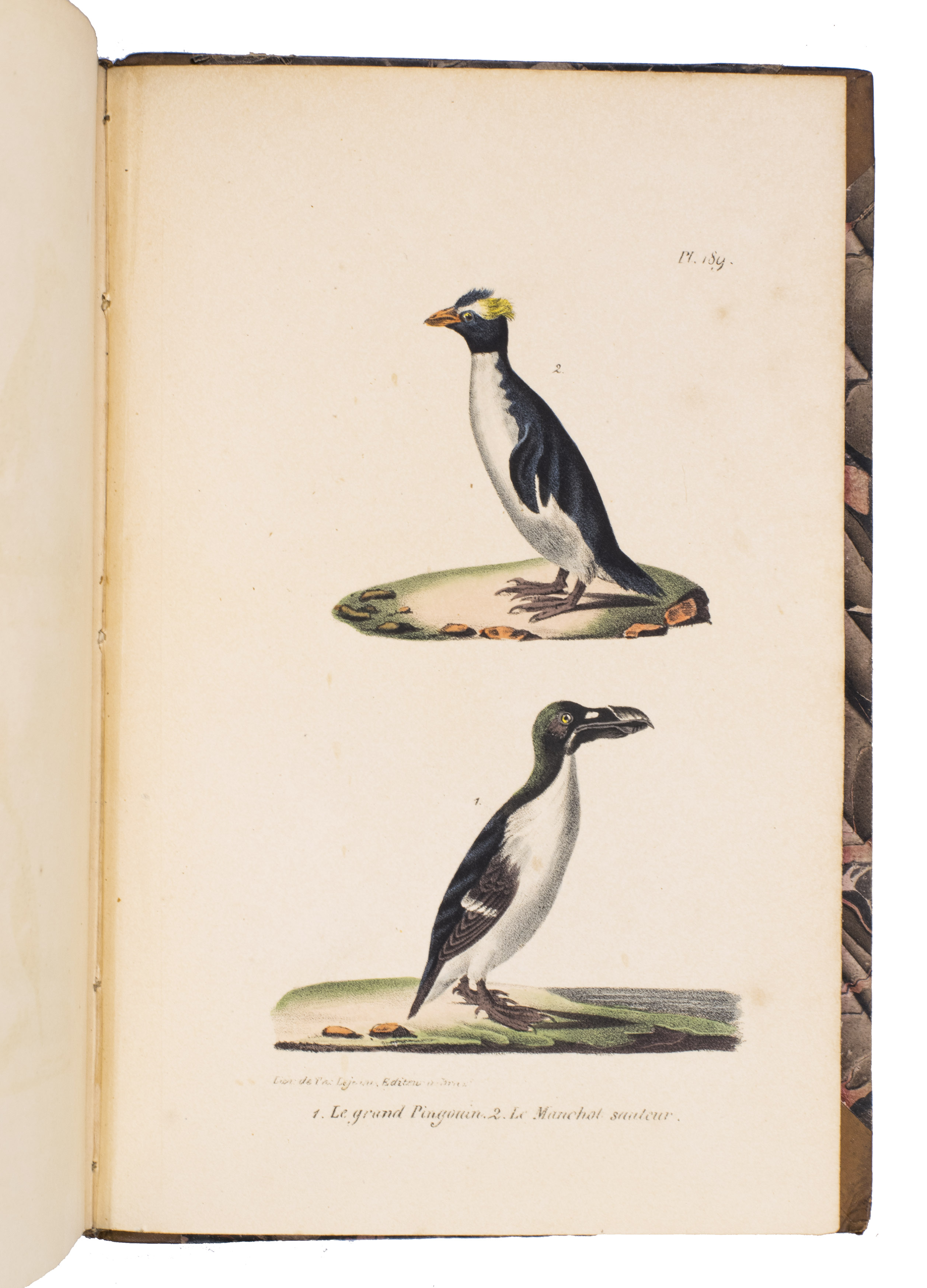
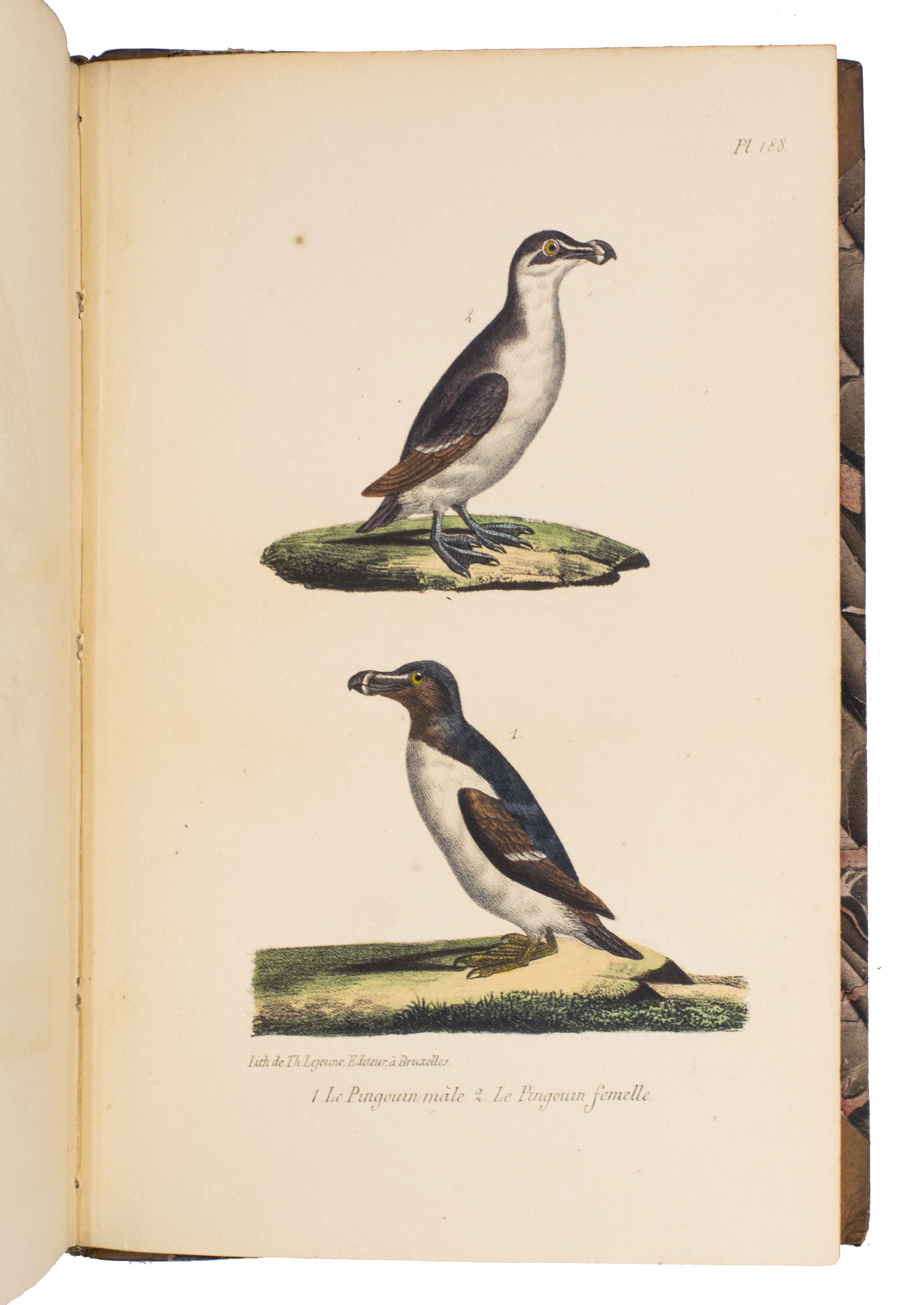
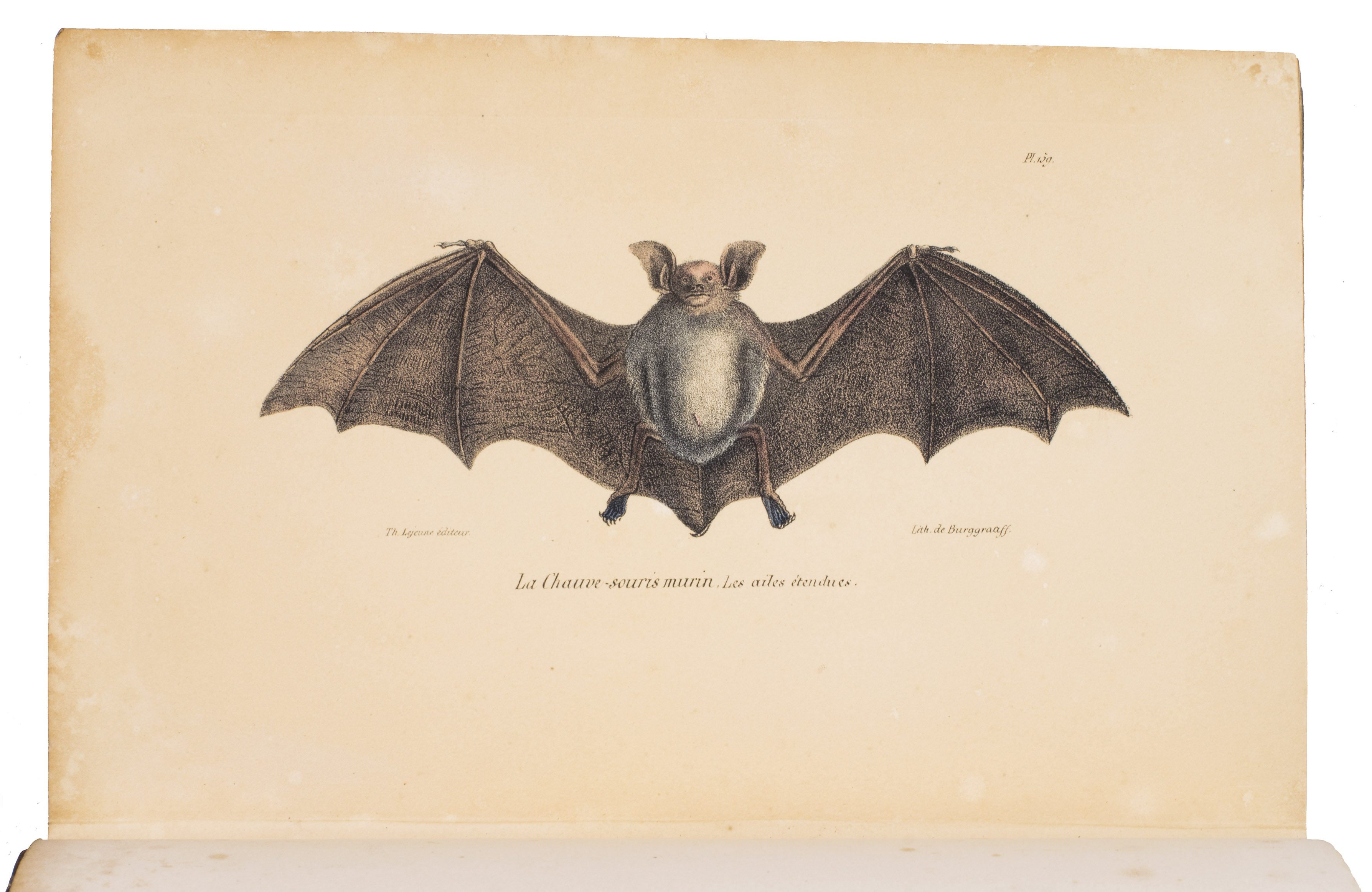
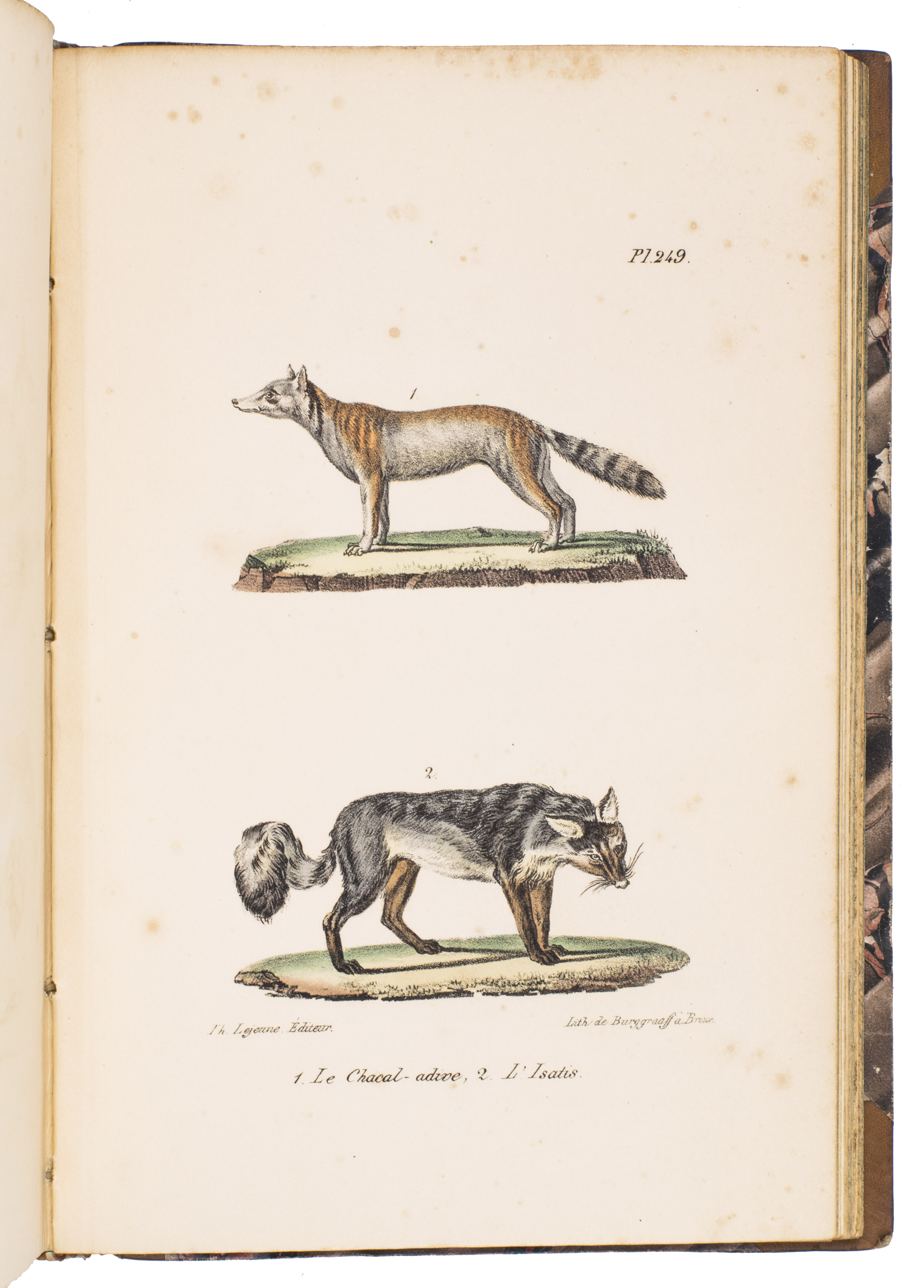
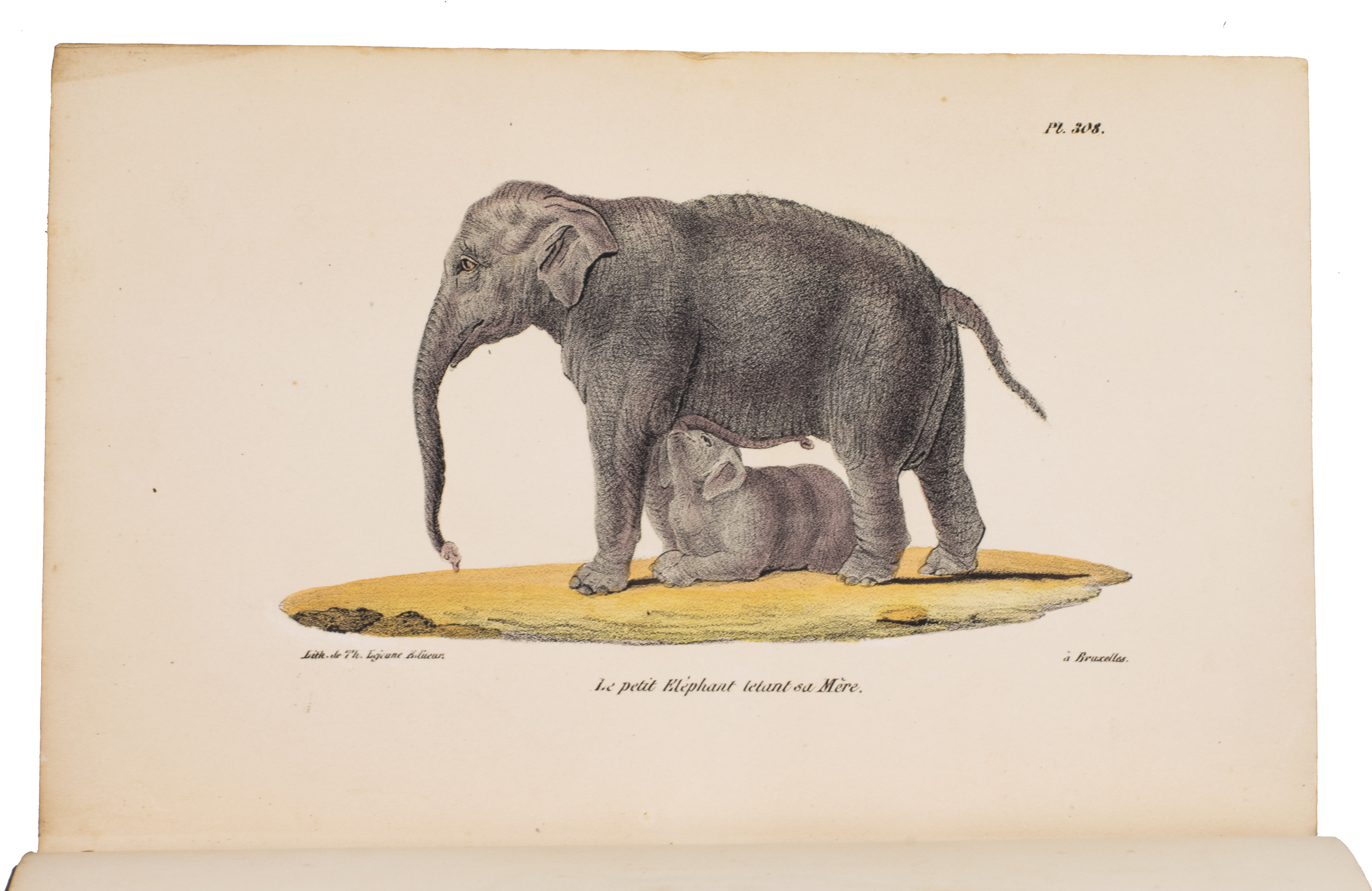
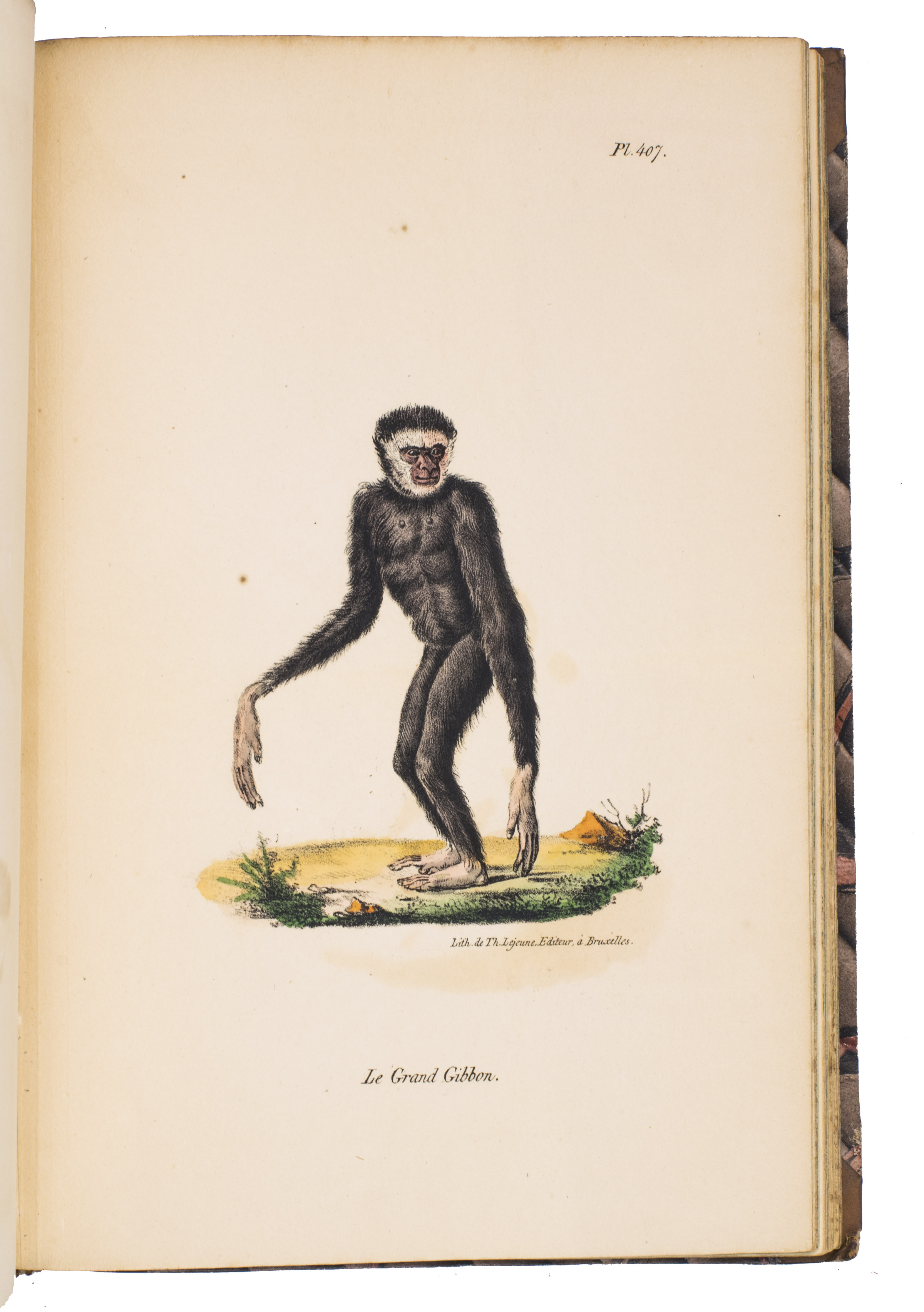
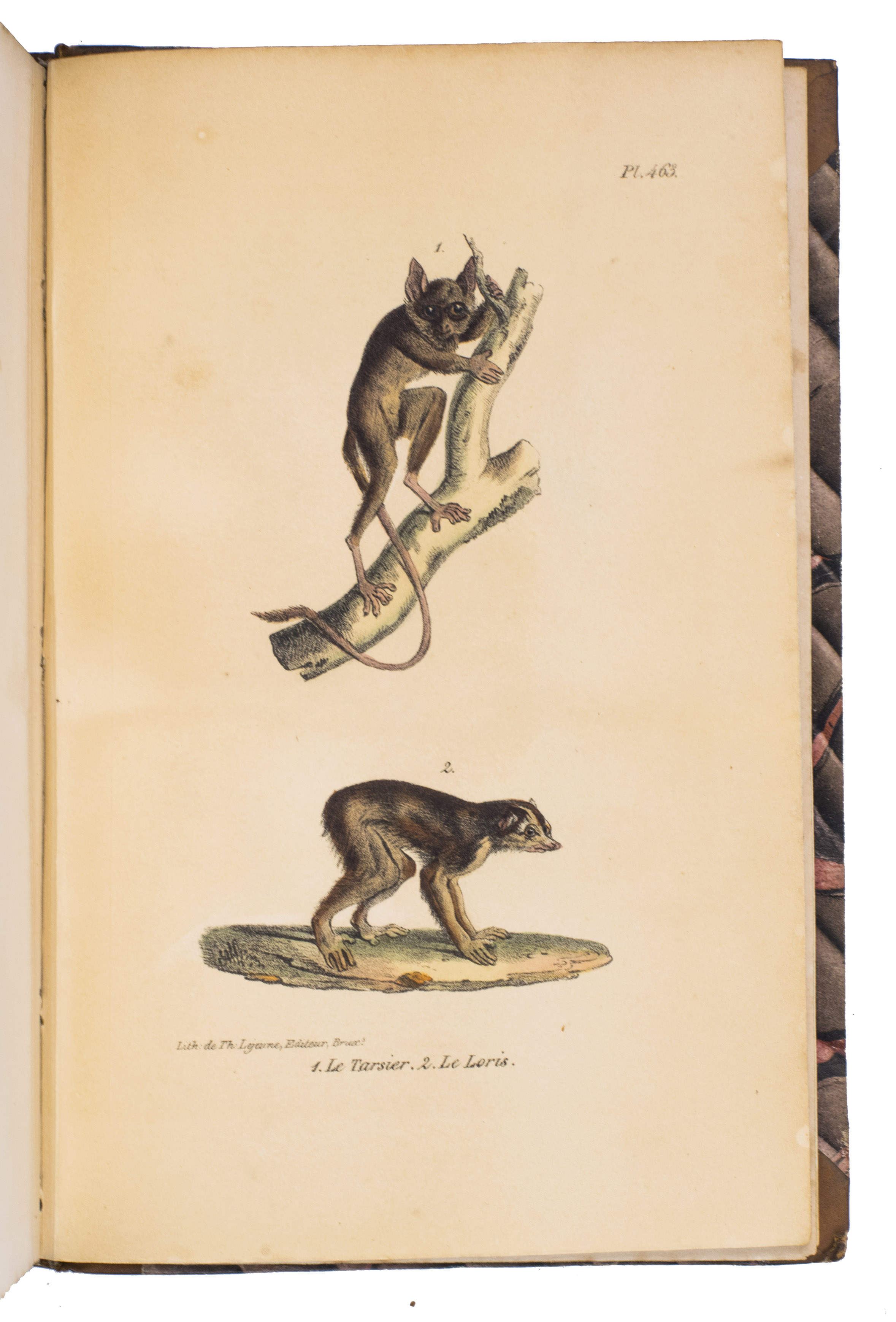
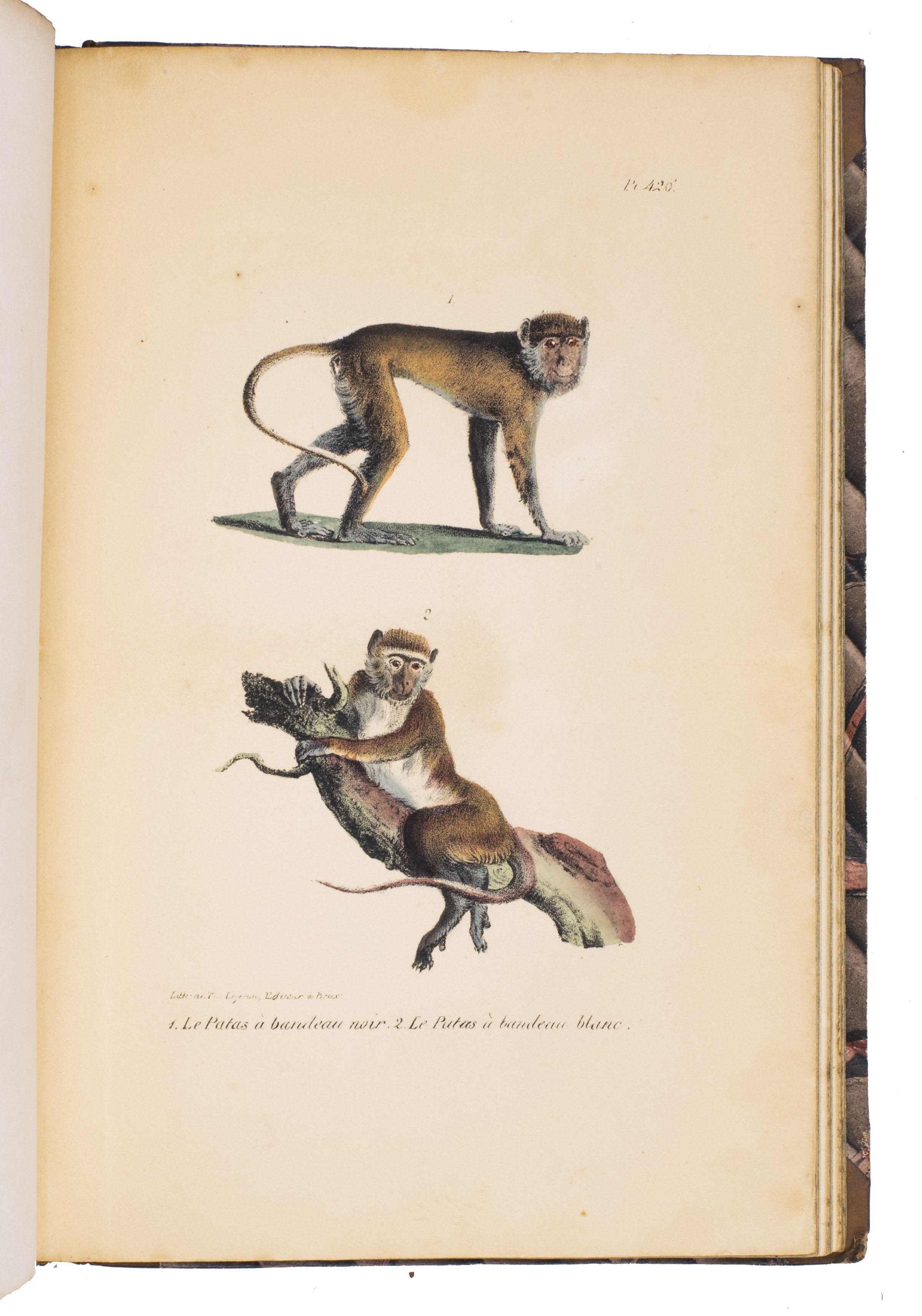
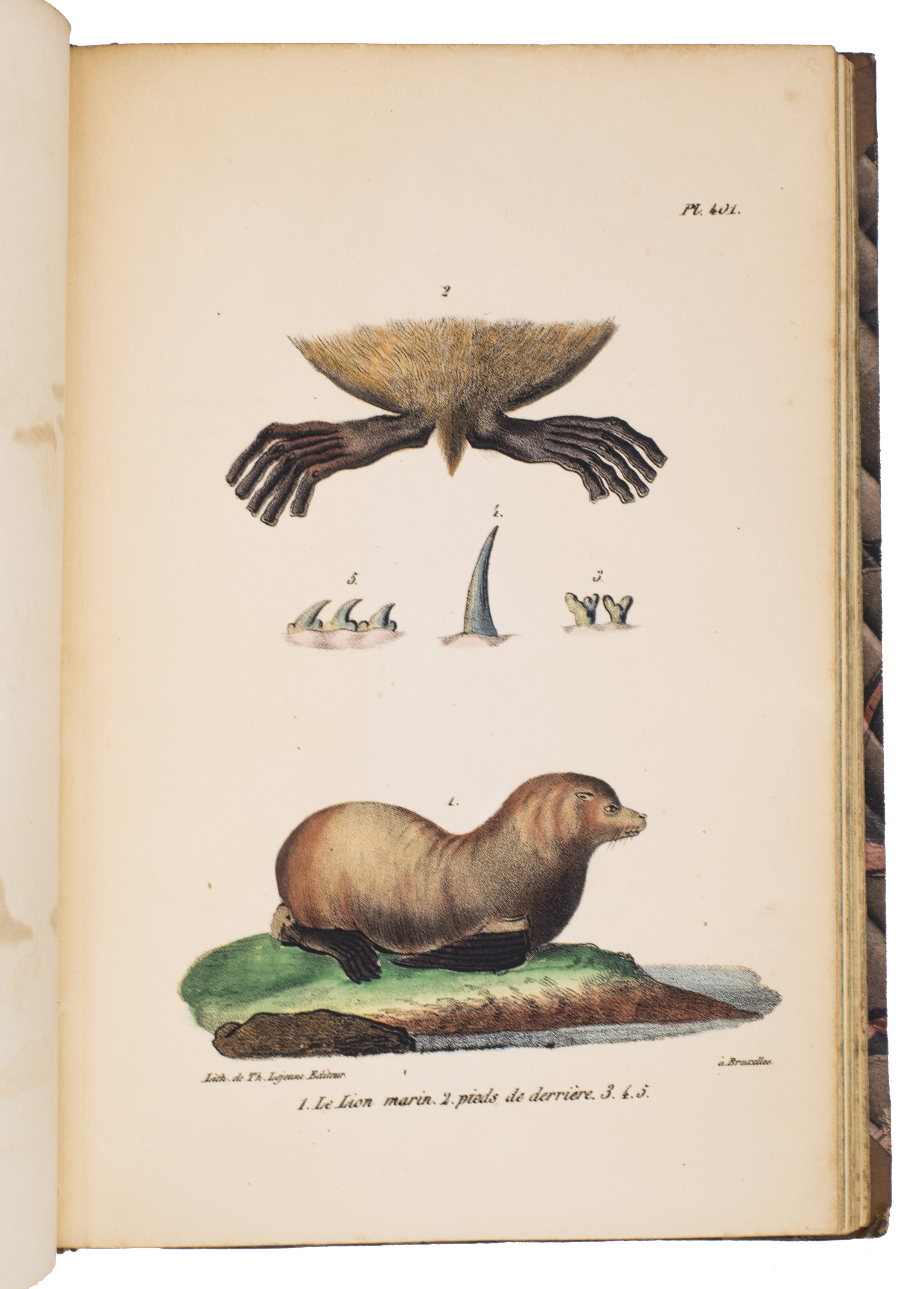
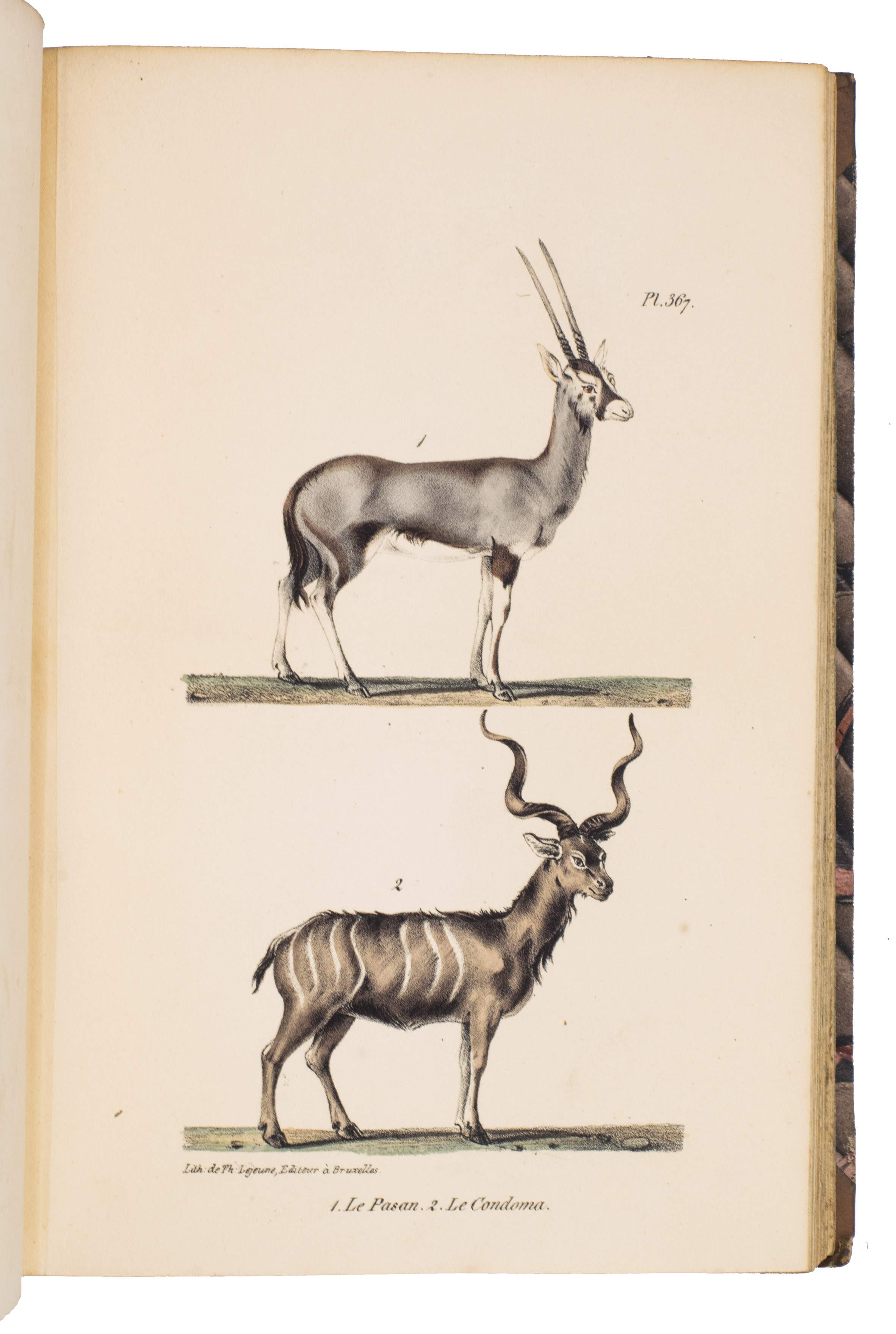
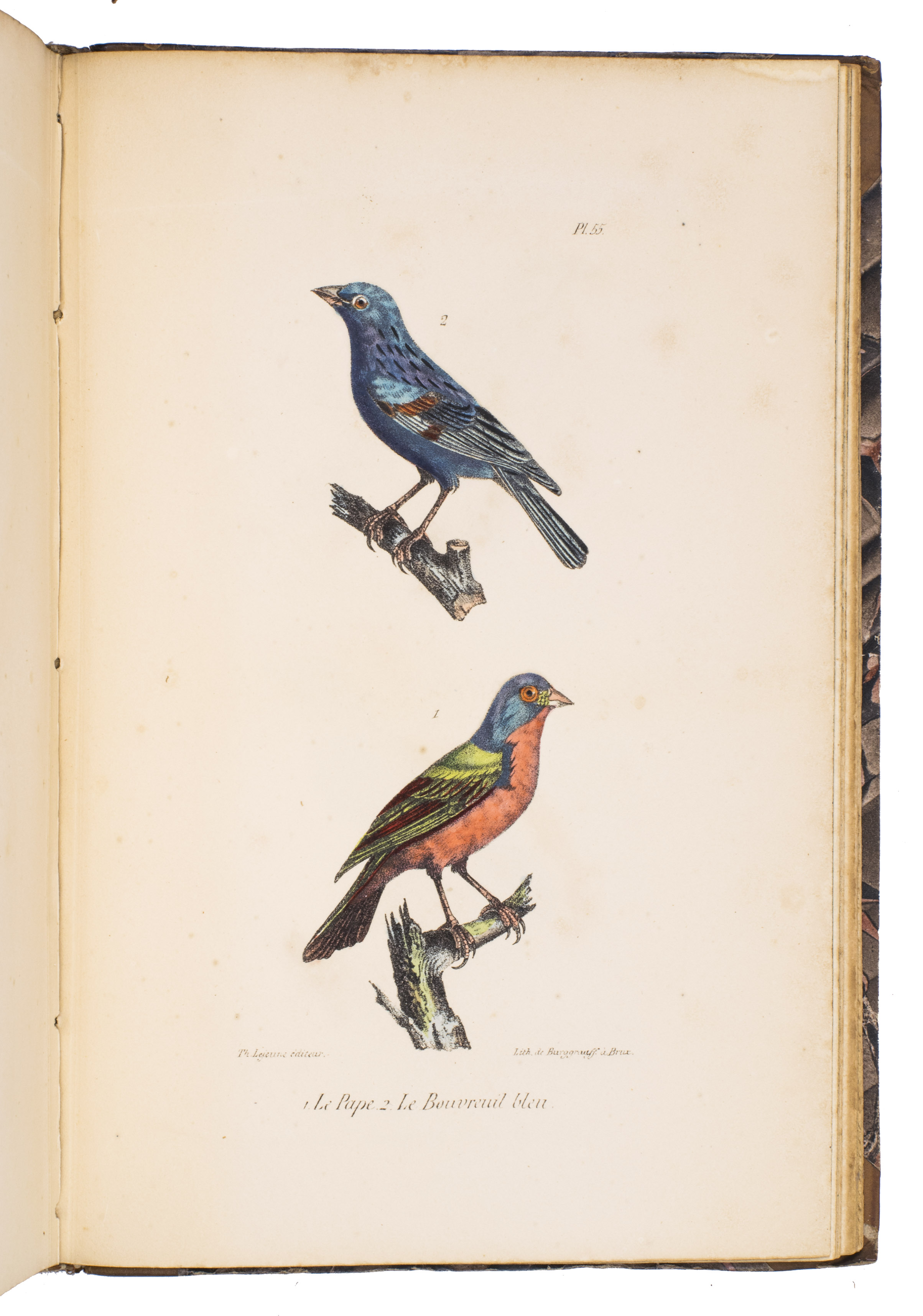
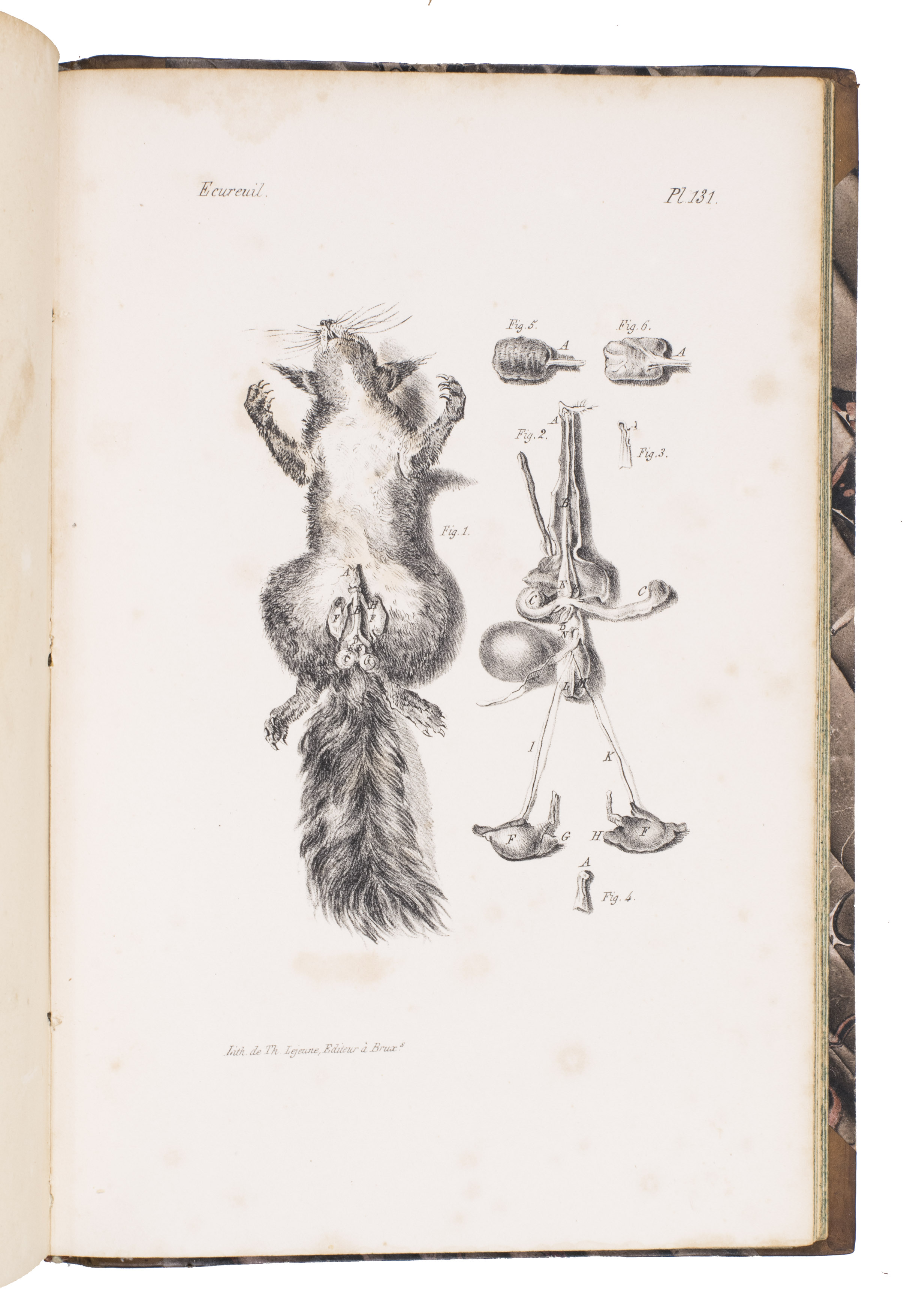
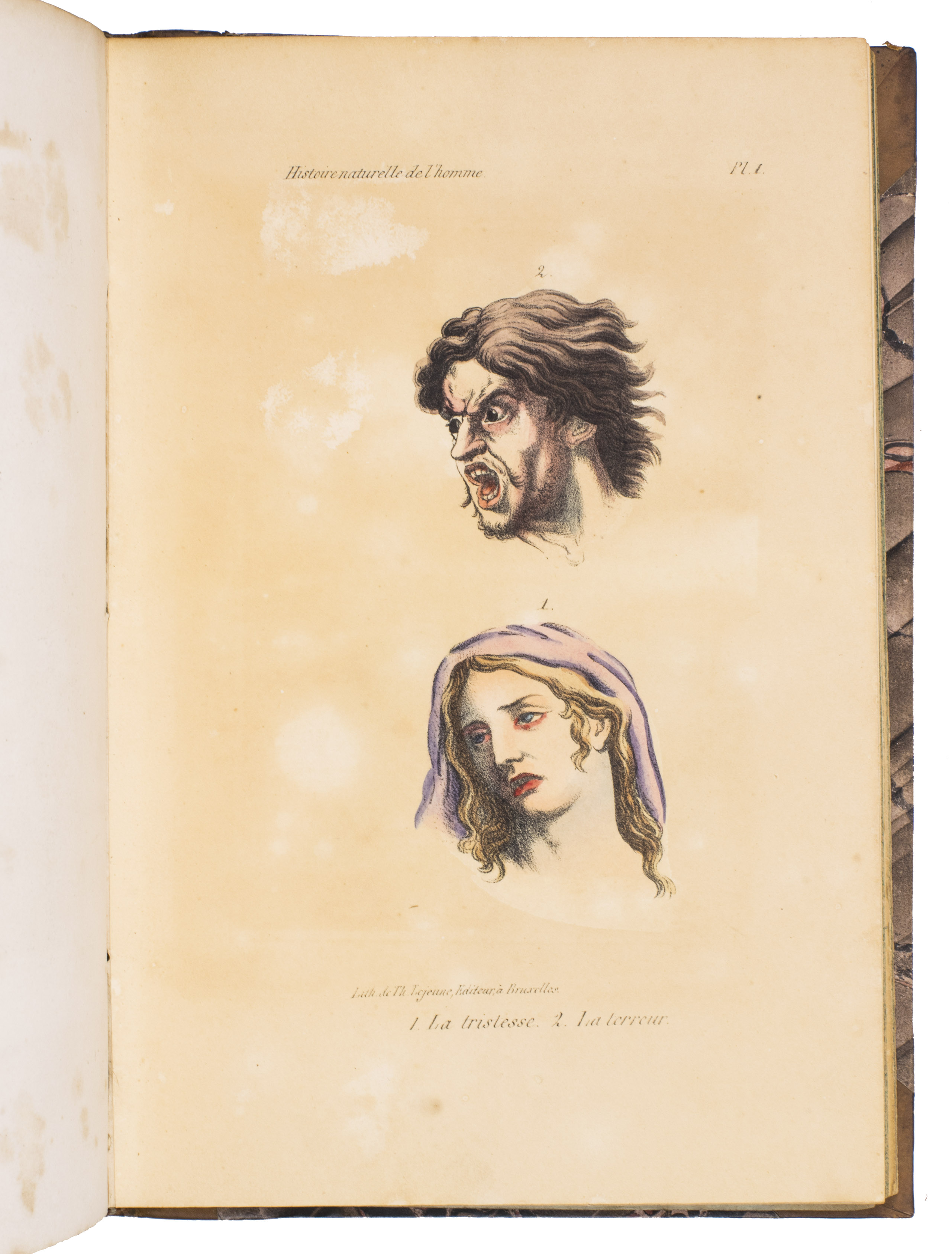
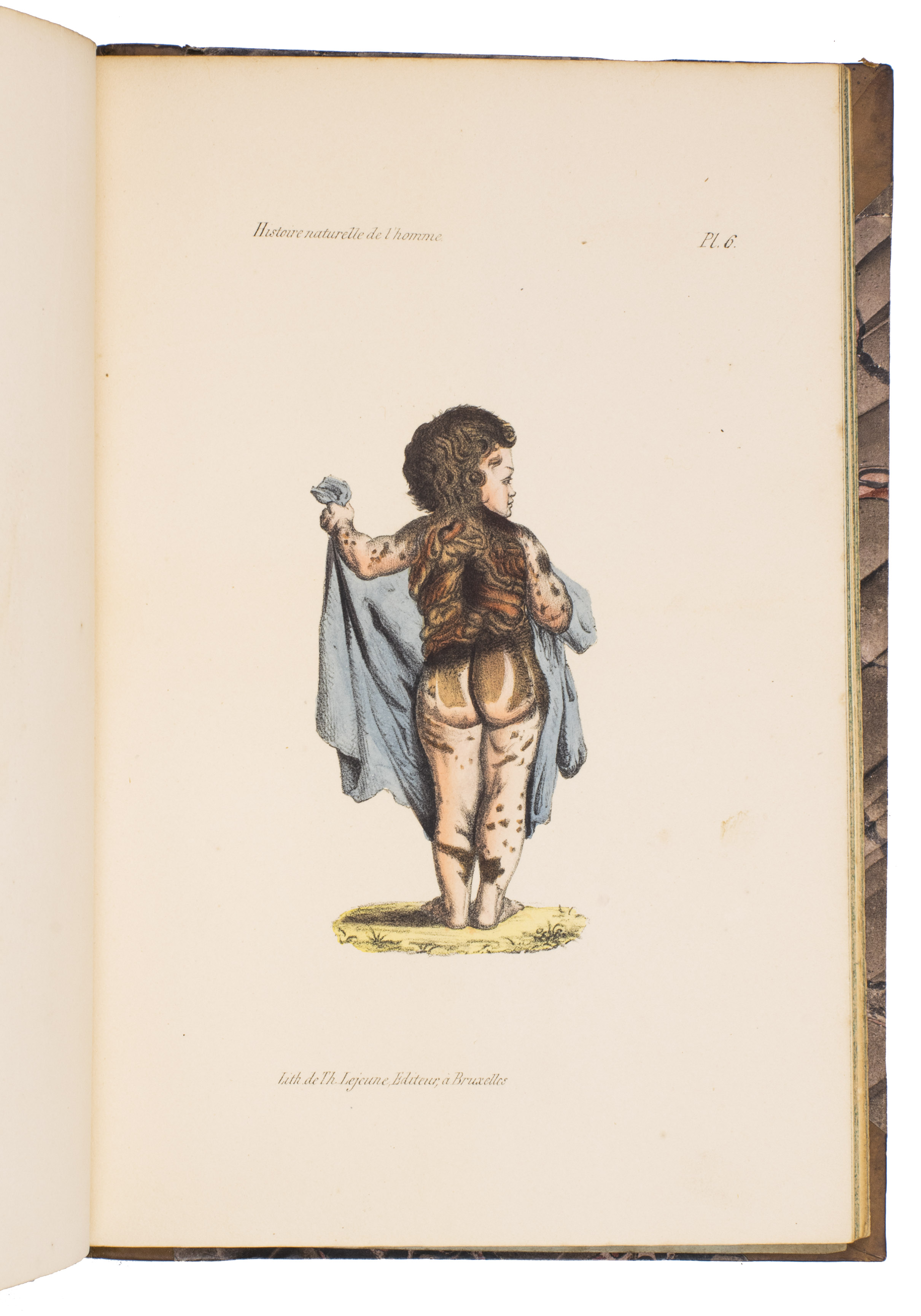
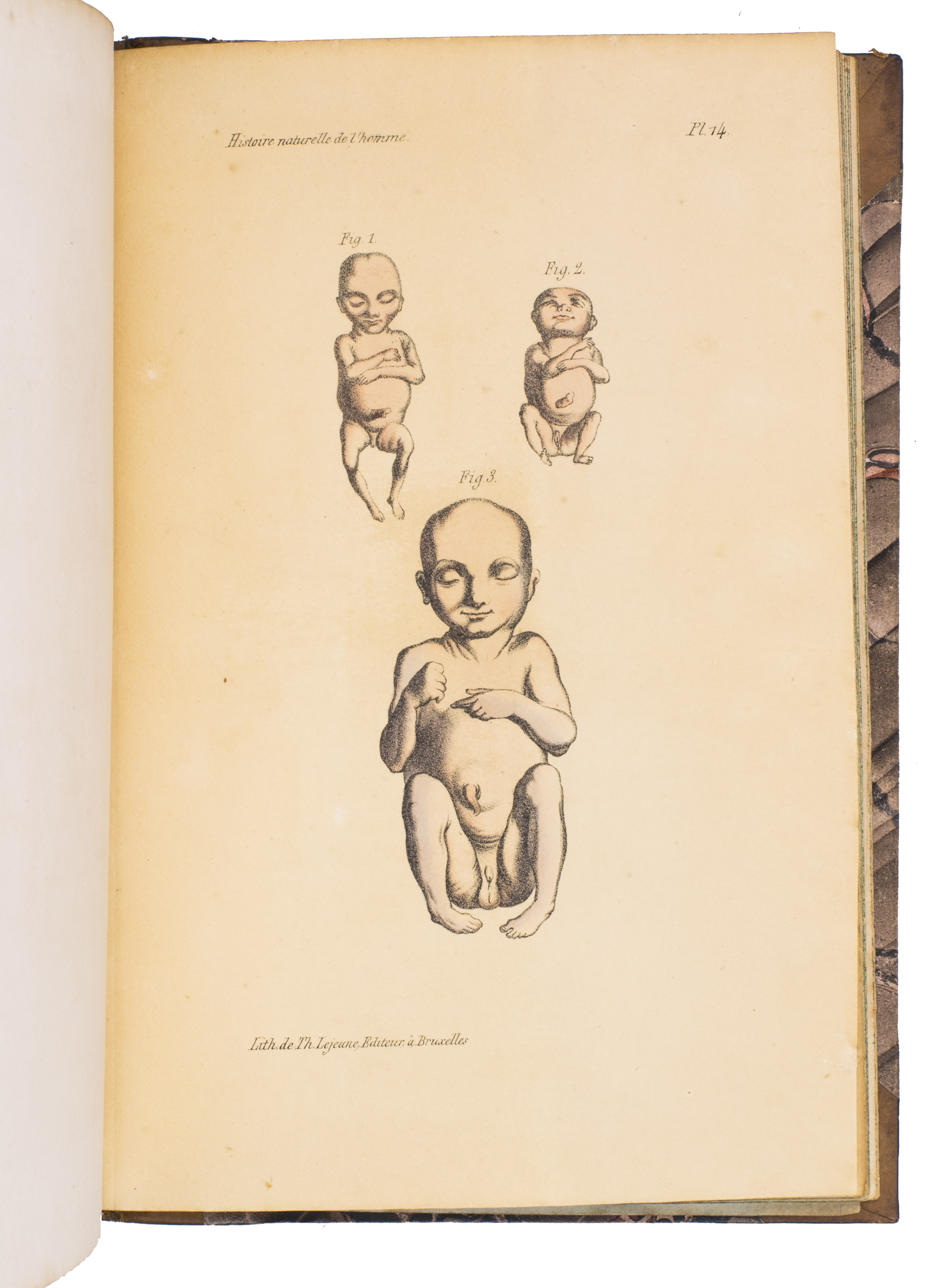
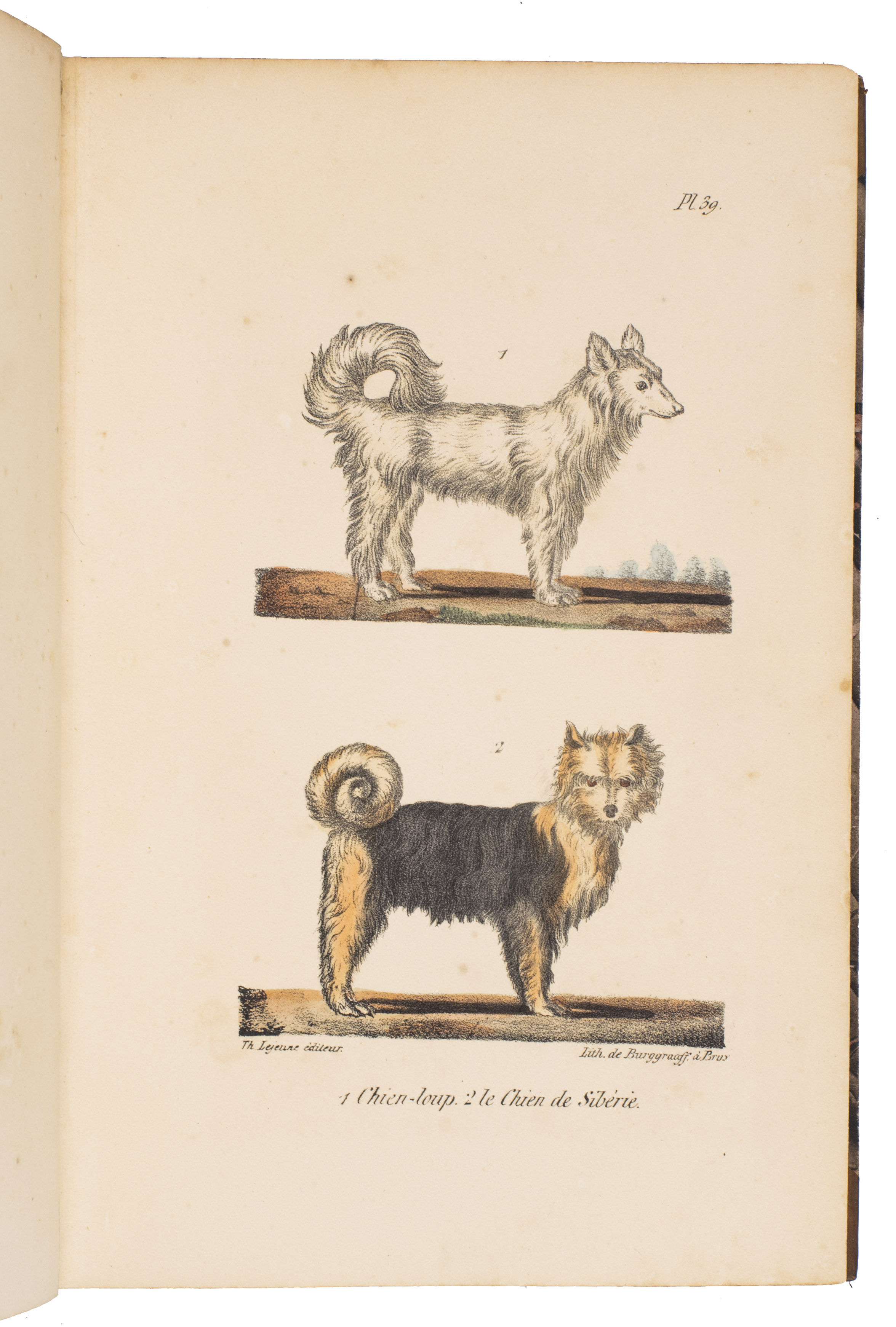
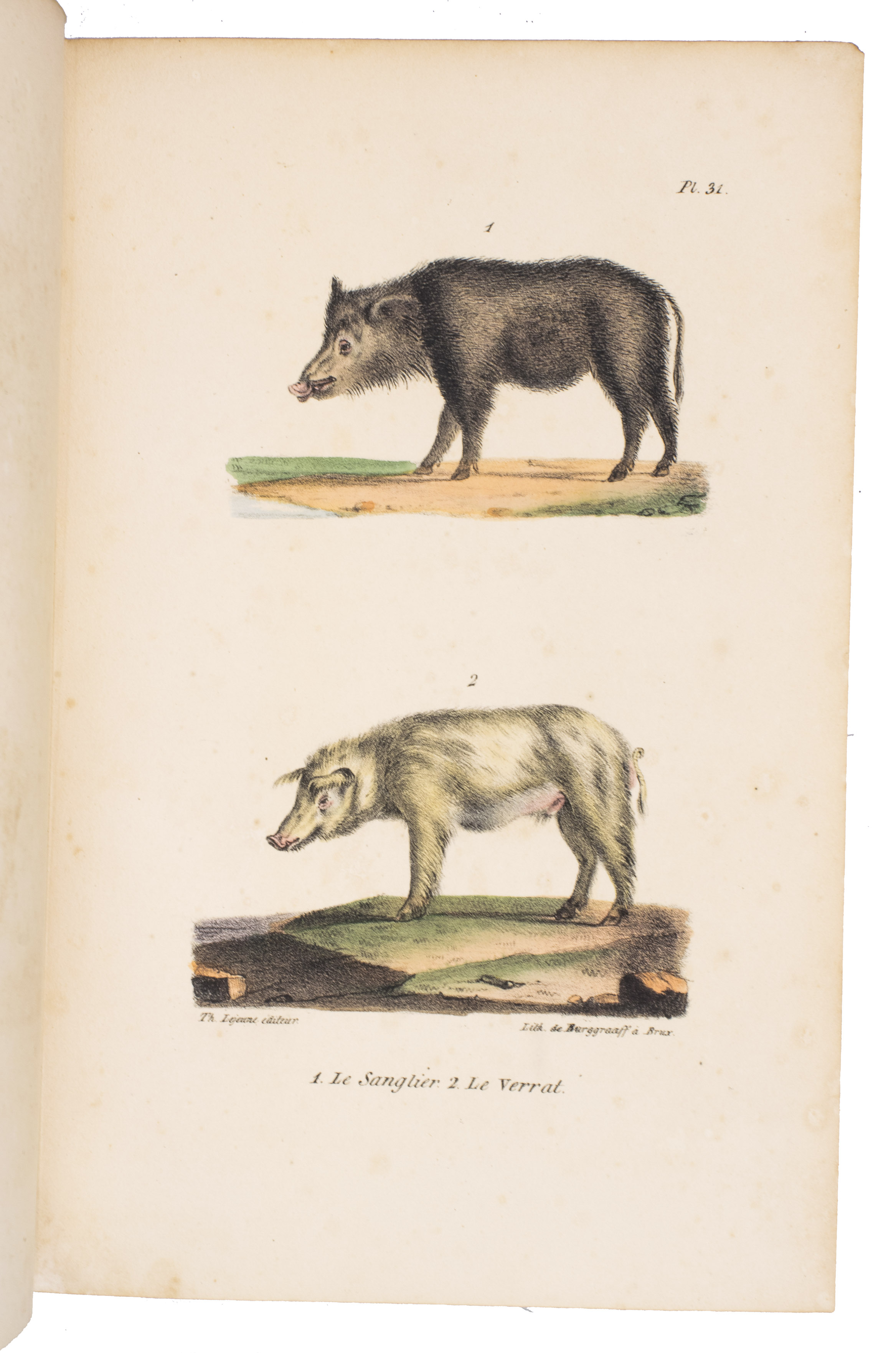
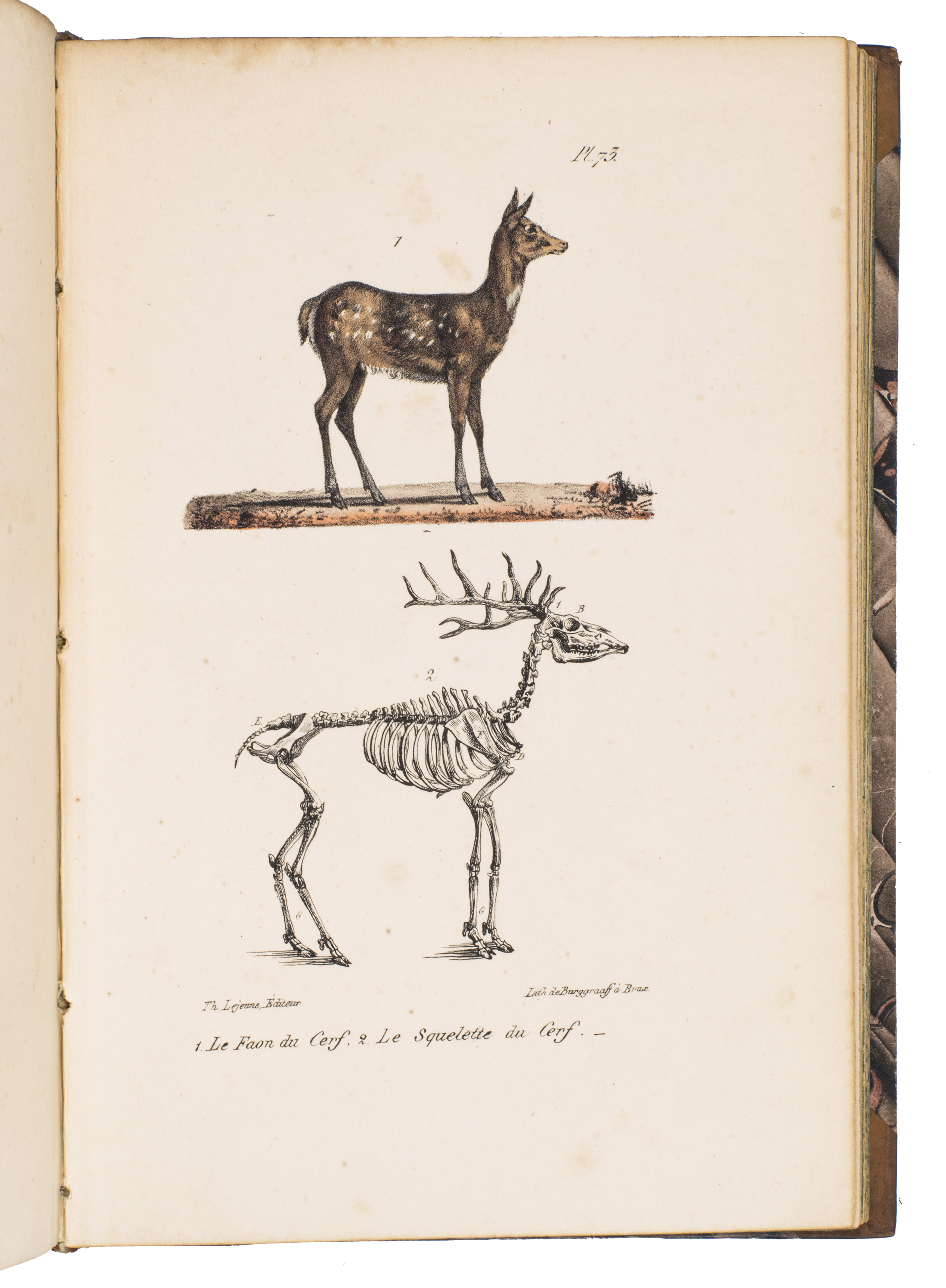
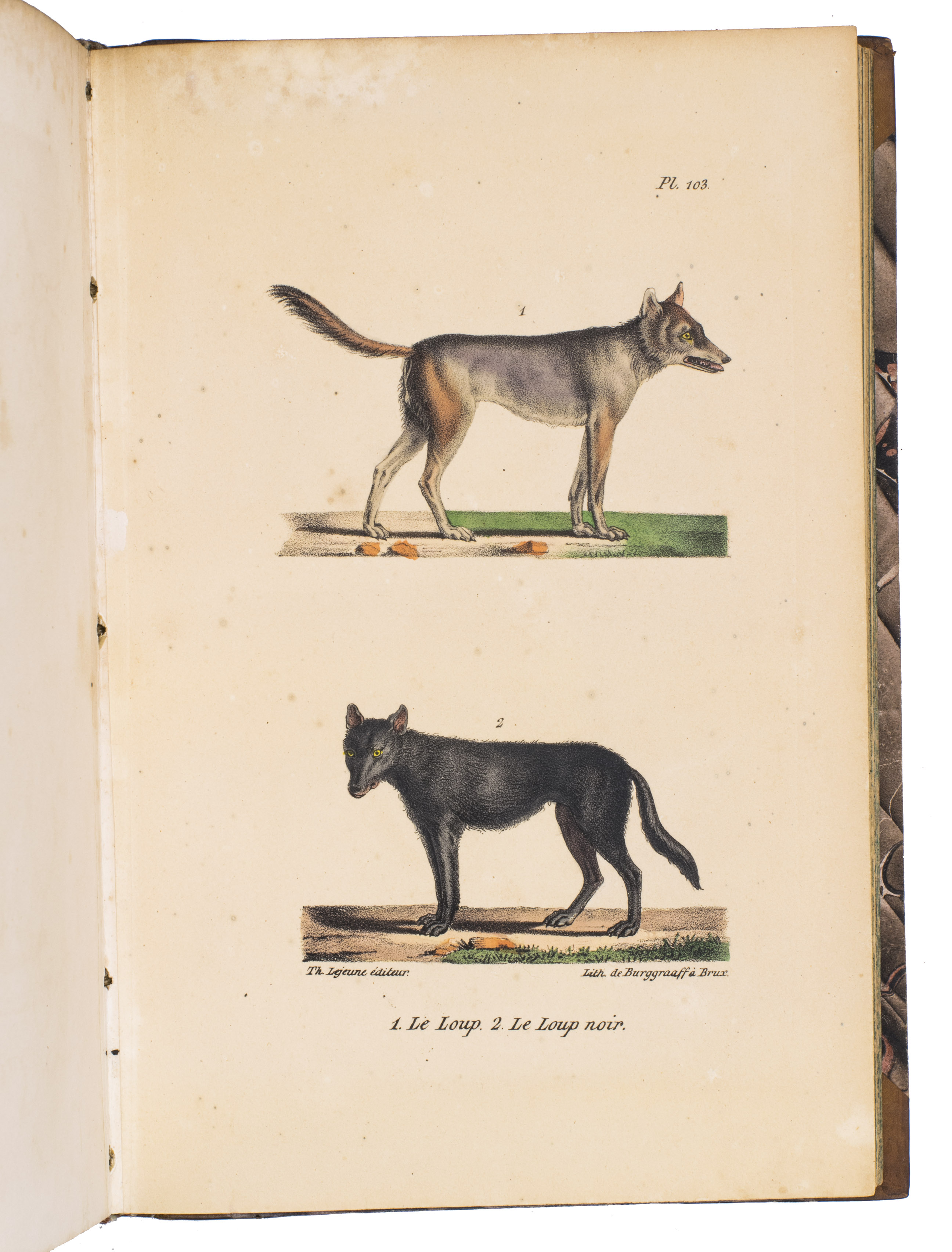
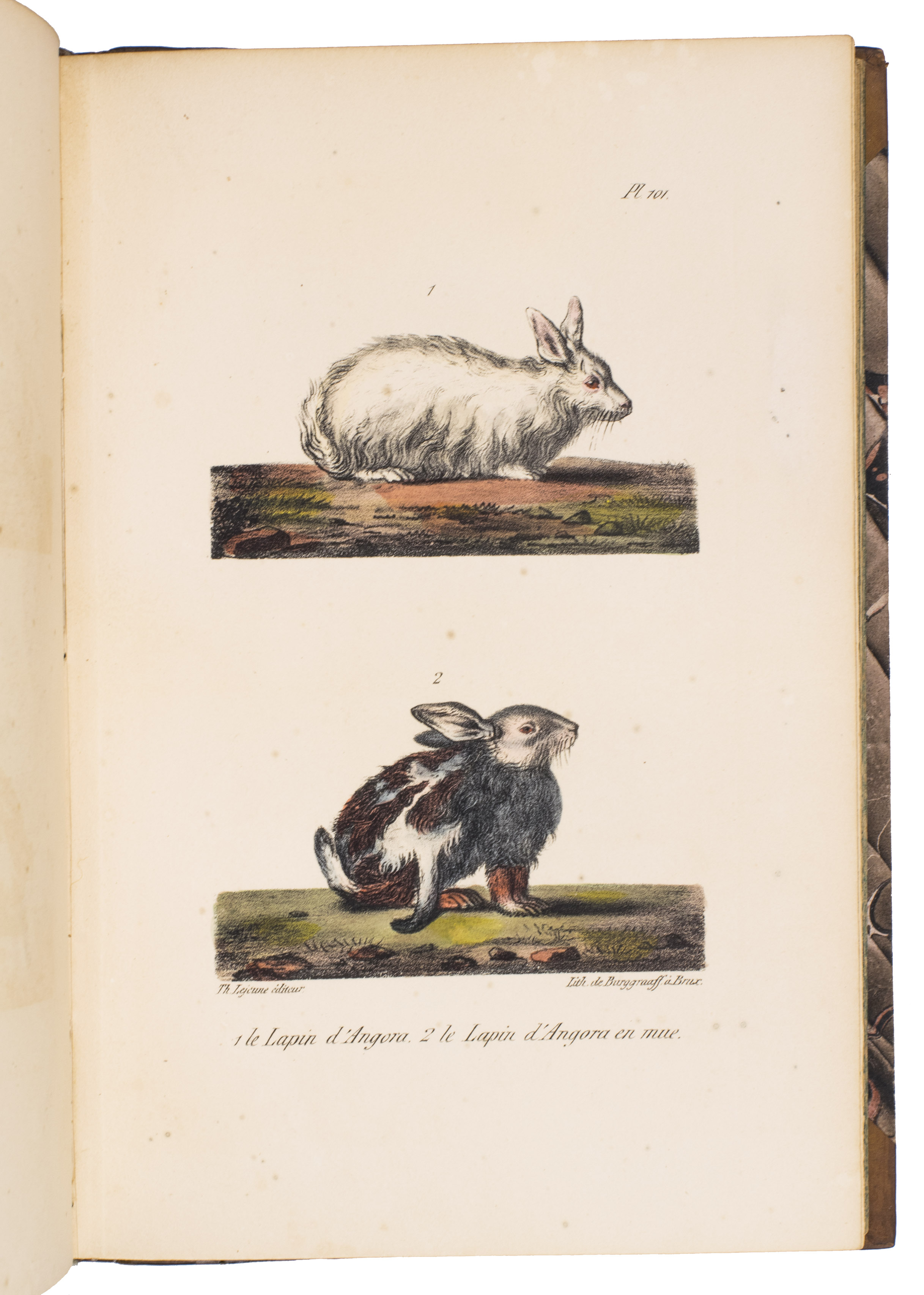
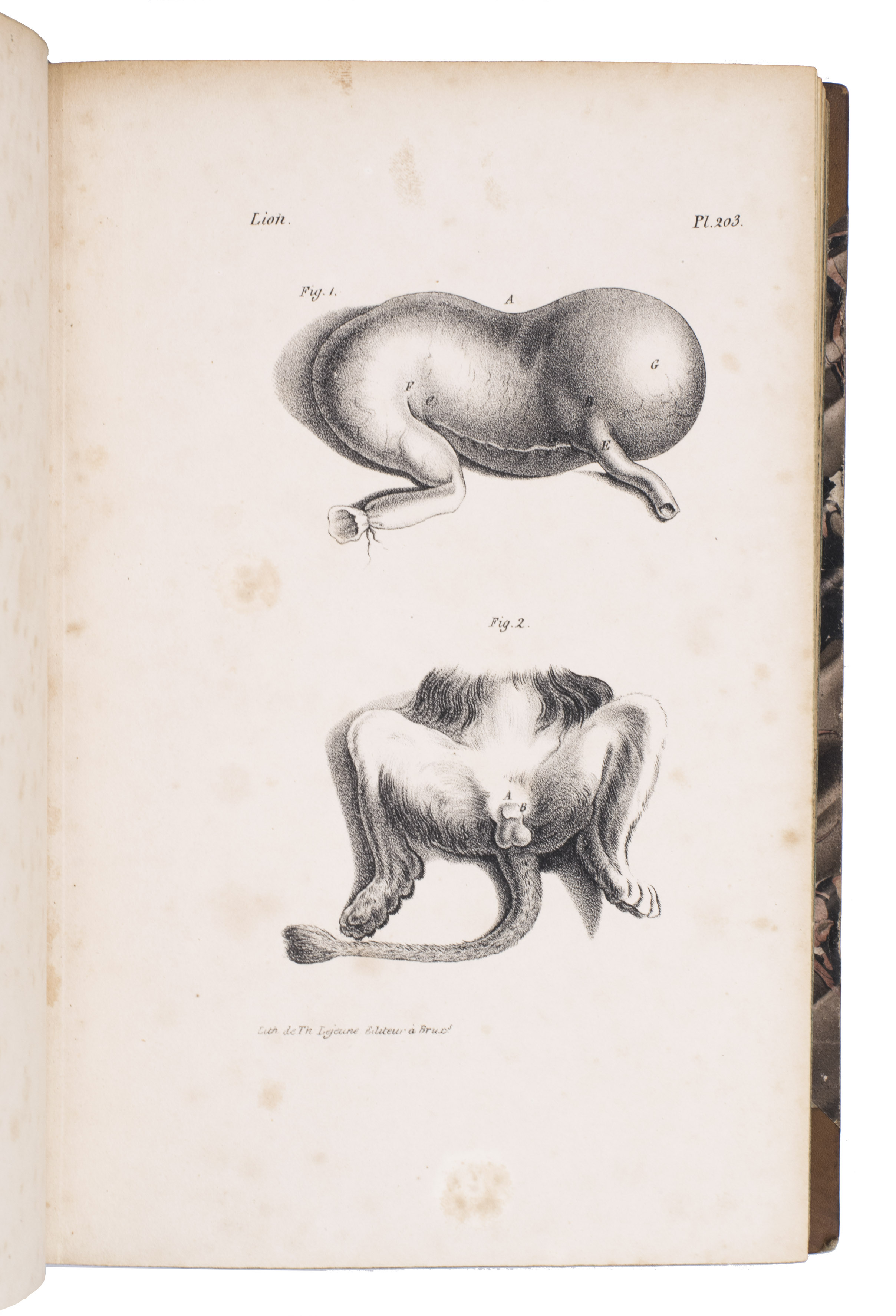
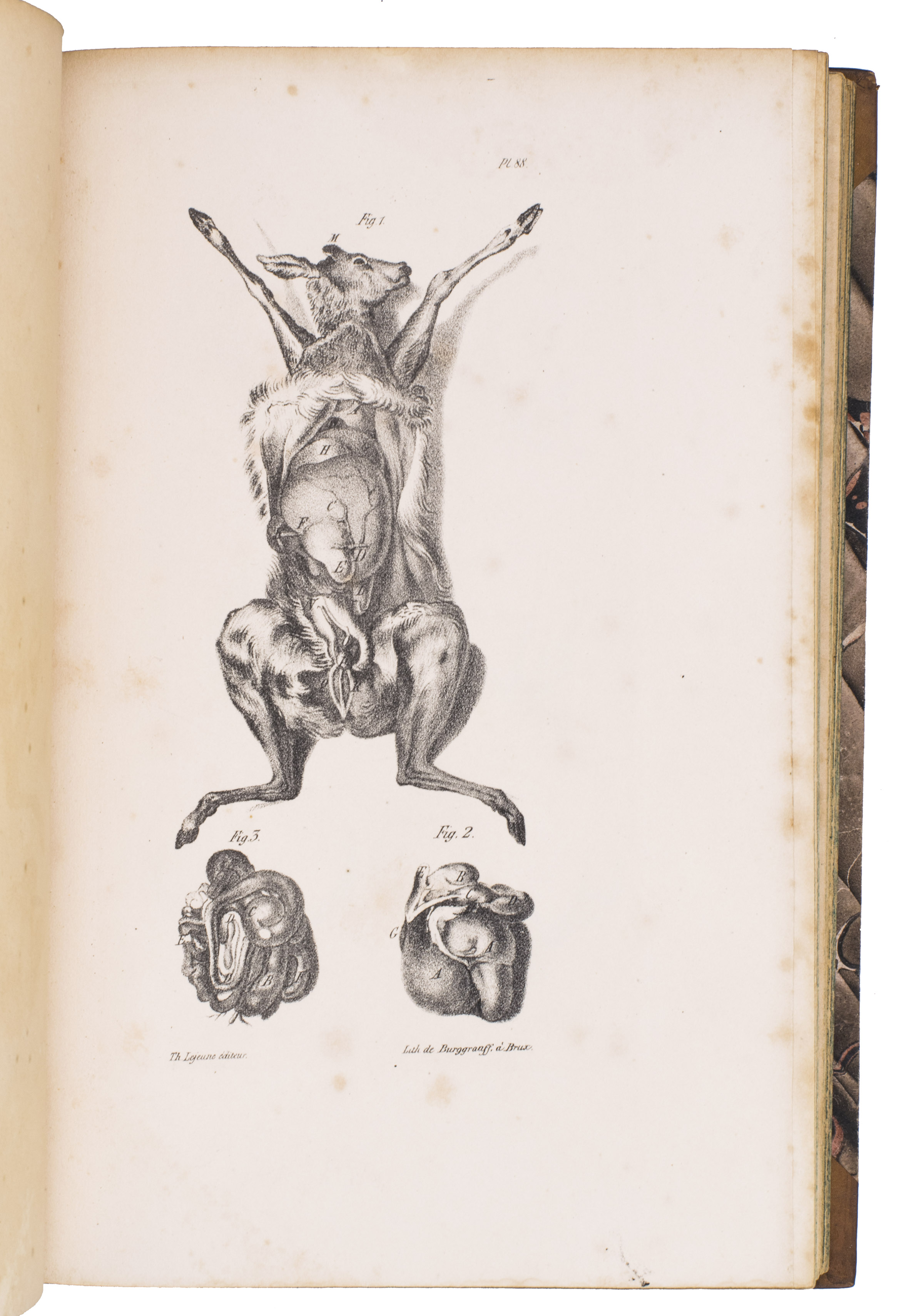
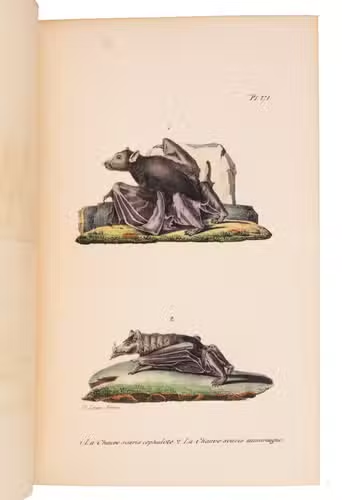
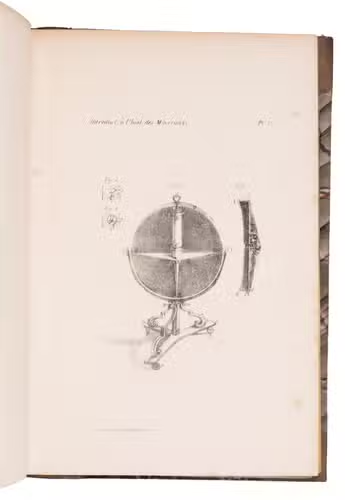
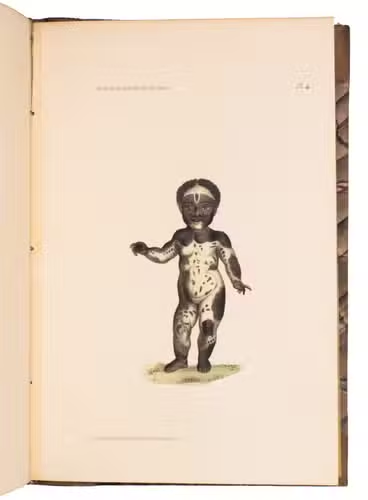
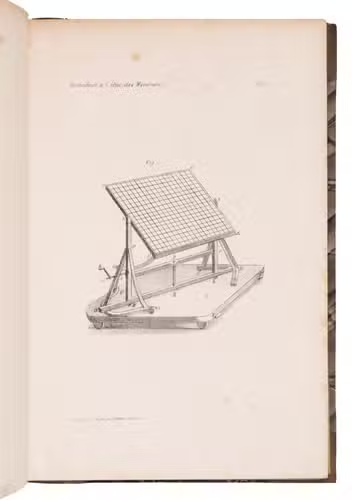
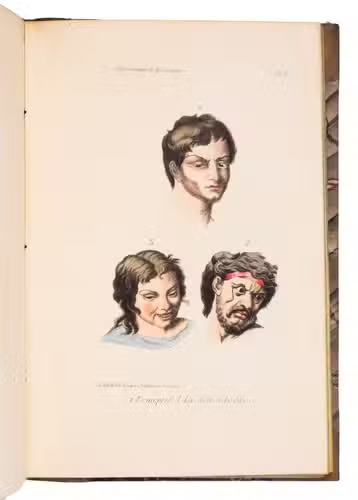
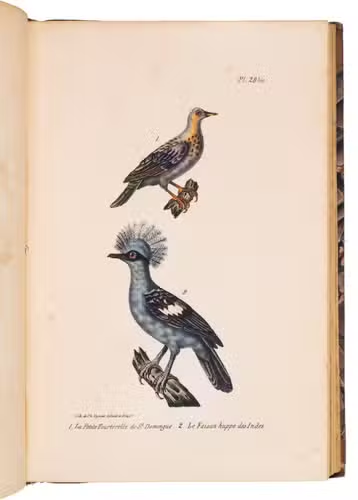
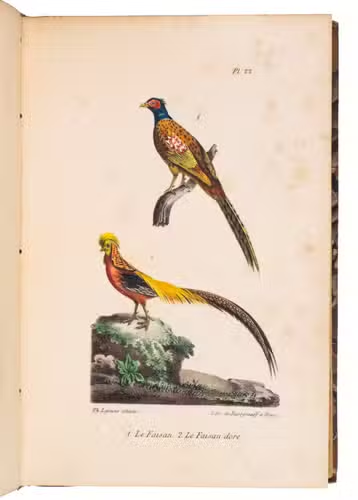
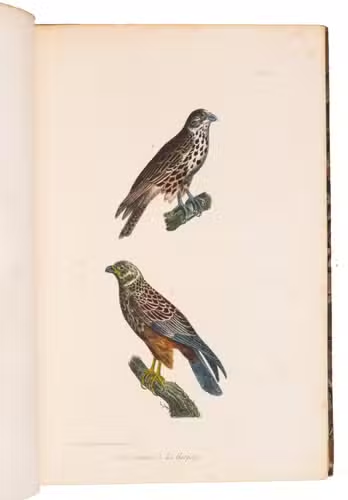
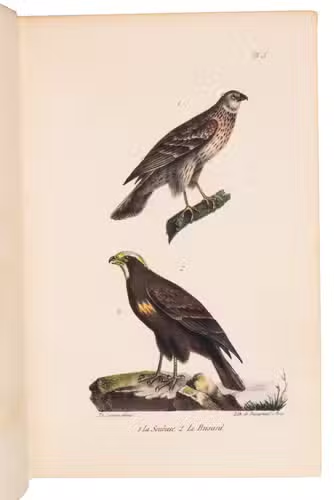
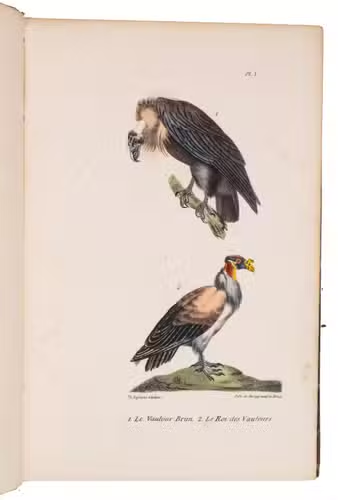
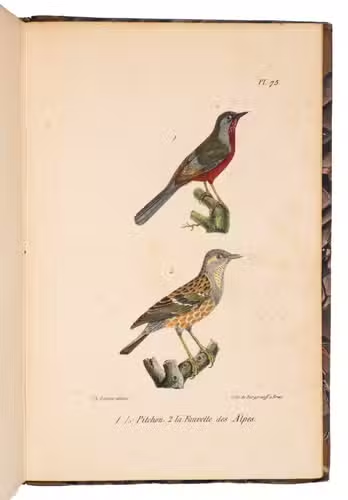
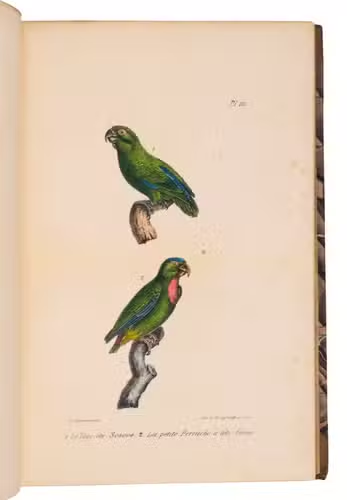
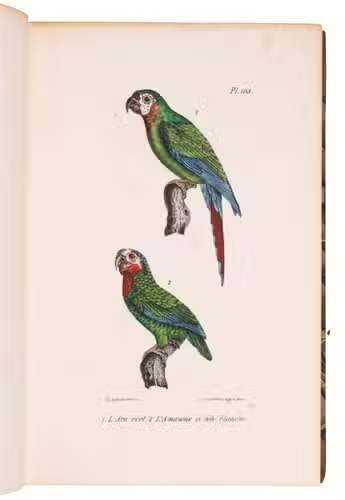
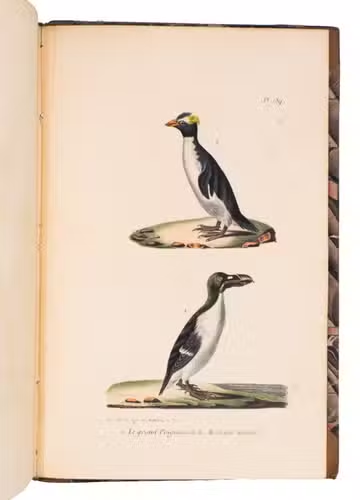
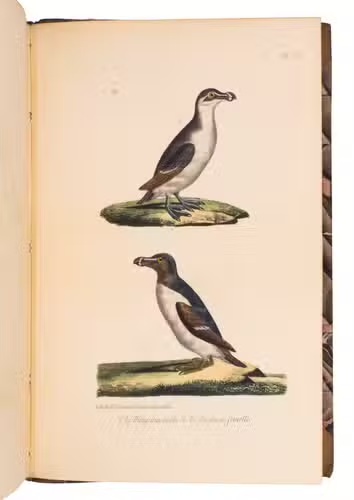
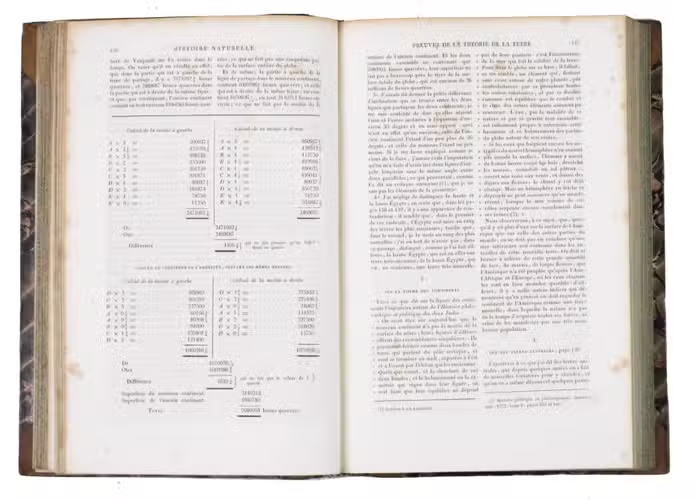
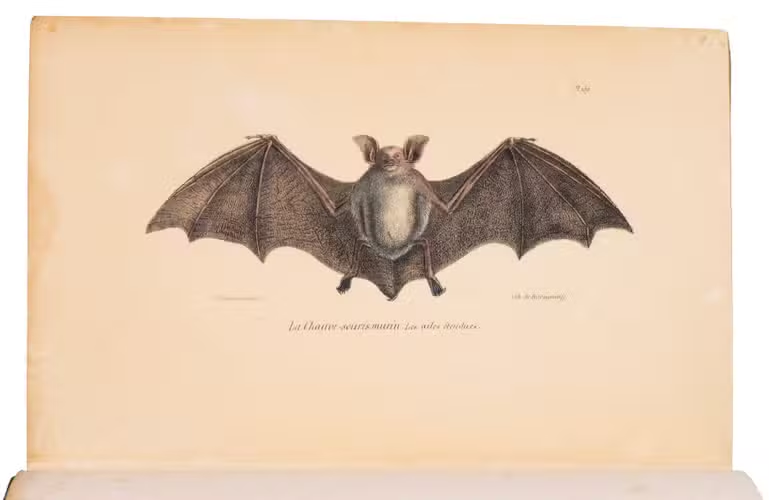
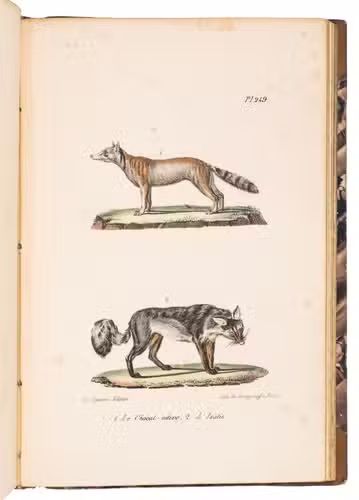
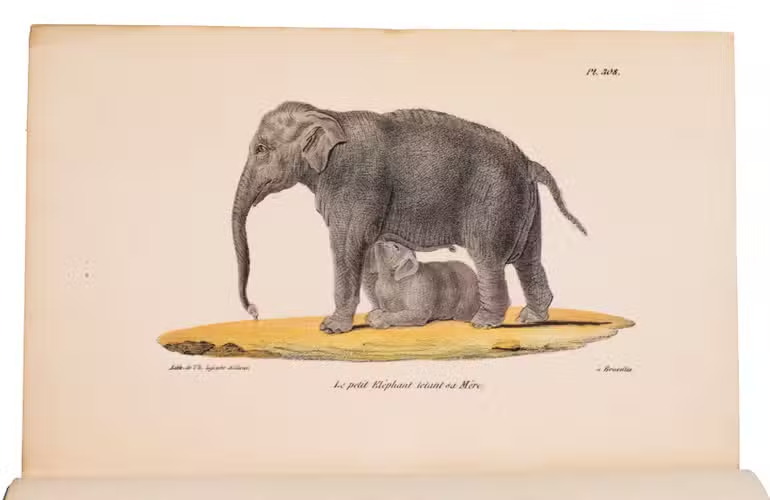
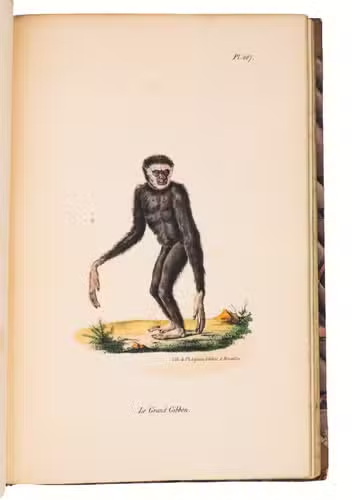
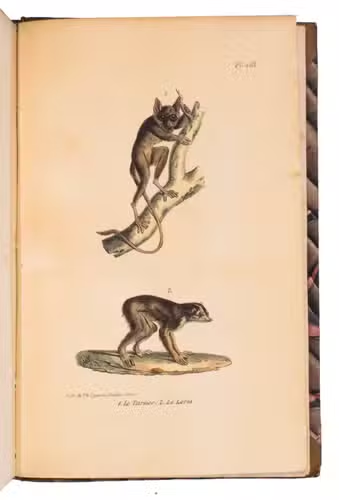
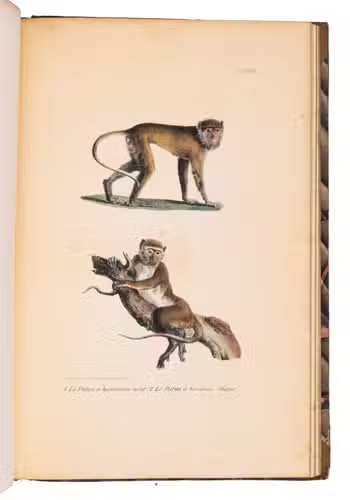
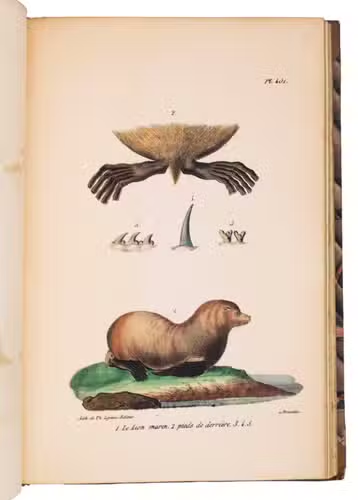
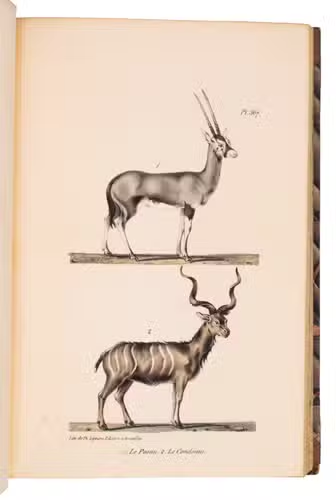
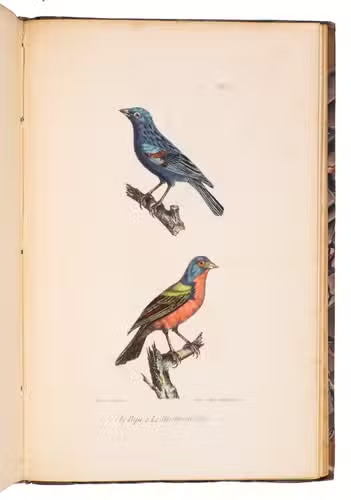
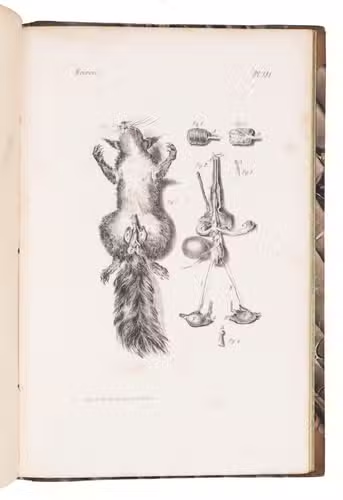
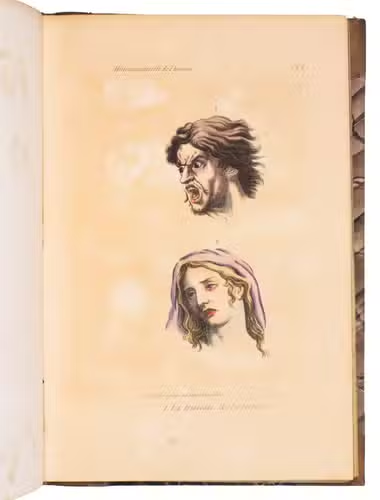
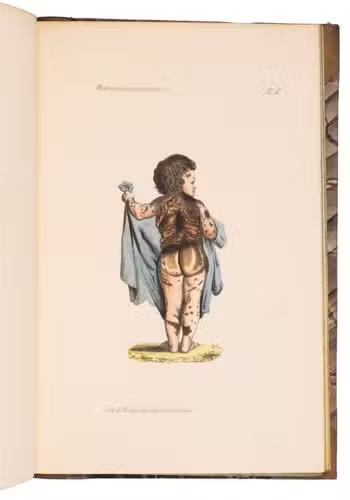
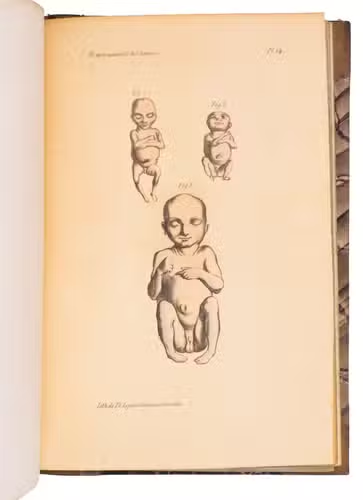
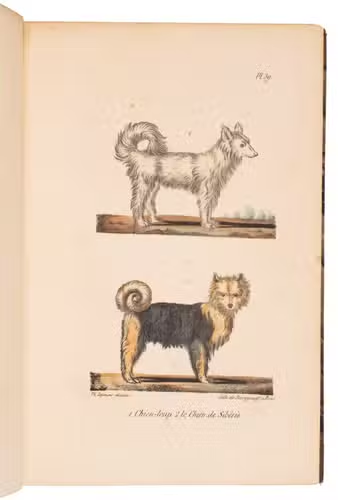
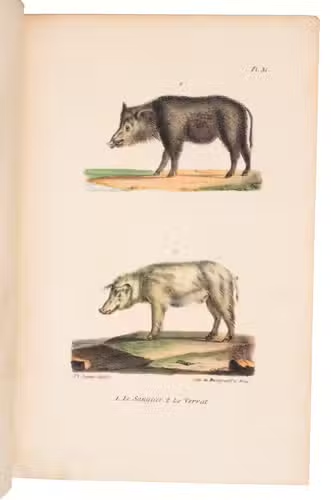
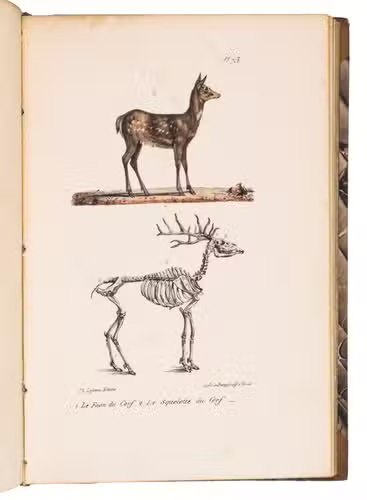
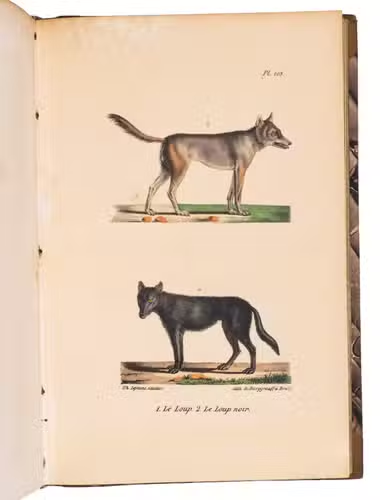
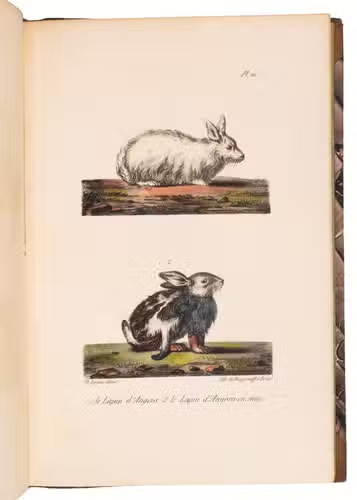
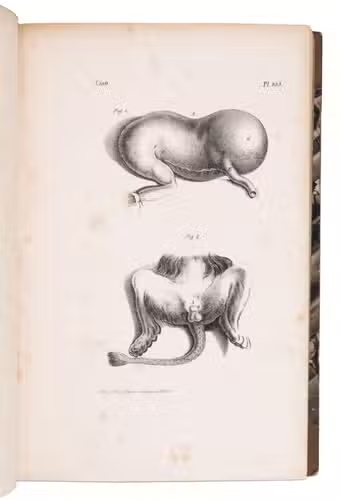
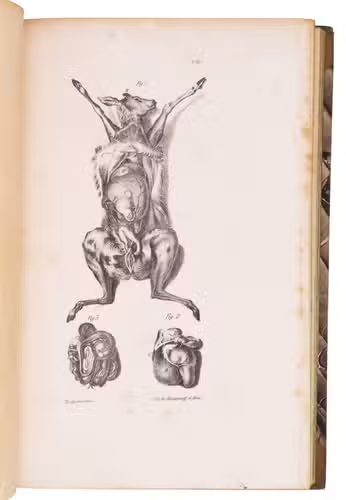
Brussels, Th. Lejeune, 1828-1833. 20 volumes (14 text and 6 atlas). 8vo. With a lithographed frontispiece portrait of the author, a lithographed portrait of Daubenton, 2 lithographed emblematic frontispieces, 2 lithographed double-page maps of the Old and the New World, 6 numbered lithographed plates of teeth, 16 numbered lithographed plates of scientific instruments etc., and 6 numbered lithographed plates of seeds in the first 4 introductory volumes, lithographed frontispieces of a naked man, woman and child, and 26 lithographed plates of human heads and species, including 10 are nicely coloured by hand in volume 5 on the natural history of man, illustrations of mammals and mammalian anatomy on 469 lithographed plates, including 226 coloured by hand in volumes 6 to 10, and illustrations of birds on 210 lithographed plates, all beautifully coloured by hand, and including 8 heightened with gold in volumes 11 to 14. Contemporary half calf. Each volume ca. 500 pp.
€ 4,500
Fine complete set of a special edition of the works of George-Louis Leclerc Comte de Buffon (1707-1788), the most important natural historian of his day, whose ground-breaking observations and classifications profoundly influenced biology, geology, and the natural sciences across Europe. This Brussels edition was edited by Professor Lamouroux, correspondant of the Institut de France, and enhanced with extensive contributions by Buffon's successors, including Daubenton, Lacépède, Cuvier, Duméril, Poiret, Lesson, and Geoffroy Saint-Hilaire, whose additions were appended to the relevant chapters to provide the most current scientific observations and refinements.
The work opens with two prefaces by the publishers and two eulogies, one on Buffon by Nicolas de Condorcet (1743-1794) and the other on Louis Jean Marie Daubenton (1716-1800) by Baron Cuvier (1796-1832), situating the compilation within its historical and intellectual context. The illustrations were produced under the supervision of M. Meunier, draughtsman of the Cabinet dHistoire Naturelle, and for the first time lithographed, a technique that allowed, according to the Paris publisher, a far more faithful representation of living subjects than was previously possible with traditional engraving. The lithography was executed by Th. Lejeune in Brussels on specially prepared paper, ensuring clarity and durability.
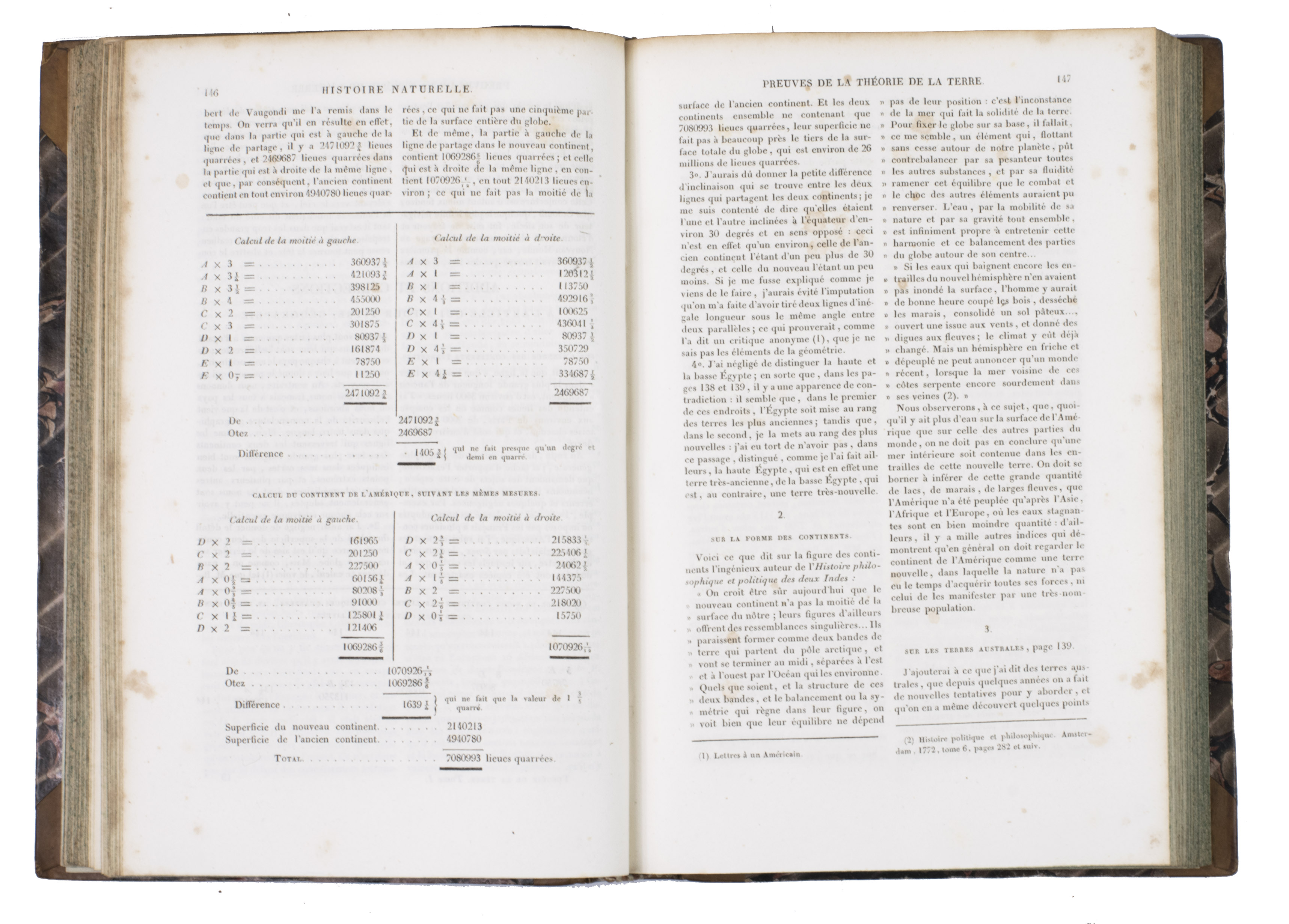
The set is divided into four major sections. Théorie de la terre, volumes 1-4, illustrating minerals, fossils, and natural phenomena, along with emblematic and scientific designs. Histoire naturelle de lhomme, volume 5, depicting human anatomy, physiognomy, and the diversity of peoples across the globe. Mammifères, volumes 6-10, presenting mammals in remarkable anatomical and behavioural detail. Oiseaux, volumes 11-14, illustrating the appearance and structure of birds in natural poses. All of these topics are also represented in 6 separate atlas volumes, providing a complete visual complement to the text.
In total, the edition contains 738 lithographs, maps, and plates, almost two-thirds of which depict mammals and birds in rich hand-colouring, demonstrating both scientific precision and extraordinary artistry. This edition preserves Buffon's original genius while reflecting the cumulative expertise of successive generations of naturalists, making it one of the most comprehensive, visually impressive, and historically significant editions of Buffons Oeuvres complètes ever produced.
With a red ownership stamp on the title page and the recto of the first flyleaf of the first volume of Théorie de la Terre "Dr. A.A. v. Otterloo," possibly Antony Adriaan van Otterloo (1847-1895), pastor in Zutphen (The Netherlands) from 1883. Some minor rubbing is visible on a few boards, and all volumes show foxing. Otherwise in very good condition. Bibl. Natura Artis Magistra 1171; Nissen 689; Sitwell, Fine Bird Books, 1700-1900 p. 83; Wood 268; Zimmer, J.T. Ayer Lib., p. 112-113.
Related Subjects: