HELYOT, Pierre.
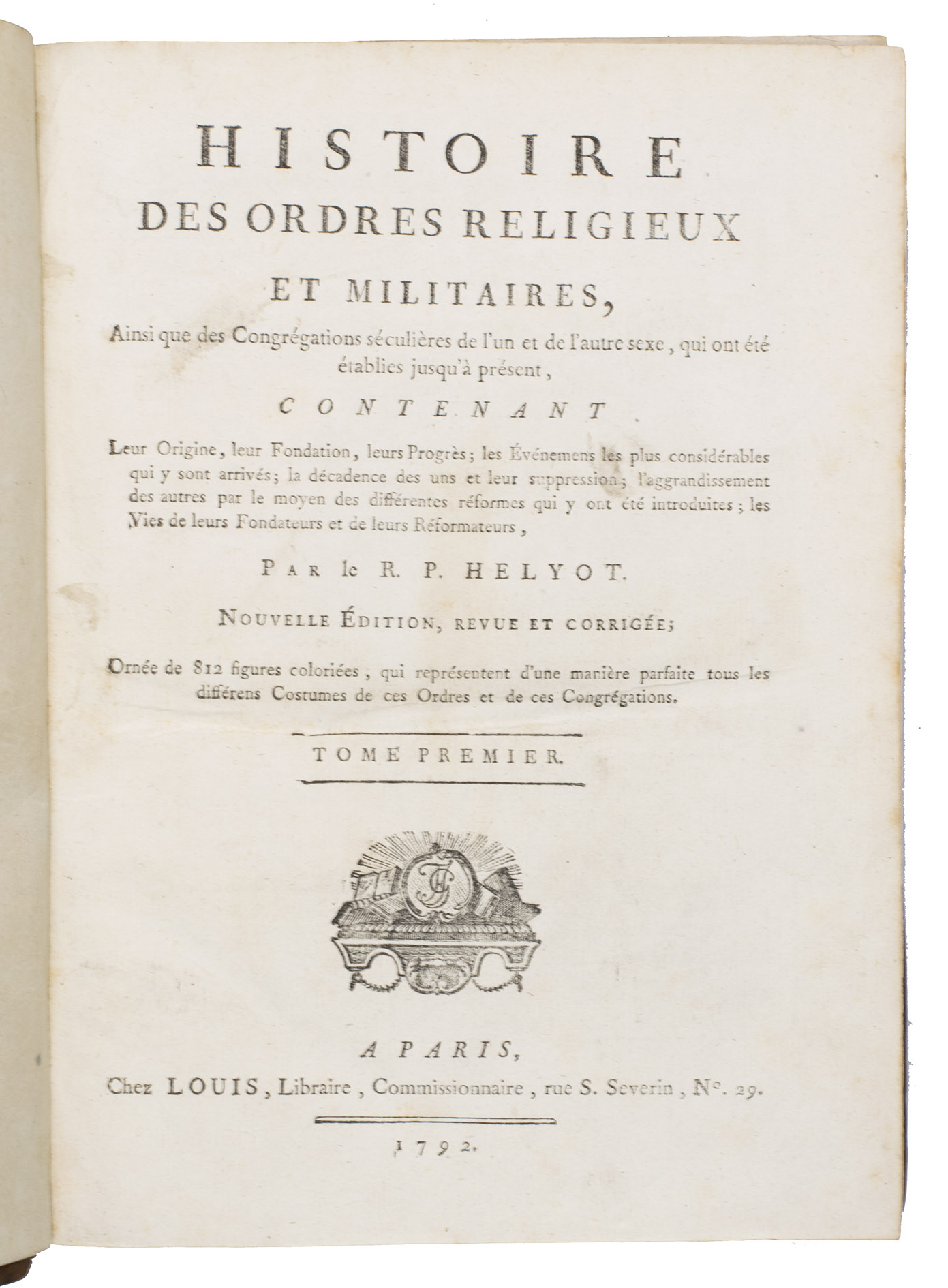
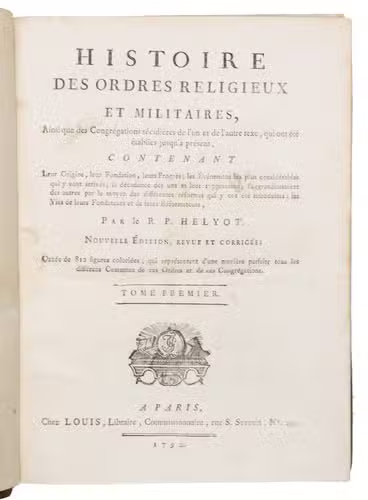
Histoire des ordres religieux et militaires, ainsi que des congrégations séculières de l'un et de l'autre sexe, qui ont été établies jusqu'à présent ...
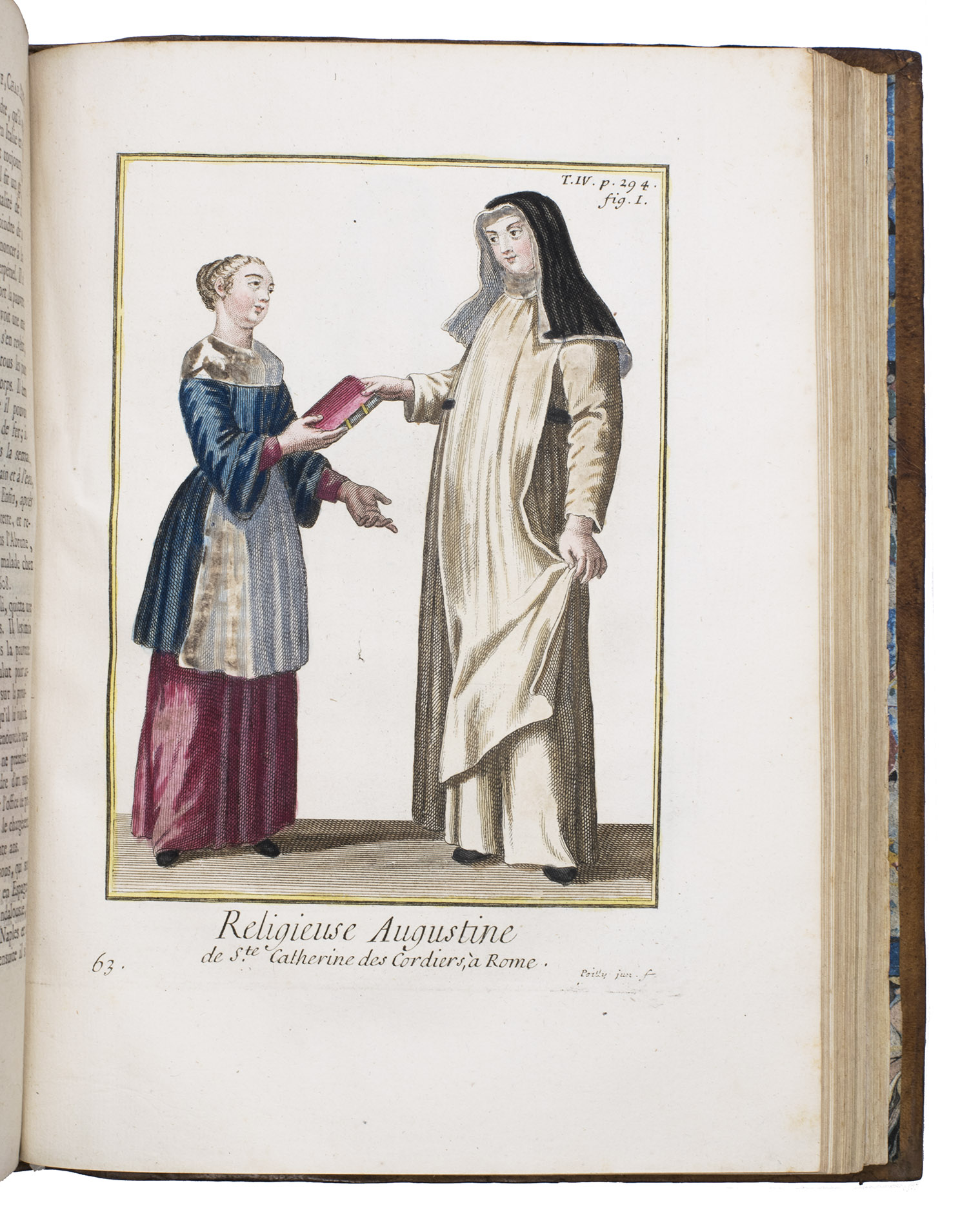
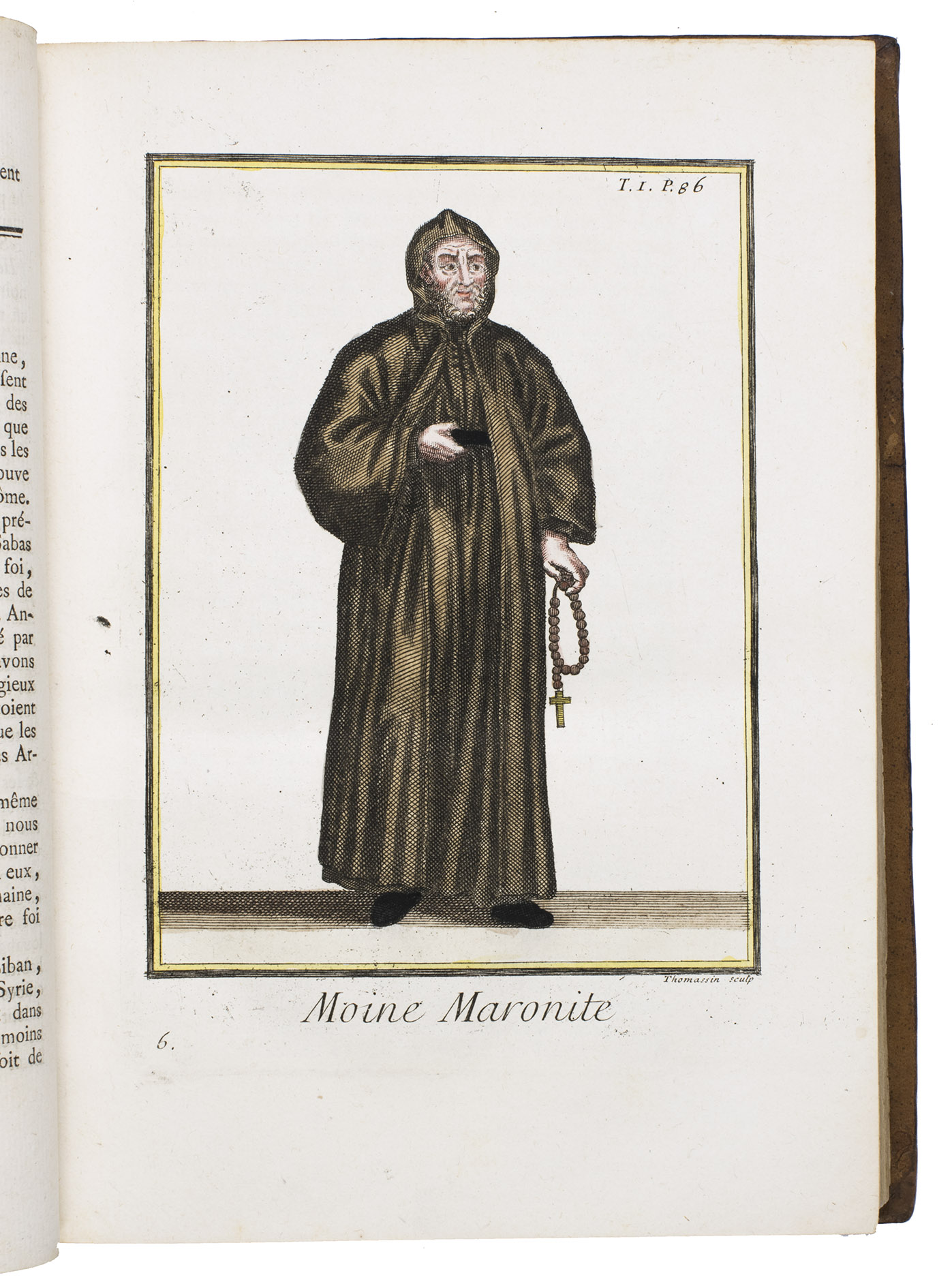
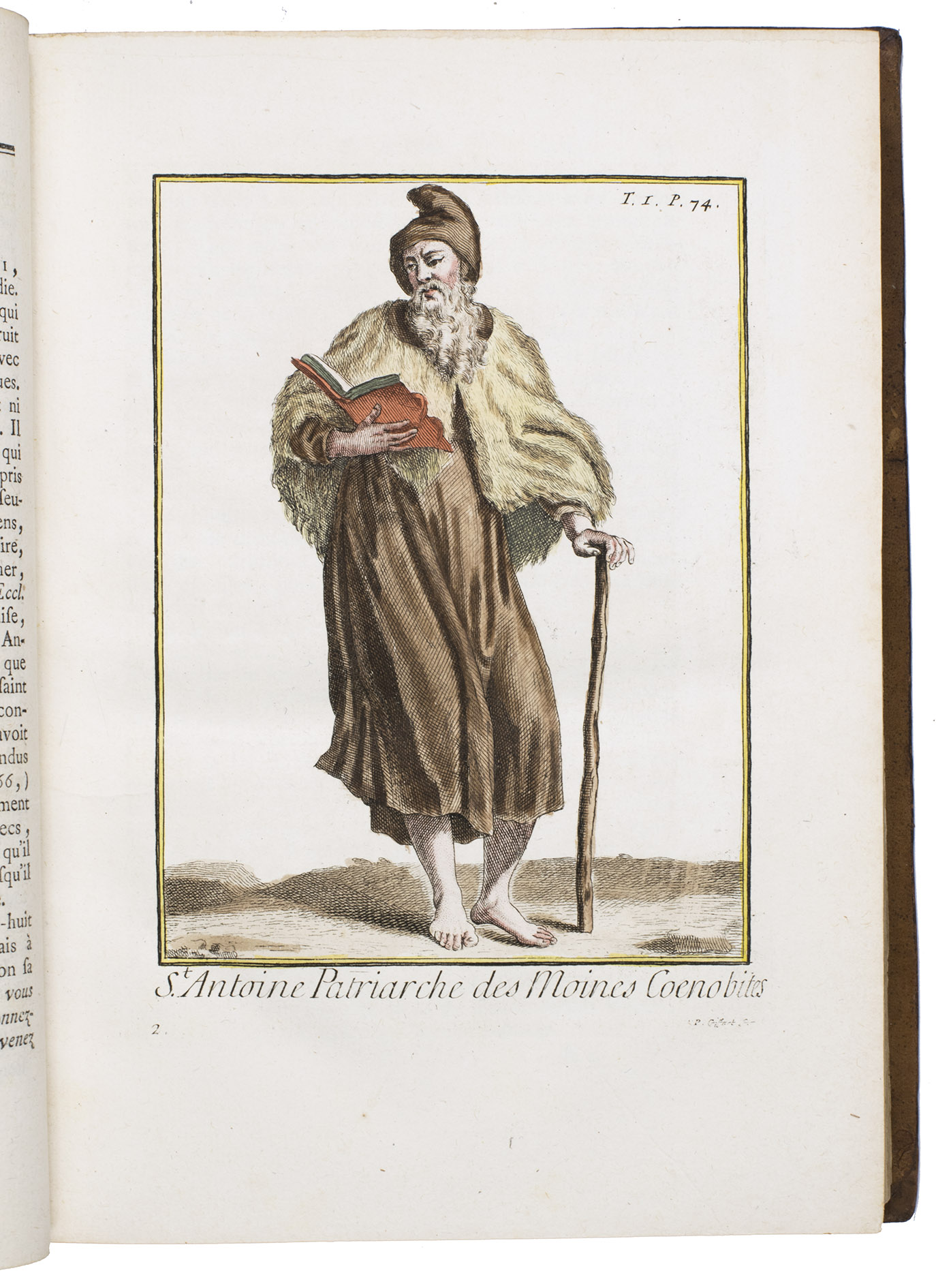
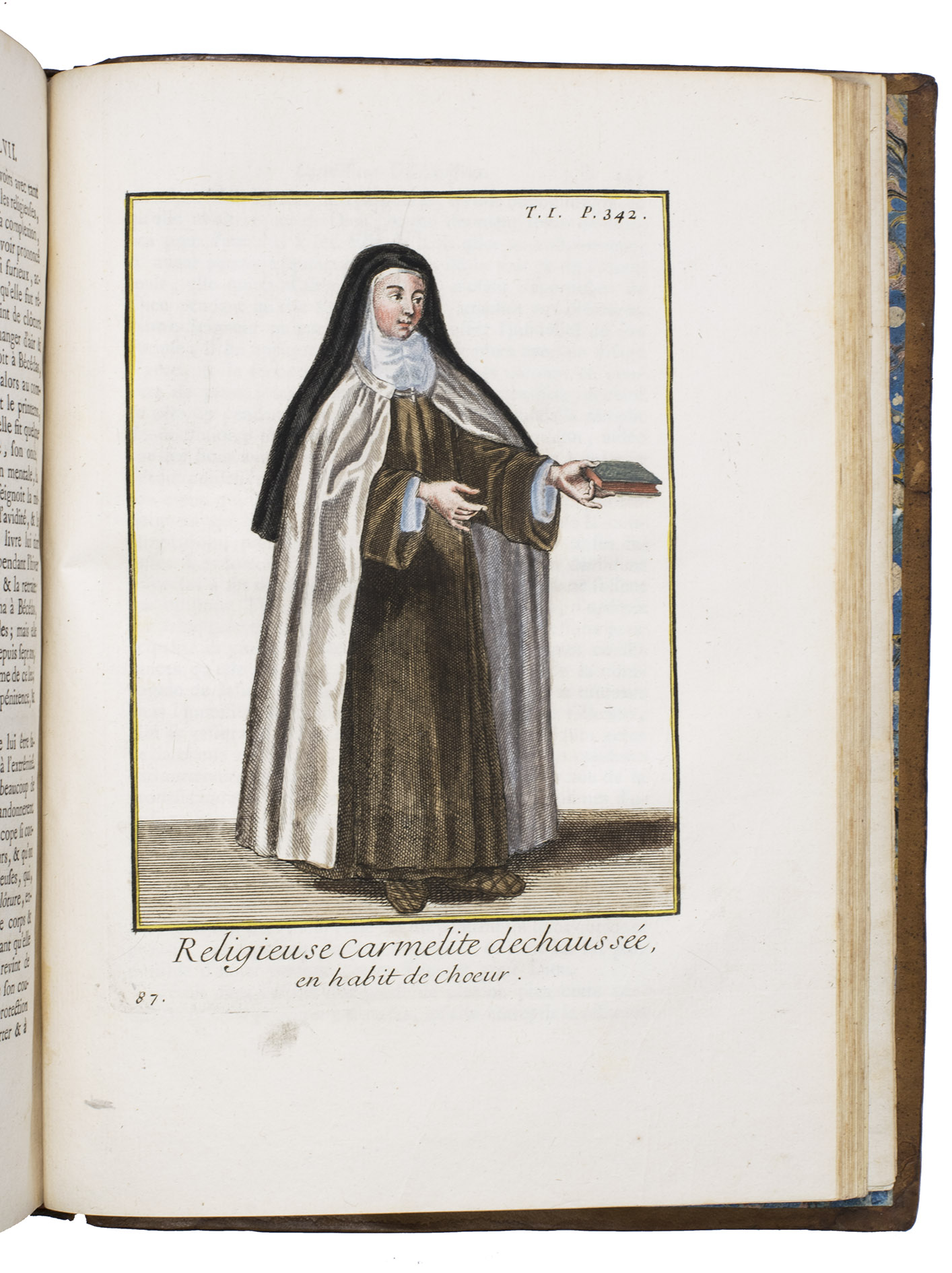
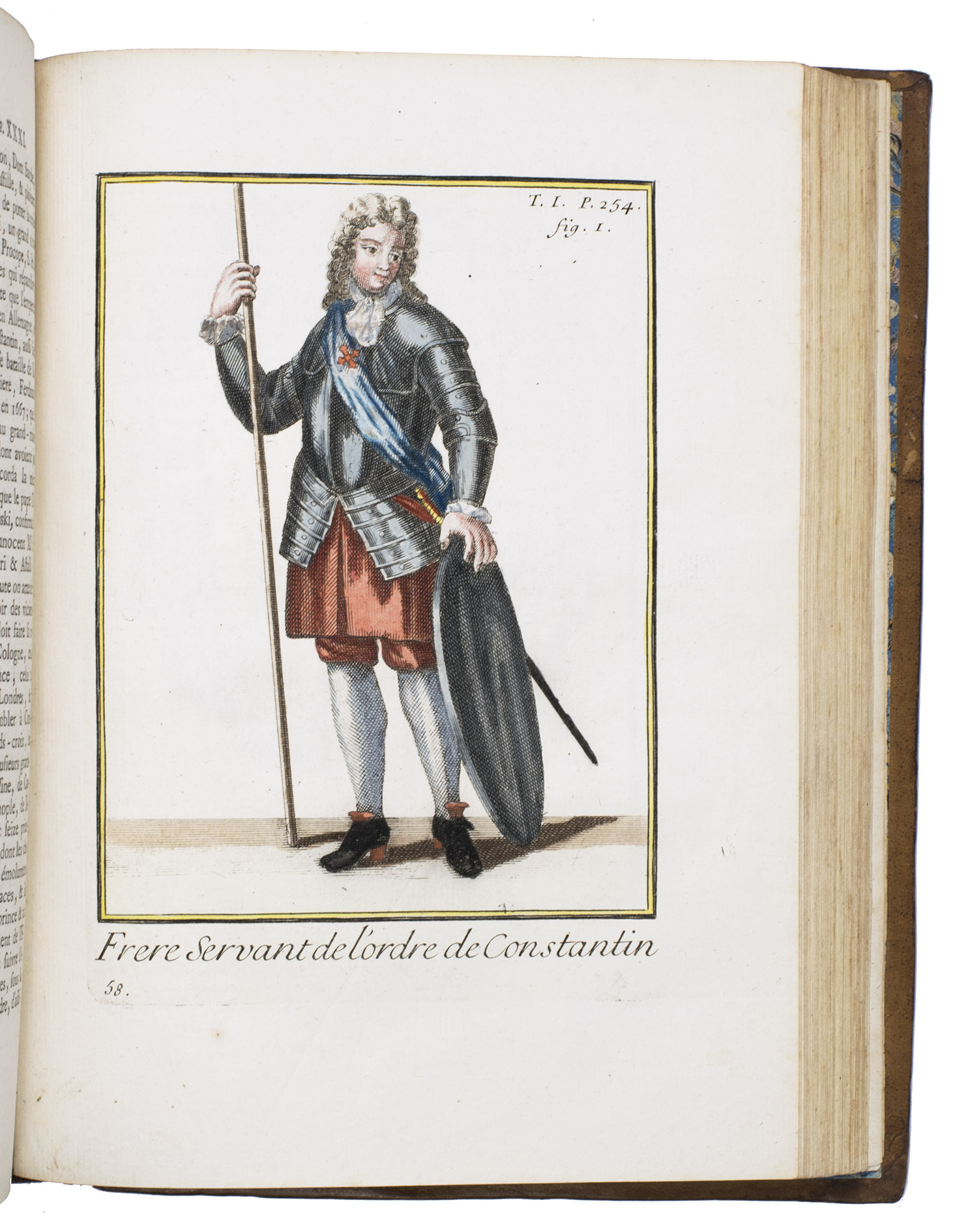
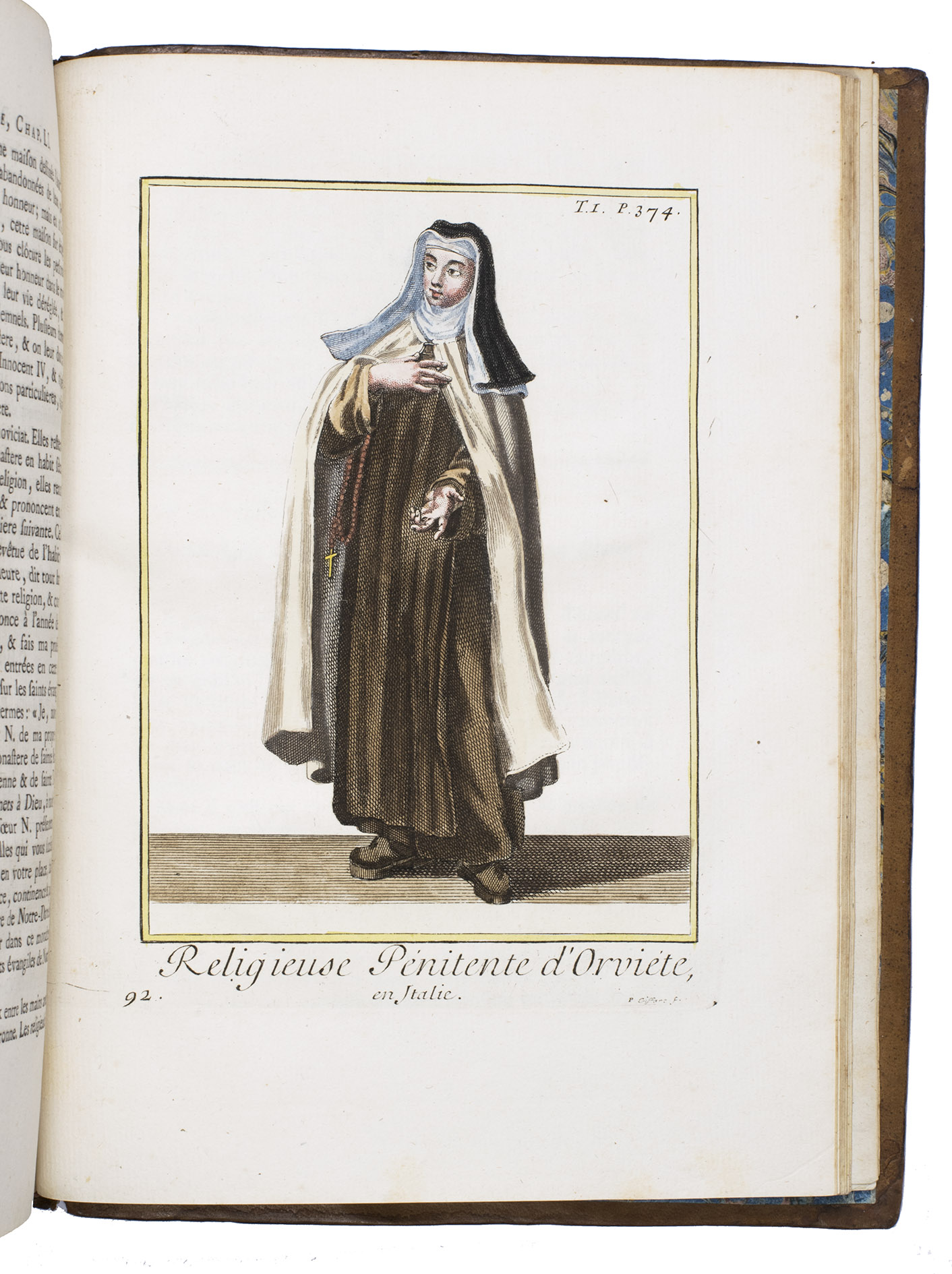
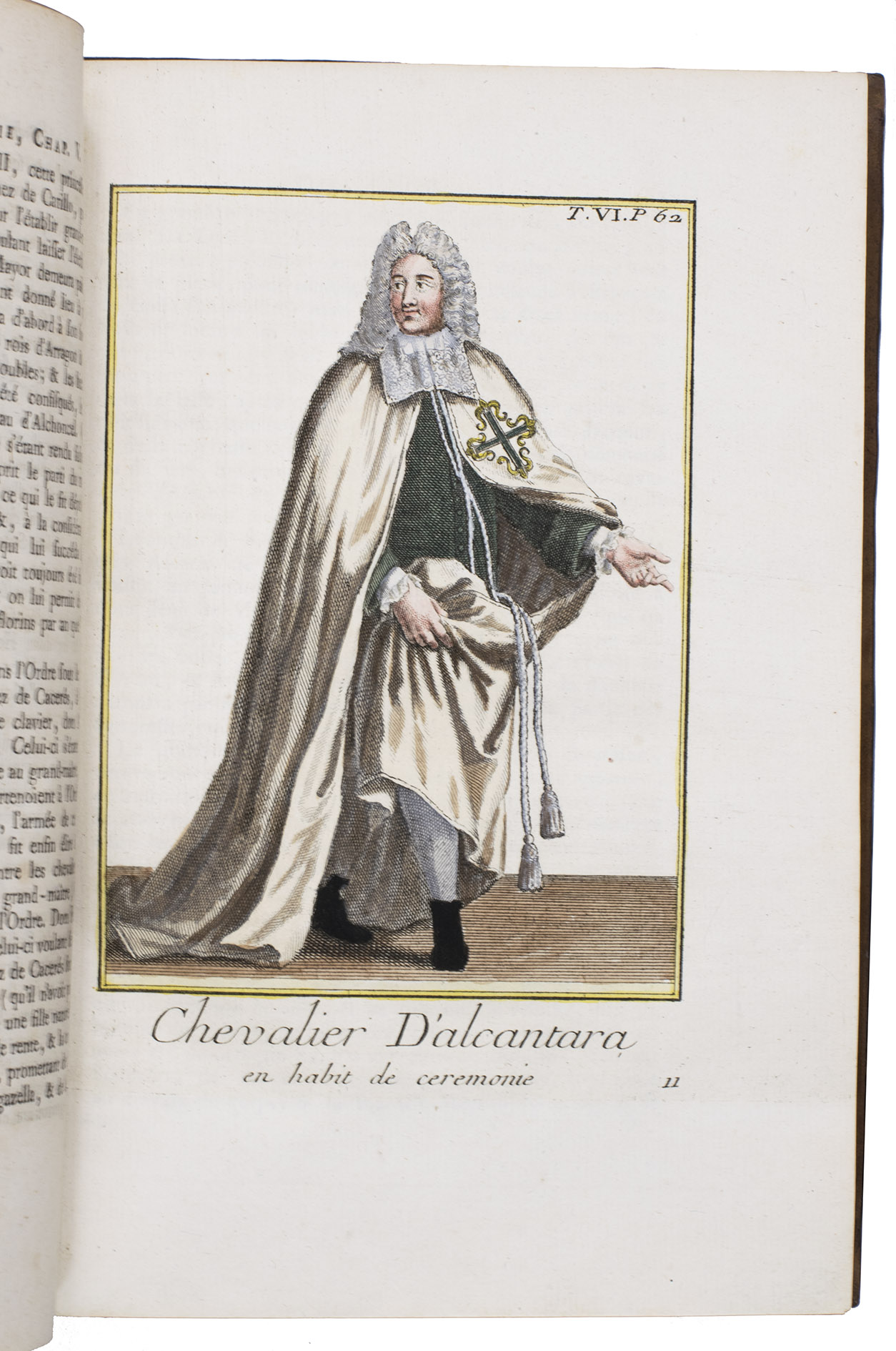
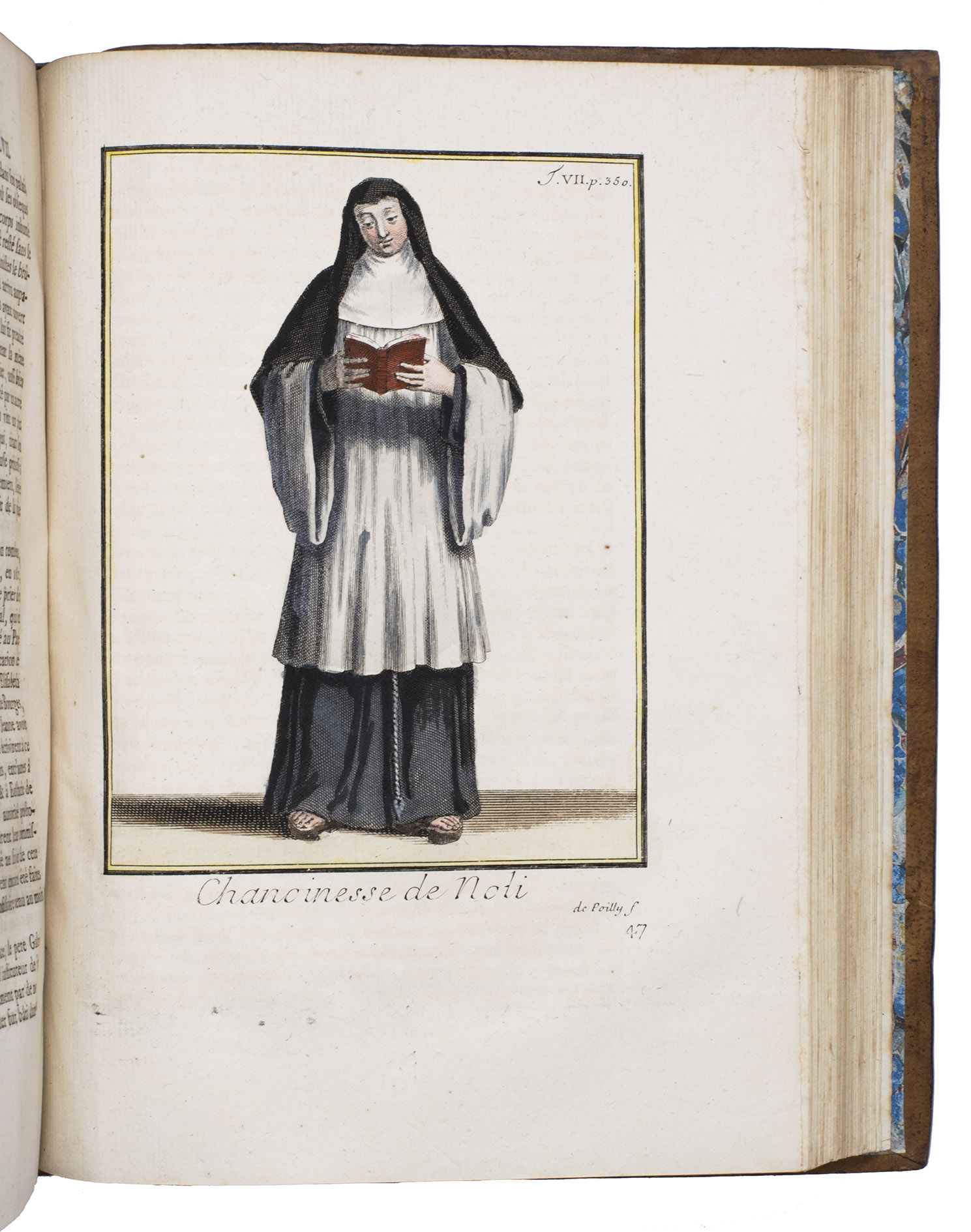
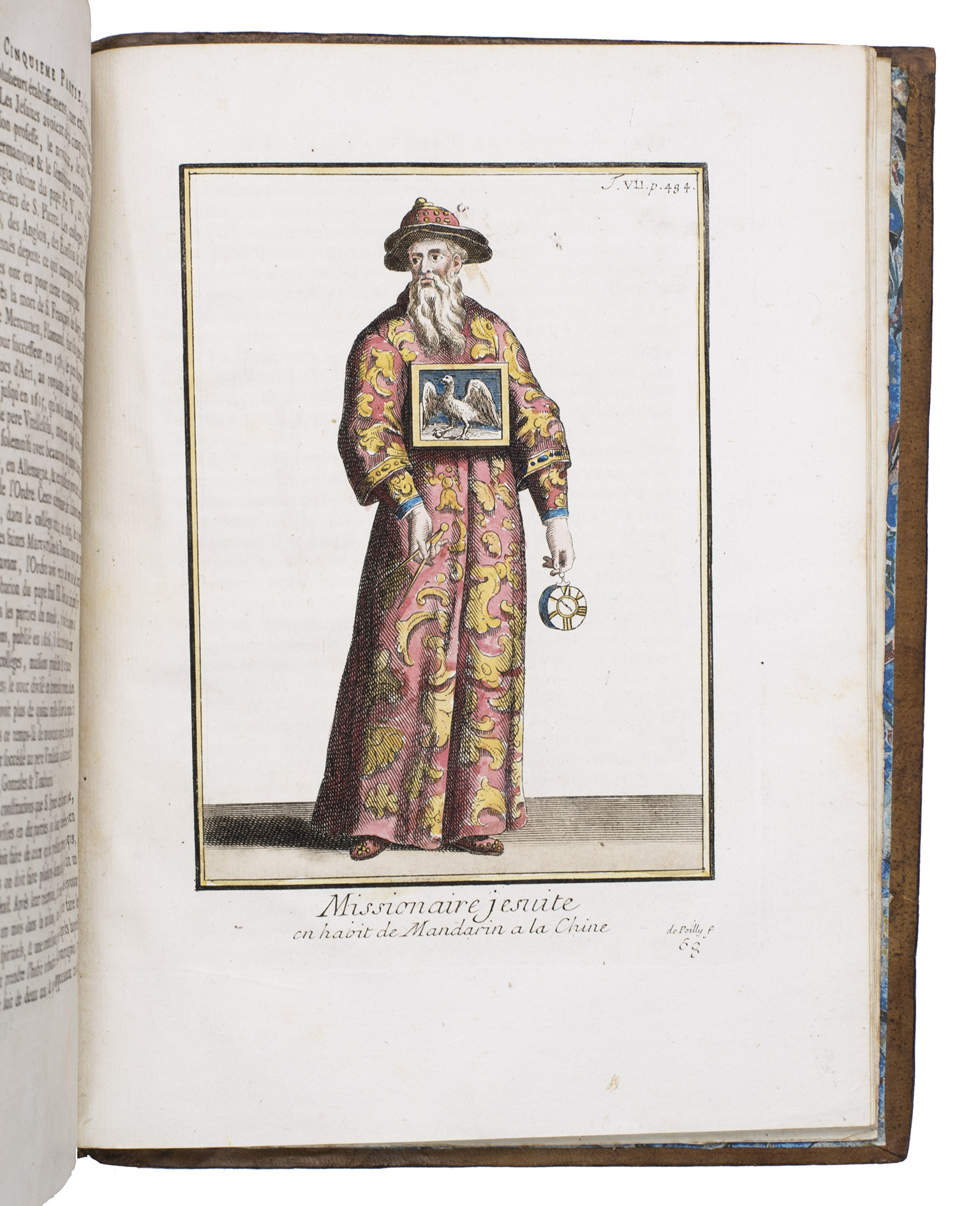
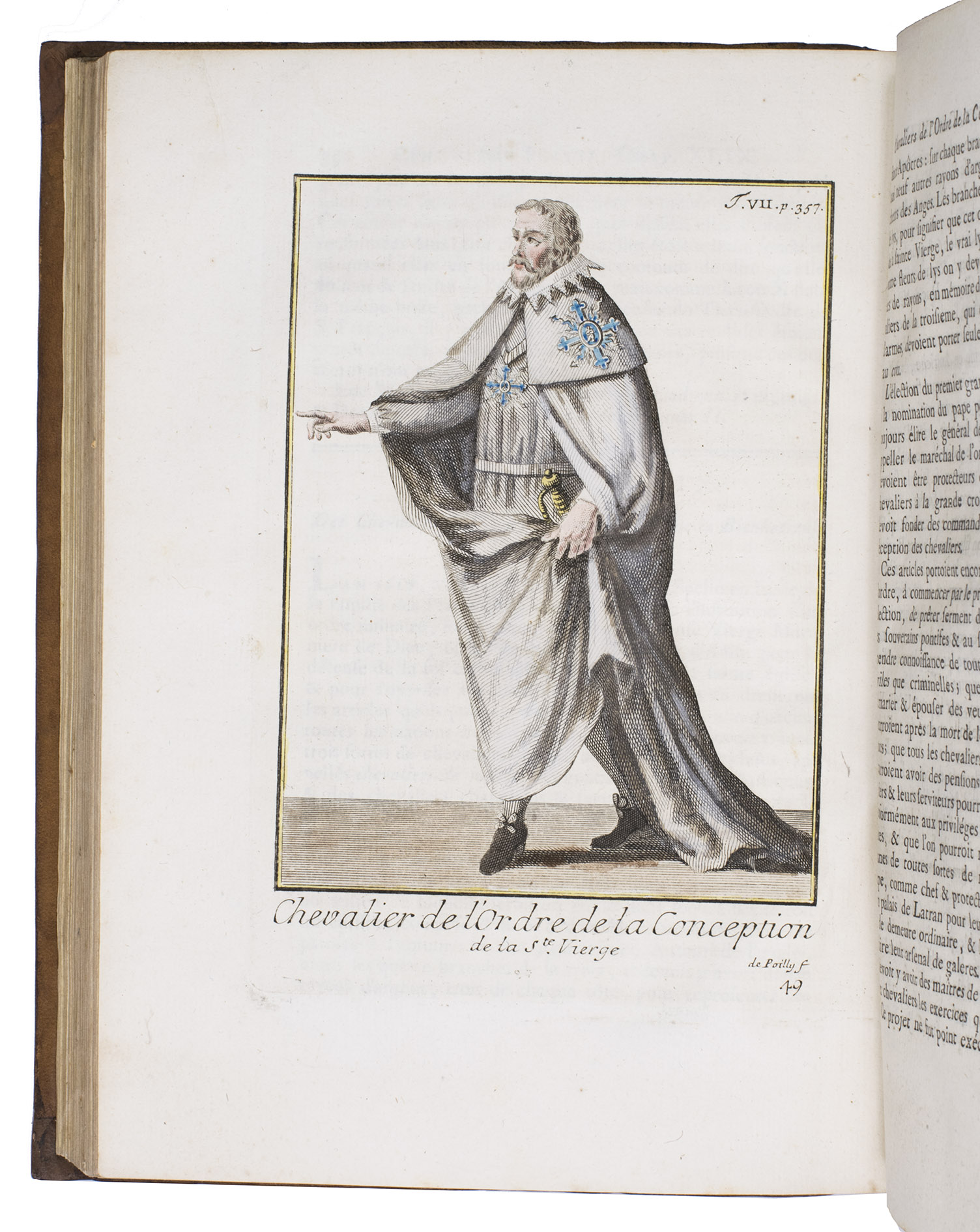
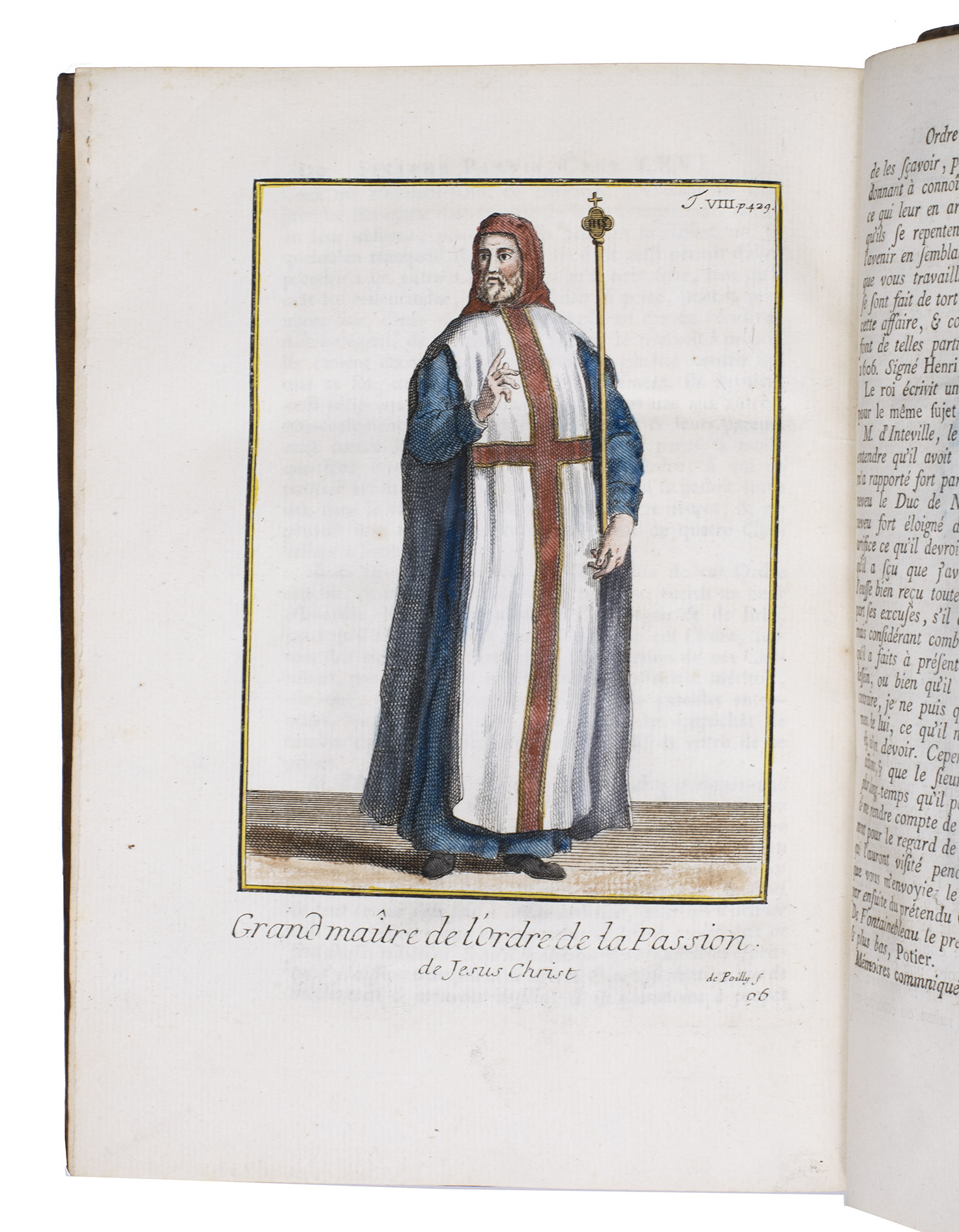
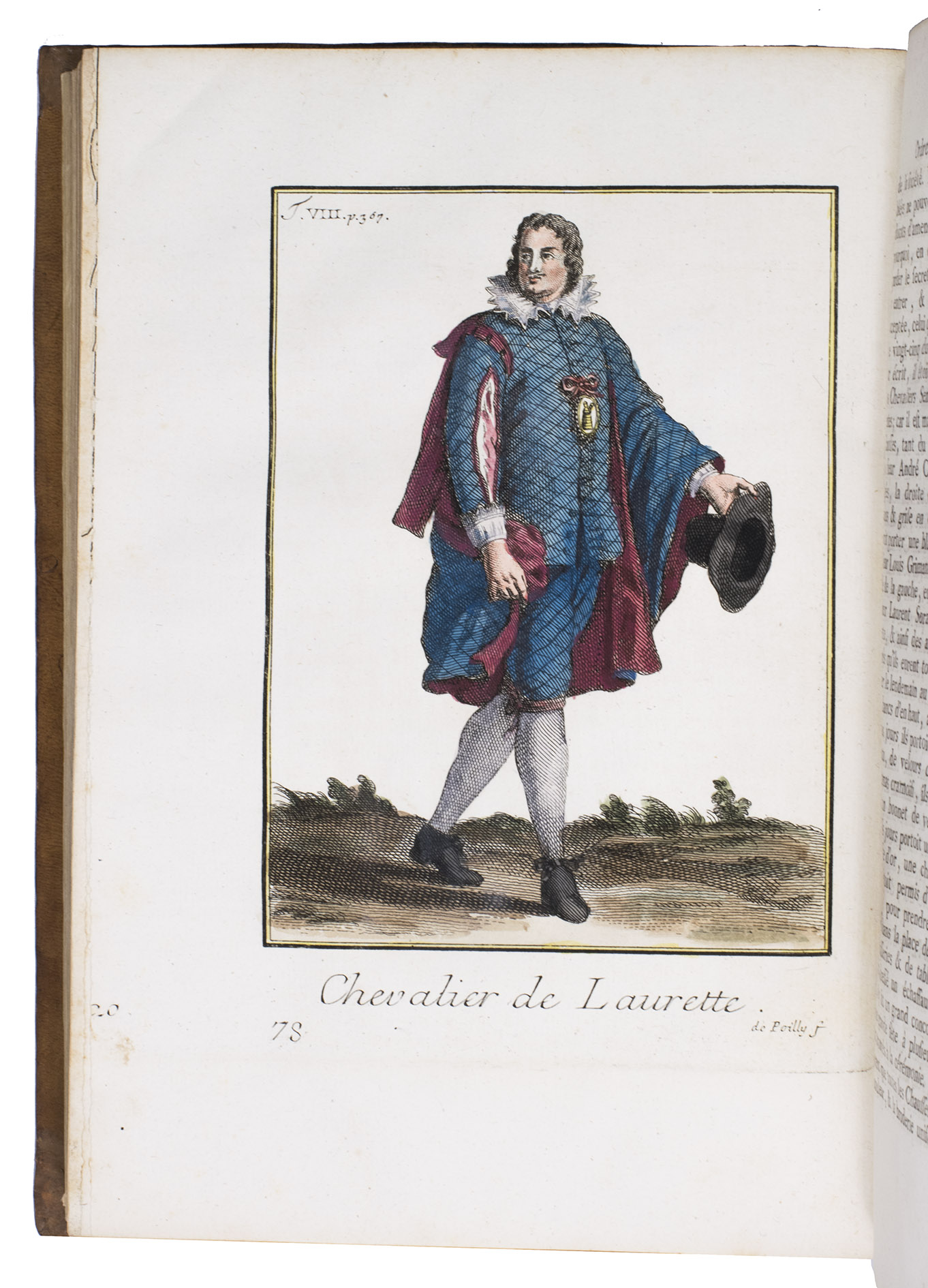
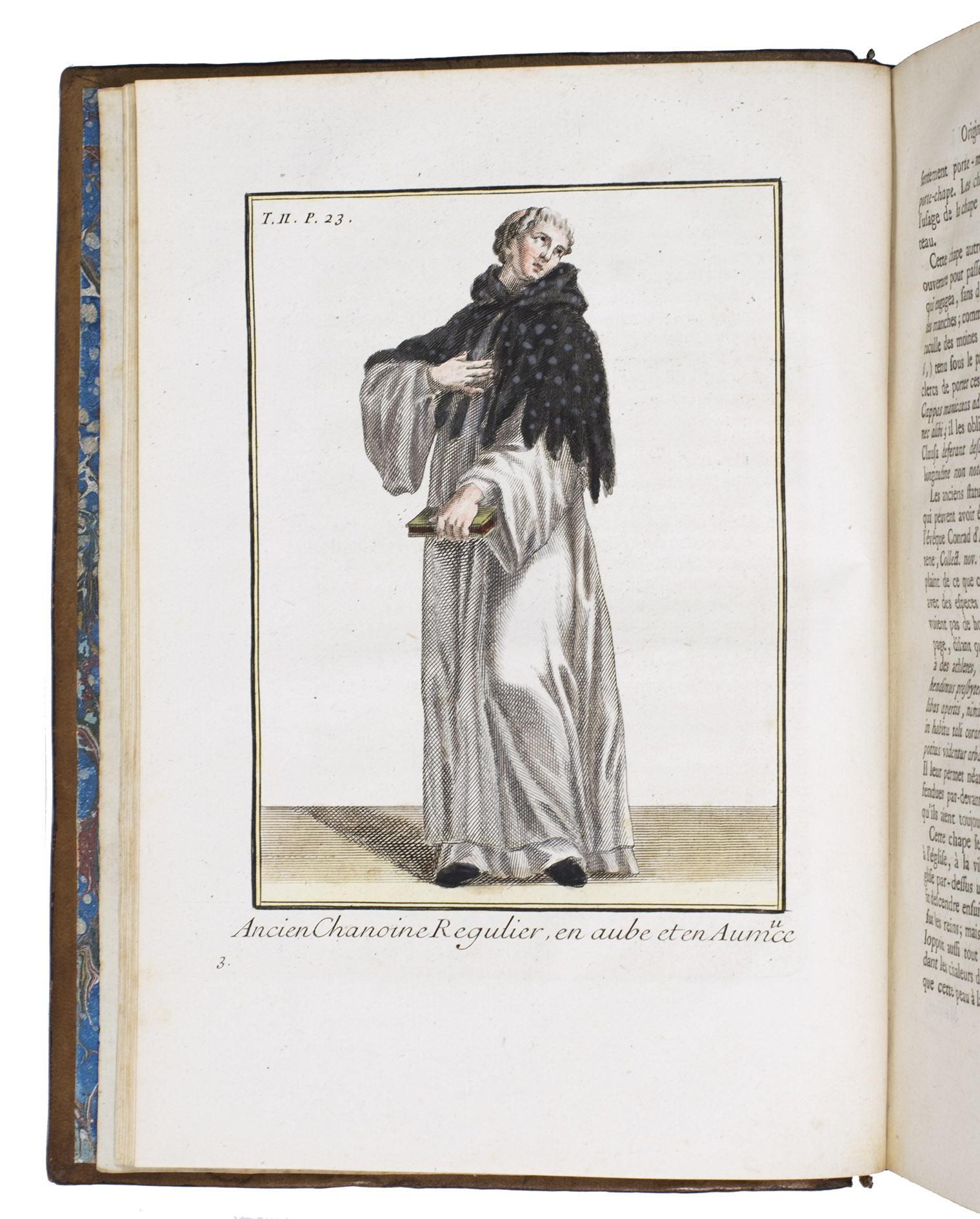
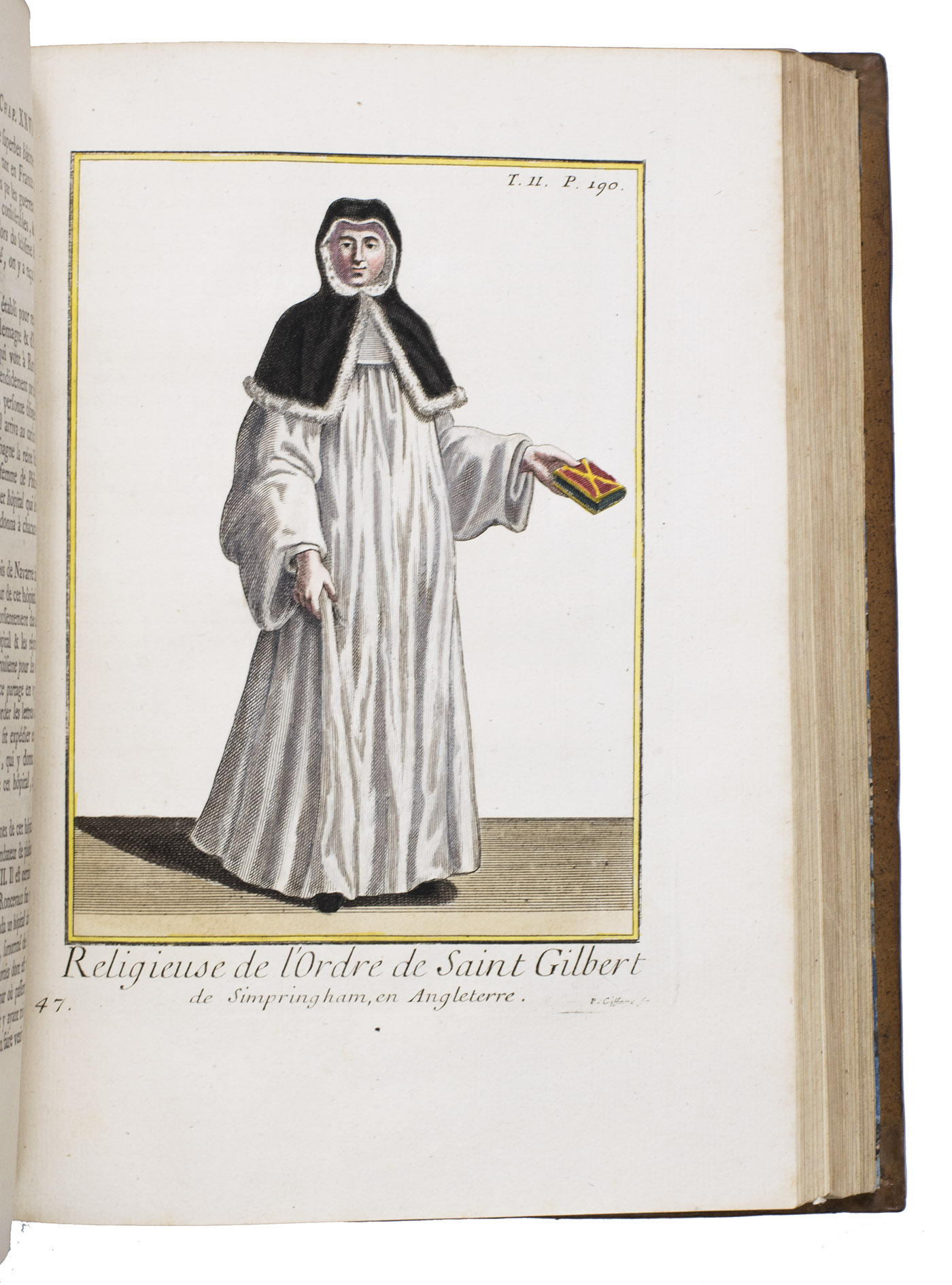
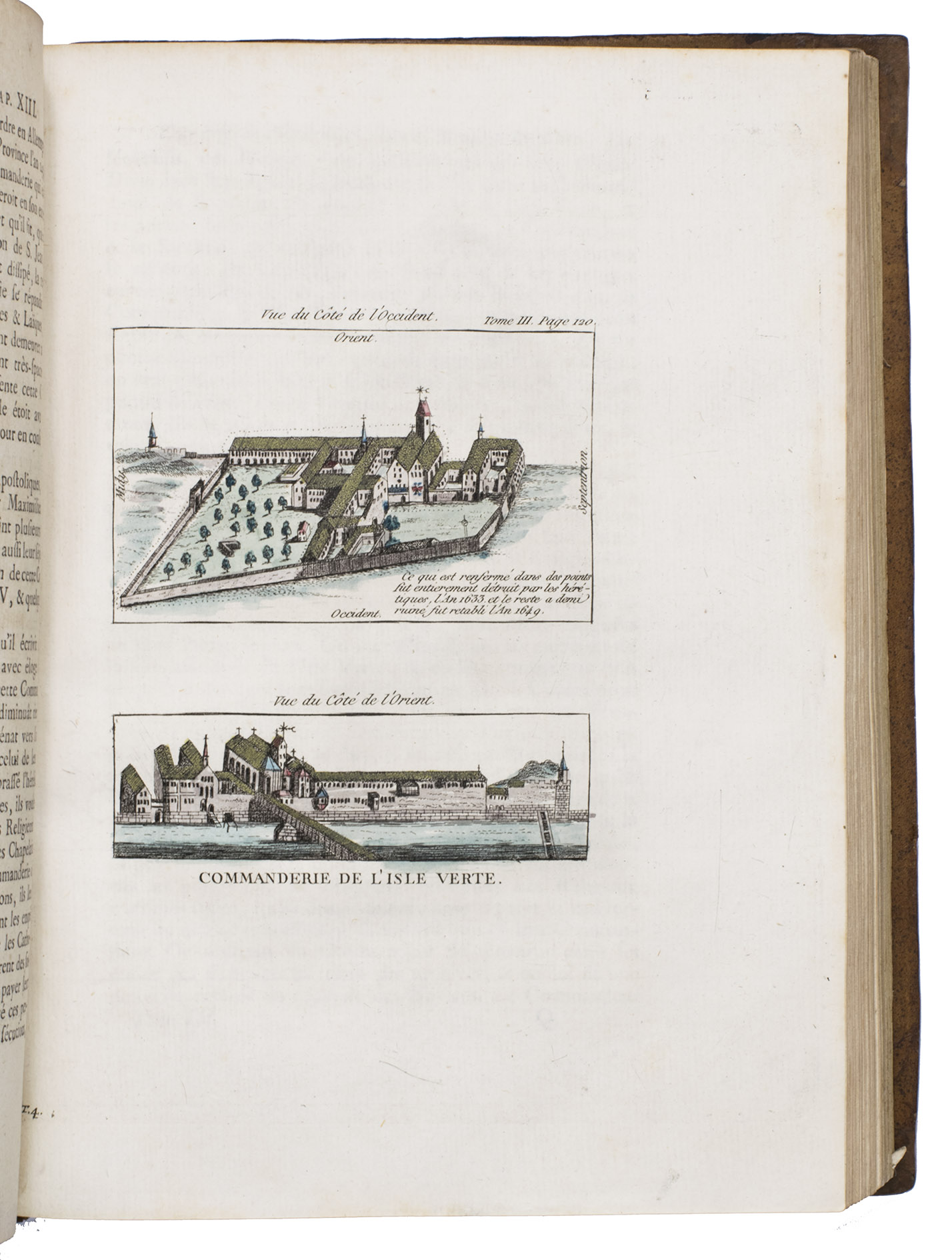
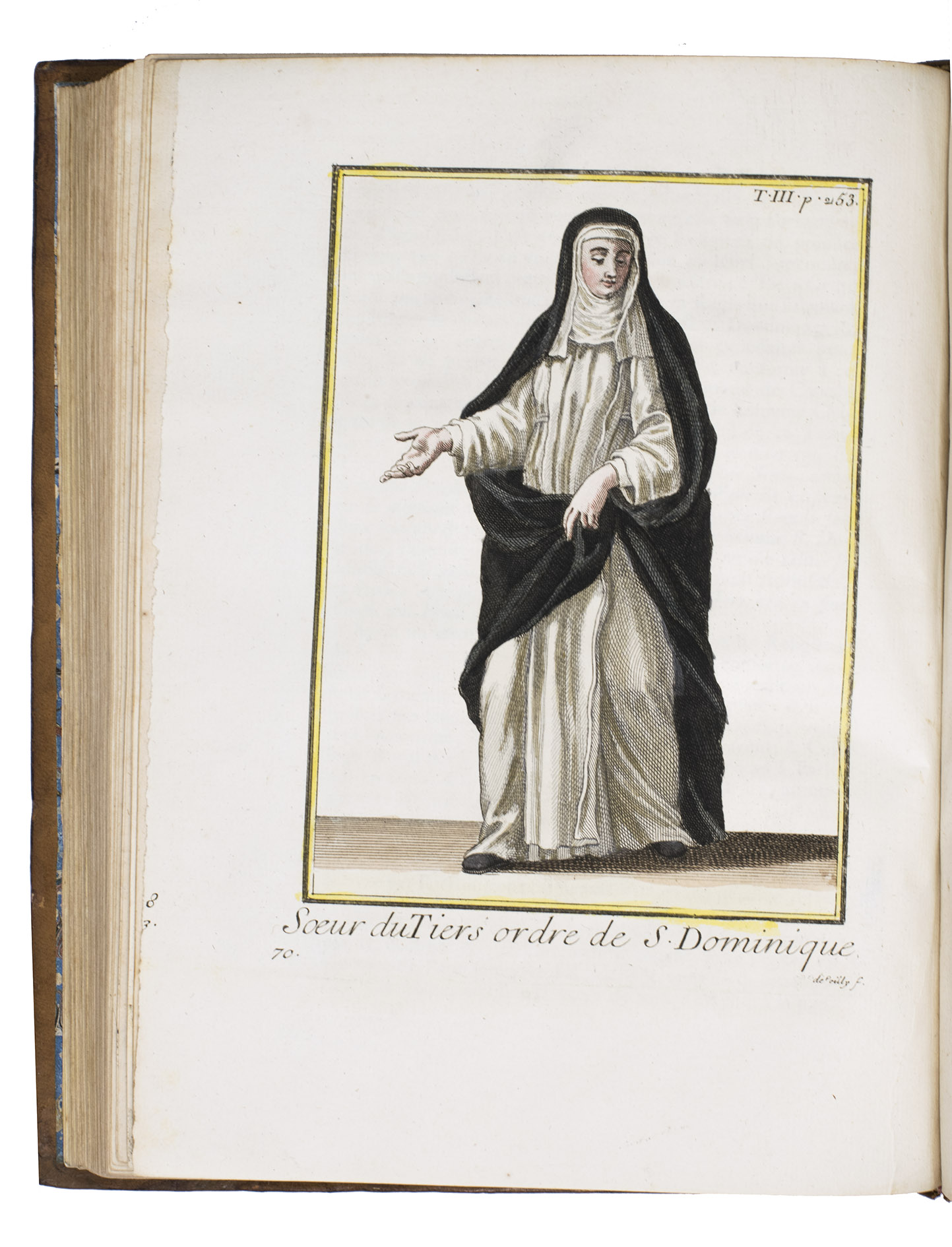
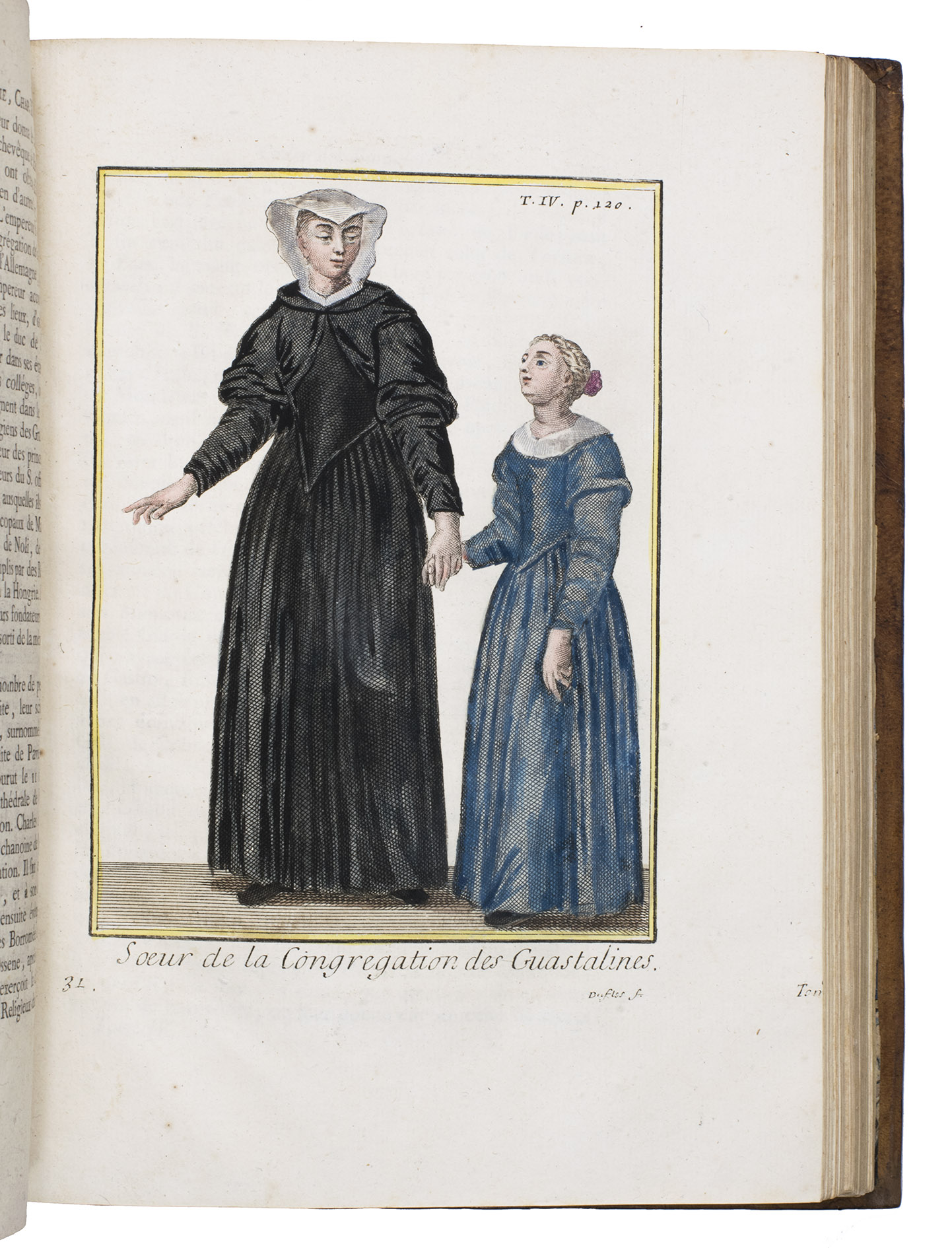
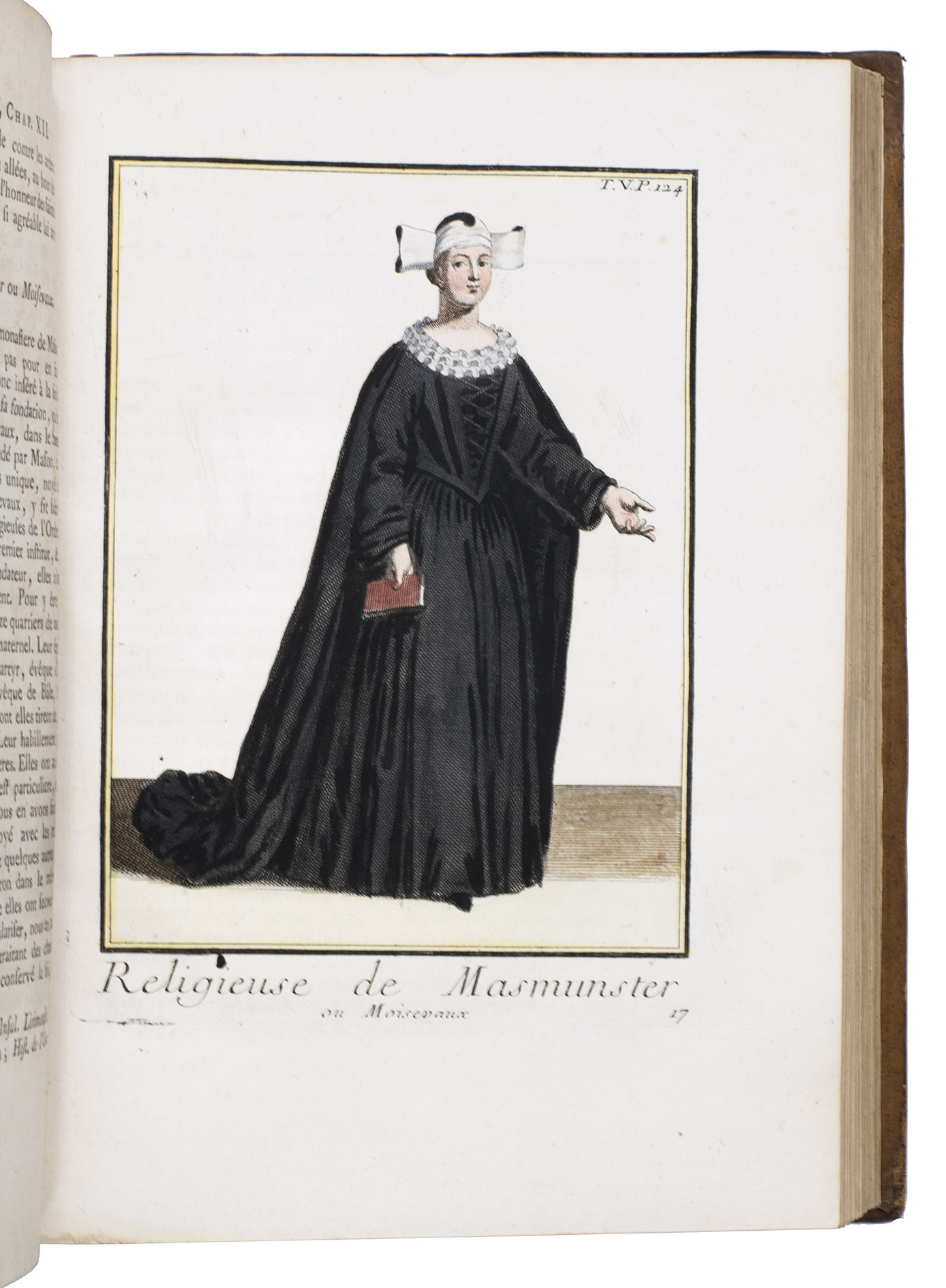
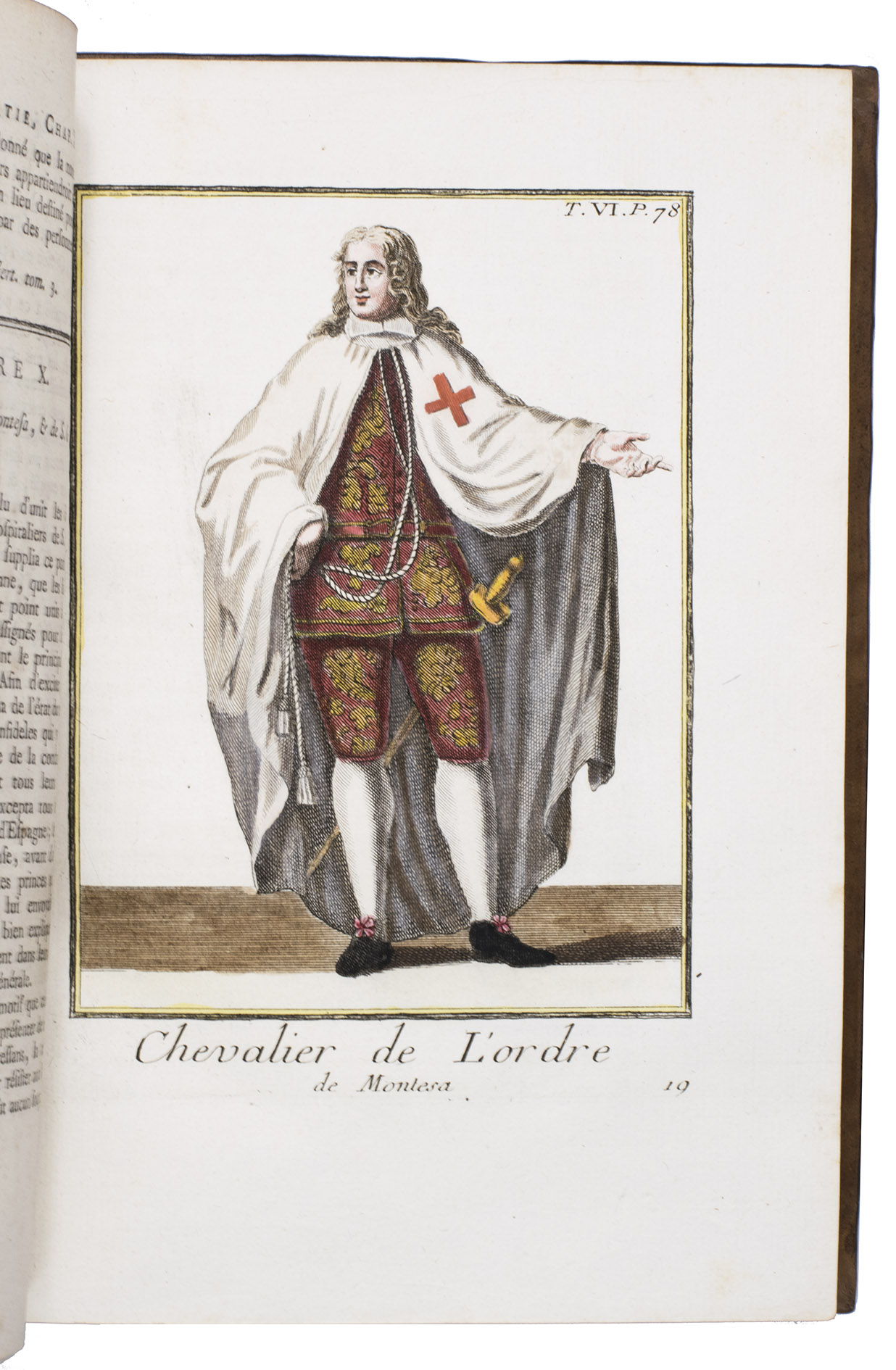
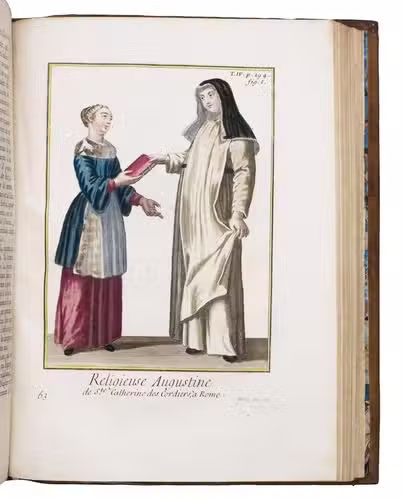
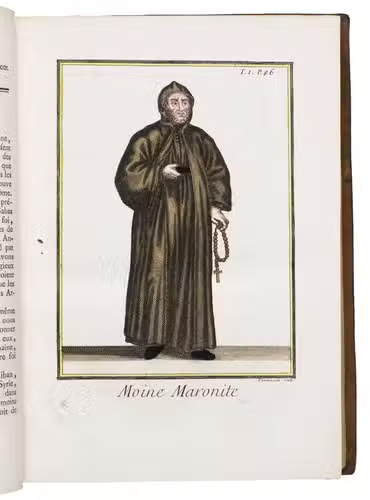
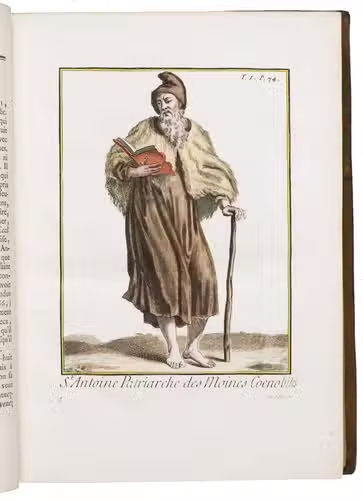
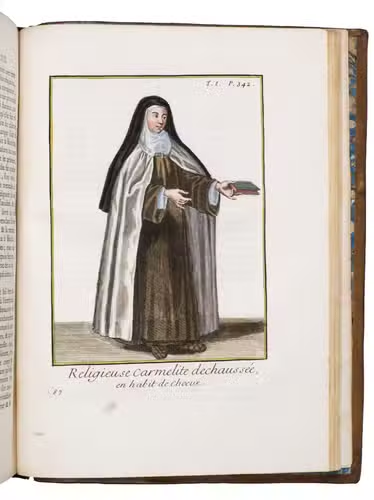
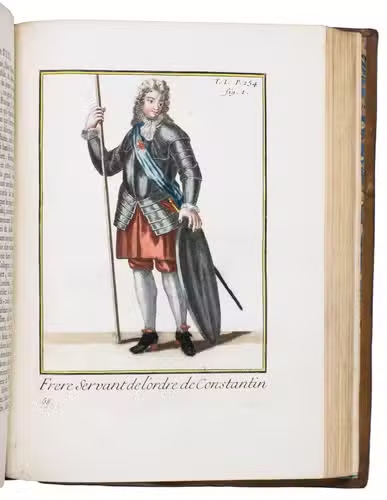
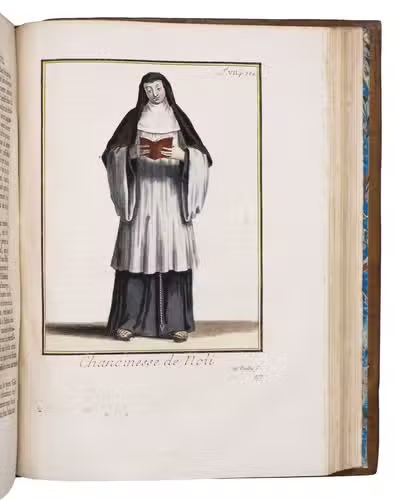
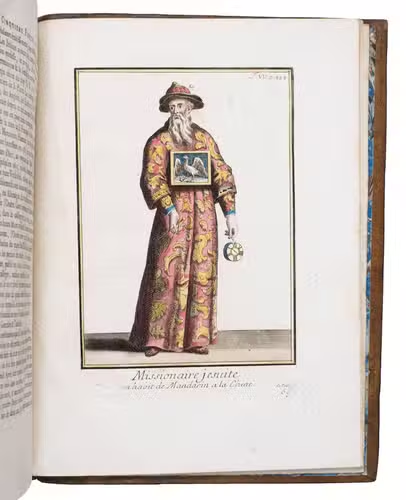
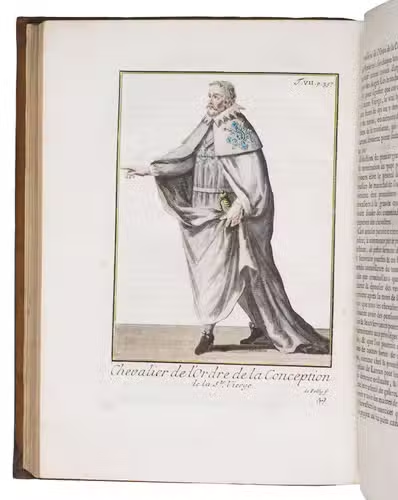
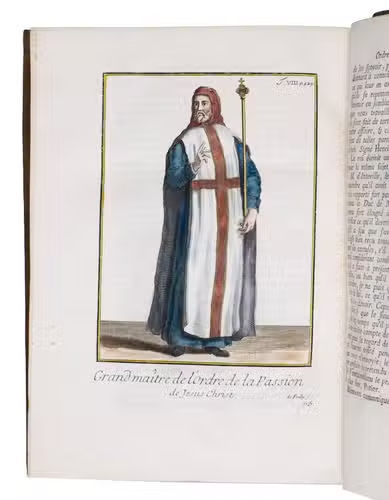
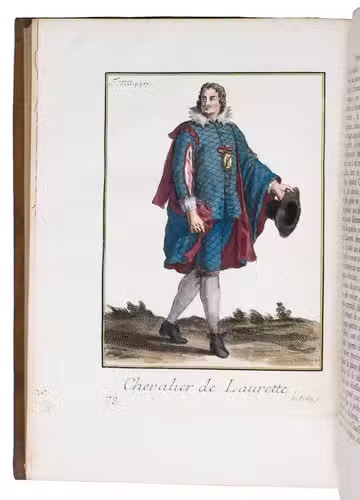
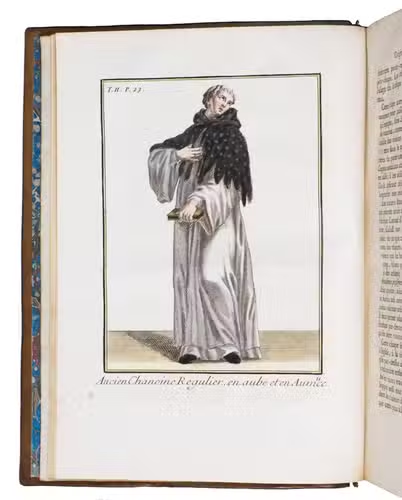
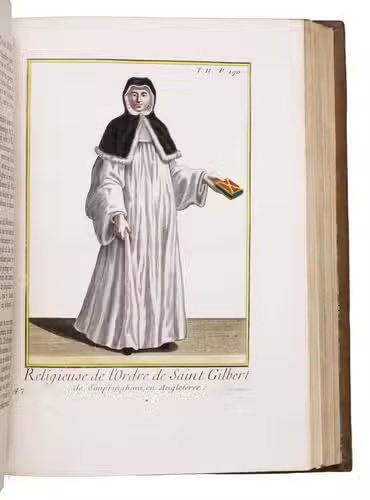
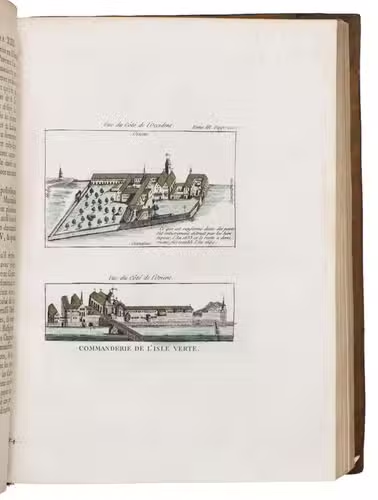
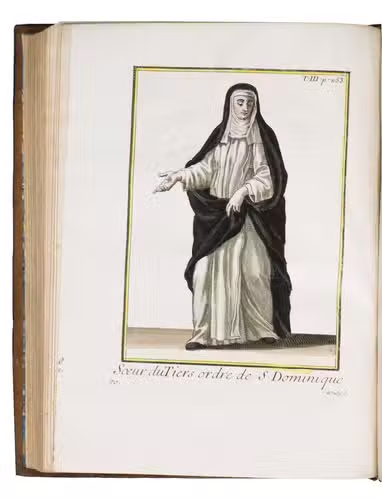
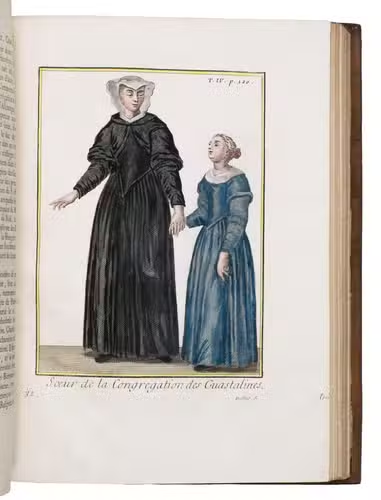
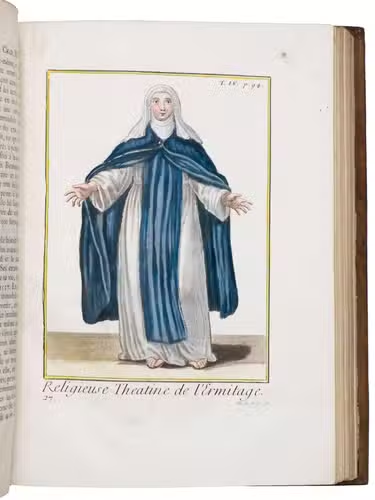
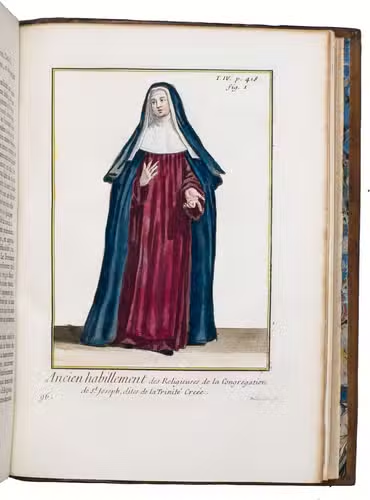
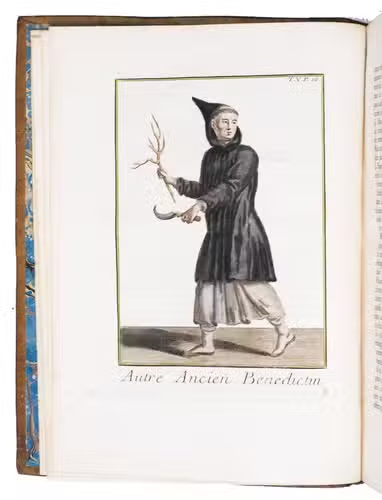
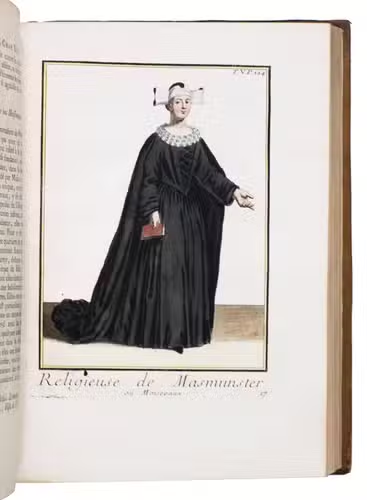
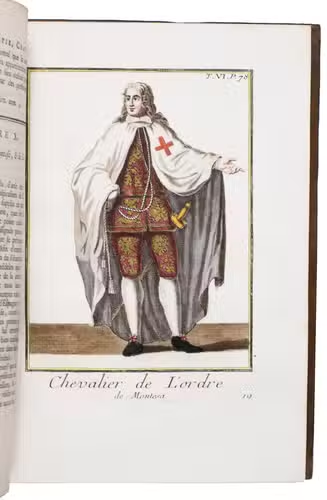
Paris, Louis, 1792. 8 volumes. 4to. With 812 full-page hand-coloured engravings, along with woodcut devices on the title pages and some woodcut head- and tailpieces. Contemporary calf, gold-tooled spine, title lettered in gold, volume number set within black circular label, the initials "P.W.S." lettered in gold at the foot of the spine, marbled endpapers. Each volume around 400-500 pp.
€ 12,000
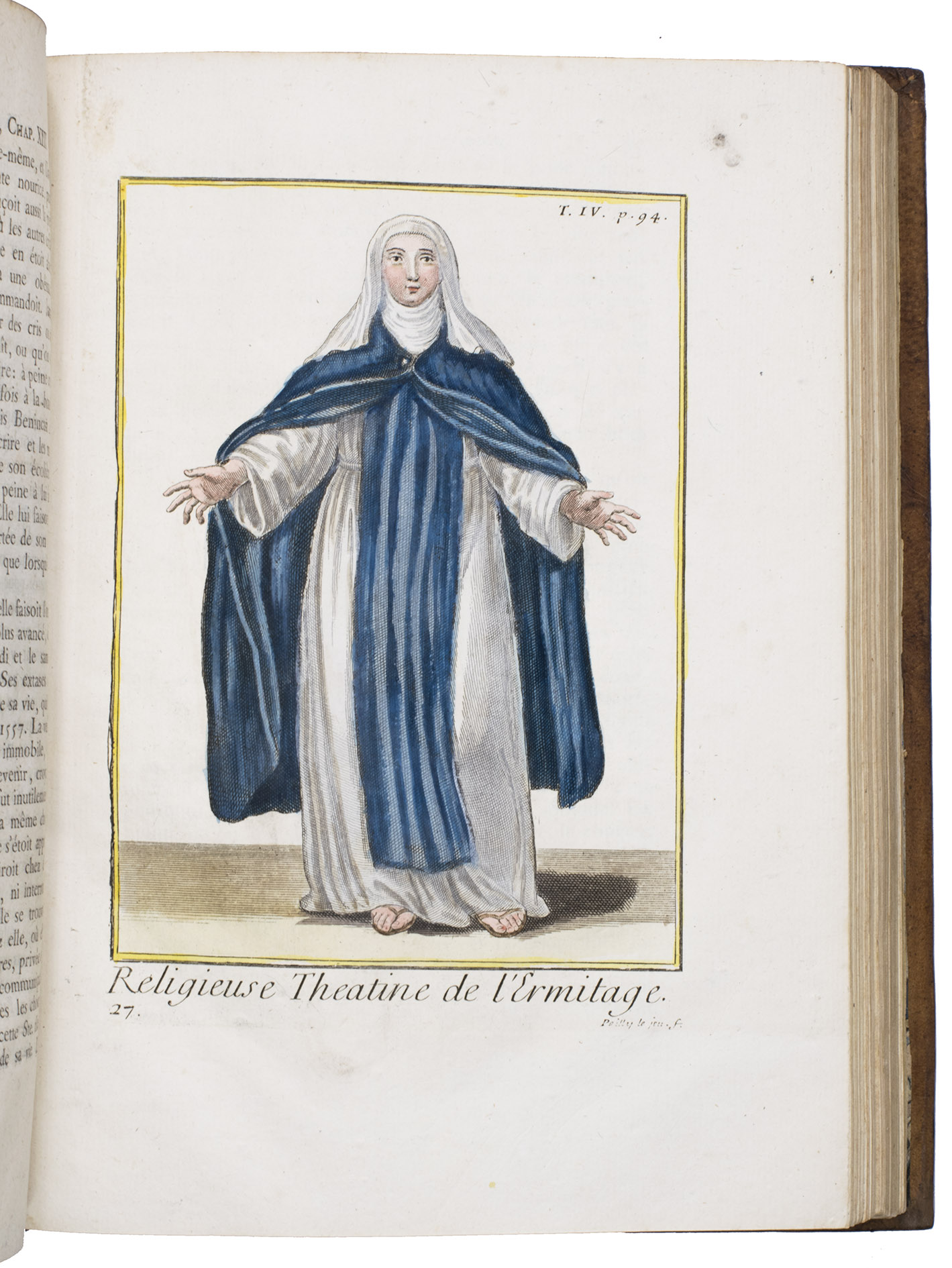
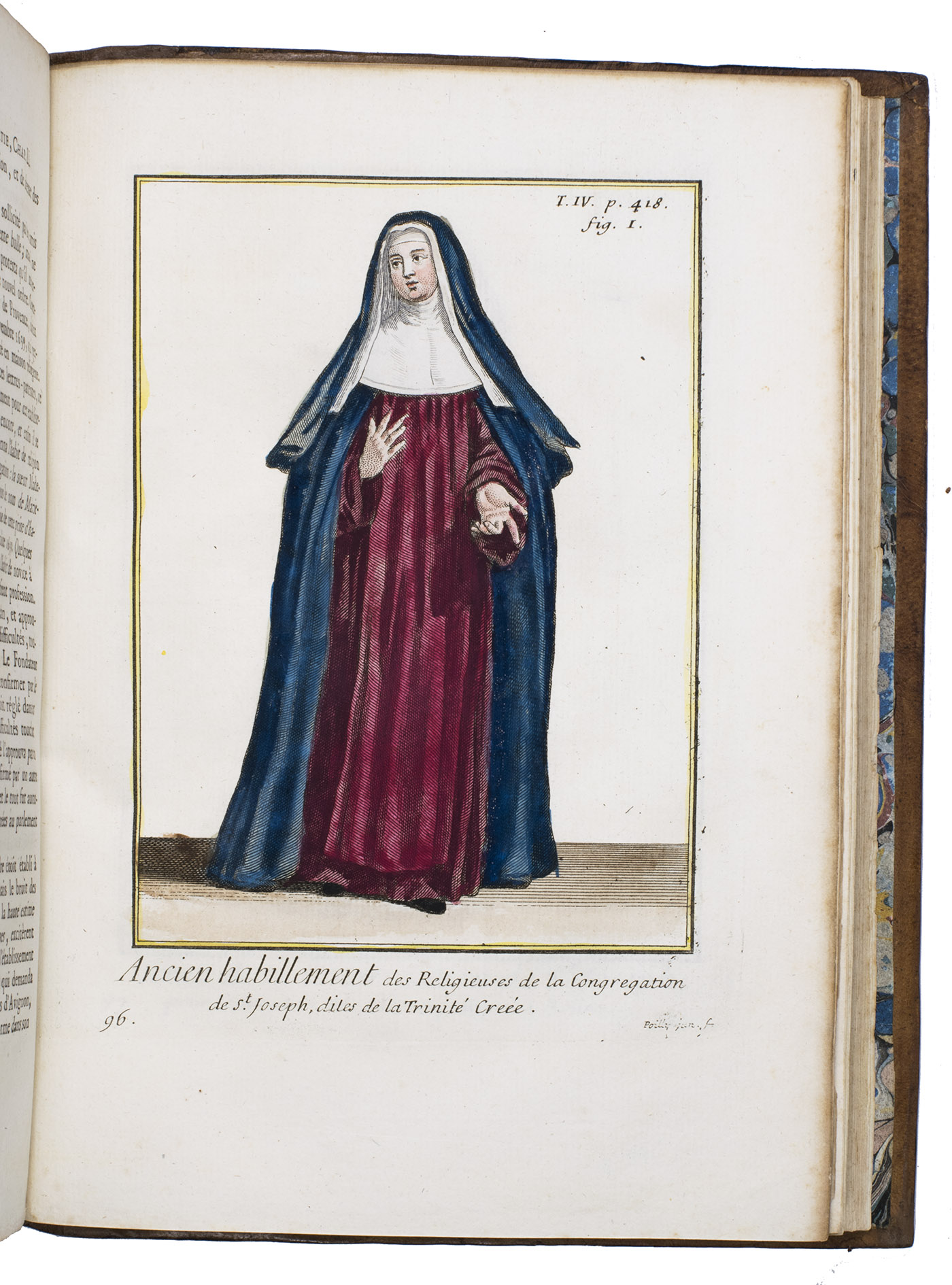
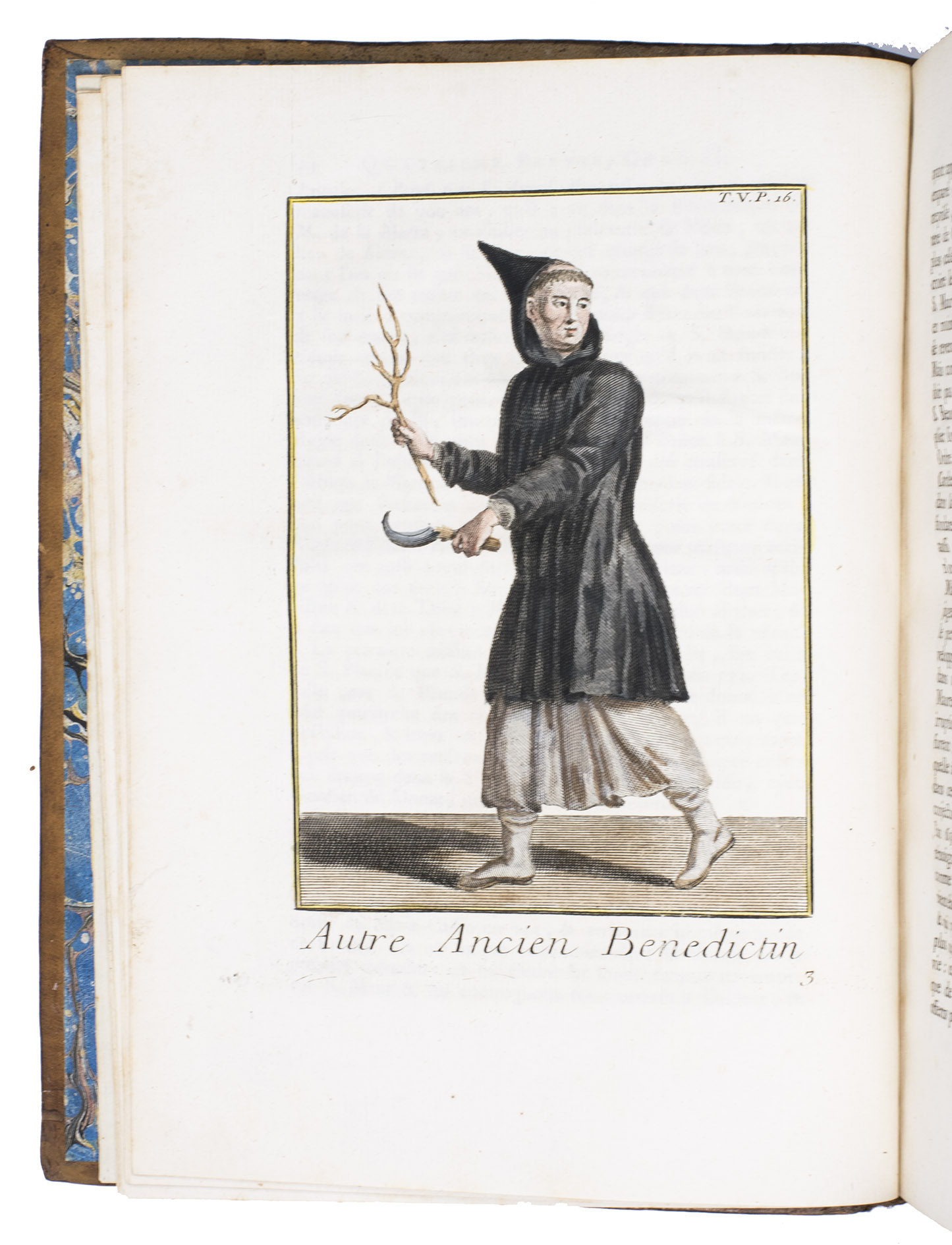
Third edition of one of the most ambitious and comprehensive early modern surveys of religious life in Europe. Conceived and largely written by Pierre Hélyot (1660-1716), and completed after his death by Maximilien Bullot (d. 1748), the work represents a monumental attempt to document the full spectrum of organised religious communities up to the end of the 17th century.
The scope of the work is exceptionally broad, encompassing monastic orders such as the Benedictines, Cistercians, and Carthusians, mendicant orders including the Franciscans, Dominicans, and Augustinians, military and chivalric orders, among them the Knights Templar and the Order of St John of Jerusalem, as well as secular congregations of both men and women. For each order, Hélyot provides detailed accounts of foundation, rule, governance, spiritual ideals, geographical spread, and, where applicable, decline or reform. His treatment is not merely descriptive but often analytical, noting variations in discipline and observance. A well-known example is his discussion of the Canons Regular of St Victor in Paris, whose strict silence, use of sign language, and avoidance of worldly courts are presented as evidence of rigorous communal discipline, in contrast to the relaxation observed elsewhere during periods of political upheaval.
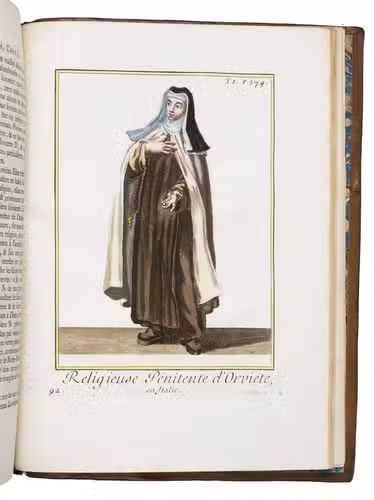
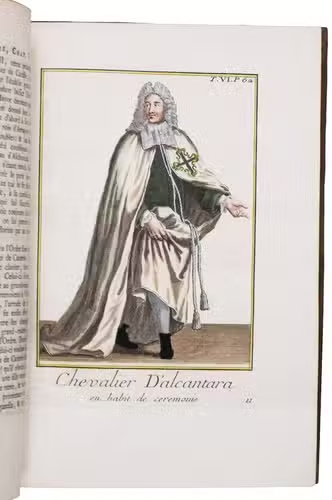
The inclusion of military orders is particularly noteworthy. Hélyot treats these institutions not simply as religious bodies but as complex social and hierarchical systems, in which rank, office, and function are reflected in highly differentiated forms of dress. His treatment of the Order of St John of Jerusalem, for instance, illustrates the interplay between religious vocation and martial organisation, showing how costume evolved alongside changes in military structure and practice.
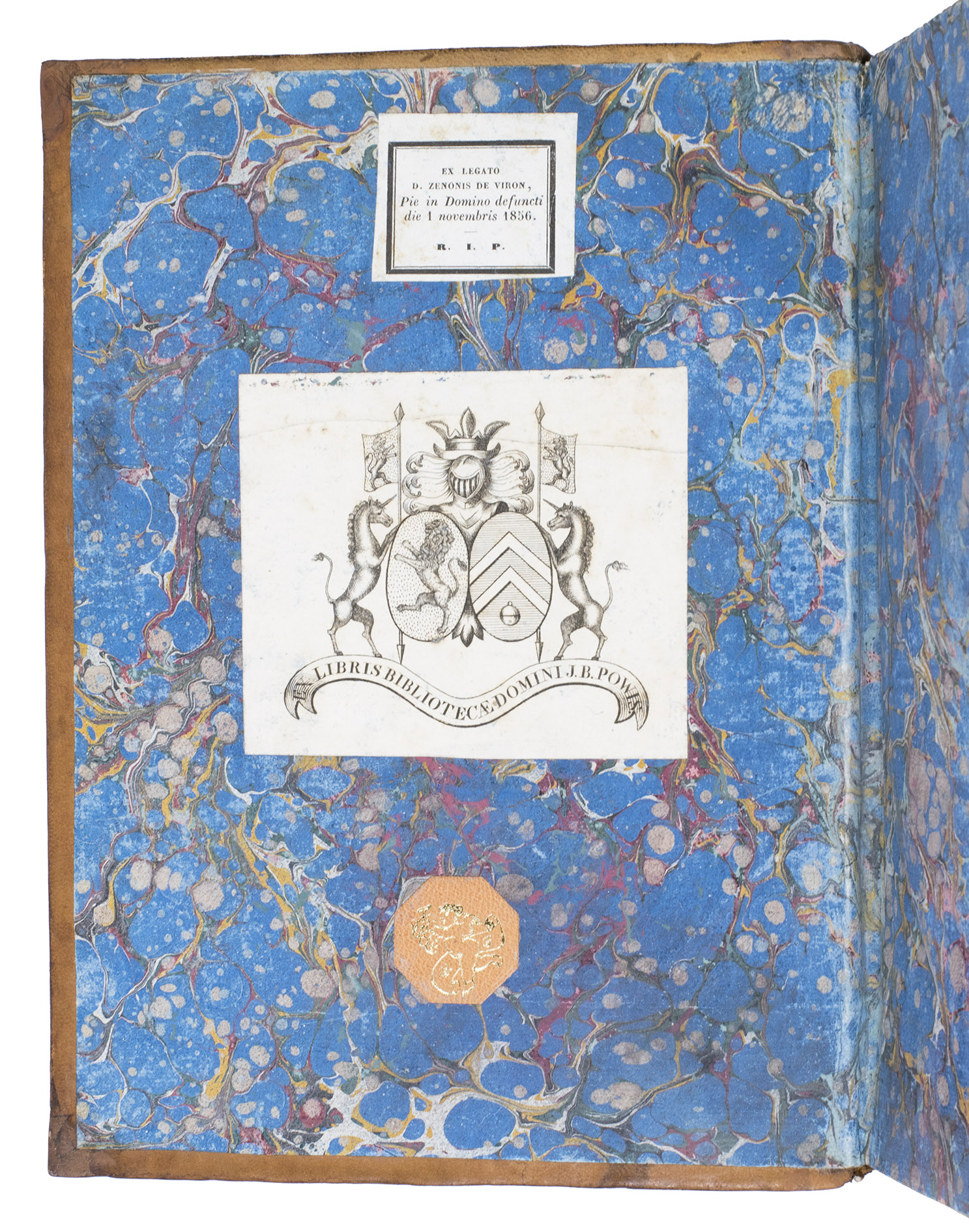
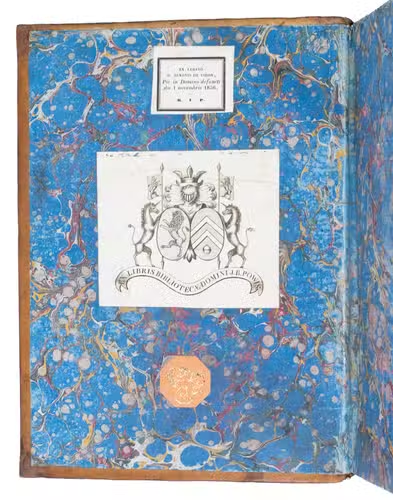
With three ex libris mounted on the front pastedown of all volumes. The first is a 19th-century bookplate "Ex legato D. Zenonis de Viron, pie in Domino defuncti die 1 novembris 1856. R.I.P." Zeno de Viron was a member of the prominent Belgian noble family de Viron, historically associated with Dilbeek. The second is an 18th-century armorial bookplate, "Ex libris bibliothecae domini J.B. Powis", belonging to Jacques Benoit Powis (1705-1764), Belgian nobleman, bibliophile, and knight (ennobled in 1733). The third is a 20th-century leather seal, silver-stamped with a putto holding grapes and the initials "K.F." The text parts in all volumes are browned throughout, with occasional staining. Otherwise in very good condition. Brunet, III, 92; Cohen, 480; Colas 1419.
Related Subjects: