JUNIUS, Hadrianus.
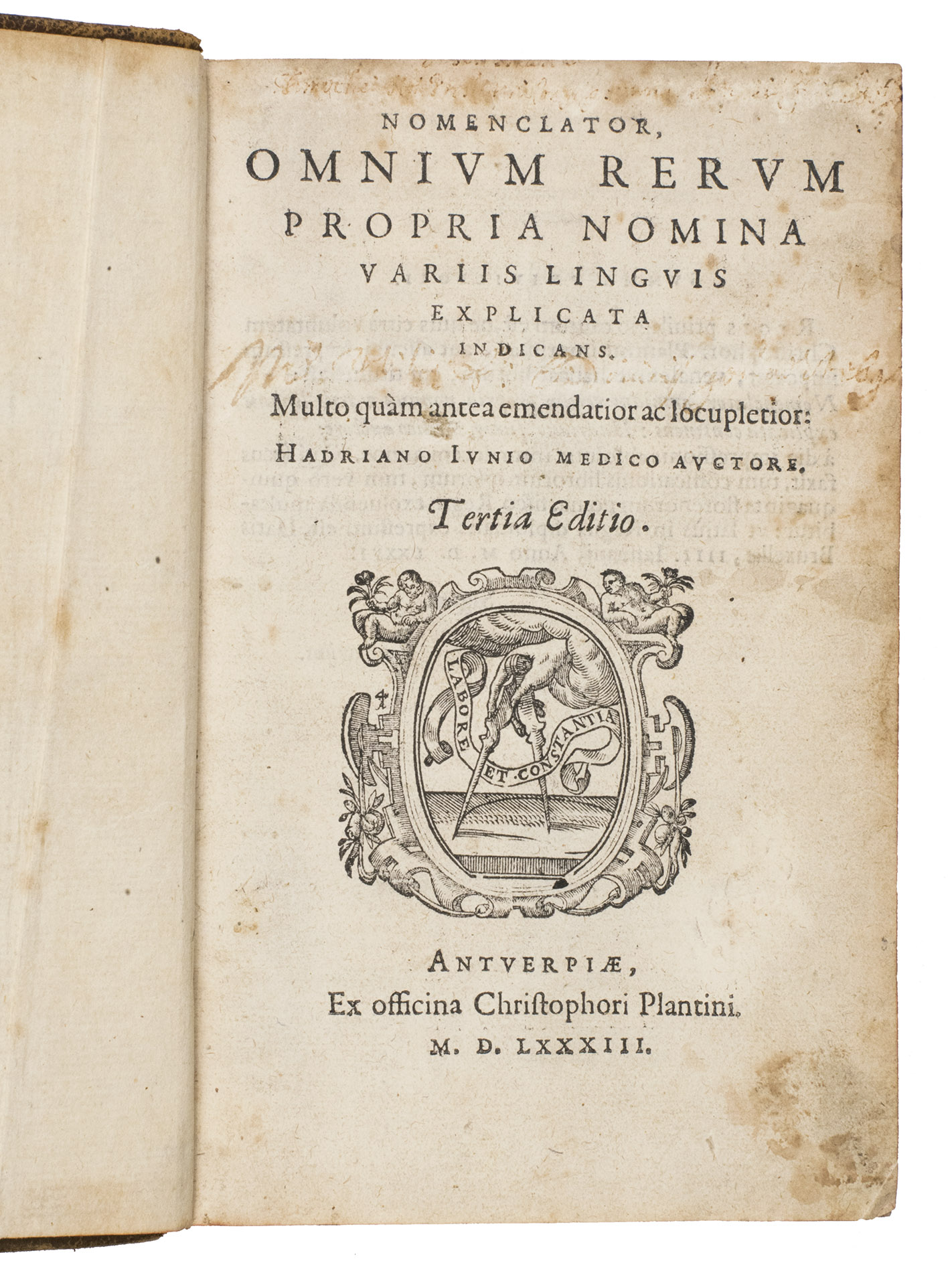
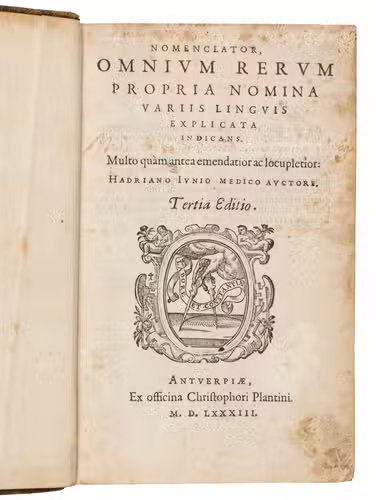
Nomenclator, omnium rerum propria nomina, variis linguis explicata indicans. Multo quàm antea emendatior ac locupletior ... Tertia editio.
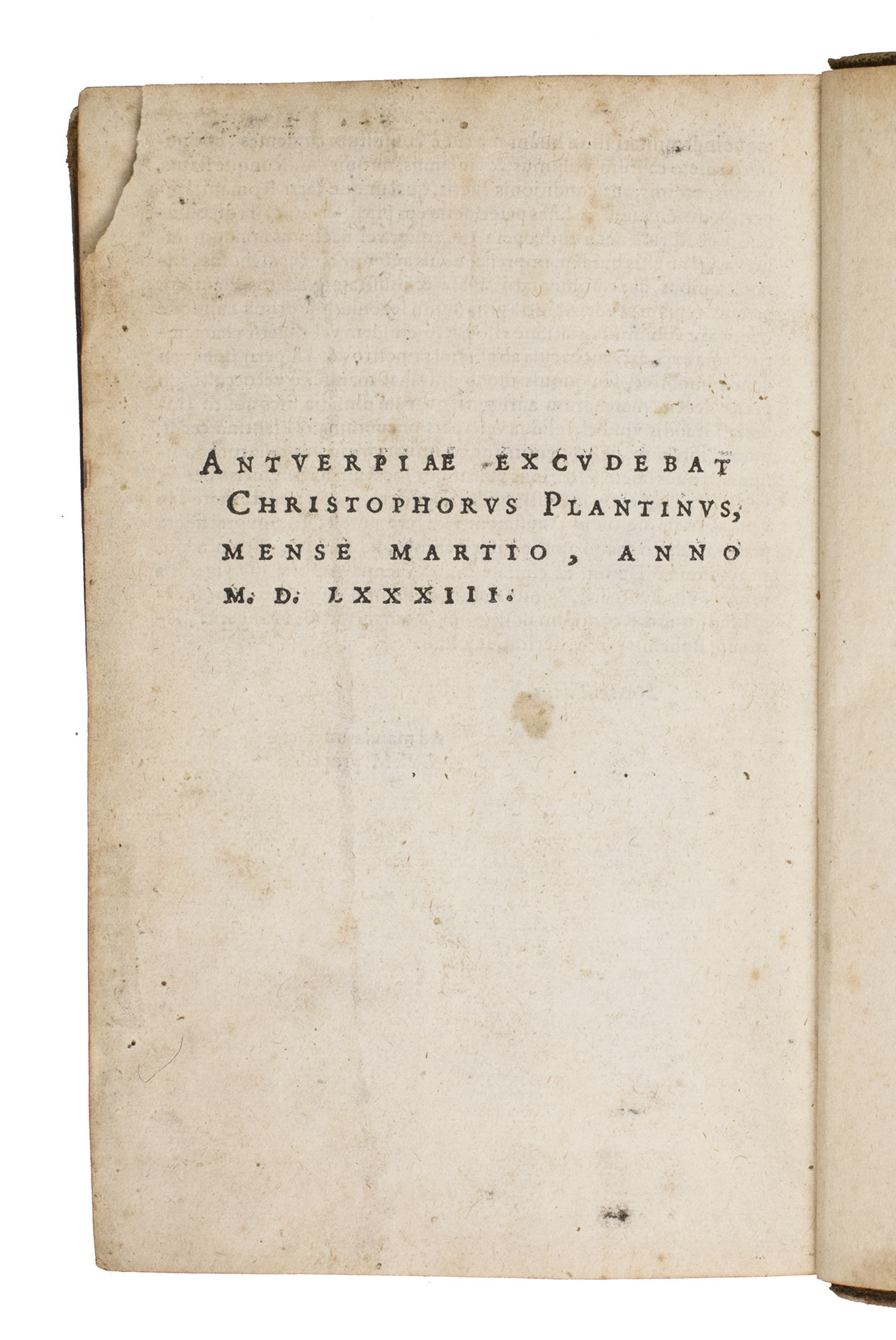
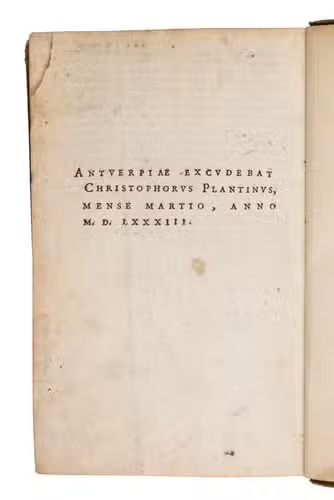
Antwerp, Christophe Plantin, 1583. 8vo. With Plantin's woodcut device on the title page.
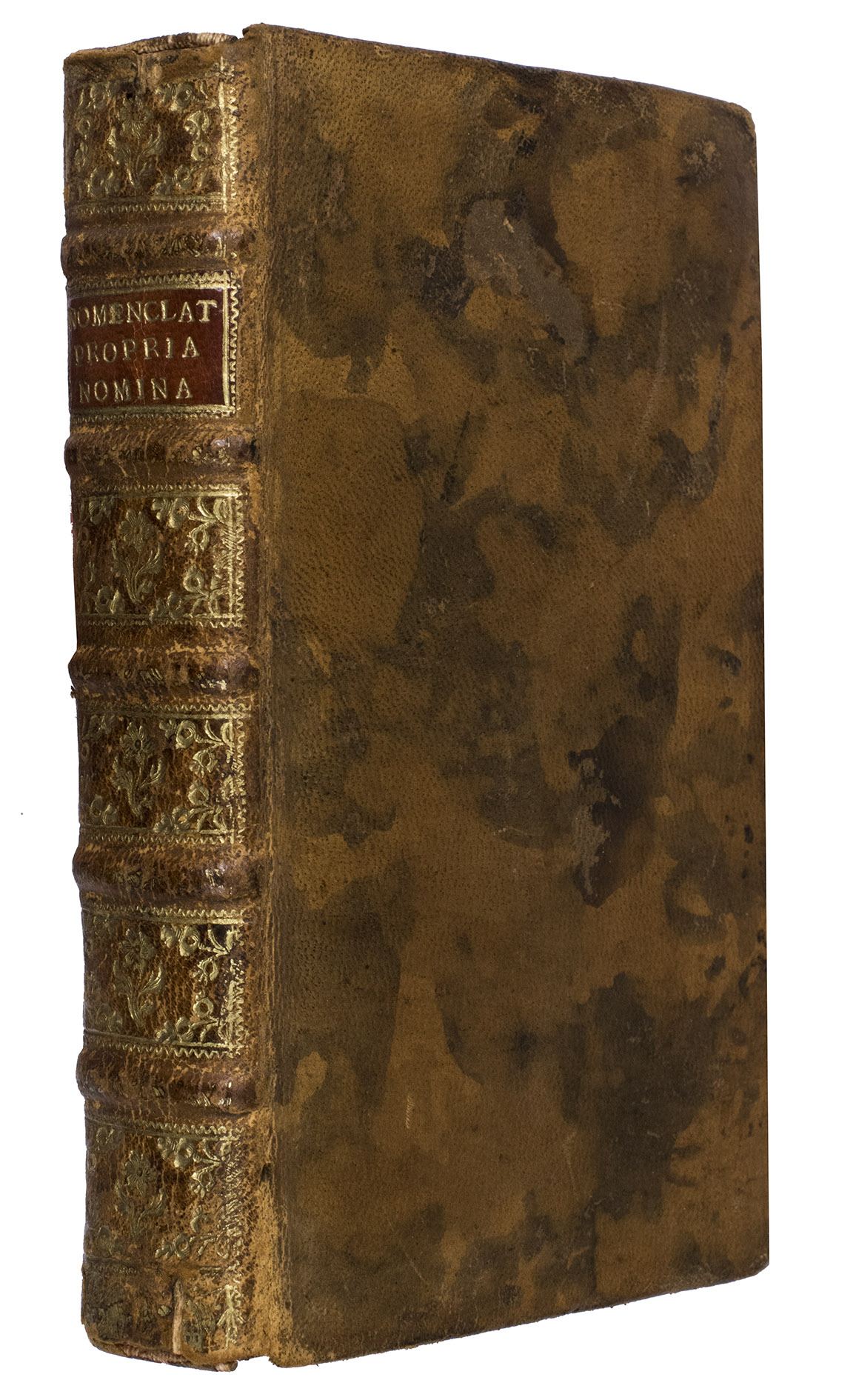
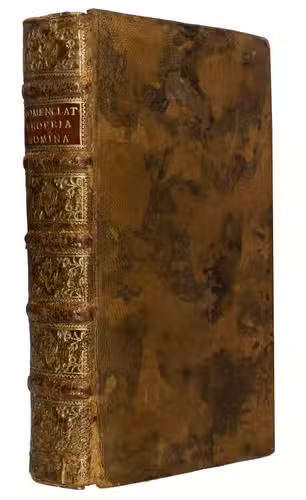
18th-century marbled calf, sewn on five supports with corresponding raised bands on the gold-tooled spine, with a separate red calf label lettered in gold, red edges. [8], 432, [70], [2 blank] pp.
€ 750
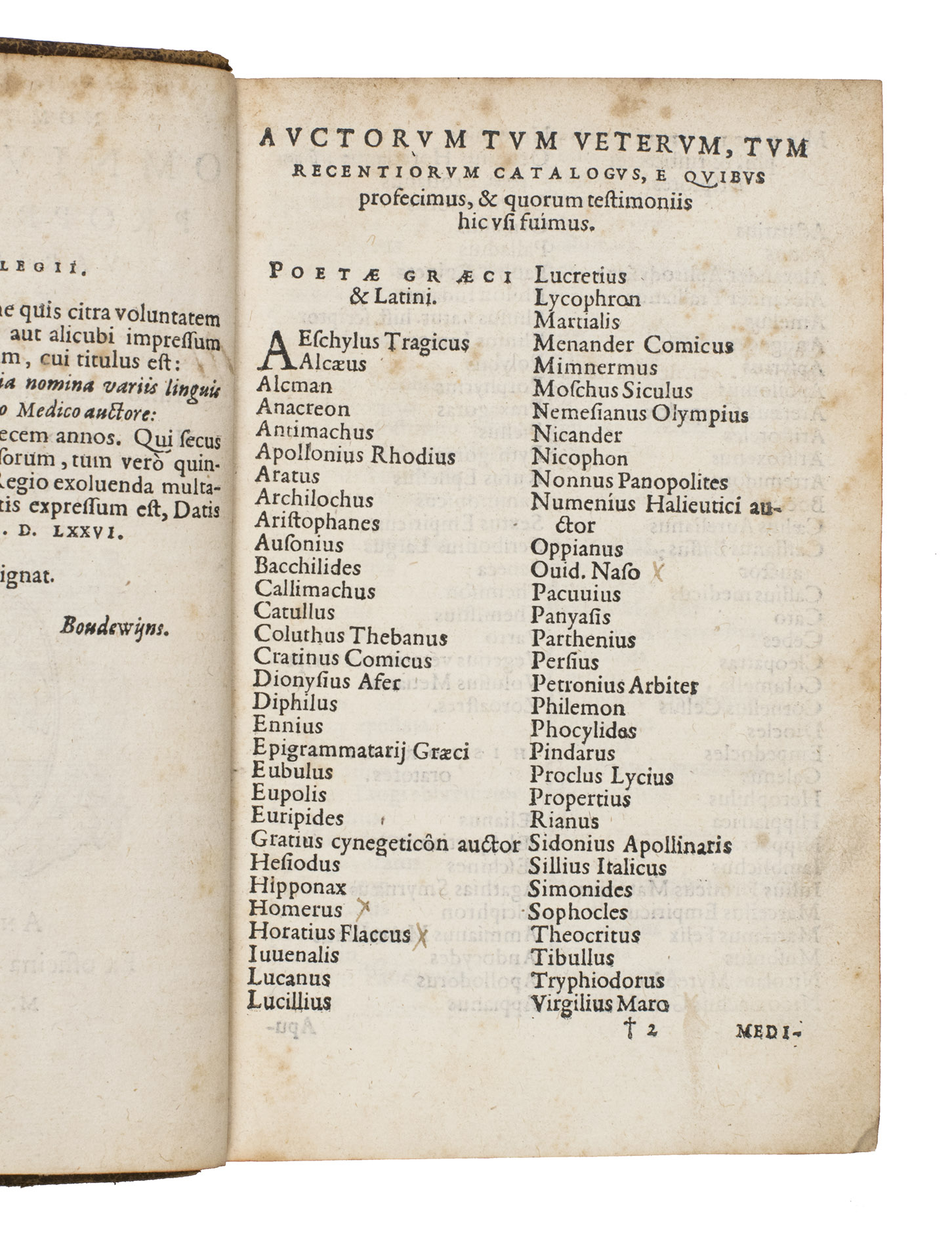
Third Plantin edition of Nomenclator, the highly influential dictionary by the Dutch physician and humanist Hadrianus Junius (1511-1575). The present work is a line-for-line reprint of the corrected and expanded second edition of 1577. The work was originally published in 1567 by Plantin in Antwerp and became one of the most popular Latin-Dutch vocabularies of the 16th-, 17th-, and 18th century.
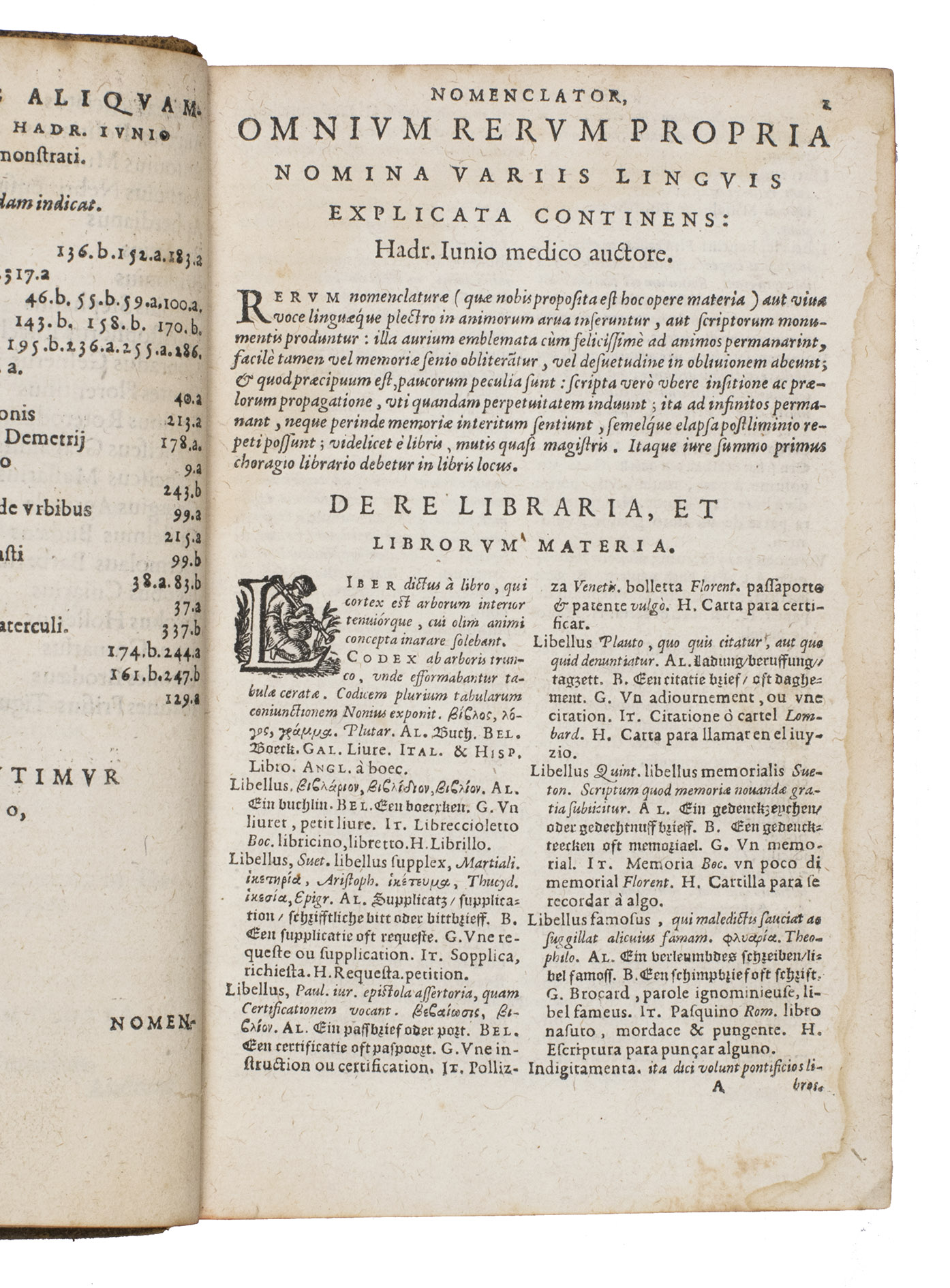
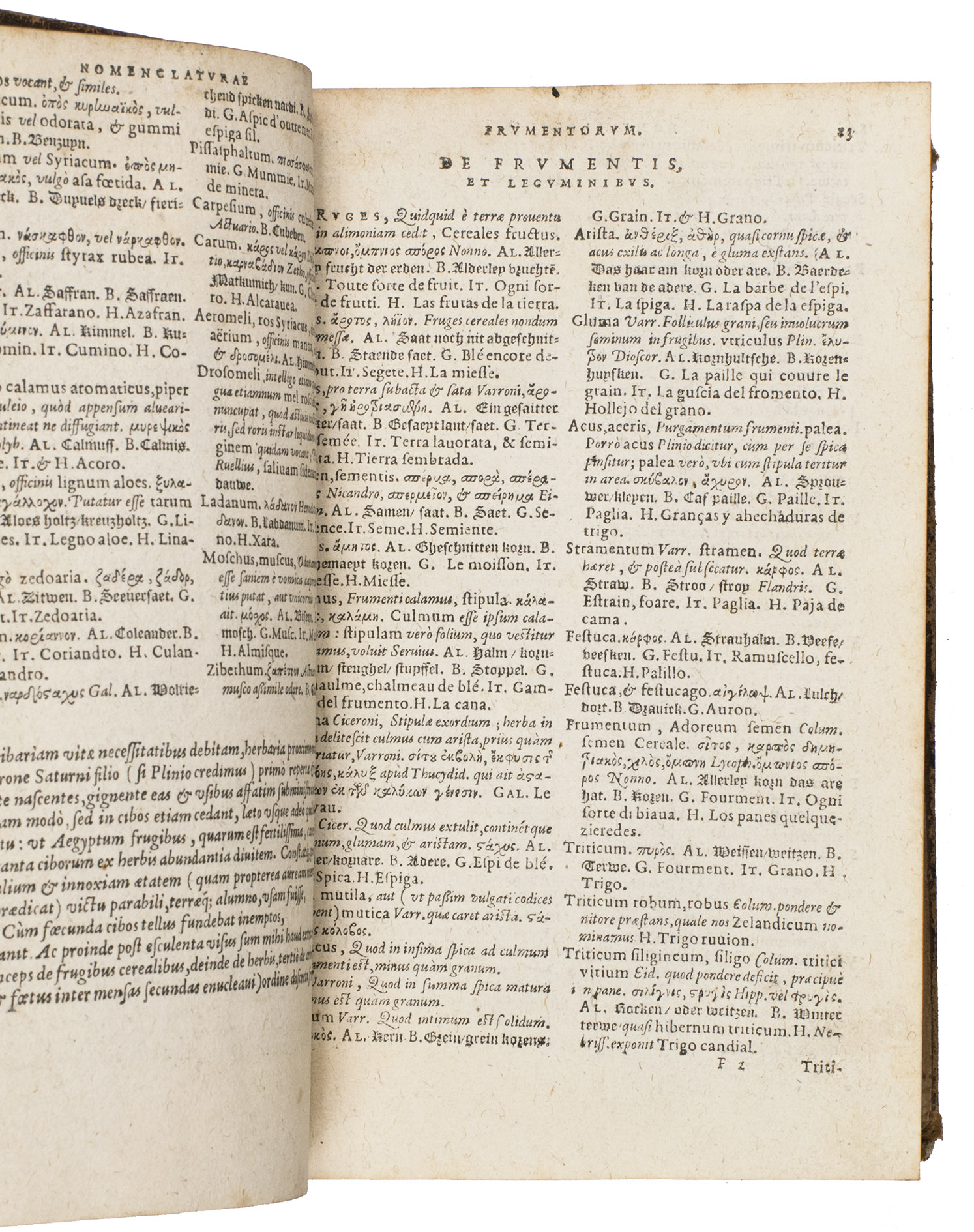
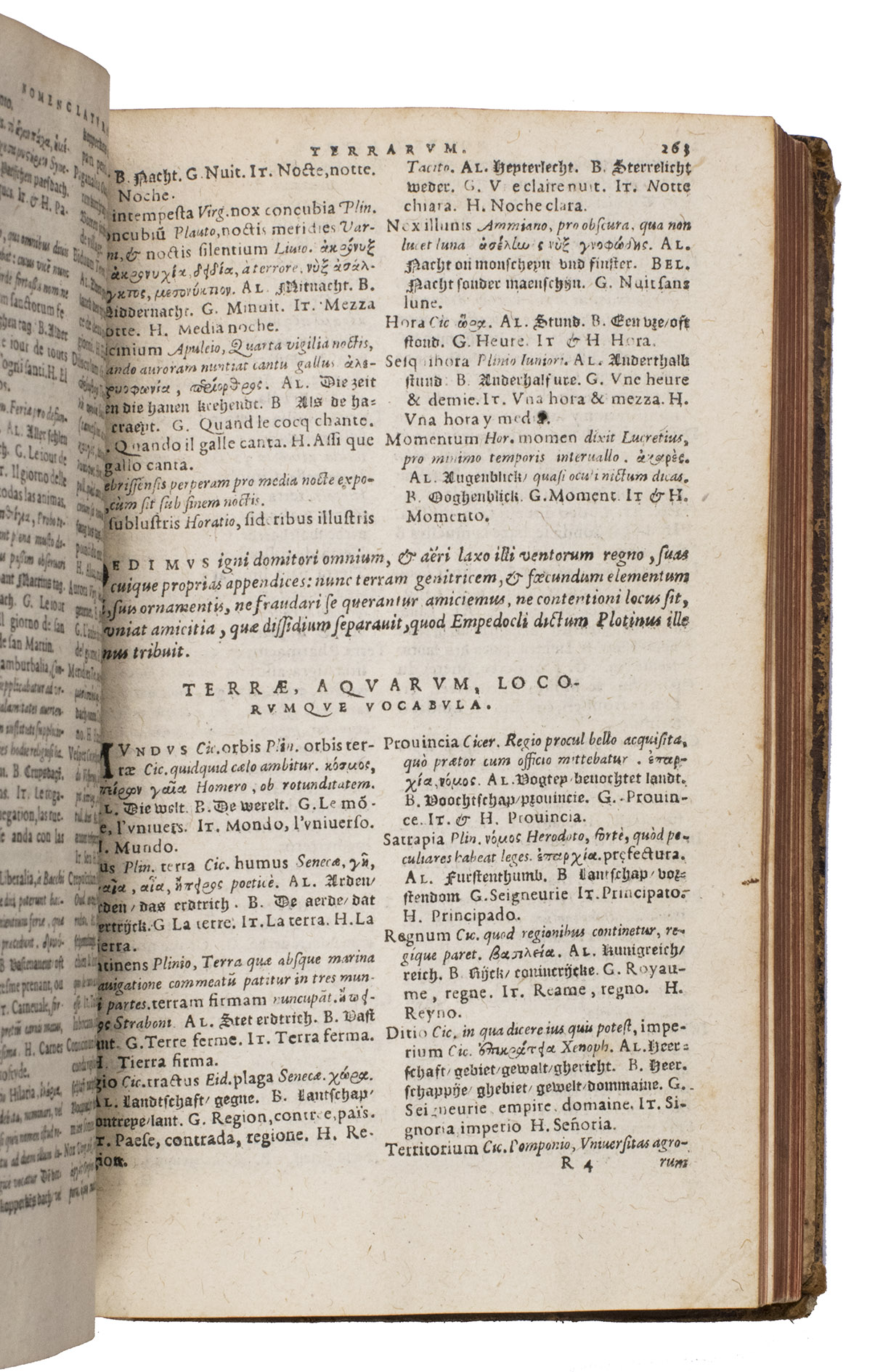
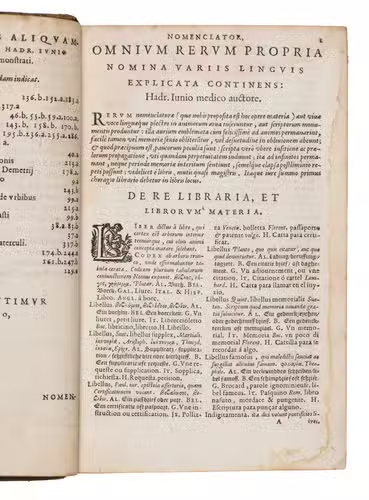
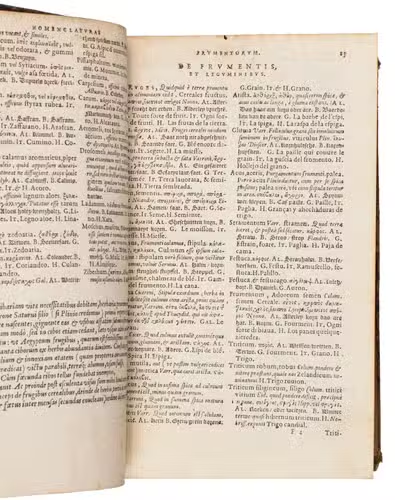
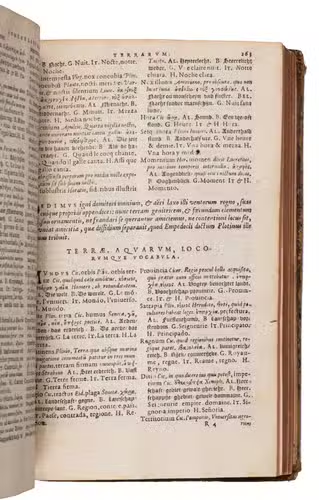
Junius Nomenclator is a thematically arranged dictionary, with Latin catchwords explained in Latin and translated into Greek and six languages: French, German, English, Dutch, Spanish, and Italian. The thematic organisation covers an extraordinary variety of subjects, including: De re libraria et librorum materia (a substantial chapter on the book trade), De cibis (food) and De potu (drink), De chirurgia (surgery), De re nummaria (money and finance), and Musica.
The work also reflects Junius training as a physician and offers particular insight into contemporary scientific terminology. Its practical approach, collecting words from craftsmen and taverns, gives the dictionary a close connection to spoken language, akin to a modern travellers guide to foreign terminology.
Junius studied medicine at Bologna and spent time in Paris and England. In 1562-63, he served as preceptor to the Danish crown prince, later King Christian IV (1577-1648). From 1563, he was physician and rector of the Latin School in Haarlem. Following the Spanish siege of Haarlem and the destruction of his library in 1573, he moved to Middelburg, where he became city physician until his death in 1575.
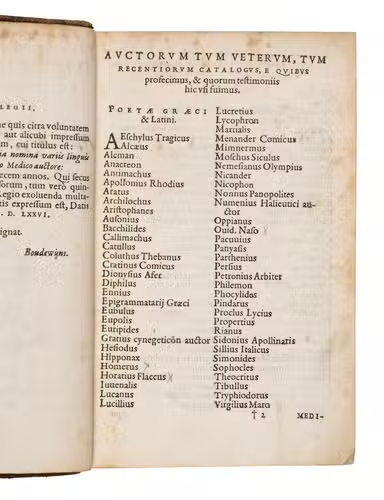
The Nomenclator was widely used in schools for centuries and strongly influenced later lexicographers such as Cornelis Kiliaen (1528-1607). Printed in various types and arranged in two columns, with the index in three, the dictionary represents a landmark in Renaissance lexicography and polyglot scholarship.
With a faded old ownership inscription on the title page, some wear to the spine ends, margins a bit short and damp stained, the work is slightly browned throughout. Otherwise in good condition. Adams J 450; Belgica typographica 1670; Claes 282; EEB (Proquest) ned-kbn-all-00028865-001; Heritage of the Printed Book Database no. GBCC6472-E %IO; Peeters-Fontainas 653; Ruelens-de Backer p. 257 no. 19; The Plantin Press Online cp010503; USTC 340794; Voet (Plantin) 1491; not in BM STC Dutch.
Related Subjects: