PIRSTINGER, Berthold.
Tewtsche Theologey.
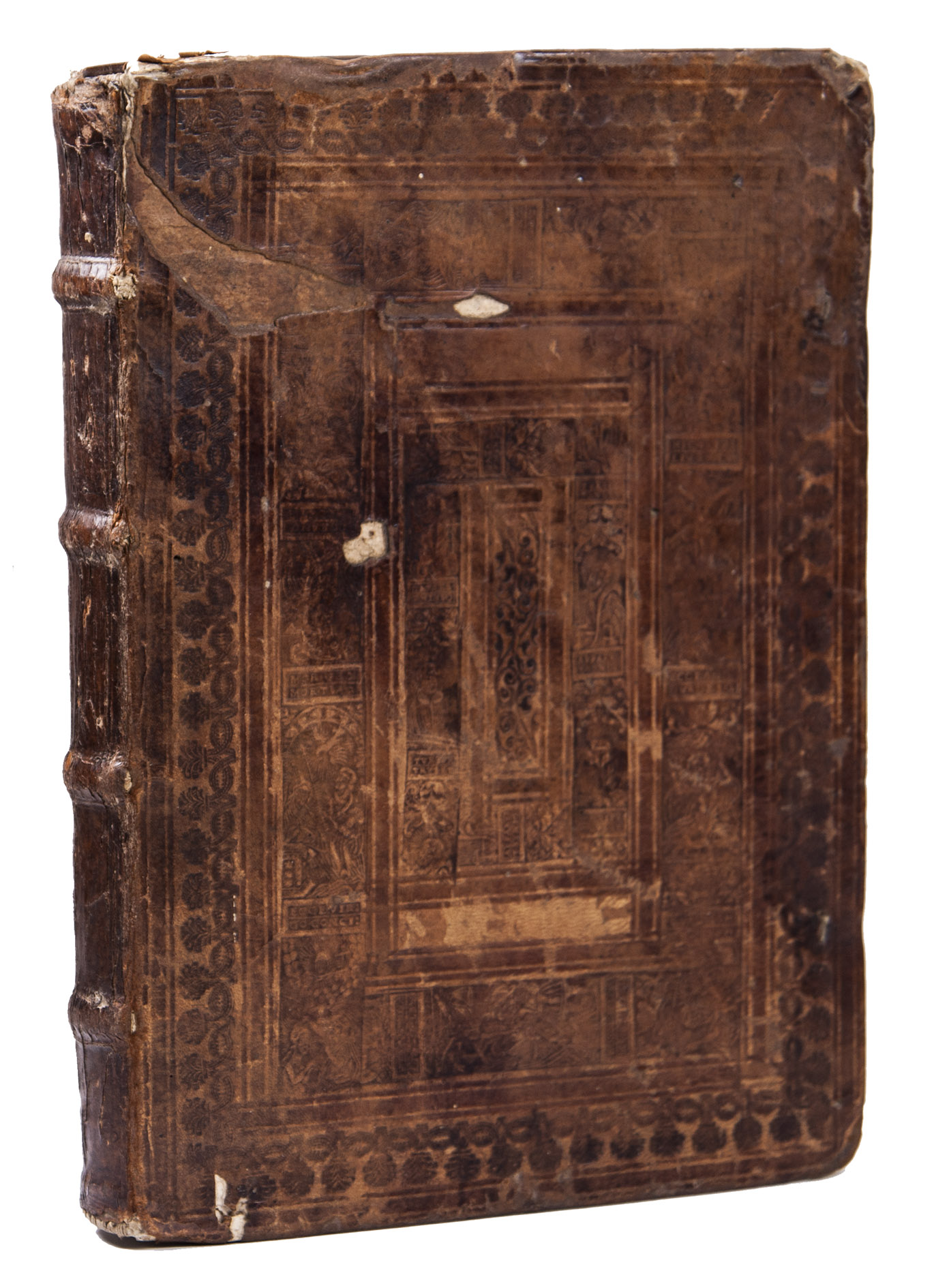
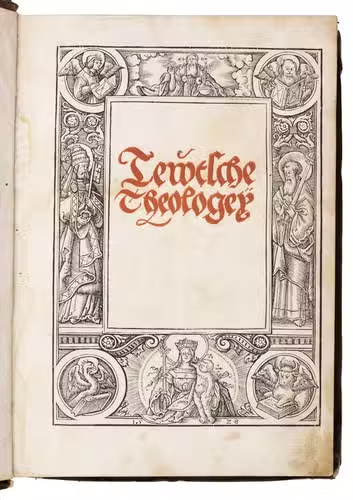
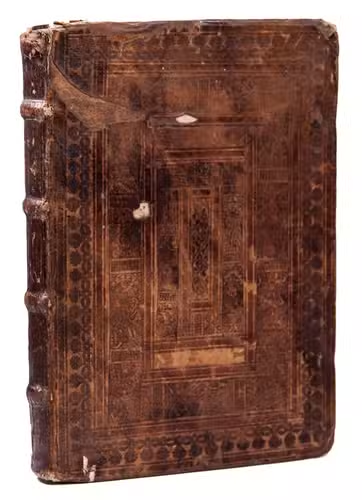
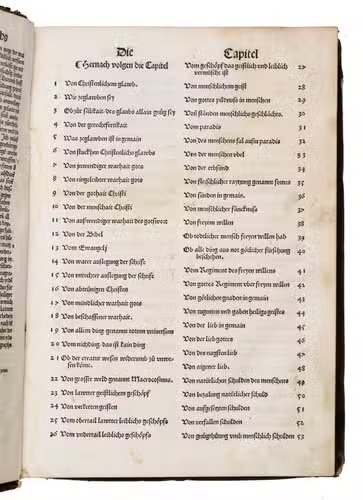
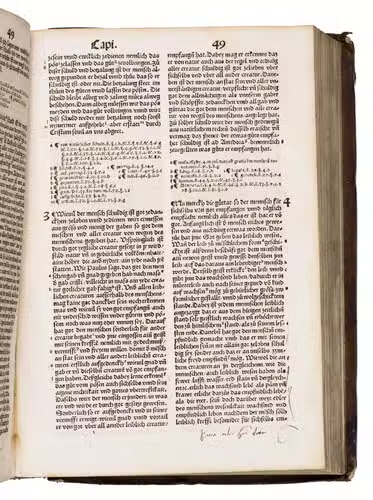
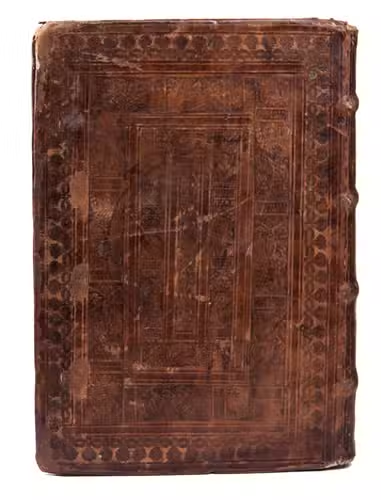
(Colophon:) München, Hans Schobser, 31 August 1528. Small folio (19.6 x 28.5 cm). With the title printed in red and set inside a woodcut frame, depicting God the Father, the Virgin and Child, SS. Peter and Paul, and the four evangelists. Near-contemporary (ca. 1586?) panel-stamped calf, sewn on 4 supports with the corresponding raised bands on the spine, and with remnants of 2 pairs of closing ties. [251], [1 blank] ll.
€ 7,500
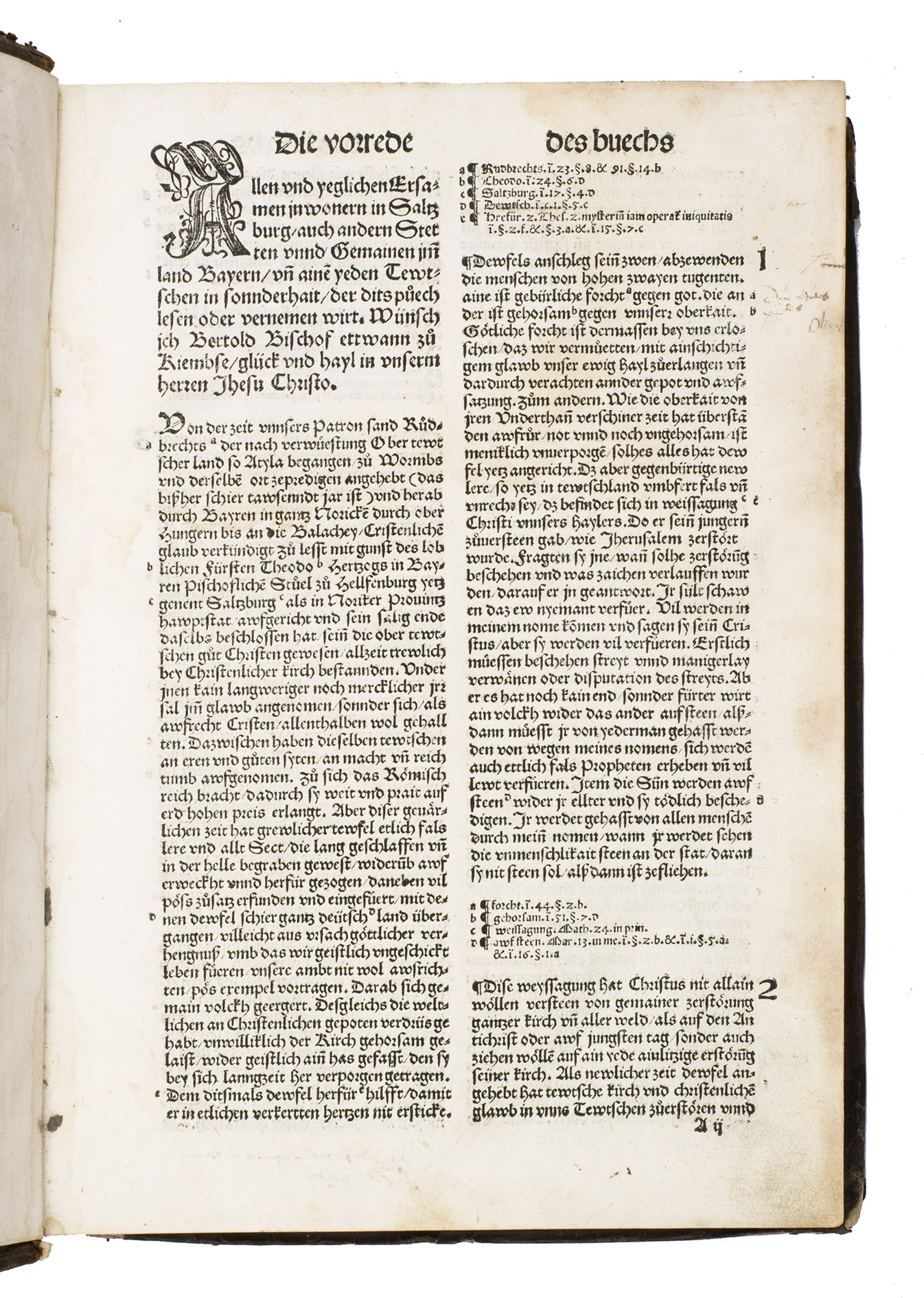
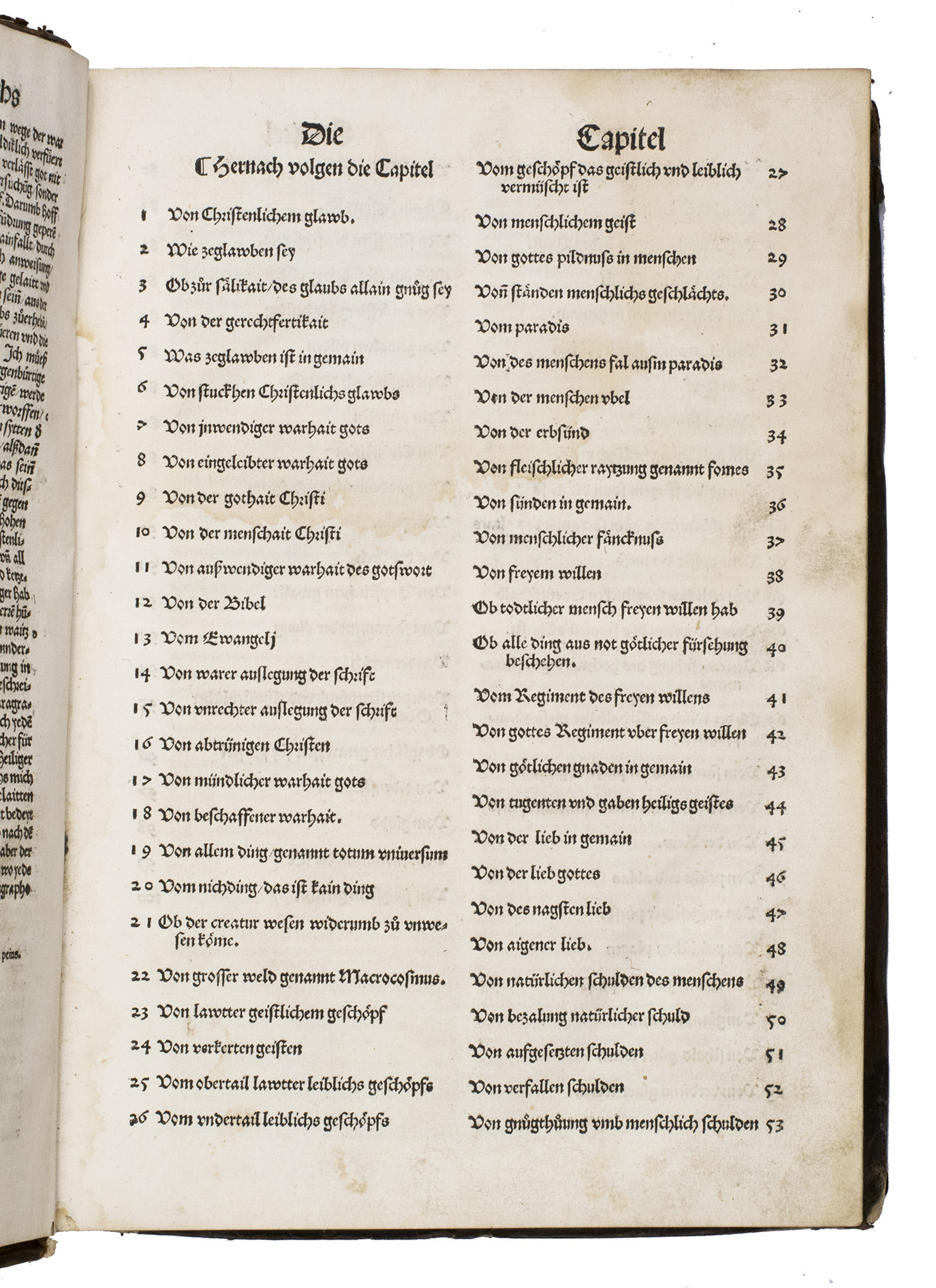
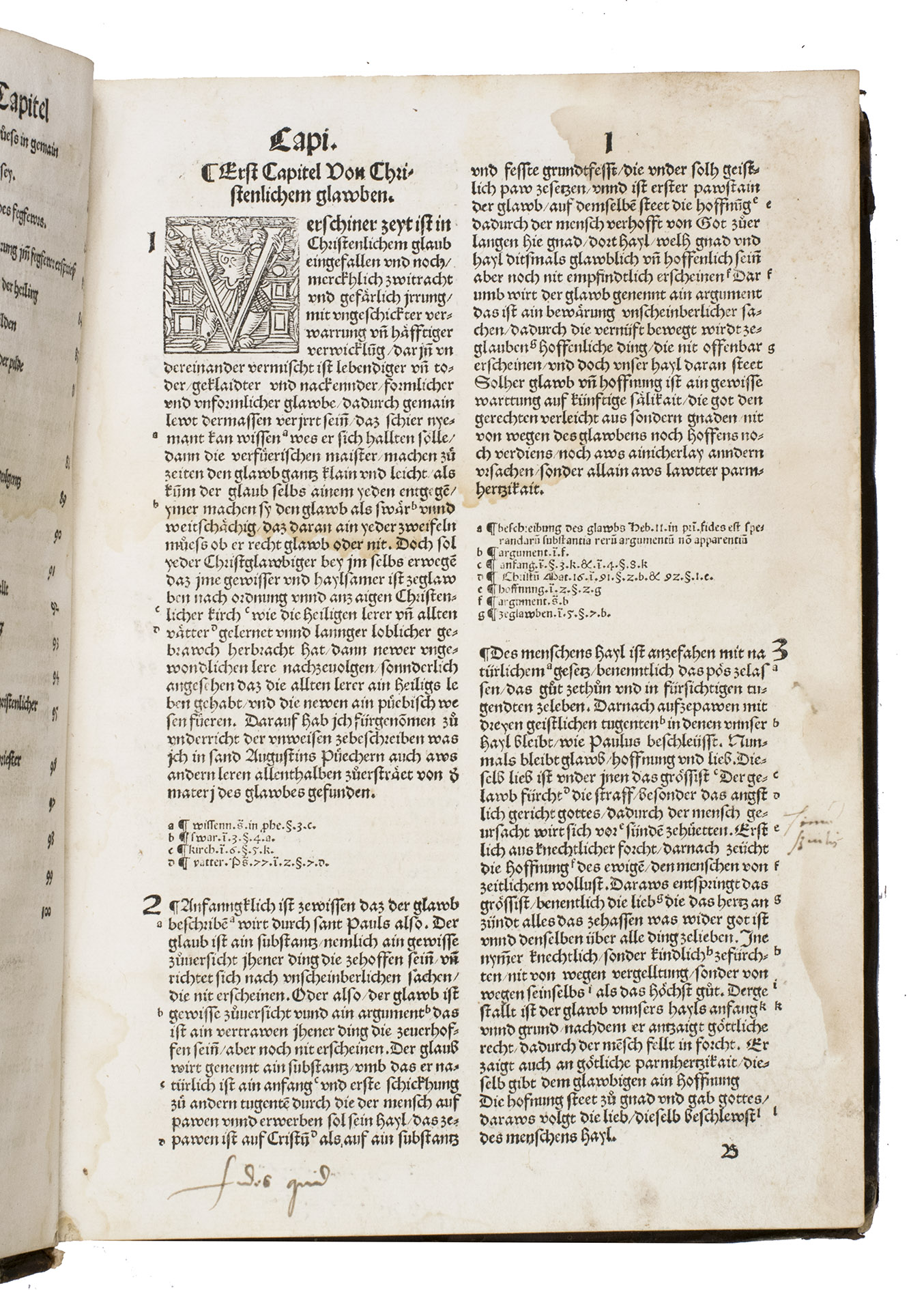
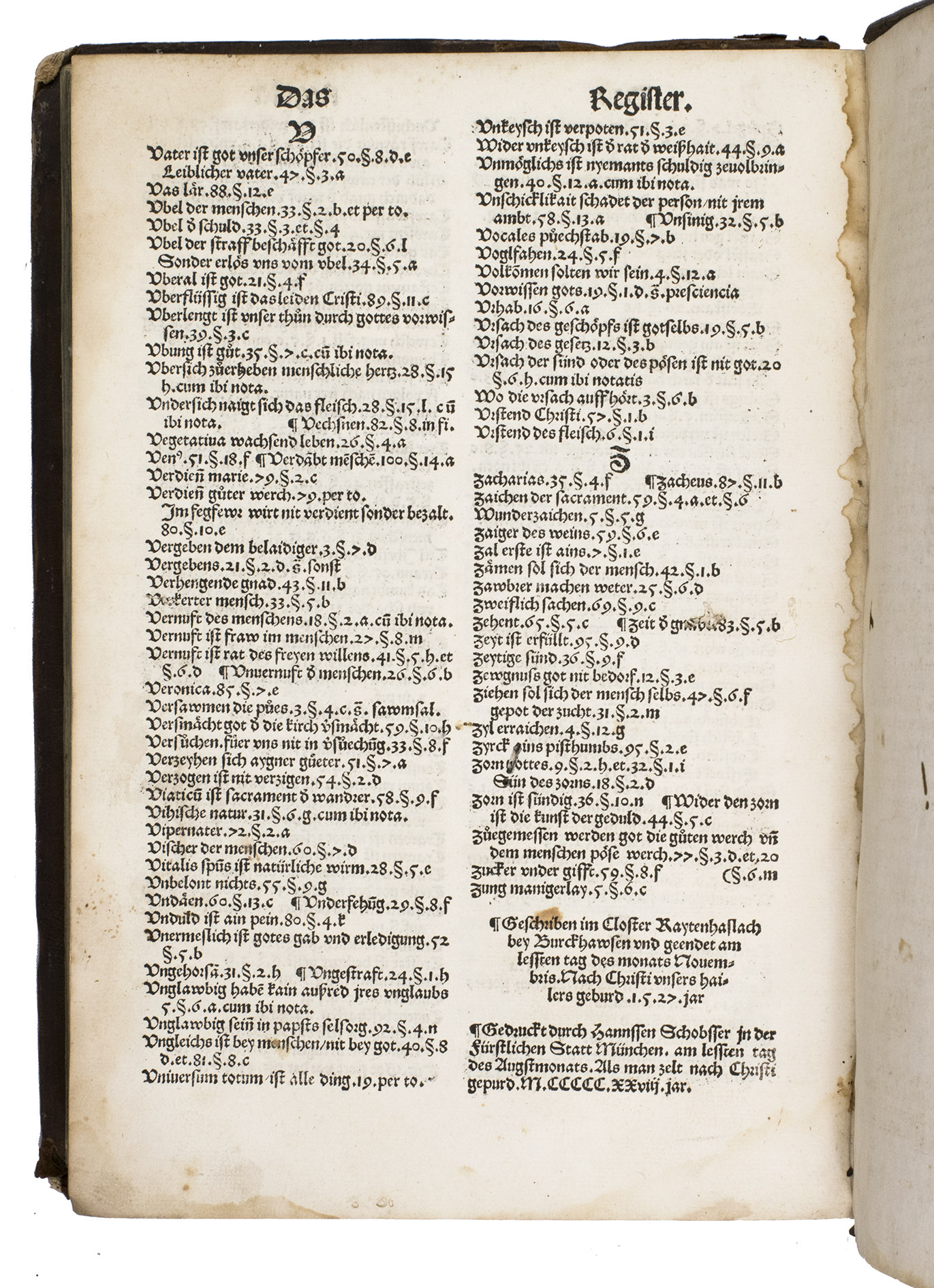
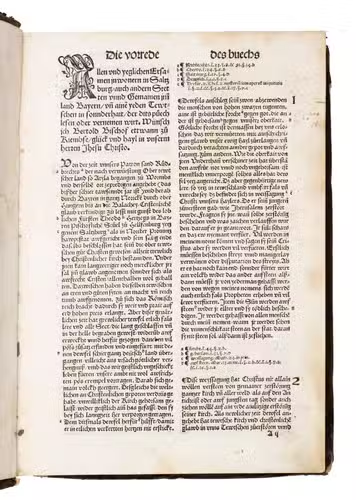
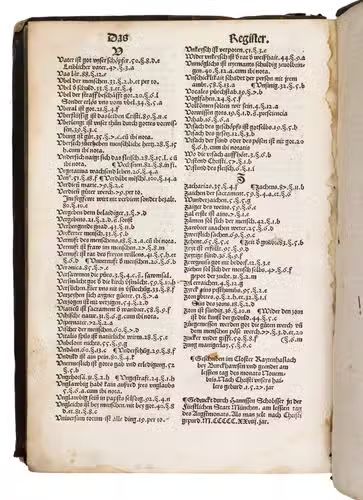
First edition of Tewtsche Theologey, printed in Munich in 1528, represents Berthold Pürstingers (1465-1543) chief work and the first extended Roman Catholic treatise on dogmatics in the German language. Written during his retirement in the Cistercian monastery of Raitenhaslach, Pürstinger completed the hundred-chapter work in 22 months, finishing on 30 November 1527, and dedicated it to Cardinal Matthäus Lang von Wellenburg (1469-1540). The dedication emphasizes the author's pastoral aim: to guide wayward Christians back to faith using simple language and practical instruction rather than ornate scholarly style.
Tewtsche Theologey was conceived as a comprehensive handbook for both clergy and laypeople, presenting Catholic doctrine clearly and systematically in opposition to the Lutheran Reformation. Its method combines careful reference to Scripture, the Church Fathers, especially Saint Augustine, and scholastic reasoning, often employing allegorical interpretation to illuminate the fundamentals of faith. The work is remarkable for its clarity and practical tone: although Pürstinger was not a professional theologian, he demonstrates sound judgment and deep knowledge, offering instruction designed for those misled or uncertain in their faith. While acknowledging the sins and failings of individual clergymen, Pürstinger emphasizes that the Churchs divine mission endures. Sacraments, teaching, and pastoral care safeguard unity, and those who reject the Churchs authority separate themselves from it. He also sharply condemns the Reformation, lamenting the loss of unity, the disregard for sacraments, and the rise of self-styled "priests" outside ecclesiastical authority.
In 1530, at the request of the Archbishop of Salzburg, Pürstinger himself translated the work into Latin as Theologia Germanica, extending its reach to educated circles. Later editions, including a Munich reprint in 1852, attest to the enduring importance of the text.
The present work is bound in a contemporary panel-stamped binding. The two roll-produced borders, representing religious scenes and saints, are described by Haebler as having been used on bindings of the year 1586.
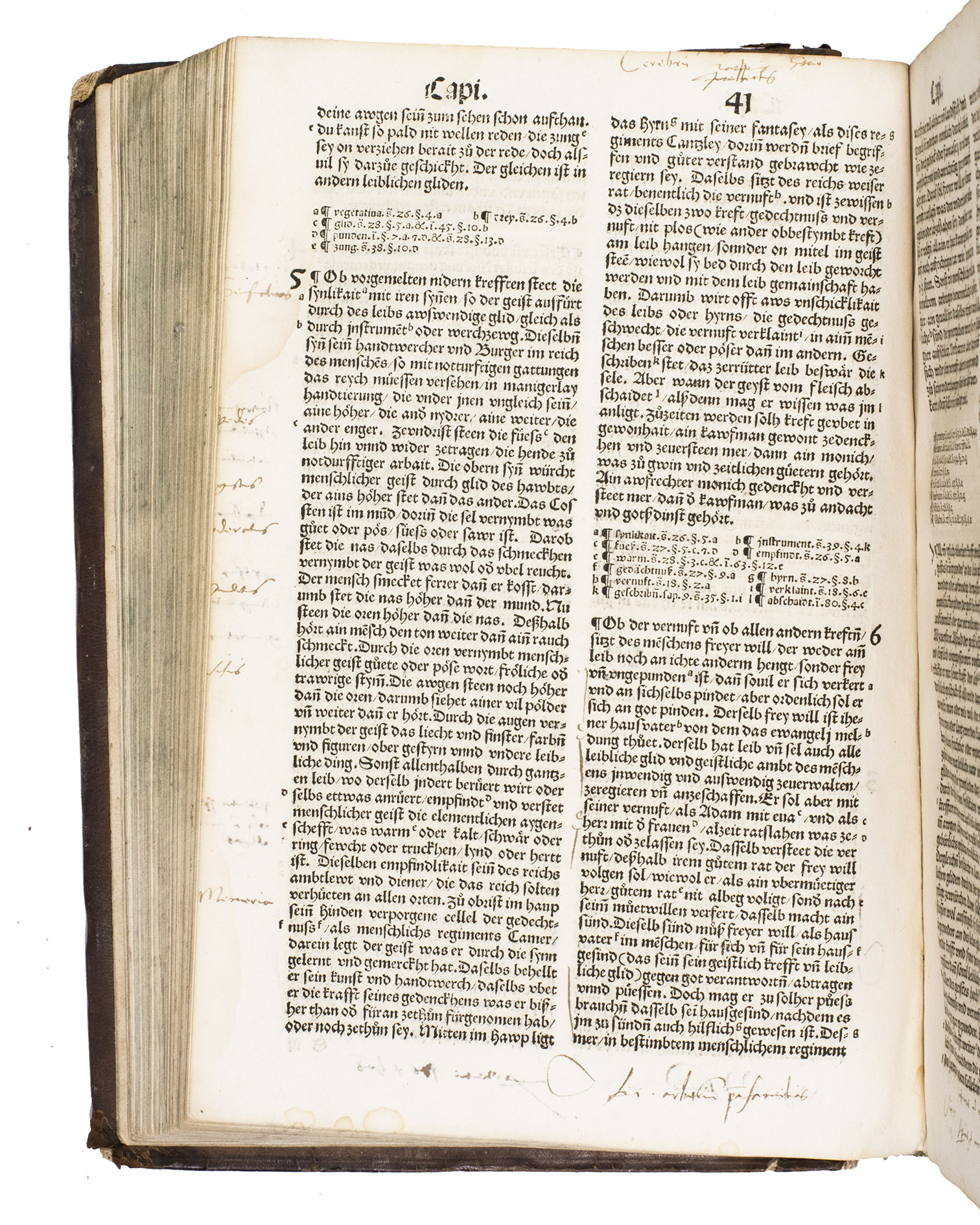
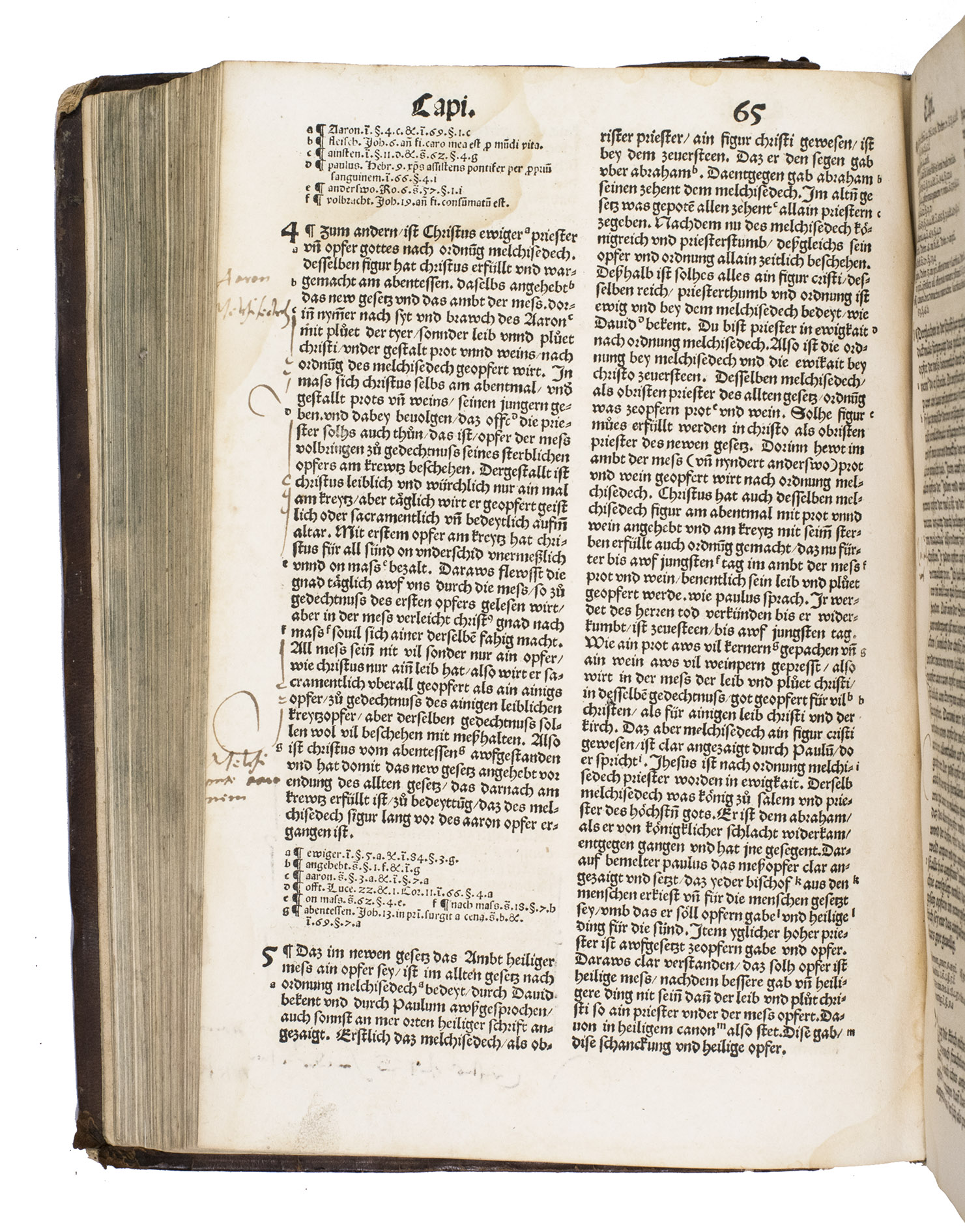
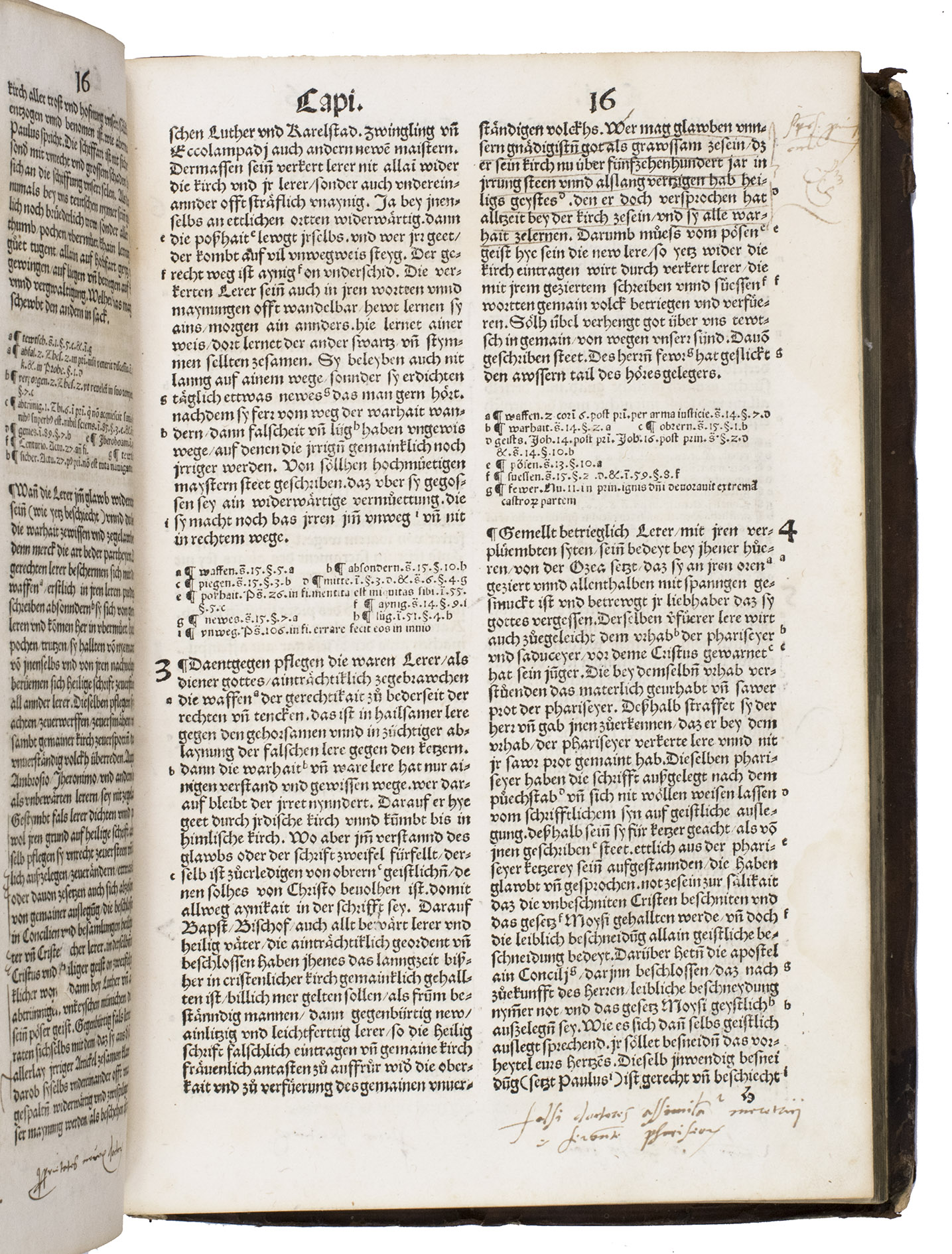
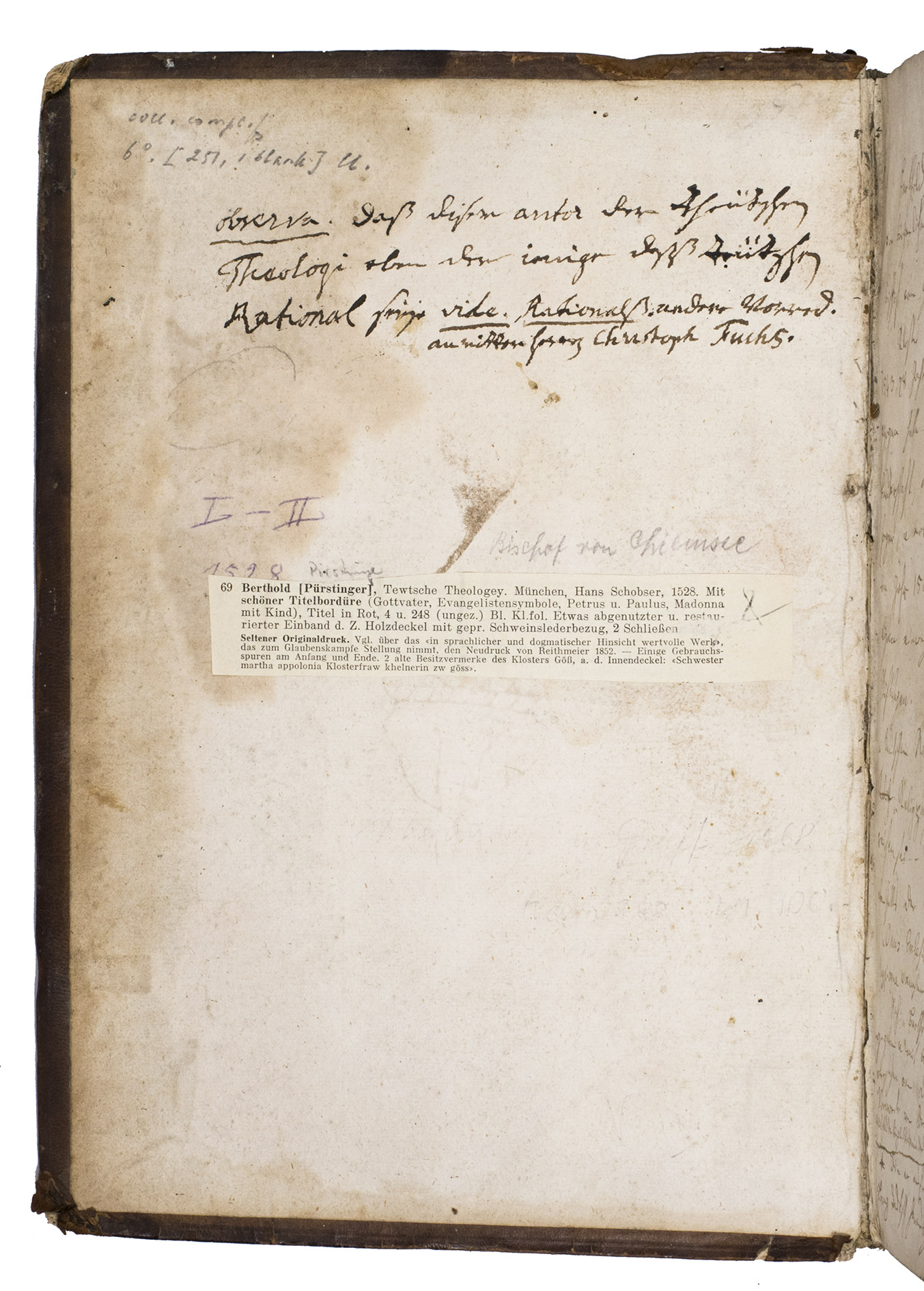
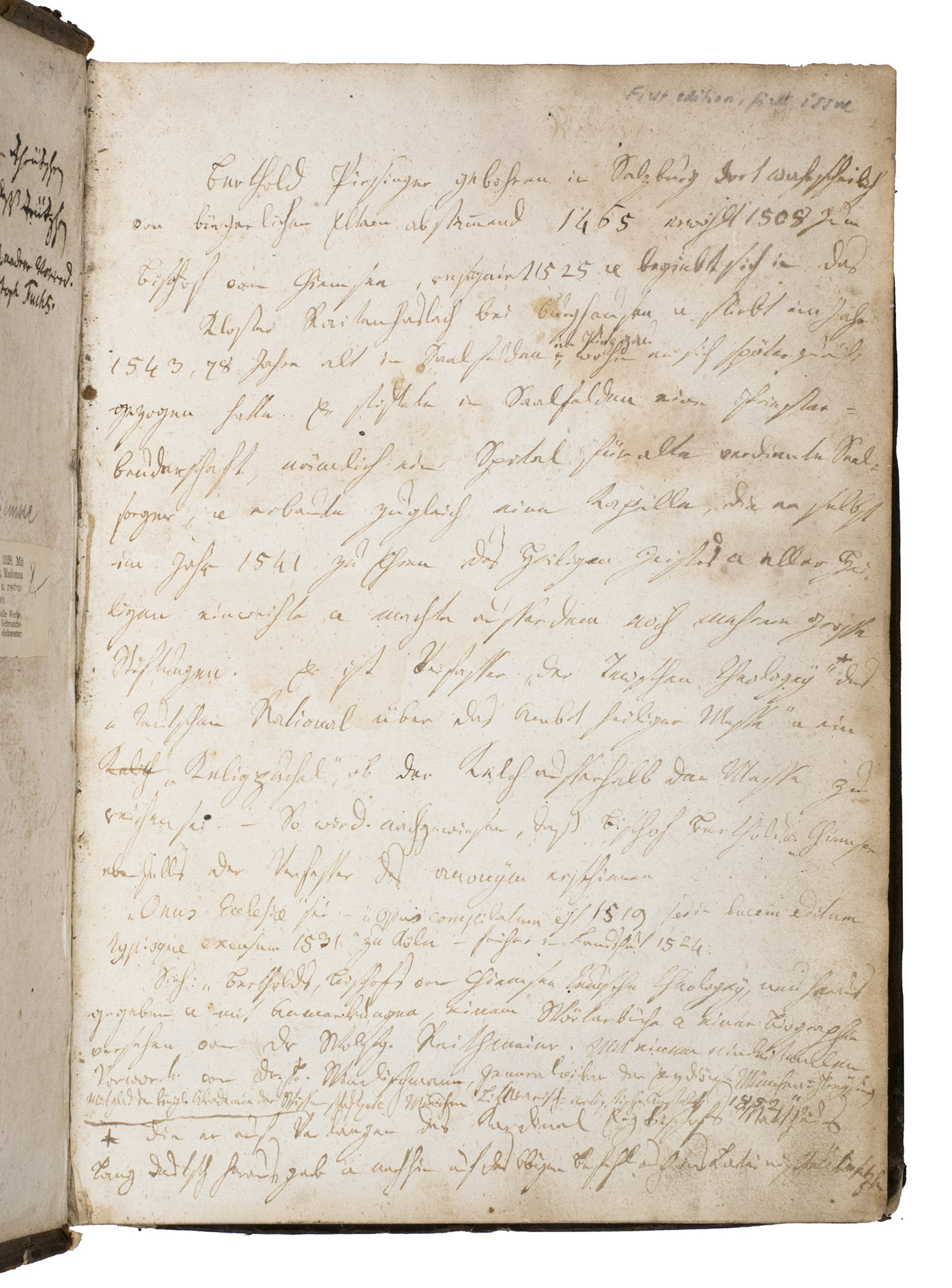
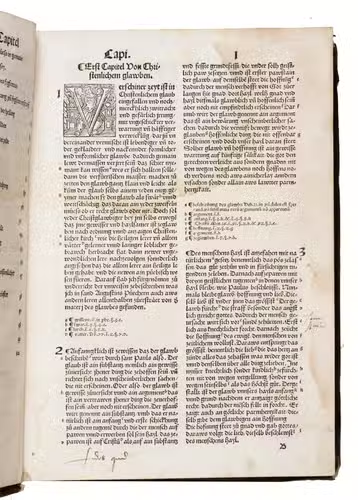
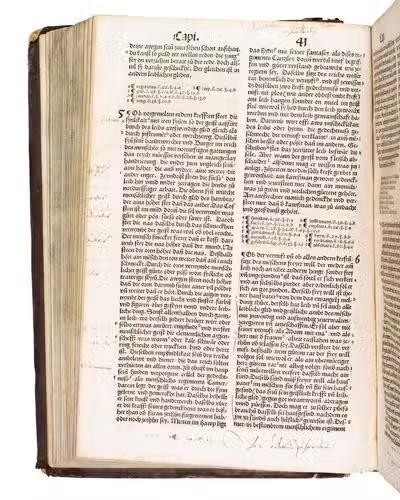
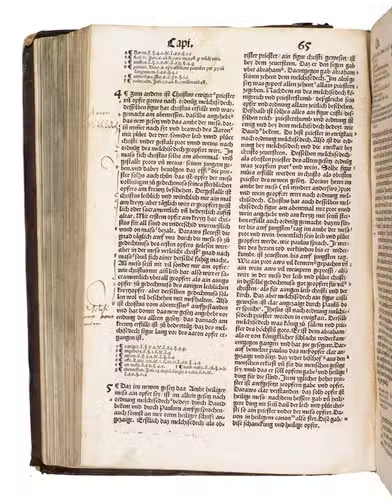
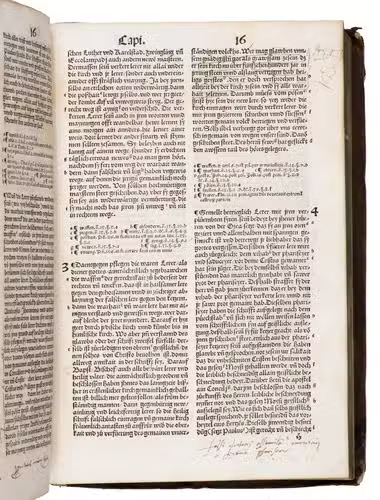
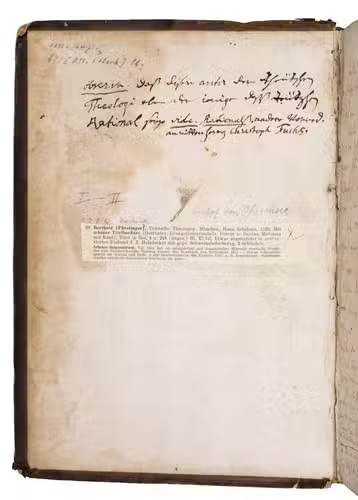
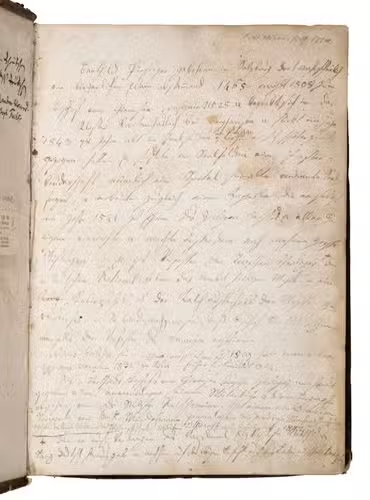
With a manuscript inscription on the front pastedown naming Christoph Fuchs, and a catalogue entry for another copy of this work mounted on a separate slip to the same pastedown. The first flyleaf bears an extensive annotation in German. The volume contains numerous underlinings and marginal notes commenting on the text. The binding is worn, with some pieces of leather missing on the front board, the leather has been restored in several spots. A small wormhole affects the final few leaves, and occasional browning and staining. Otherwise in good condition. BM STC German p. 698; Dodgson II, 425, 12 c note; Haebler II, 163; Milway, The burden and the beast: An oracle of apocalyptic reform in early sixteenth-century Salzburg, (1997); Remberger, "Die Lehre von der Kirche in der" Tewtschen Theologey" Bertholds von Chiemsee", Münchener Theologische Zeitschrift, 9(2), (1958), pp. 97-109; USTC 696369 (same as 696370); VD 16, P 2923; WorldCat 634875044.
Related Subjects: