REUCHLIN, Johann.
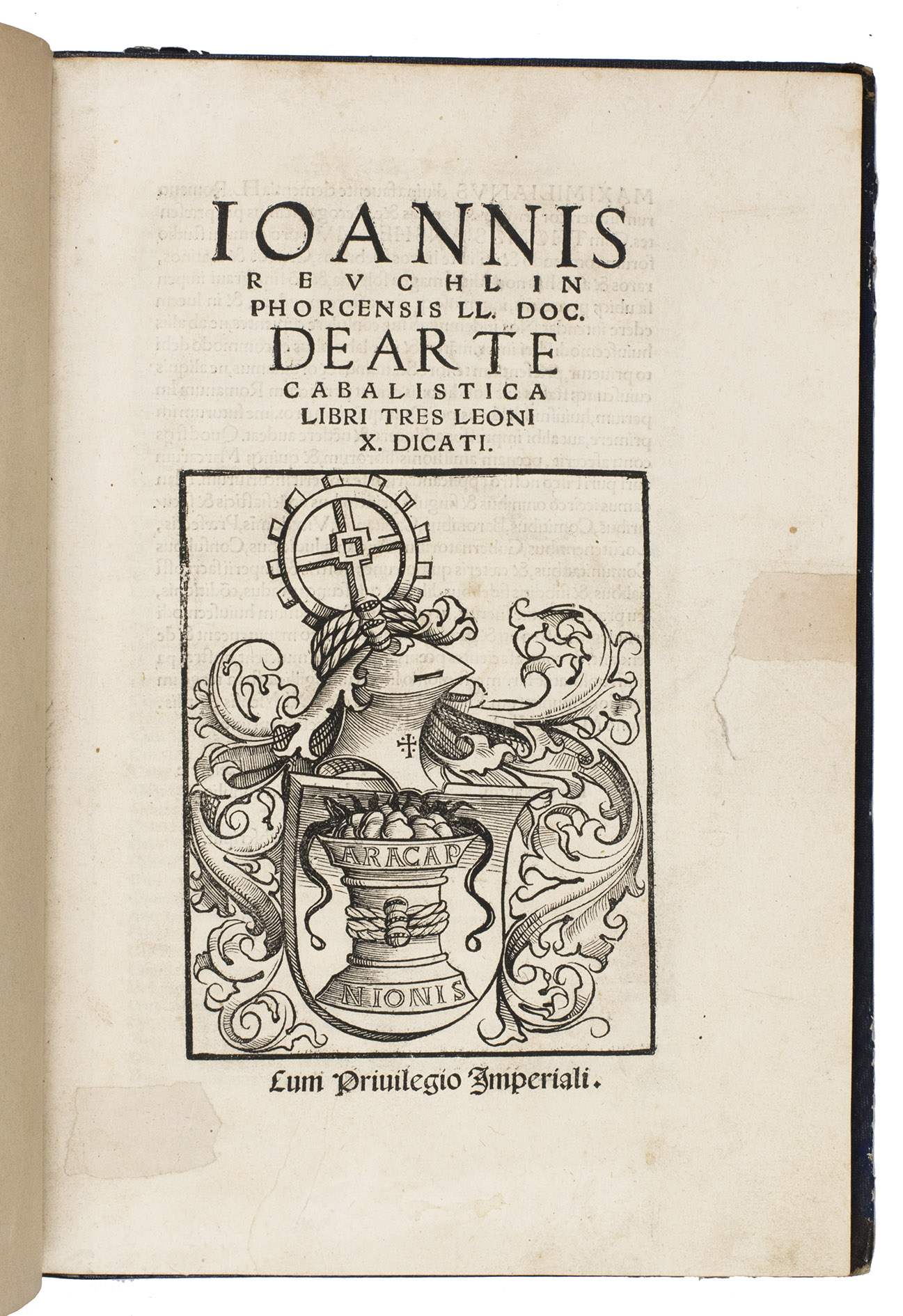
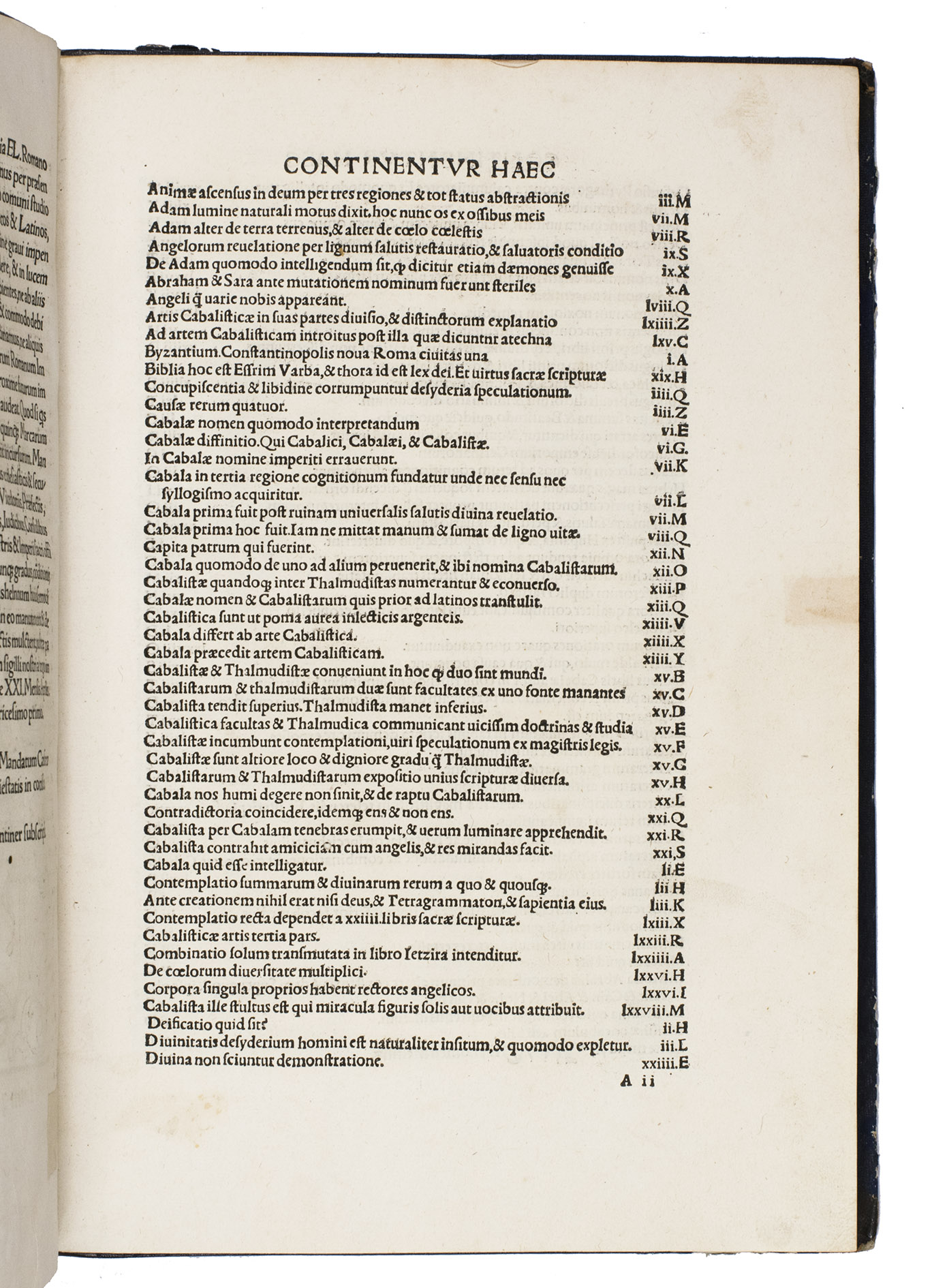
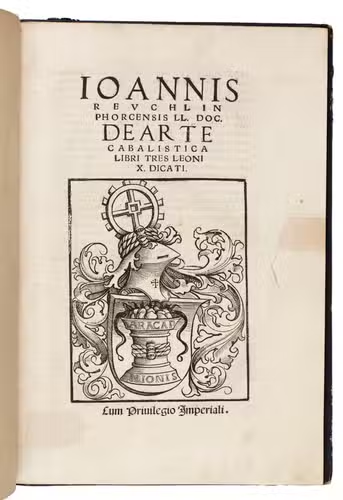
De arte cabalistica libri tres Leoni X. dicati.
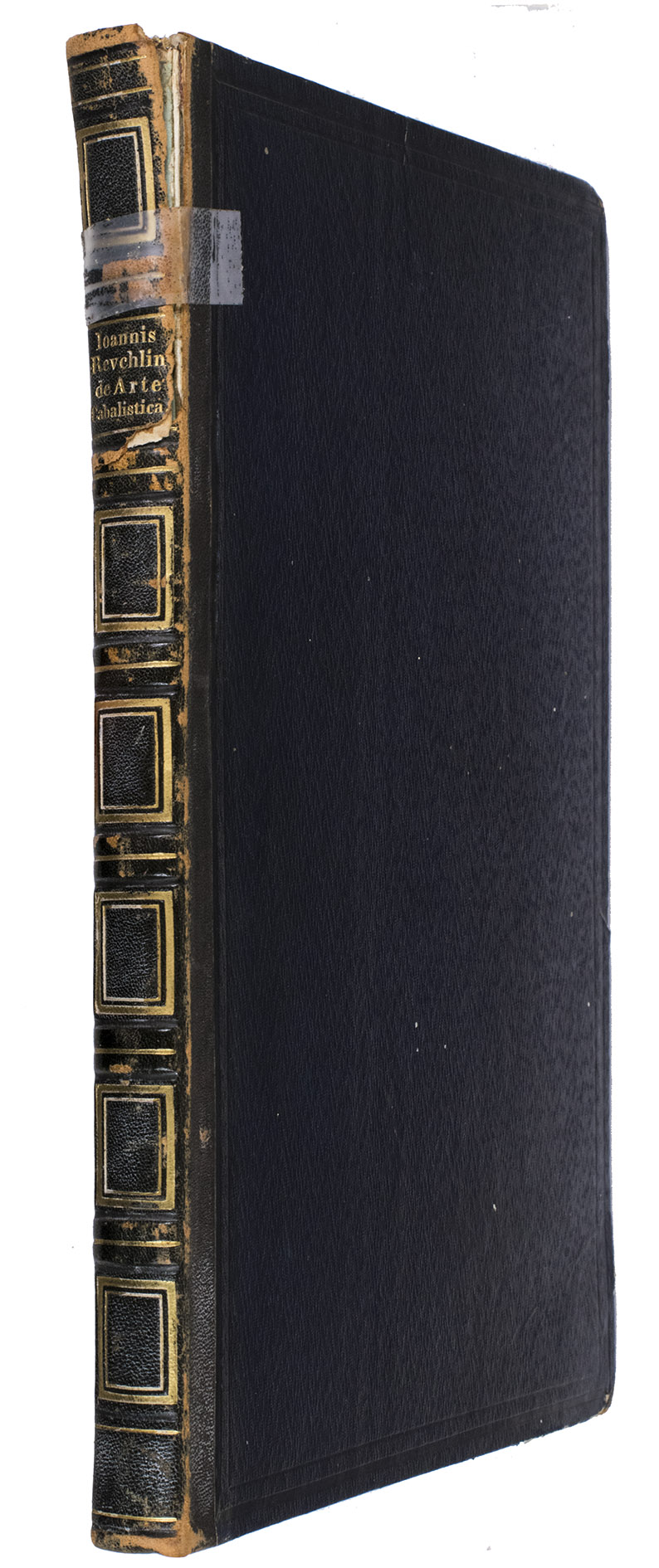
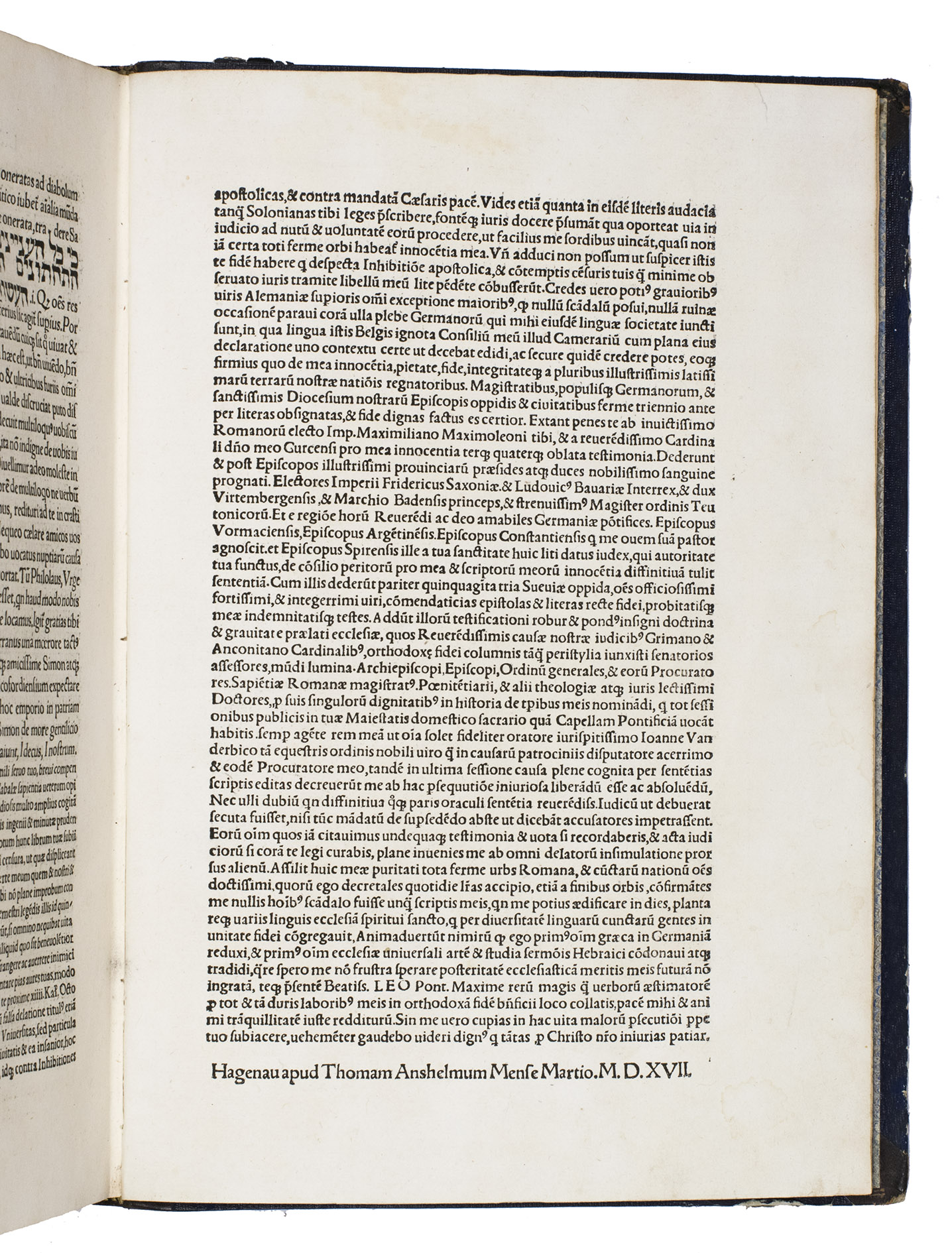
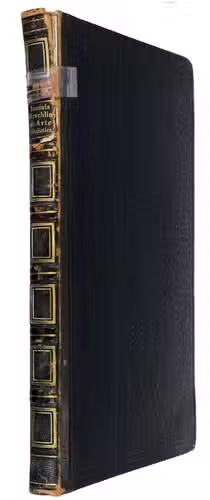
(Colophon:) Hagenau, Thomas Anshelm, March 1517. Small folio (20.5 x 29.8 cm). With Reuchlin's woodcut decorated coat-of-arms on the title page. 19th-century blind-stamped half calf. [4], LXXIX, [1] ll.
€ 15,000
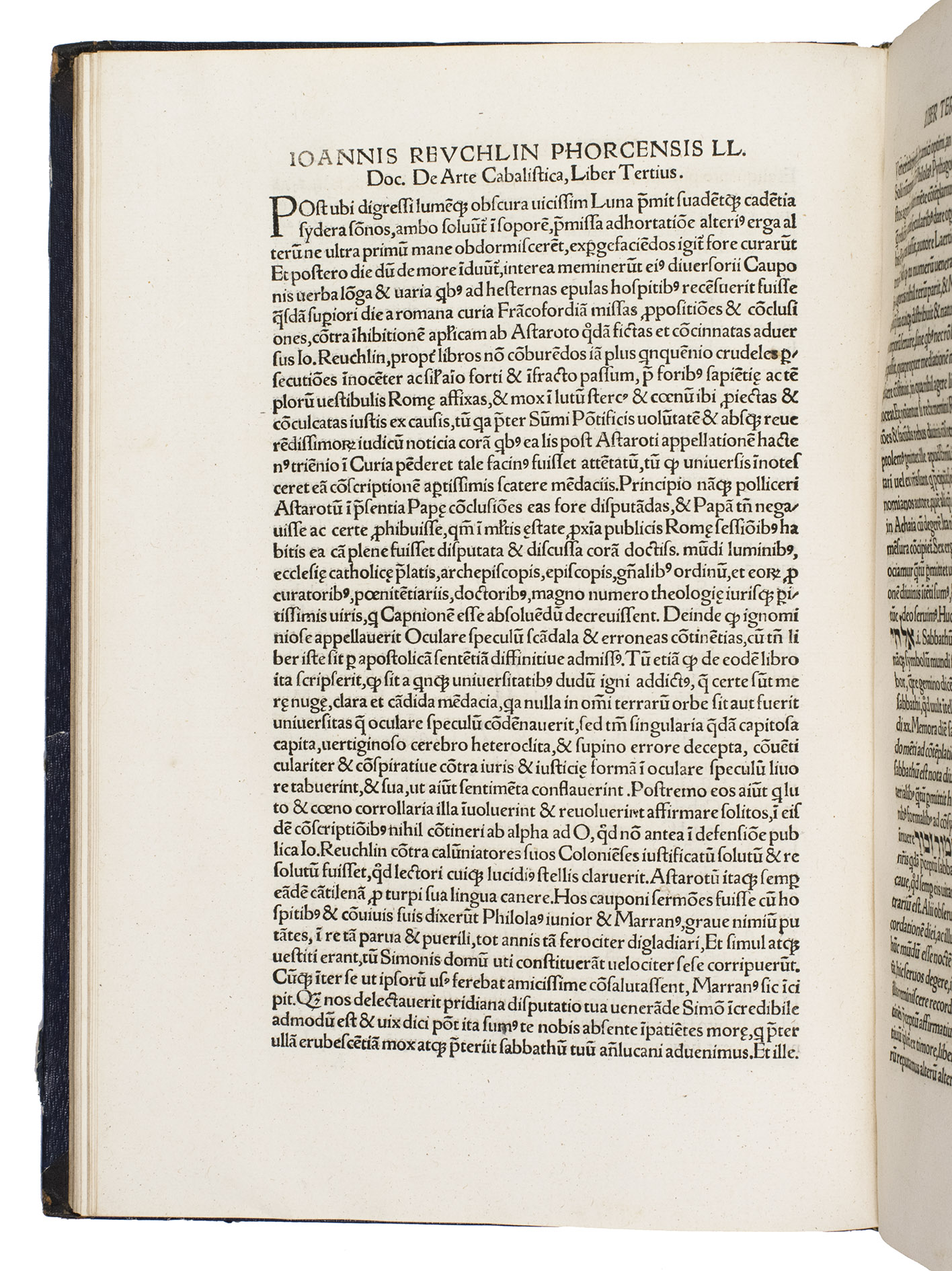
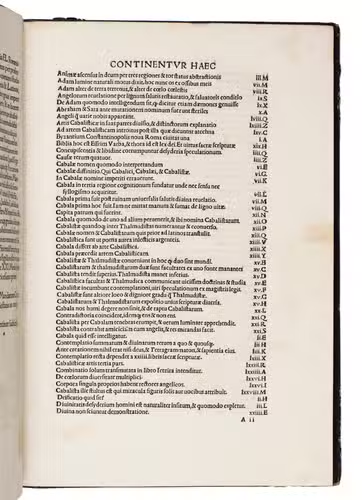
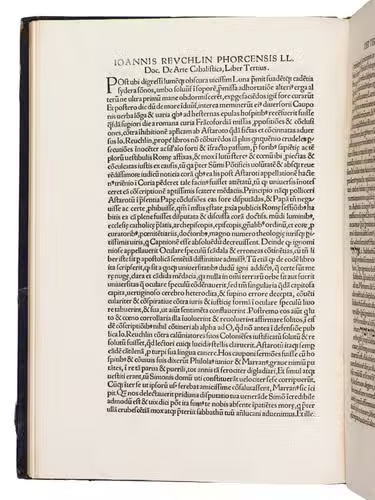
First edition of De arte cabalistica, the first substantial Latin exposition of Kabbalistic doctrine. It was written by Johann Reuchlin (1455-1522), a leading figure of European Humanism and a renowned professor at the University of Basel, and it marks a crucial moment in the dissemination of Jewish mystical thought to the Christian intellectual world.
Inspired to study the Kabbalah in 1490, Reuchlin began learning Hebrew in 1493 and gradually amassed an impressive collection of Kabbalistic texts. Contrary to many contemporaries, who sought to suppress Jewish learning, Reuchlin saw in the Kabbalah a means to defend Christianity and reconcile science with the mysteries of faith. His first major Hebrew work, De rudimentis hebraicis (1506), provided a grammar and lexicon based largely on David Kimhi (1160-1235), opening the Hebrew tradition to Christian scholars. This foundation led to De arte cabalistica.
The text unfolds as a three-part dialogue between Simon, a Jew, Marranus, a Muslim, and Philolaus, a Pythagorean. Through this structure, Reuchlin seeks a harmonization of Kabbalah with Christianity, dedicating the work to Pope Leo X, who had intervened to halt proceedings against Reuchlin for opposing the suppression of Hebrew books. The first part addresses the origins and principles of Kabbalah, arguing for its compatibility with Christian belief. The second part integrates philosophical currents, including Pythagorean and Platonic ideas, showing how Kabbalah can illuminate divine mysteries. The final part synthesises these insights, demonstrating their practical application to theology and spiritual understanding. Later, the work was defended by Martin Luther against the antisemitism of Johann Pfefferkorn (1469-1523) and others, though it was subsequently listed on the Index librorum prohibitorum by Pope Paul IV in 1559. Scholars continue to regard it as the most important Renaissance text on Kabbalah and a pivotal vehicle for its dissemination in Christian Europe.
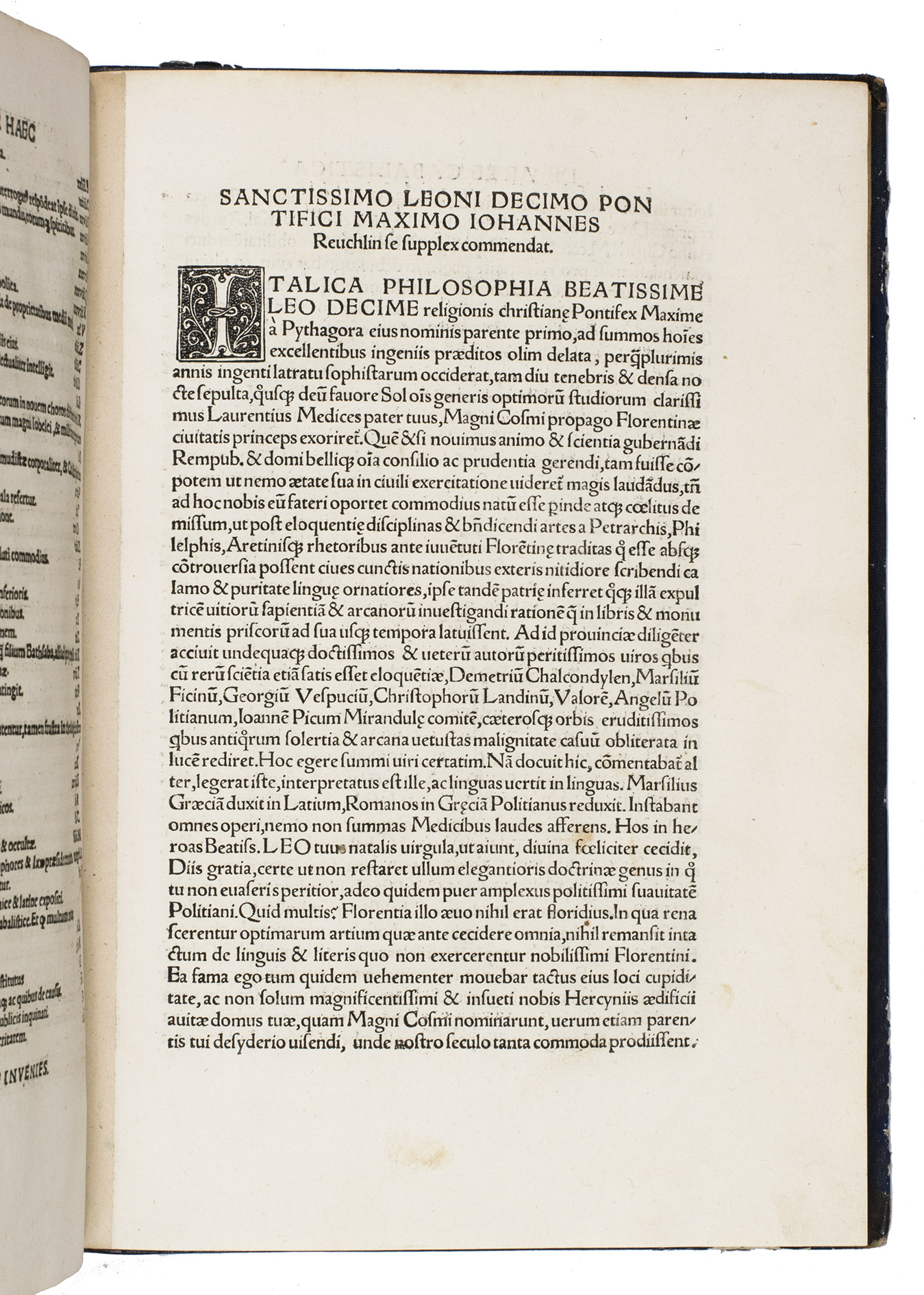
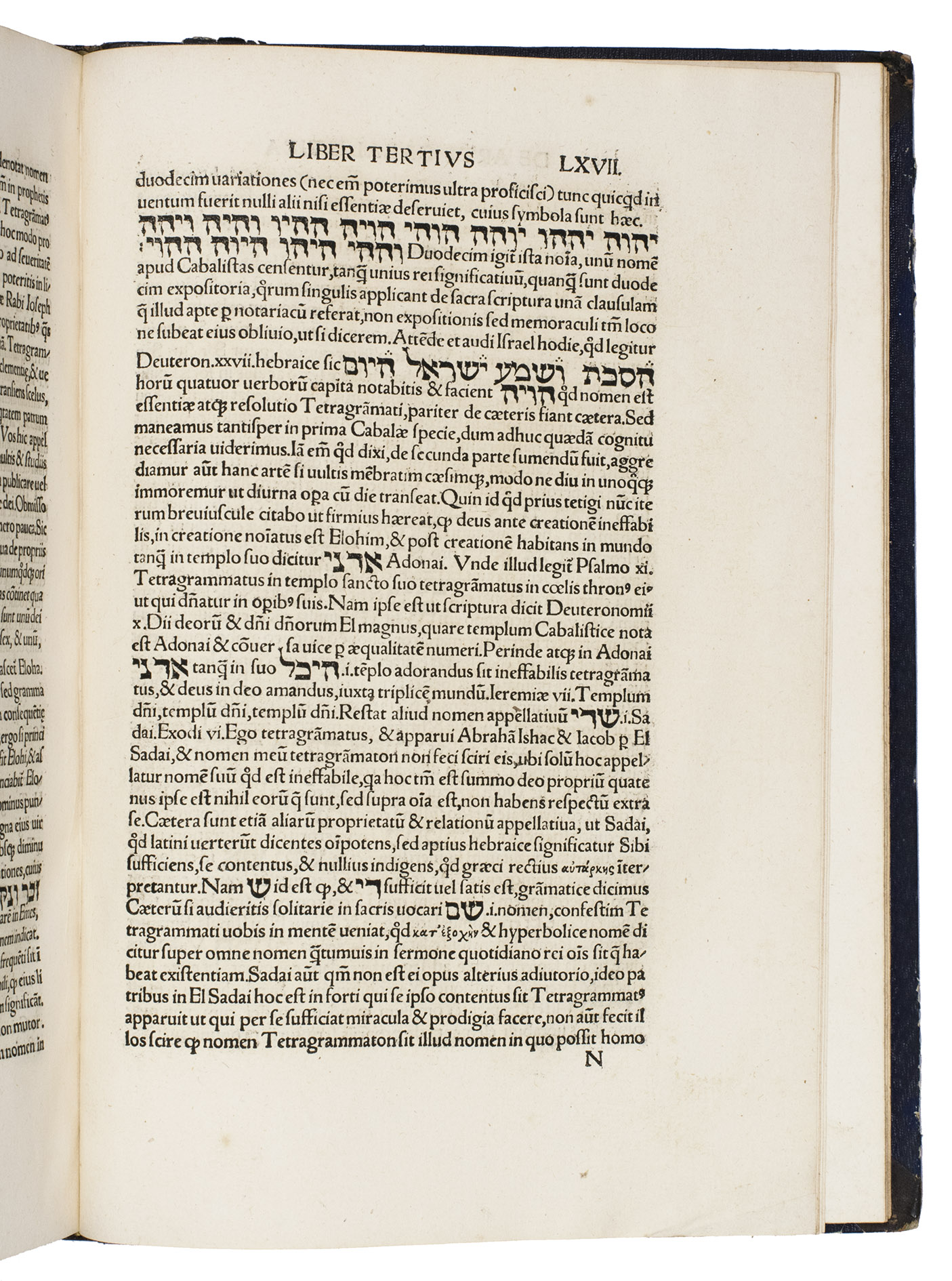
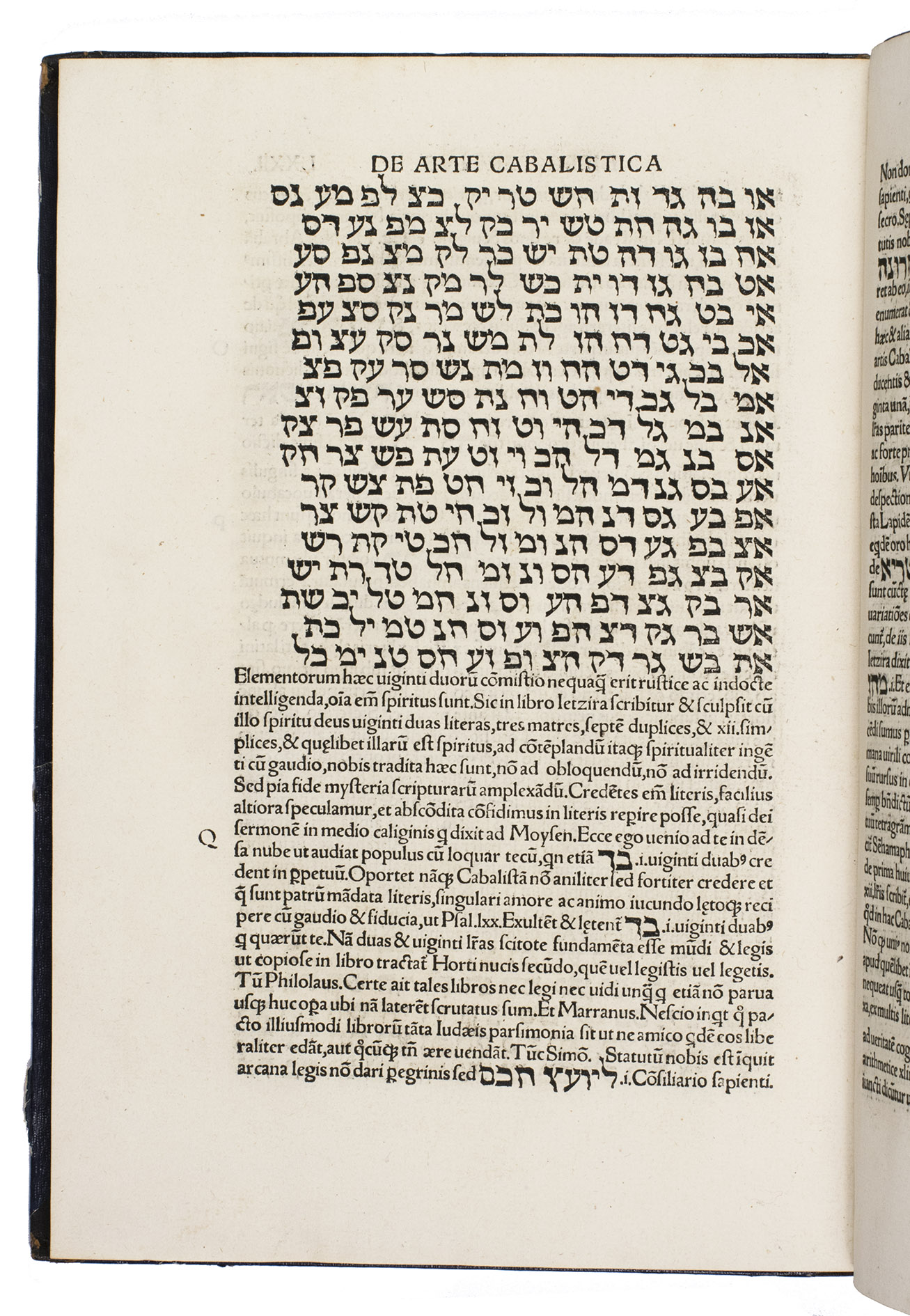
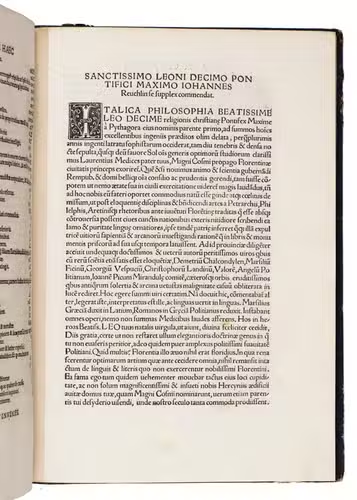
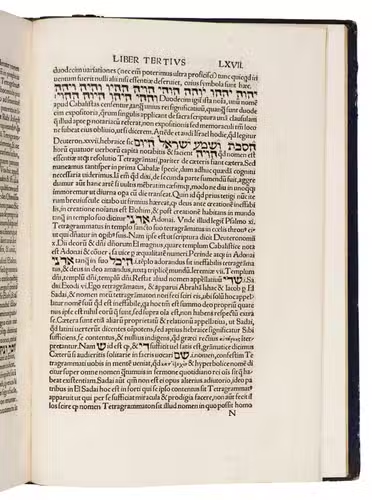
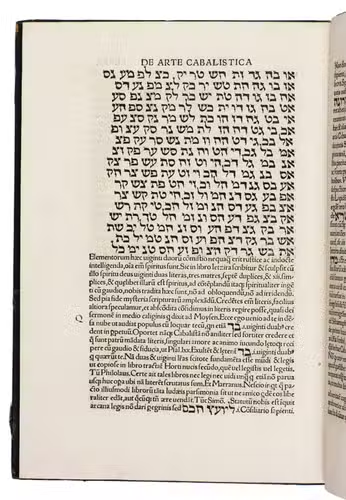
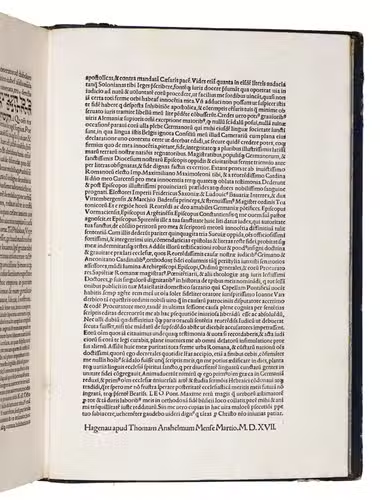
Printed by Thomas Anshelm in Hagenau, the book features passages in Hebrew and Greek type. On the title verso is a privilege granted by Emperor Maximilian I for Anshelms first editions in Hebrew, Greek, and Latin, a document of notable importance in the history of publishing and bookselling, as it is the earliest of its kind.
With a small manuscript annotation in the outer margin on the verso of leaf VI ("Quid sif Cabala"). The binding shows signs of wear, with a piece of tape around the head of the spine, parts of the title page (at the fore-edge margin and in the gutter) have been reinforced, and a tiny wormhole in the fore edge of ll. XII-XLVII. Otherwise in good condition. Adams R 381; BM STC German p. 732; Goedeke I, 416.20; Ludwig Geiger, Reuchlin (1871), pp. 185-202; USTC 667610; VD16 R 1235.
Related Subjects: