ALARDUS AMSTELREDAMUS.
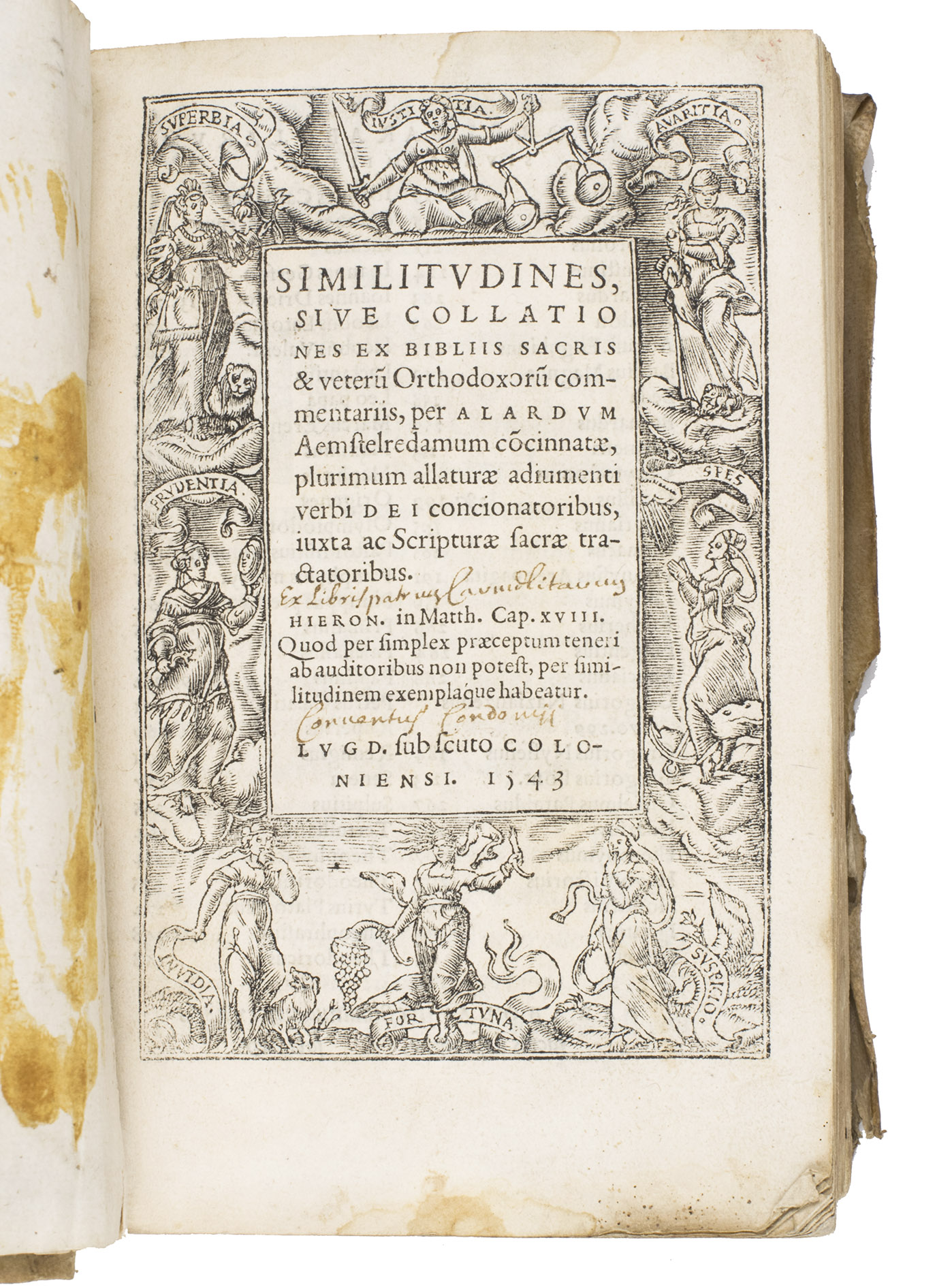
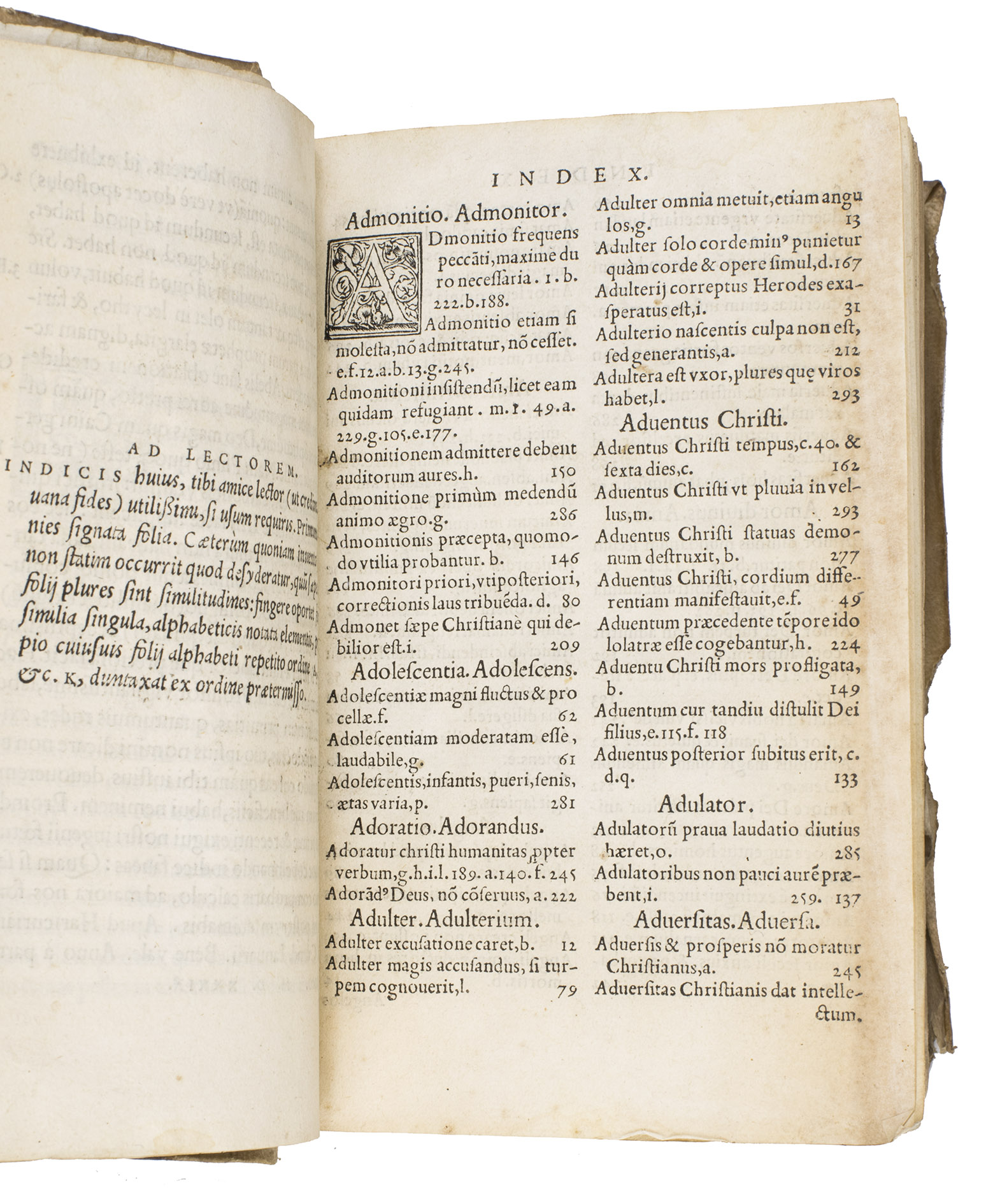
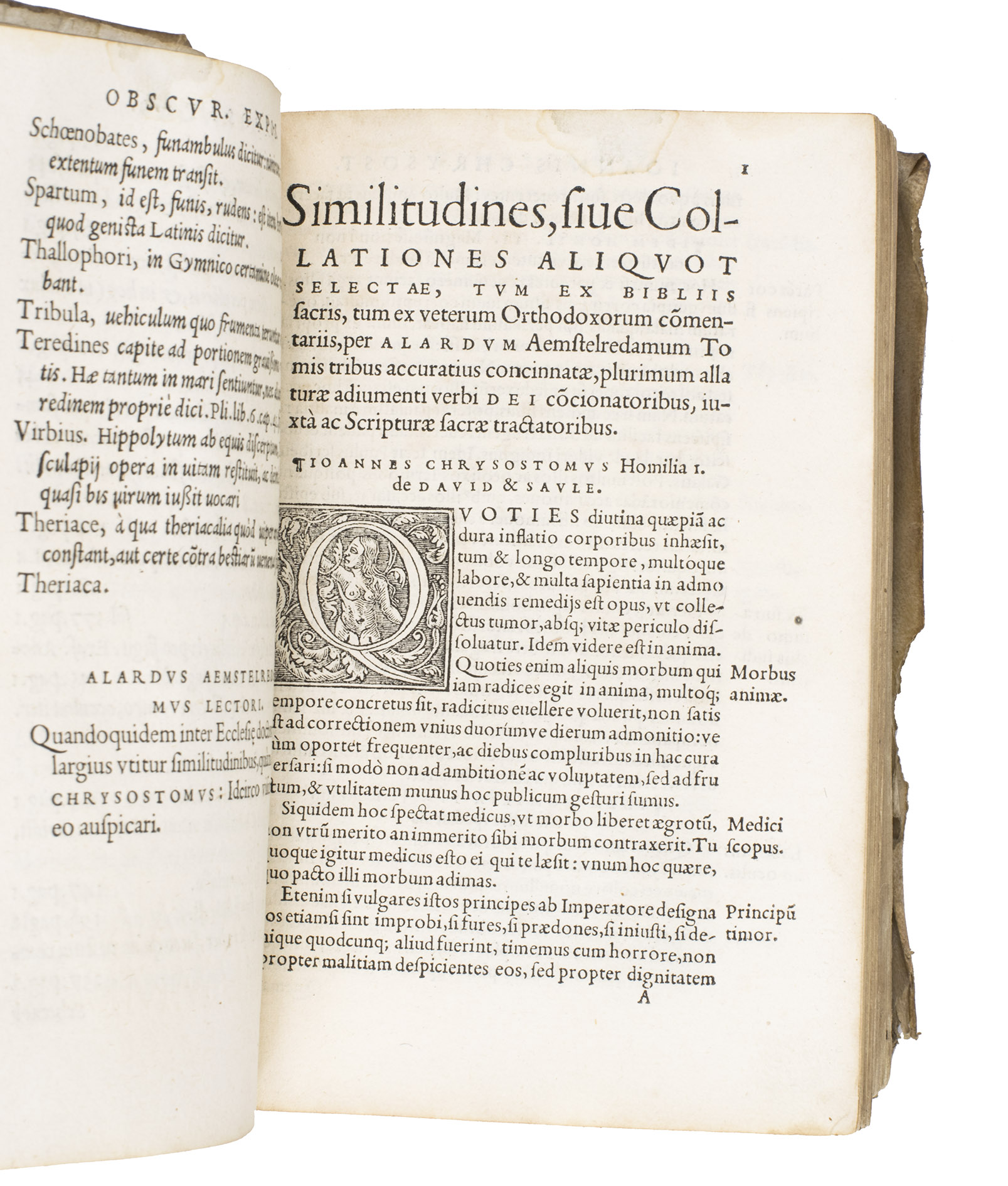
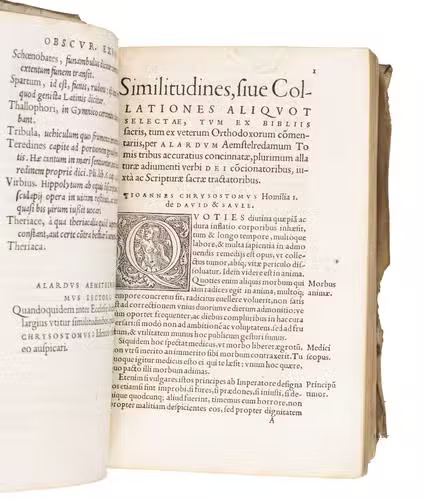
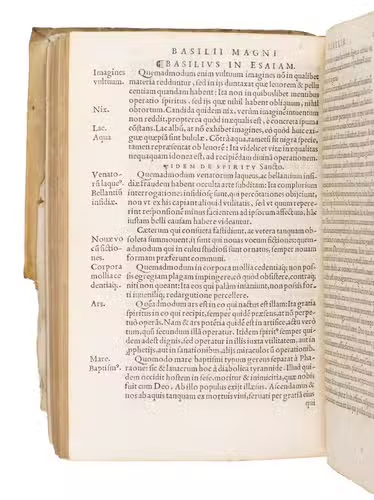
Selectae similitudines sive collationes, tum ex bibliis sacris, tum ex veterum orthodoxorum commentariis. per ... tomis tribus accurativs concinnatae, plurimum allaturae adiumenti verbi dei concionatoribus, iuxta ac scripturaesacrae tractatoribus.
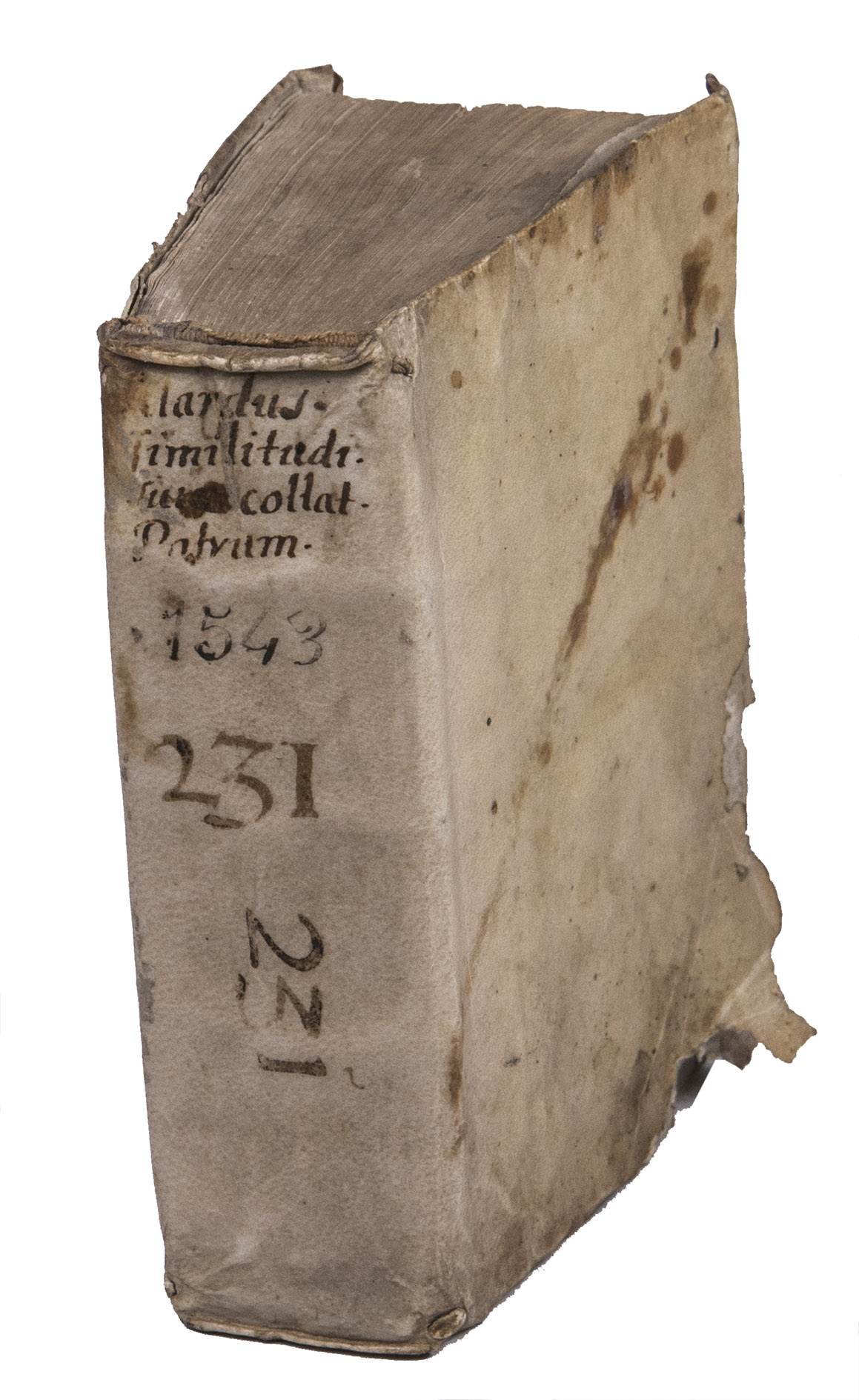
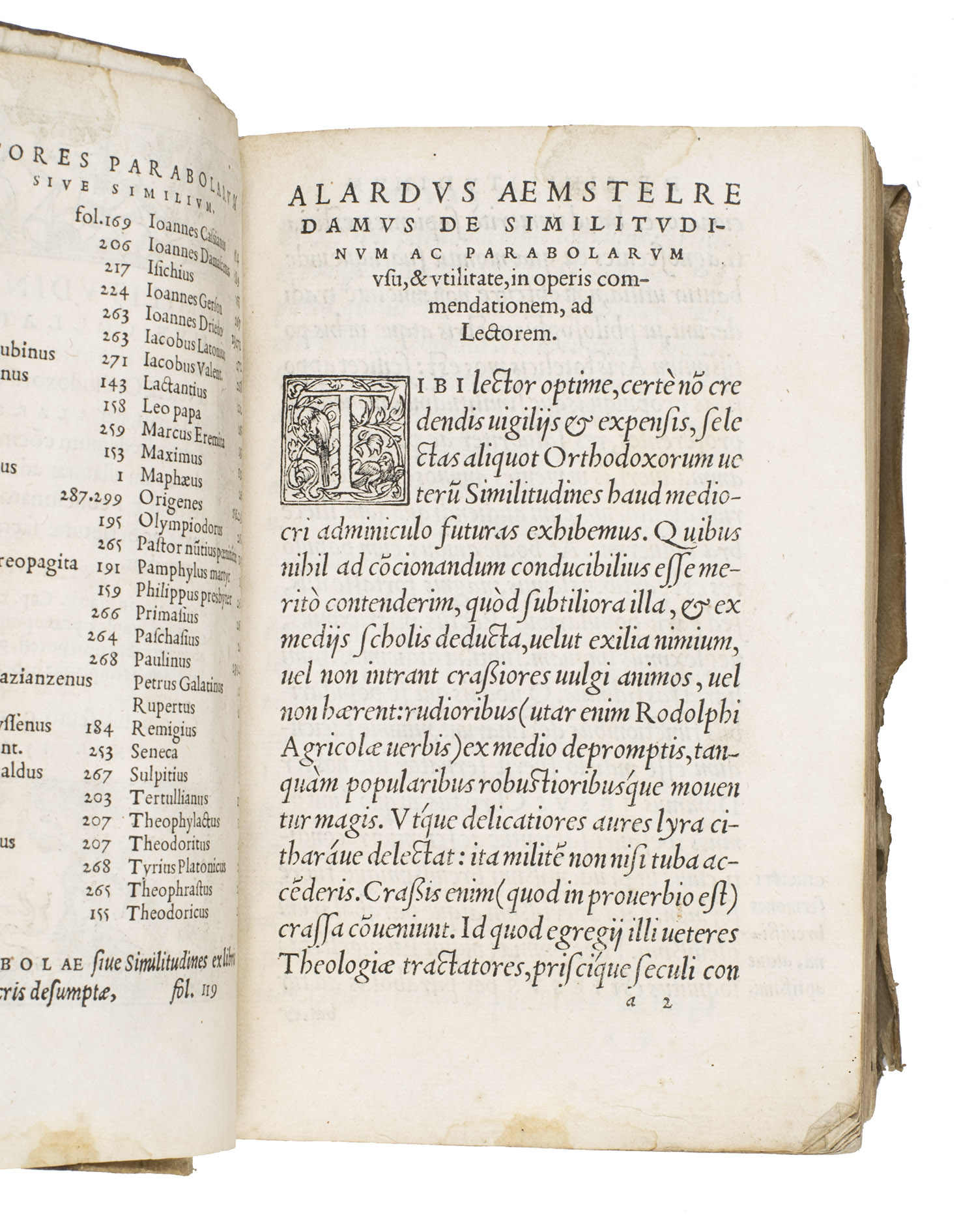
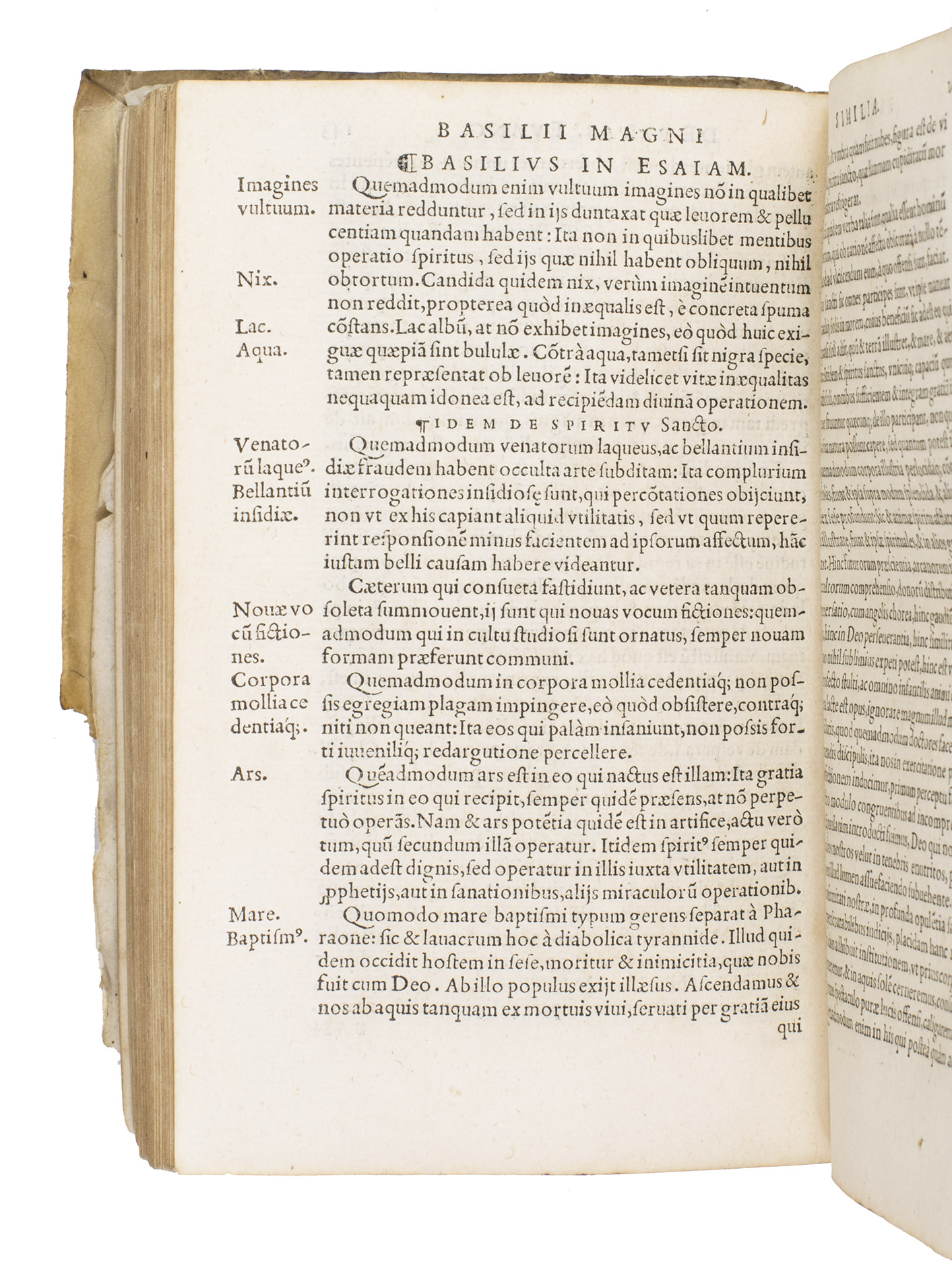
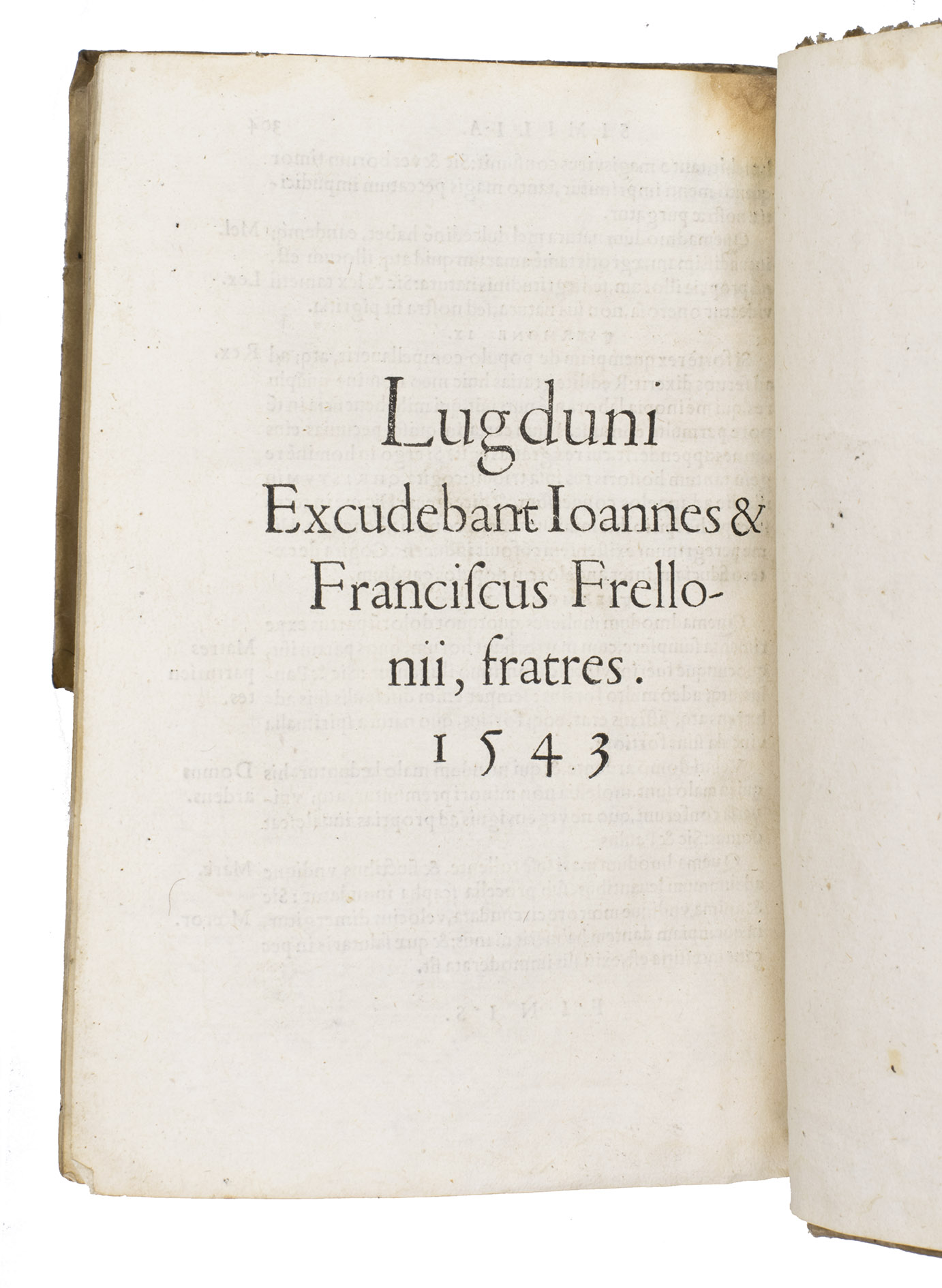
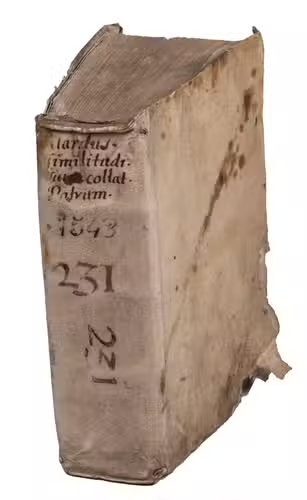
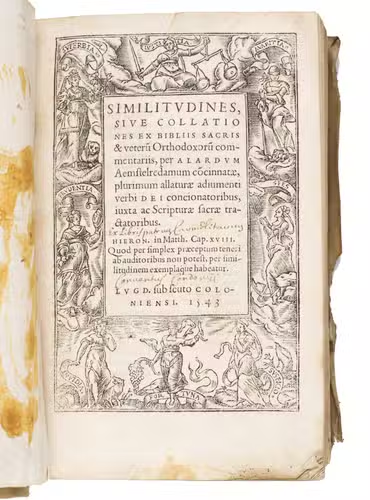
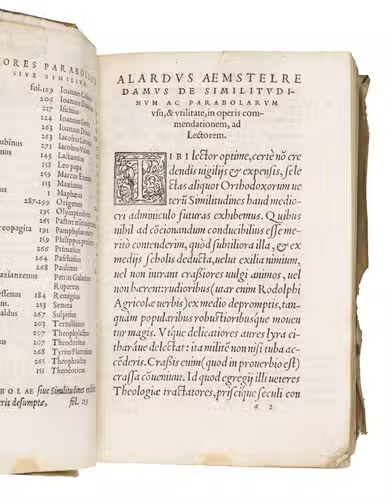
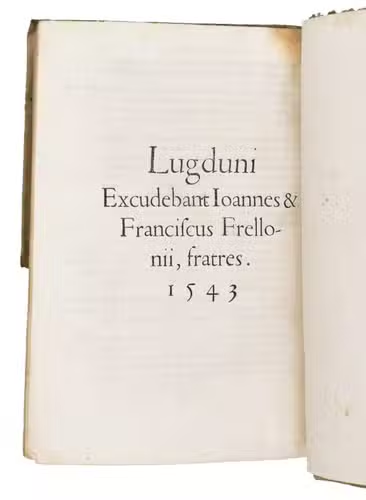
Lyon, (colophon:) Jean and Francois Frellon, 1543. 8vo. With the title set in a woodcut frame, and some woodcut decorated initials. Contemporary limp overlapping vellum. [48], 304 ll.
€ 1,500
Second edition of Alardus Amstelredamus' (or Alardus of Amsterdam, 1491-1544) Selectae similitudines, his most popular work largely due to his extensive commentary on Desiderius Erasmus (1466-1536), with whom he maintained a close personal and scholarly relationship. The present work exemplifies Alardus role as a key figure of biblical humanism, reflecting both his humanist erudition and his engagement with contemporary theological discourse. It remains a landmark work of 16th-century scholarship and an essential testament to the intellectual networks of the Northern Renaissance.
Alardus life was characterised by an unwavering commitment to humanist scholarship and to the defence of orthodox Catholic teaching during the early years of the Reformation. His wide-ranging literary output includes devotional works, theological treatises, and editions of classical texts. He maintained lifelong ties with the Benedictine Abbey of Egmond, celebrated its library and treasures, and dedicated numerous works to its abbots. Alardus passed away in Leuven in 1544, bequeathing his library to the Amsterdam Orphanage, and was buried in the Church of Saint Francis.
With a contemporary manuscript owner's inscription on the title page "Ex libris patrum Carmelitarum conventus Londinii". The White Friars came to London in 1241 and assembled a substantial library, which was partly destroyed and partly dispersed at the dissolution of the monasteries in the 16th century. The vellum (and paper beneath) in the bottom outer corner of the front board and the top and fore-edge margin of the back board is damaged, both boards and the spine are somewhat stained. The work is slightly browned throughout, with brown staining (glue residue?) on the first flyleaf and some damp staining in the blank top margin towards the end. Otherwise in good condition. Baudrier V 193; Kölker (Alardus) A.L. 43; USTC 153760; not in Adams, BM STC French.
Related Subjects: