ALARDUS AMSTELREDAMUS.
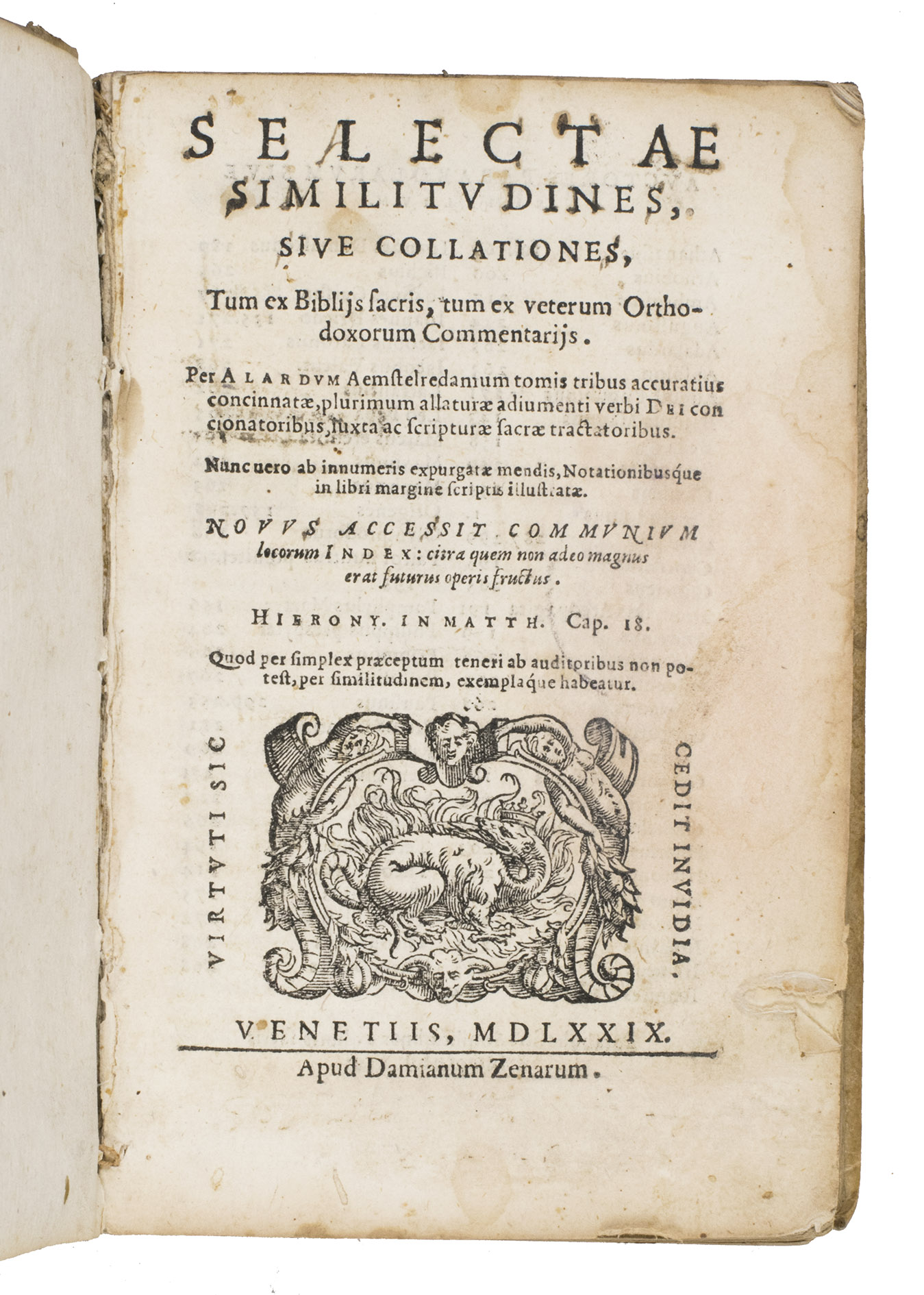
Selectae similitudines, sive collationes, tum ex Bibliis sacris, tum ex veterum Orthodoxorum commentariis ... Nunc vero ab innumeris expurgatae mendis, notationibusque in libri margine scriptis illustratae. Novus accessit communium locorum Index ...
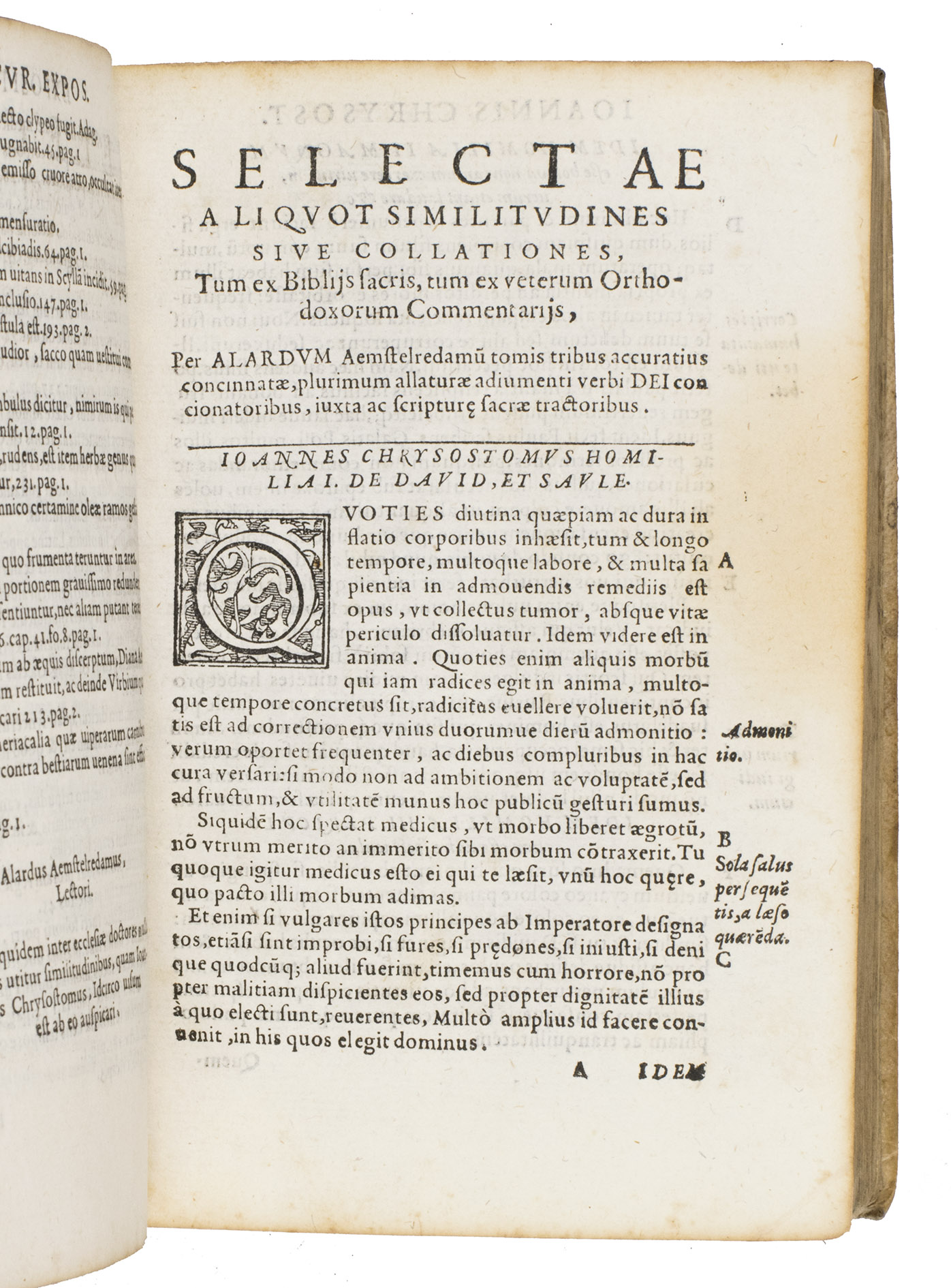
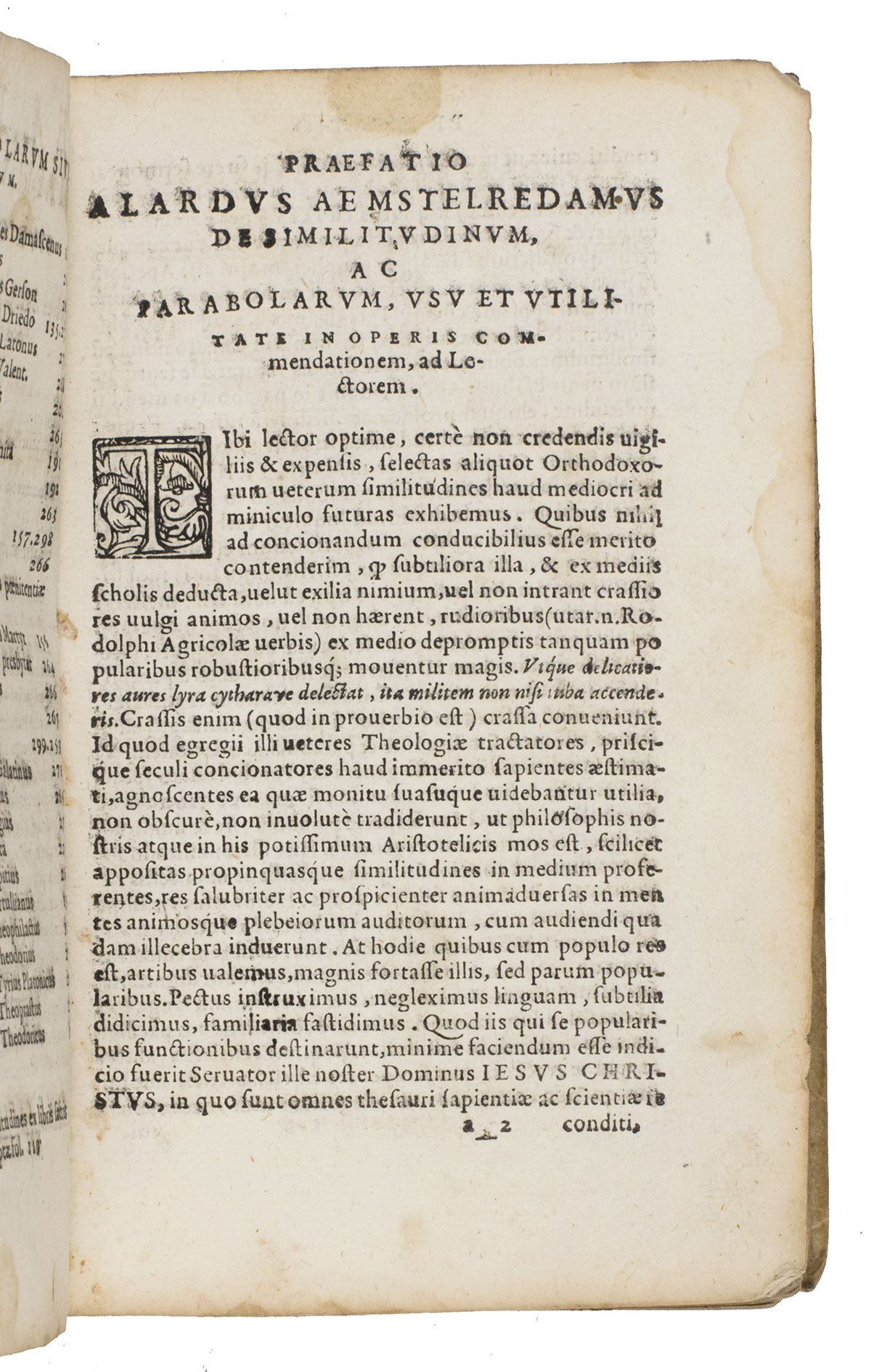
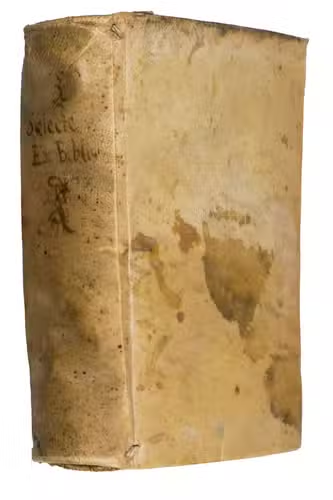
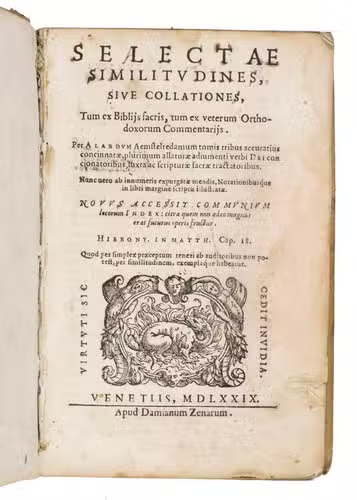
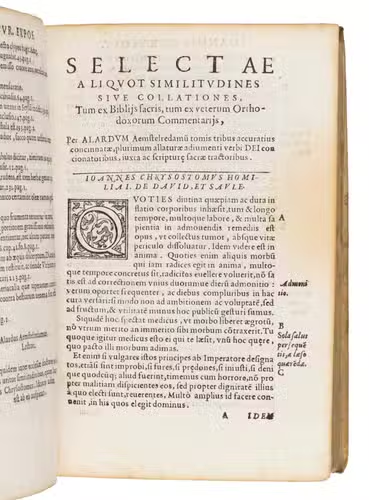
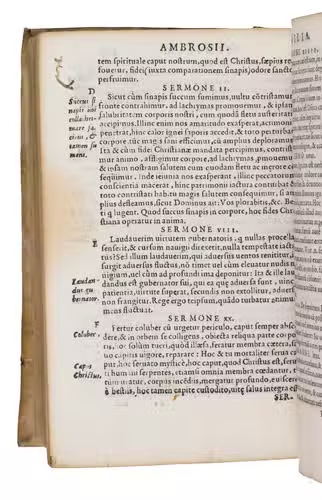
Venice, Damiano Zenaro, 1579. 8vo. With the woodcut printers device of Damianus Zenarus (fl. 1563-ca. 1604), featuring a crowned salamander sitting amidst flames, on the title page, and several woodcut initials. Contemporary limp vellum. [44], 304 ll.
€ 1,250
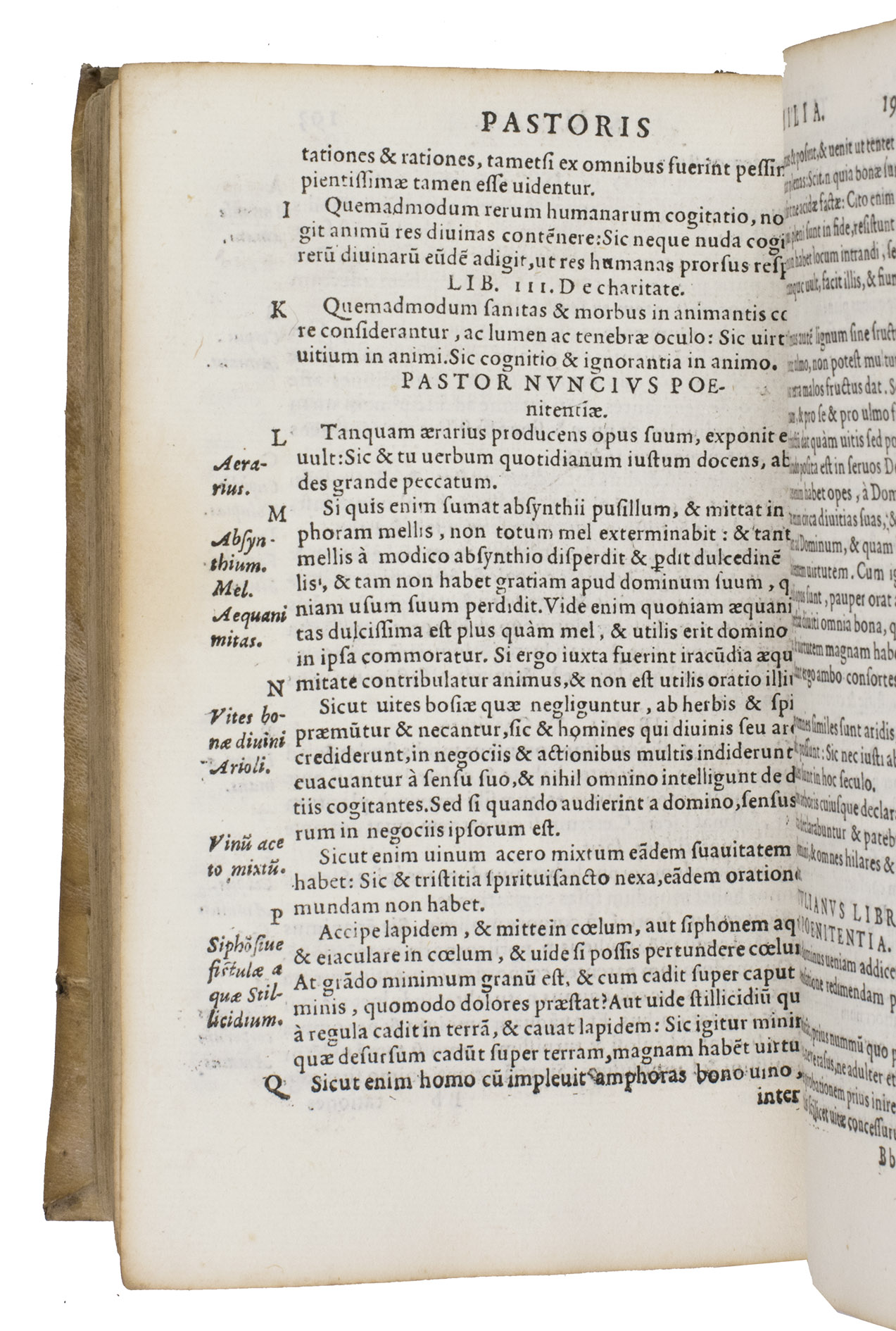
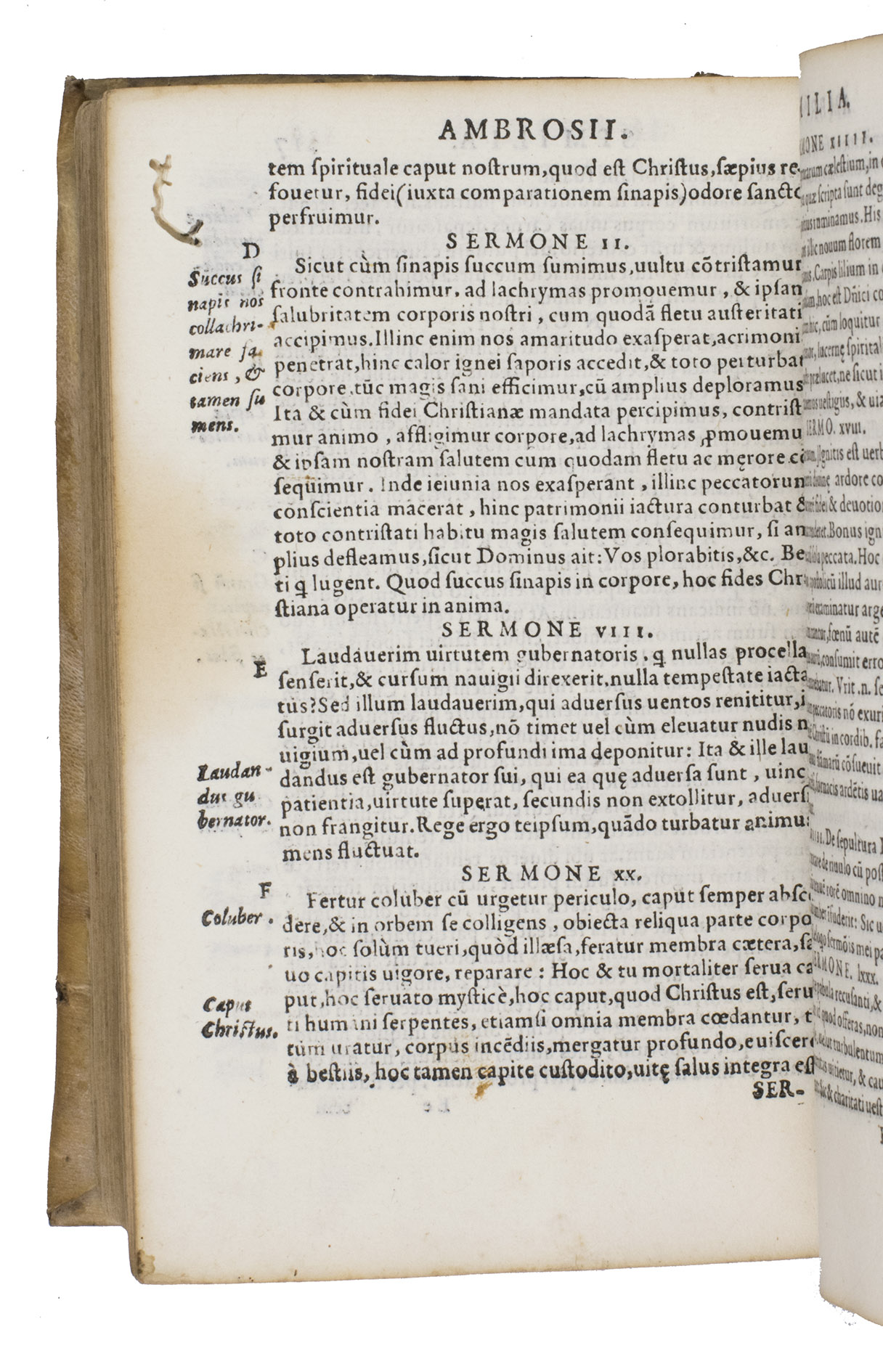
Page-for-page re-issue of the third edition (with some variants and many more printed marginal notes) of the most popular work by the Dutch humanist scholar Alardus Amstelredamus (Alardus of Amsterdam; 1491-1544), containing a collection of "similes", comparisons, parables and analogies gathered principally from the Bible and from the writings of the Church Fathers, designed as a theological and rhetorical handbook to provide intellectual and rhetorical tools to Christian preachers and biblical scholars. The first edition was published in 1539 by Johann Gymnich I in Cologne; the second in Paris in 1543 (with 5 other issues in the same year: 4 in Paris, 1 in Tours), and the third by the same publisher in Venice in 1574.
Alardus probably was a pupil of Alexander Hegius in Deventer. By 1511, he was teaching in Alkmaar where he was a student of Murmellius. Later, he maintained a close personal and scholarly relationship with Erasmus. The lasting popularity of the Selectae similitudines was also the result of this relationship and his involvement in the publication of the latters works, including Erasmus Adagia. Alardus main work was the two-volume of the edition of the collected works of Agricola in 1539, published by Johann Gymnich I in Cologne.
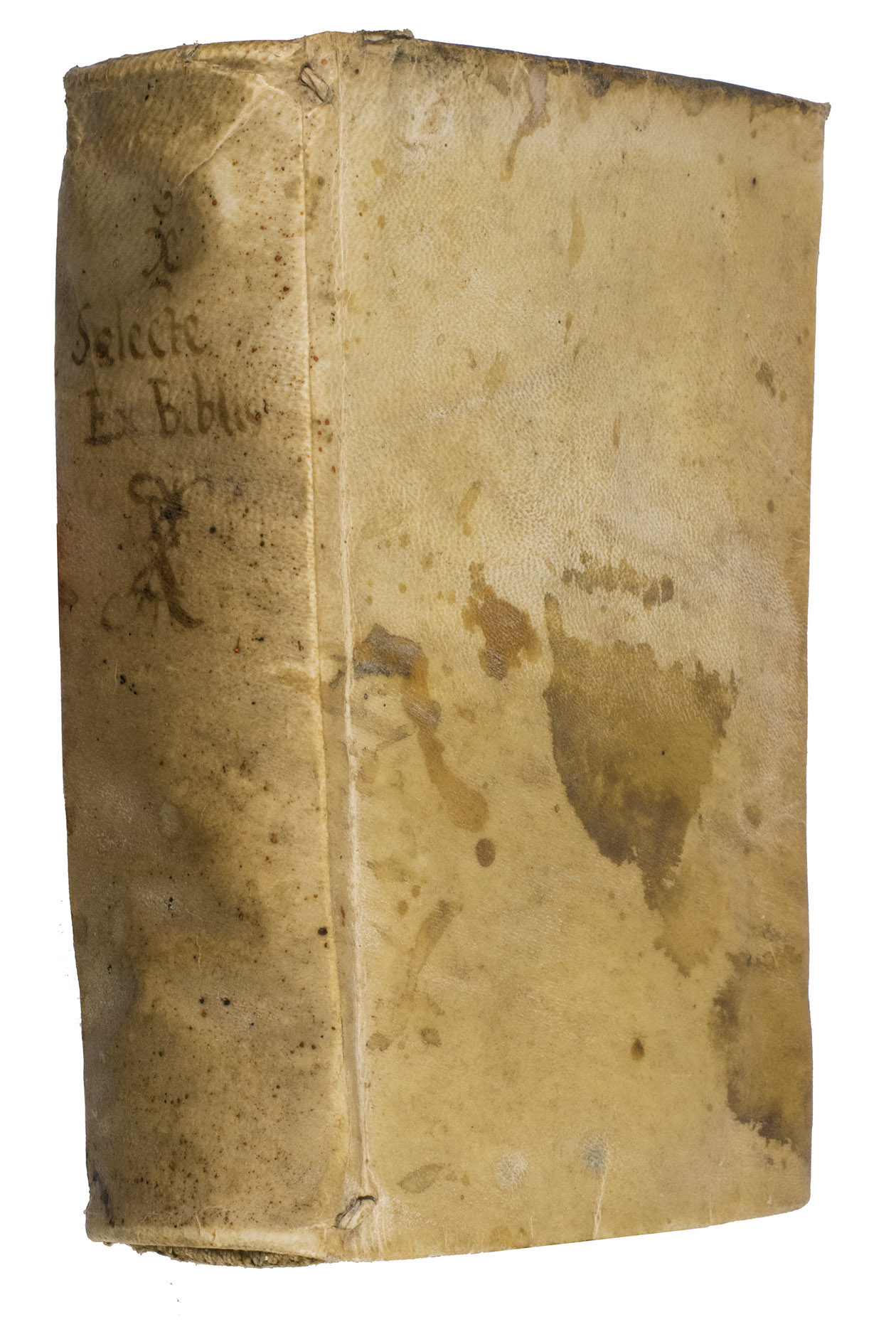
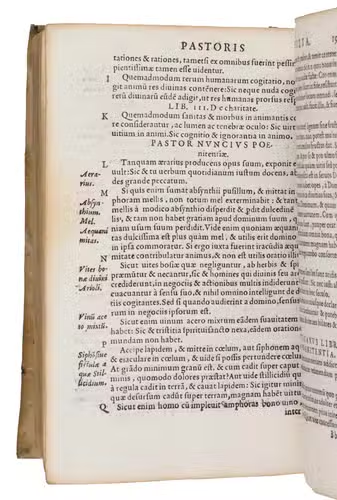
With a (contemporary) owner's inscription at the foot of the title page in brown ink. The binding is worn, the vellum is wrinkled and slightly stained, the book block is almost detached from the binding (only connected at the bottom of the front endpapers, revealing some printer's waste used in the binding), mostly marginal water staining throughout, a few small wormholes in the final leaf and back pastedown, lacking the final blank flyleaf. Otherwise in good condition. Contemporaries of Erasmus, I, p. 1921; De Graaf, Alardus, no. 43; Index Aurelianus, 102.111; Kölker, Alardus, A.L. 54; USTC 808182.
Related Subjects: