GIOVIO, Paolo.
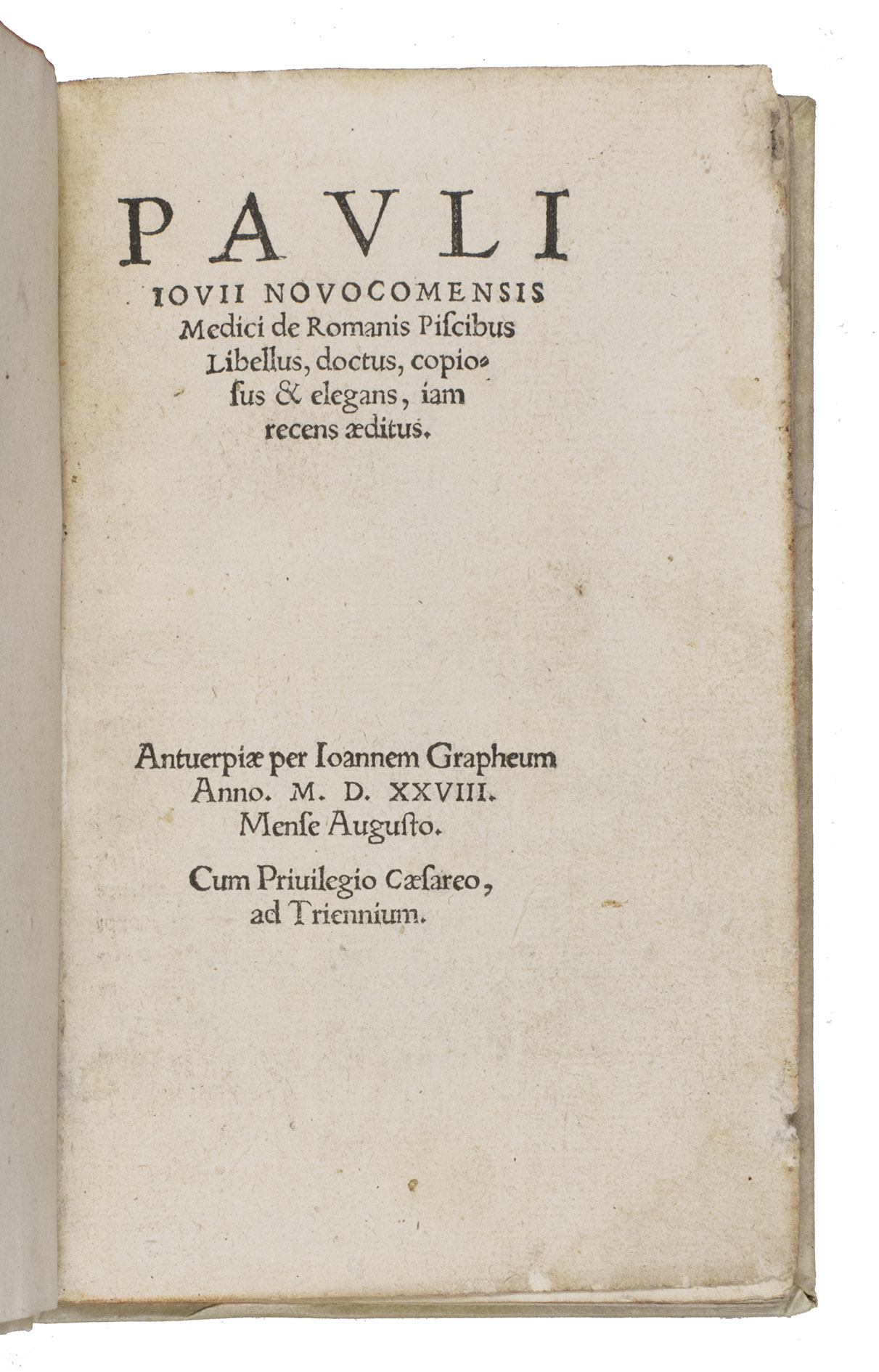
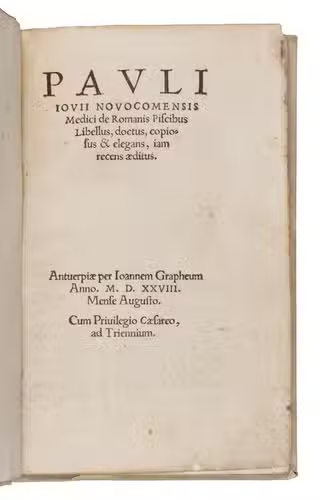
De Romanis piscibus libellus, doctus, copiosus & elegans, iam recens aeditus.
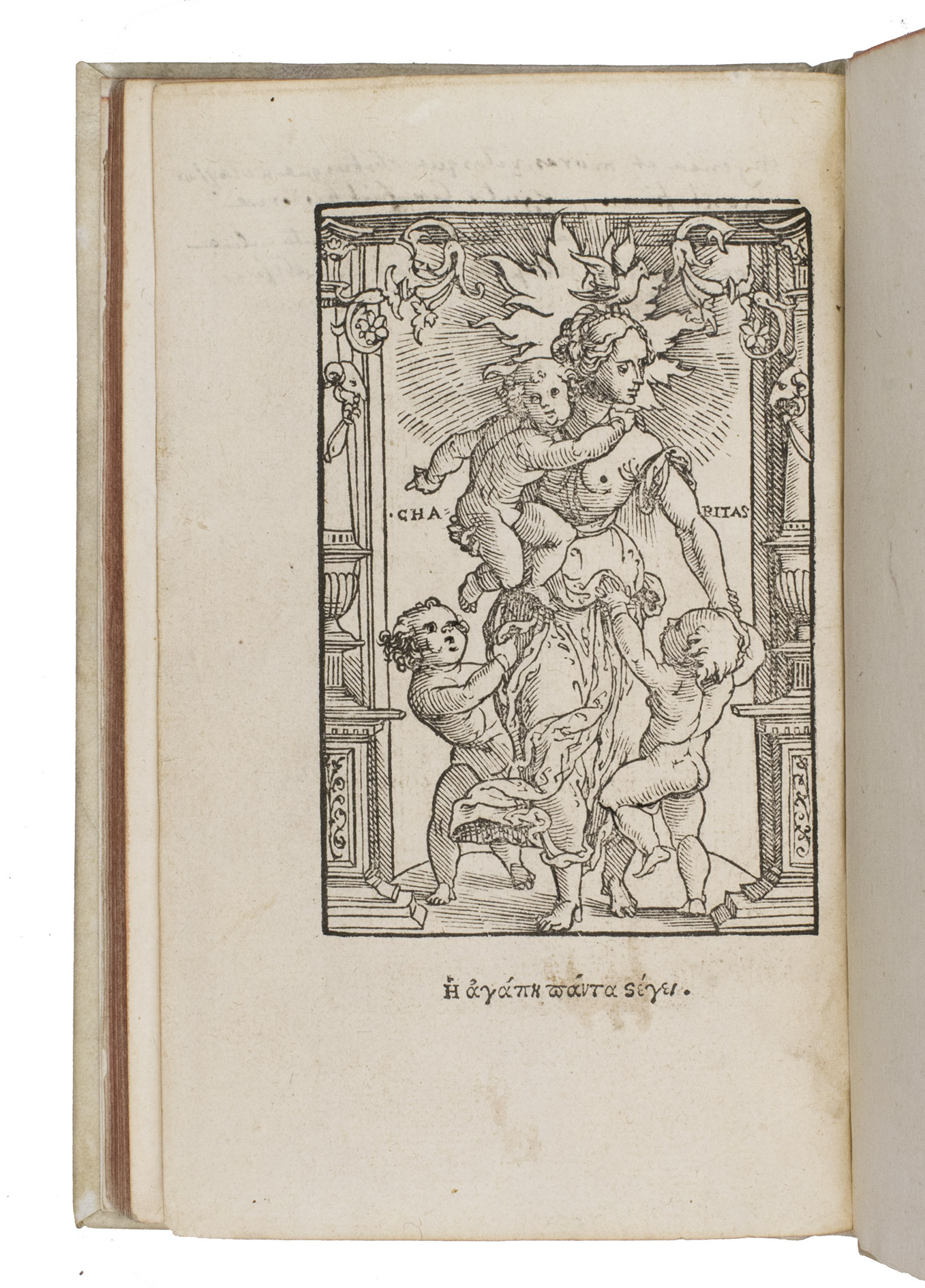
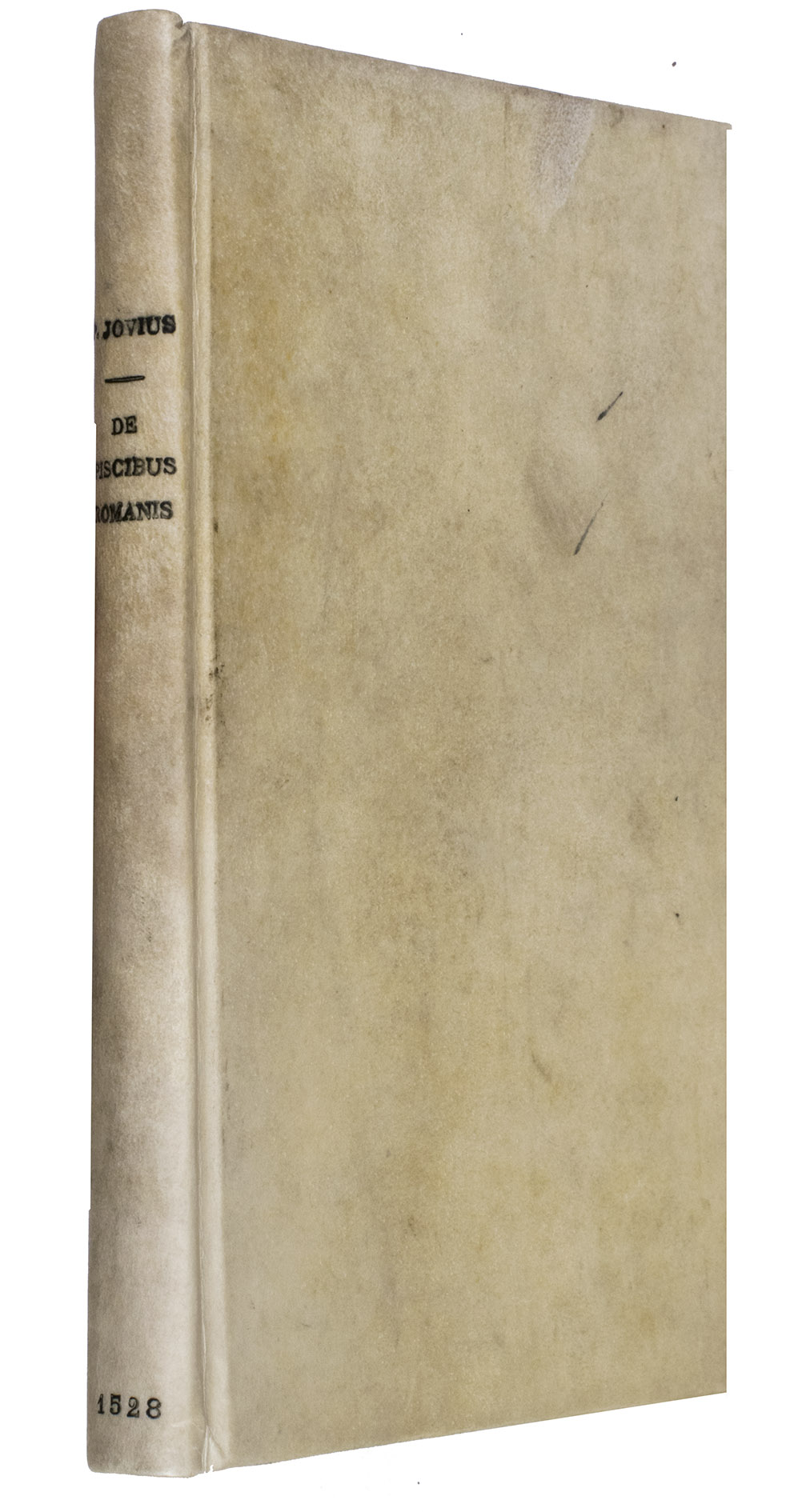
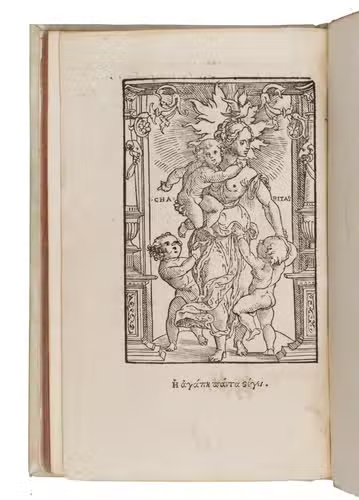
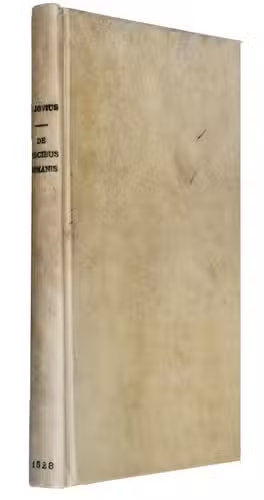
Antwerp, Joannes Grapheus, 1528. 8vo (15.1 x 10.1 cm). With a full-page woodcut decorated illustration, incorporating Grapheus device on the verso of the last leaf. Modern vellum. [64] ll.
€ 950
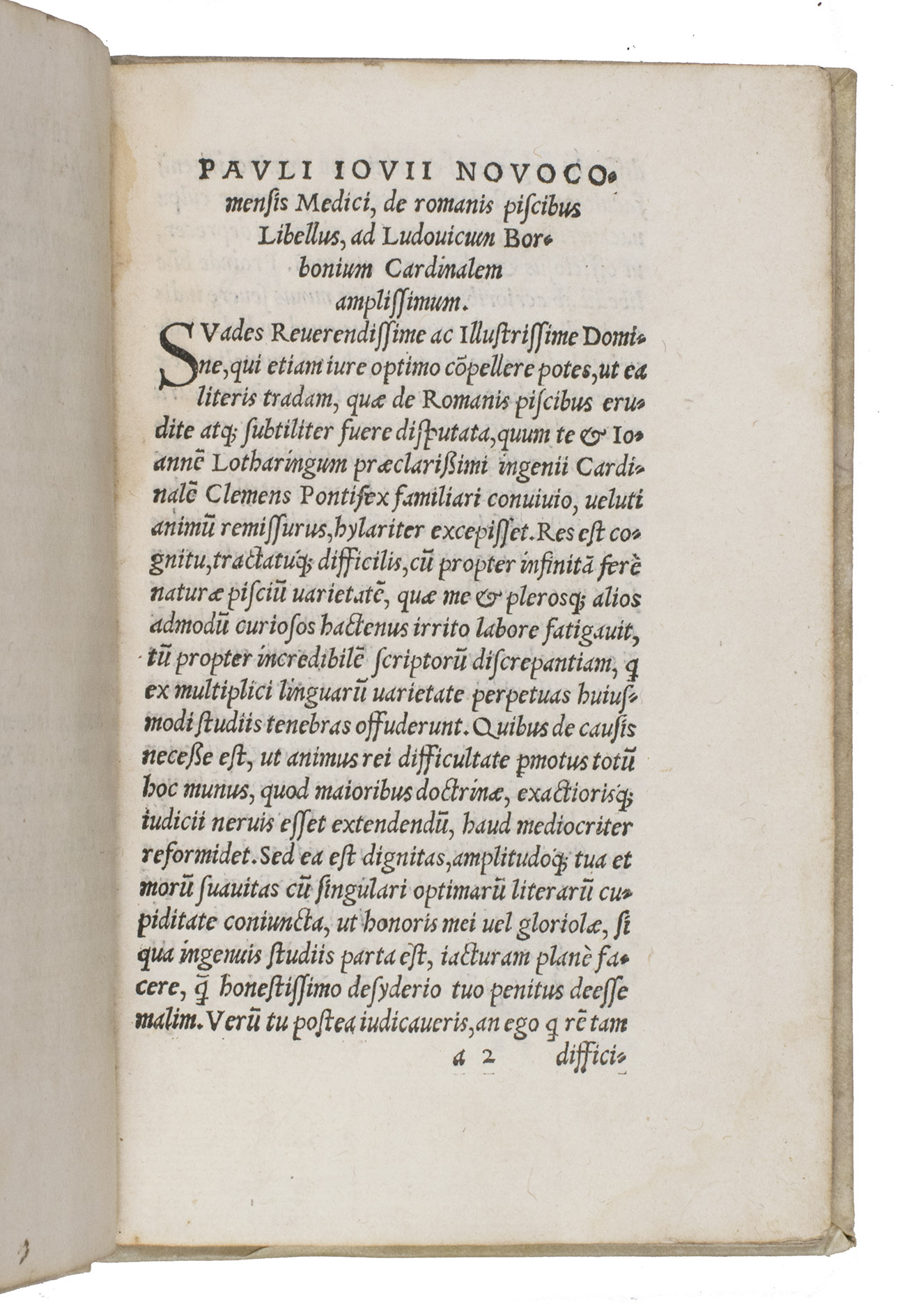
Second edition of Paolo Giovio's (1483-1552) most curious and engaging work De romanis piscibus, his little treatise on the fishes of the Mediterranean. First printed in Rome in the summer of 1524, the work was conceived, fittingly, at a papal banquet. Pope Clement VII had gathered distinguished guests, among them Cardinal François Louis of Bourbon (1493-1557), when a spirited dispute broke out over the proper names of the fish served at table. Giovio, physician, courtier, and soon to be bishop, took up the challenge with characteristic wit. Out of this moment of convivial erudition grew a book that would become a classic.
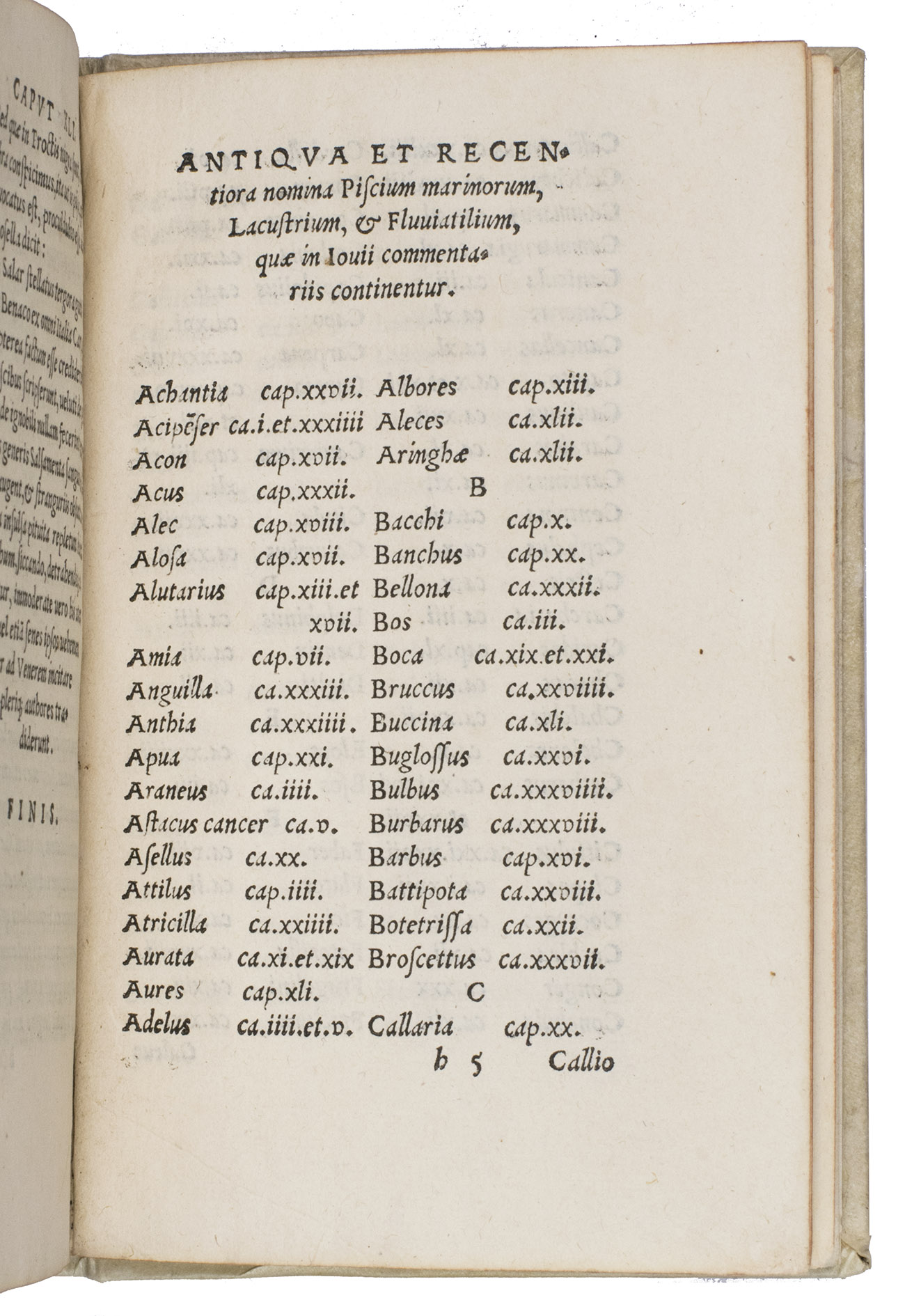
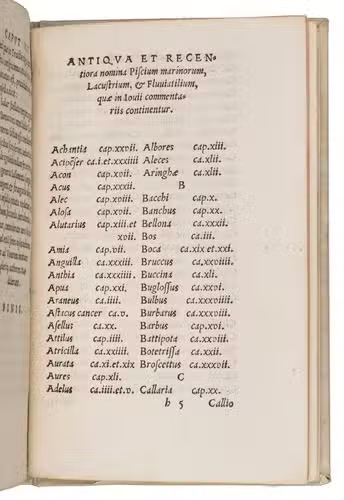
The present work represents an early and little-known witness to the texts swift circulation and its appeal to both scholars and gastronomes. Giovio catalogues some forty species of sea, river, and lake fish known to ancient and contemporary Romans. Drawing on Pliny, Galen, Athenaios, and a wide range of classical authors, he compares ancient and modern nomenclature, describes fishing grounds, comments on medical and dietary properties, and, with occasional relish, offers instructions on how best to prepare the catch. More than once he remarks on the difficulties of matching classical terminology to the living experience of contemporary fishermen, an undertaking made all the more complex, he notes, by the "almost infinite variety" of aquatic life and the migrations that carry fish into Roman waters from distant seas.
Born in Como, trained in Padua and Pavia, Giovio came to Rome as a physician but soon moved in the highest intellectual and political circles. He witnessed the sack of Rome in 1527, fled to Ischia, wrote histories, dialogues, and political commentaries, and later entered the orbit of Cardinal Alessandro Farnese (1520-1589) before retiring to the shores of Lake Como to complete his great Historiarum.
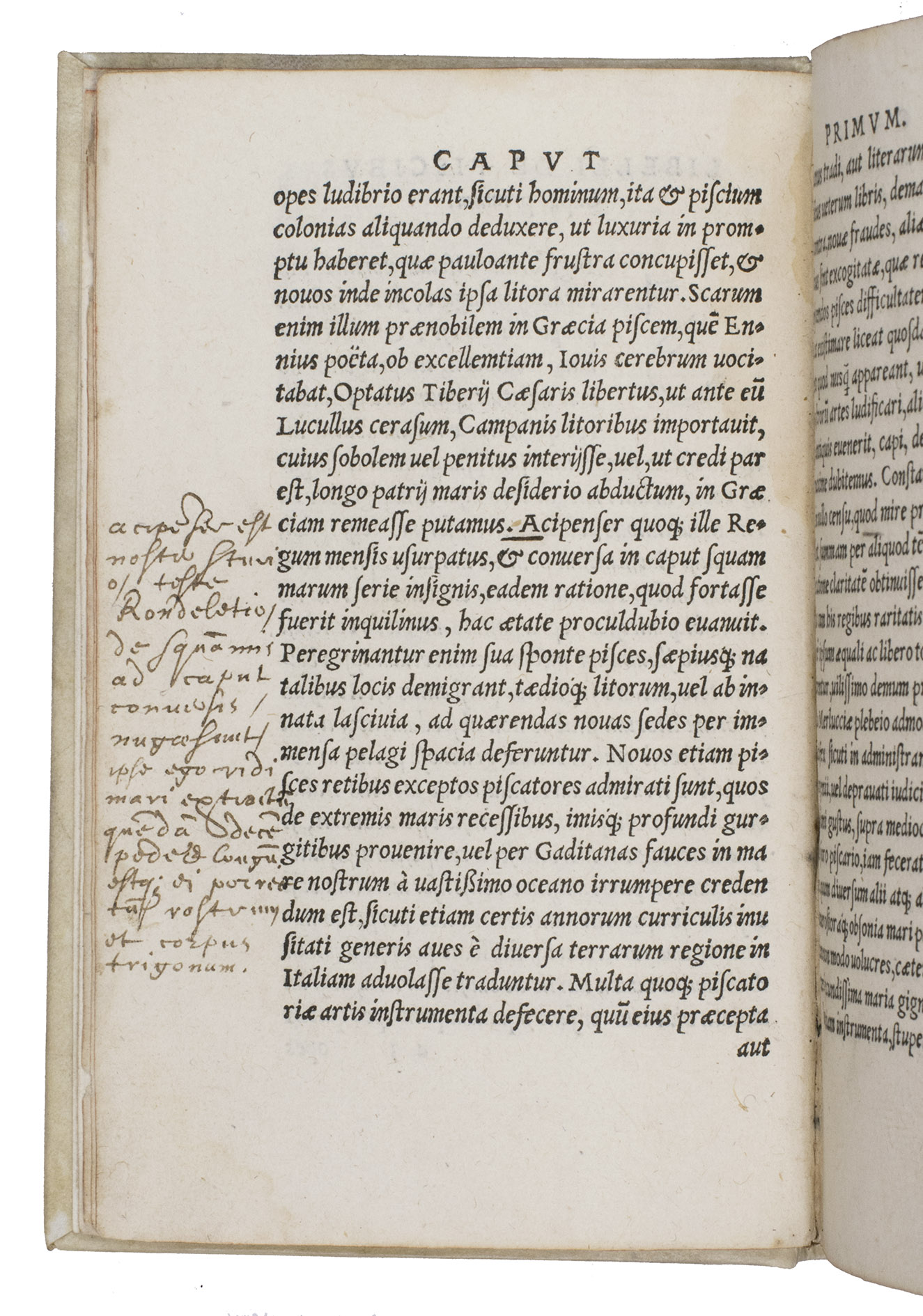
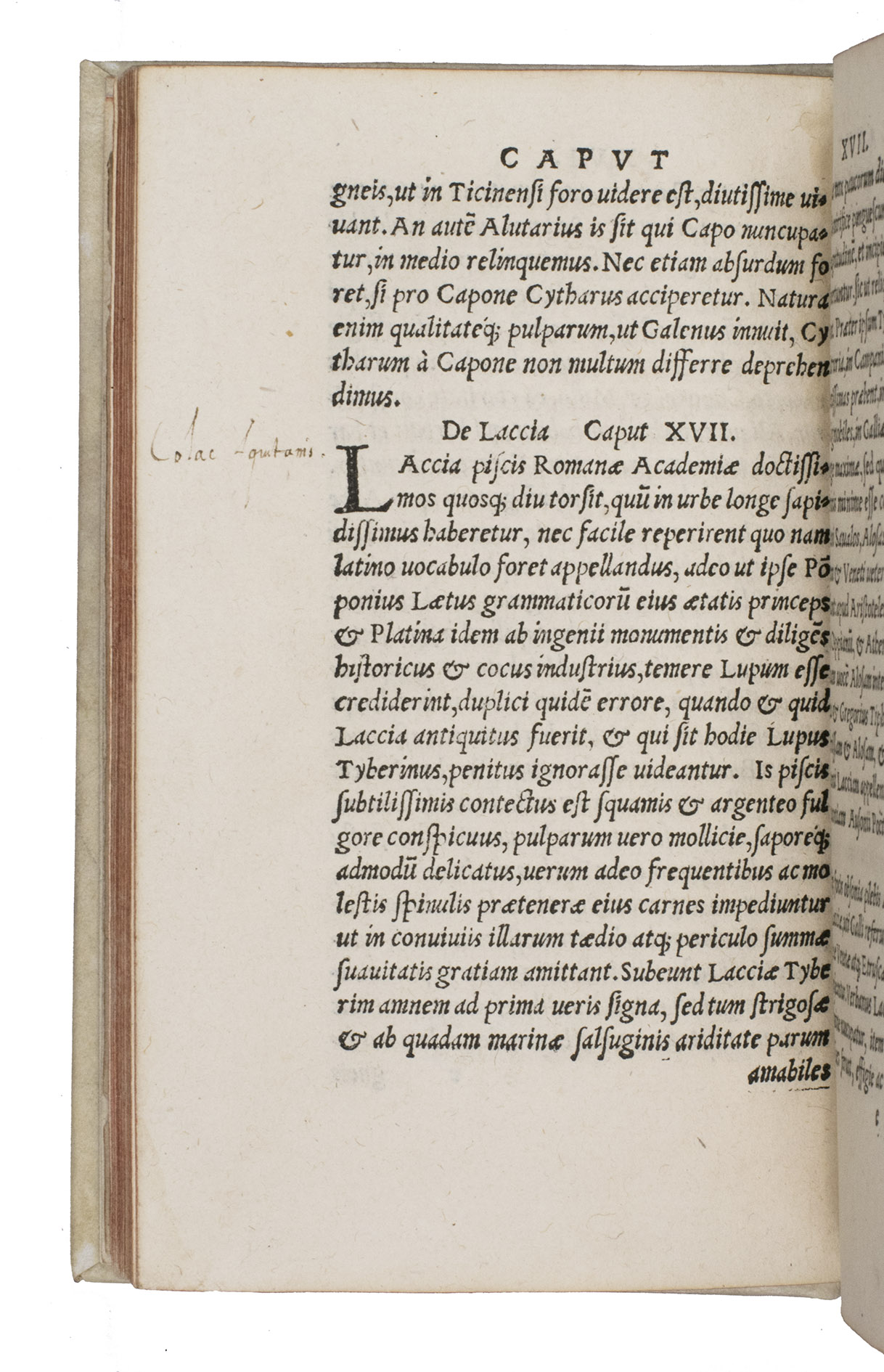
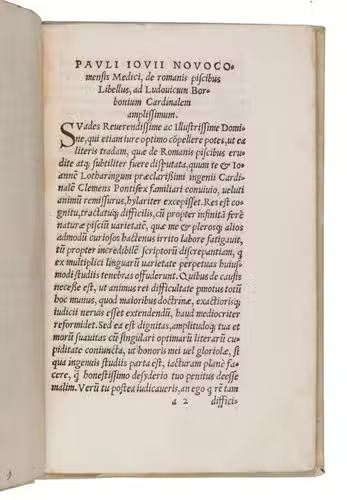
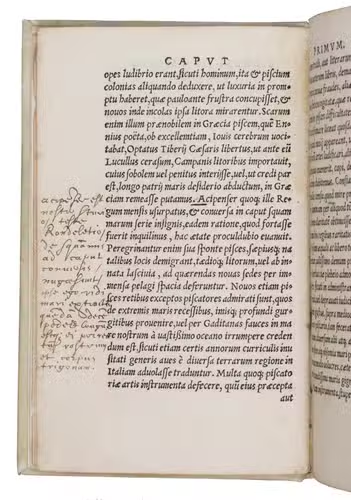
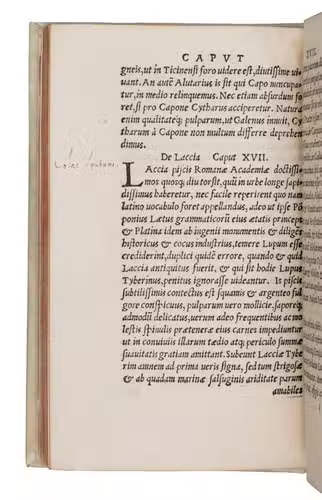
With some old annotations in the margins, commenting on the work itself and one annotation on therecto of the last flyleaf: ("Ingenia et mores, vitasque obitusque notasso pontificum, arguta lex fuit historiae tu tamer hinc laute tractas pupulmenta culinae hoc platina, est ipsos pascere pontifices"). With a very light water stain in the outer margin. Otherwise in good condition. Glardon, "Beginnings of Ichthyological Natural History: Formal and Structural Questions", Ichthyology in Context (1500-1880), (2023), pp. 91-110; Nijhoff-Kronenberg 1238; Omodeo, "The Invisible Fisherman: The Economy of Water Knowledge in Early Modern Venice", Ichthyology in Context (1500-1880), (2023), pp. 364-391; Price Zimmerman, Paolo Giovio: The Historian and the Crisis of Sixteenth-Century Italy, (1995); STCV 12928628 (1 copy); USTC 440887; not in Adams.
Related Subjects: