ISE, Sadatake
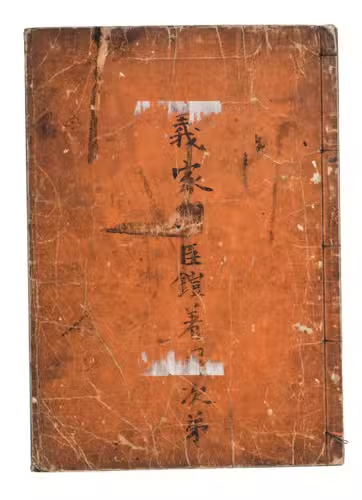
Yoshiie Ason yoroi chakuyõ shidai [= Lord Yoshiie puts on his armour] Áx¼Ò³¯³¼æz×ÅÓôεÚ.
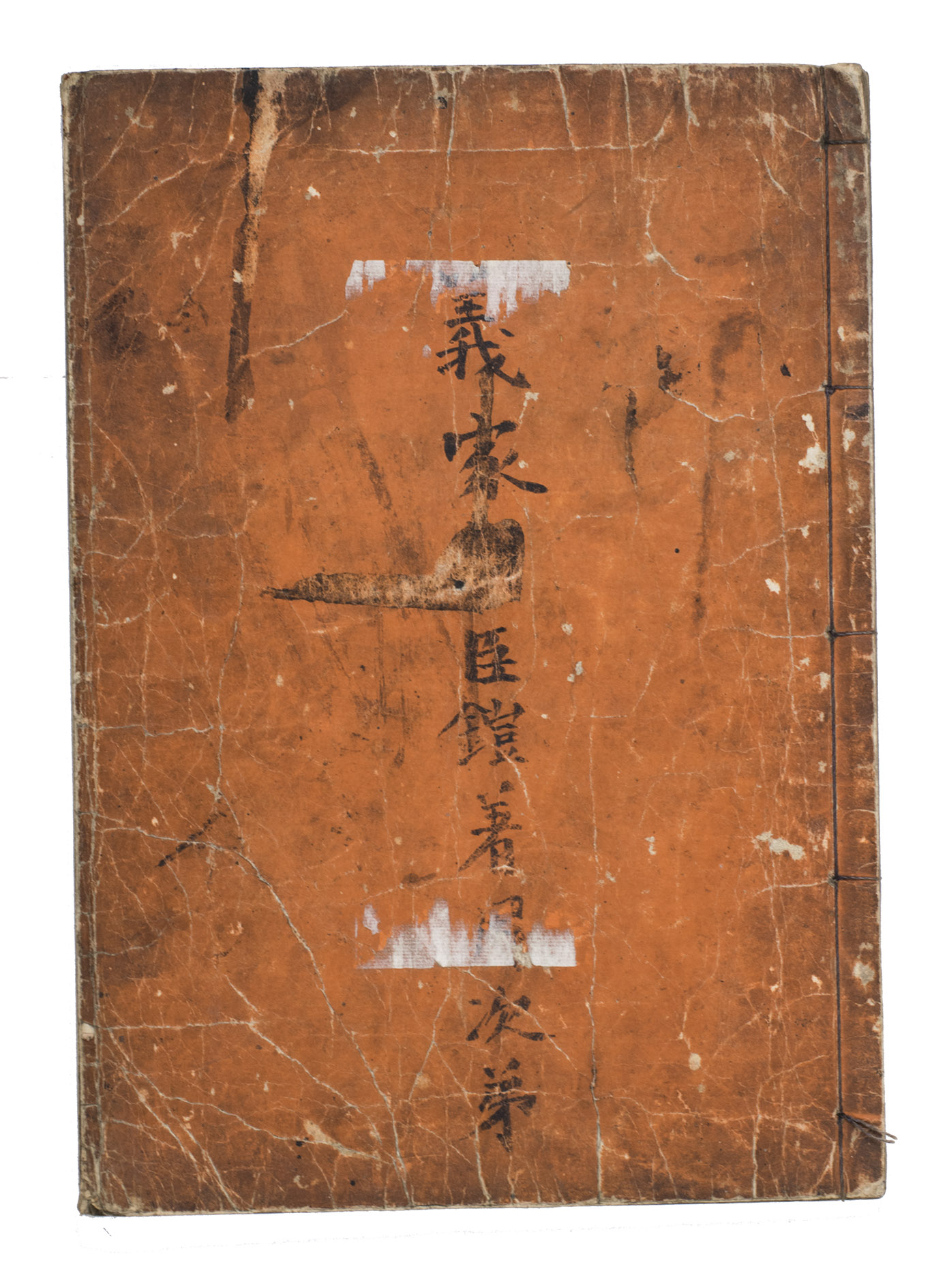
[Japan, 1781-1789]. Large 8vo (ca. 27.7 x 19.5 cm). With 24 watercolour illustrations, manuscript text in Japanese. Contemporary red wrappers with the manuscript title on the front and a faded inscription on the back. [16] ll.
€ 8,500
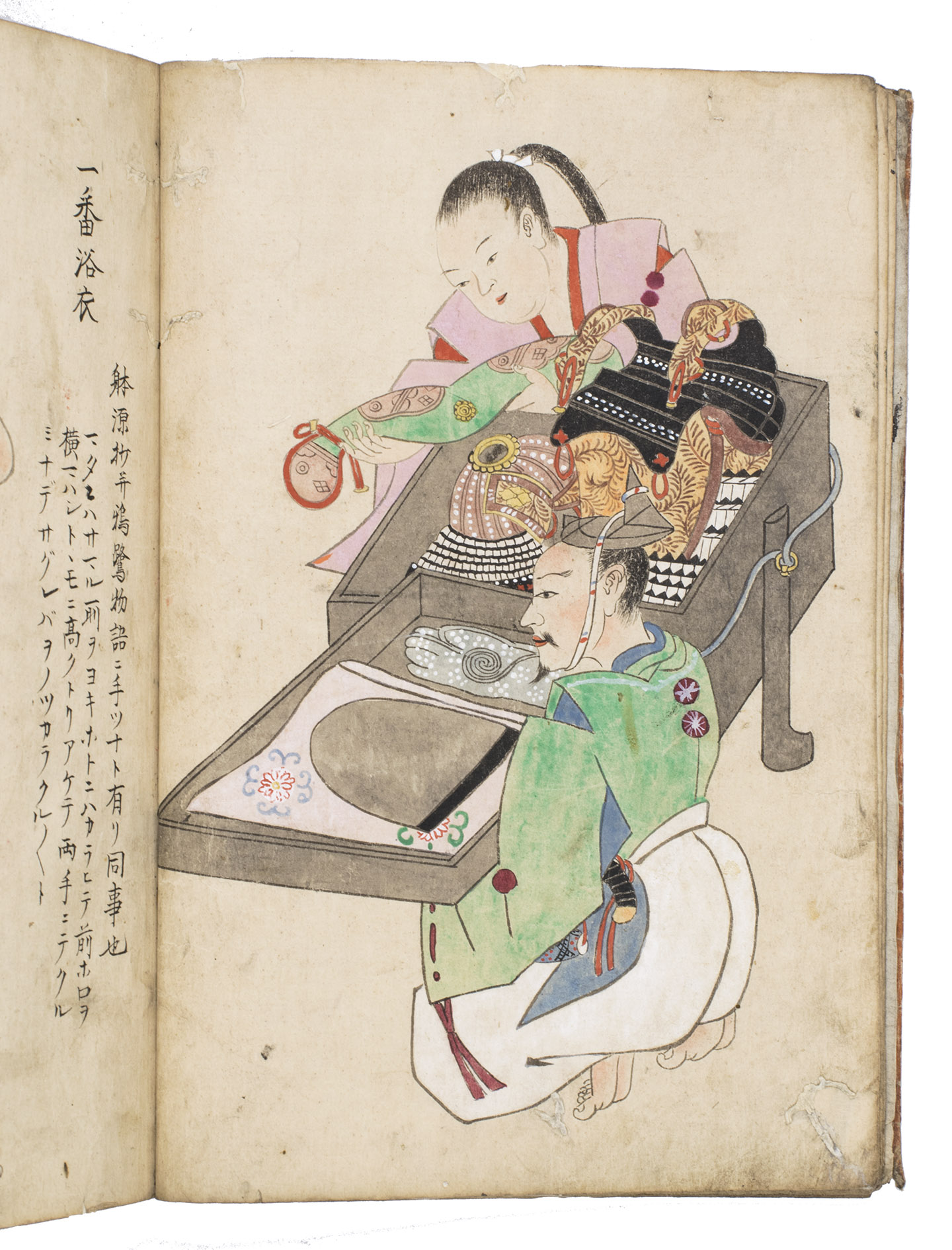
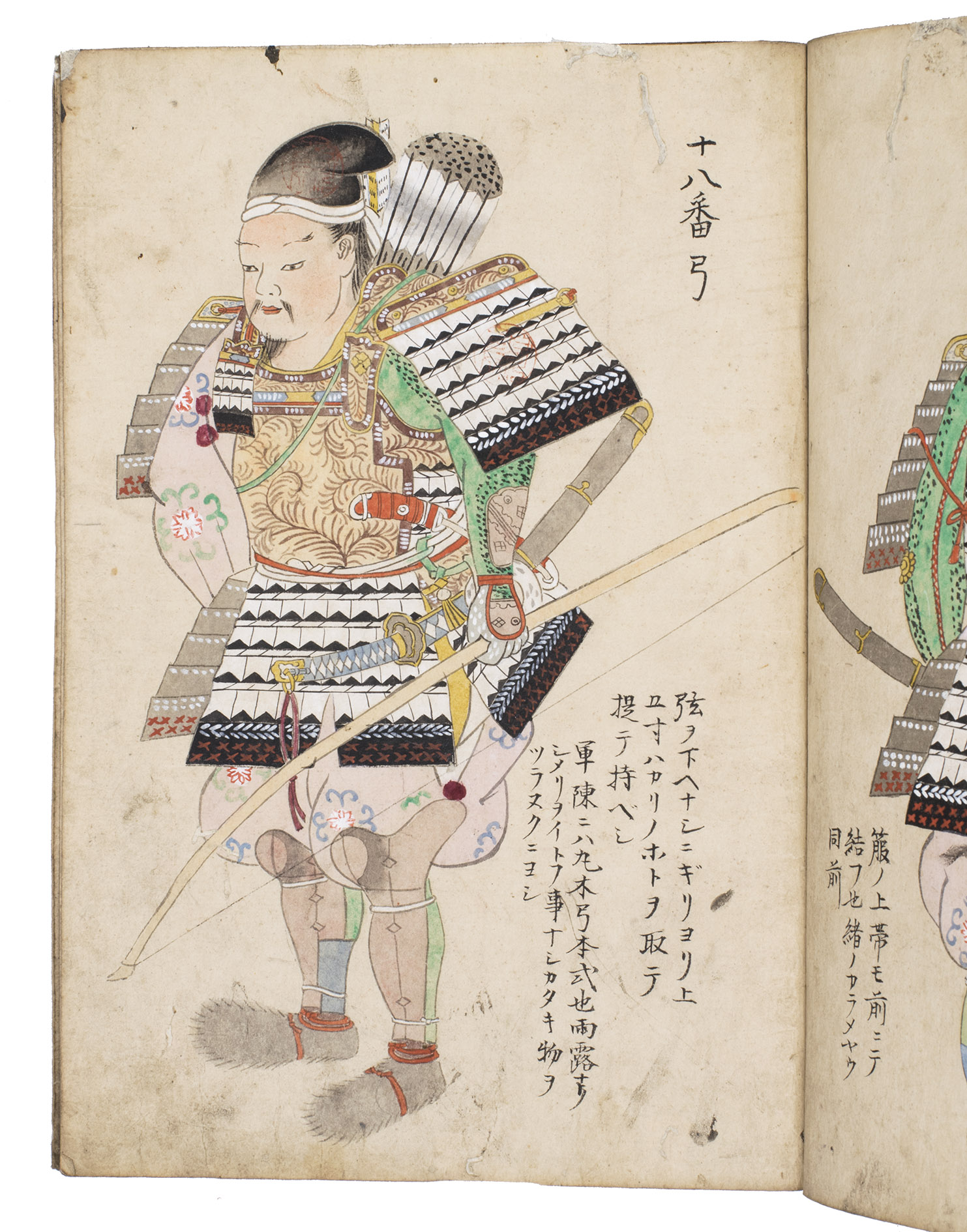
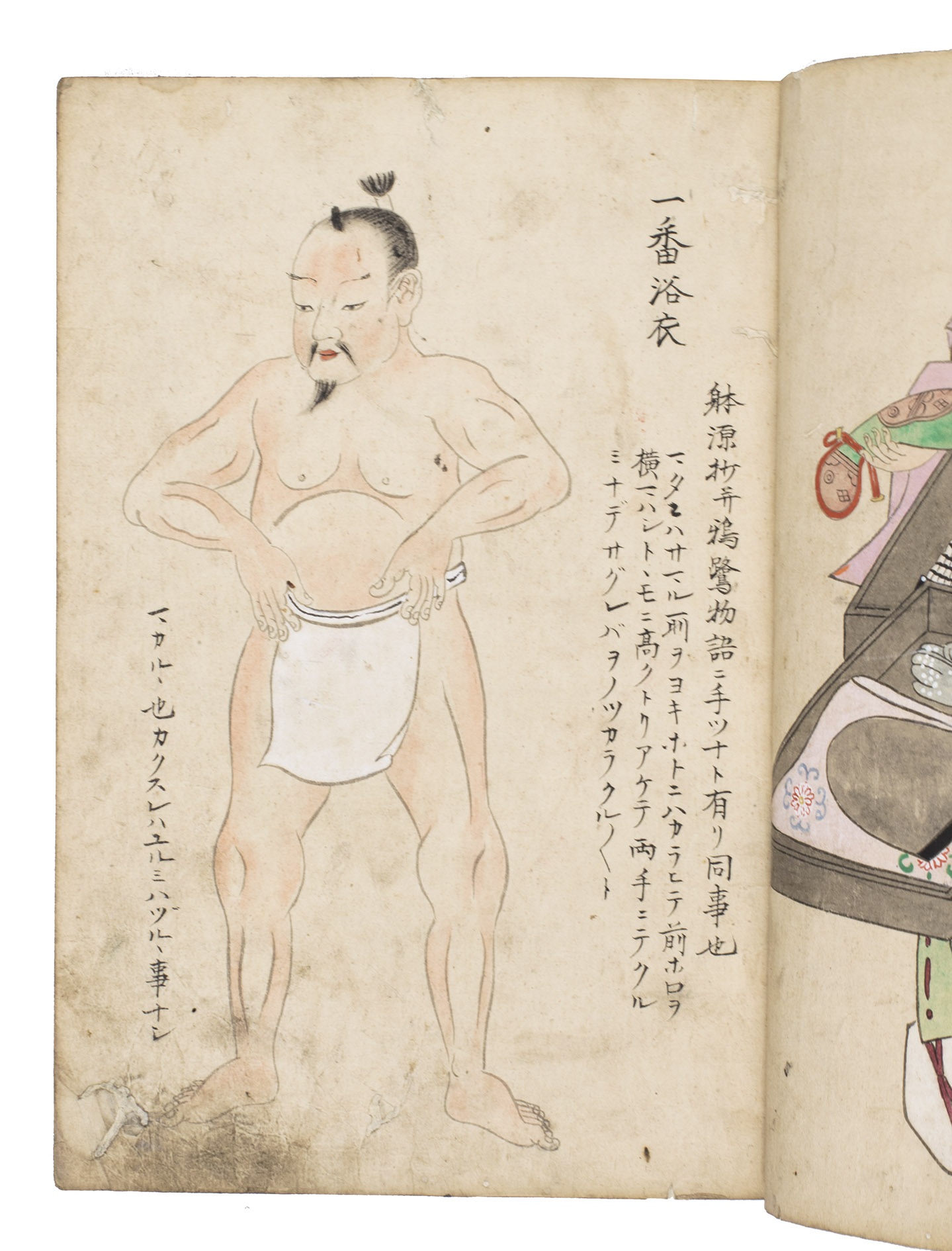
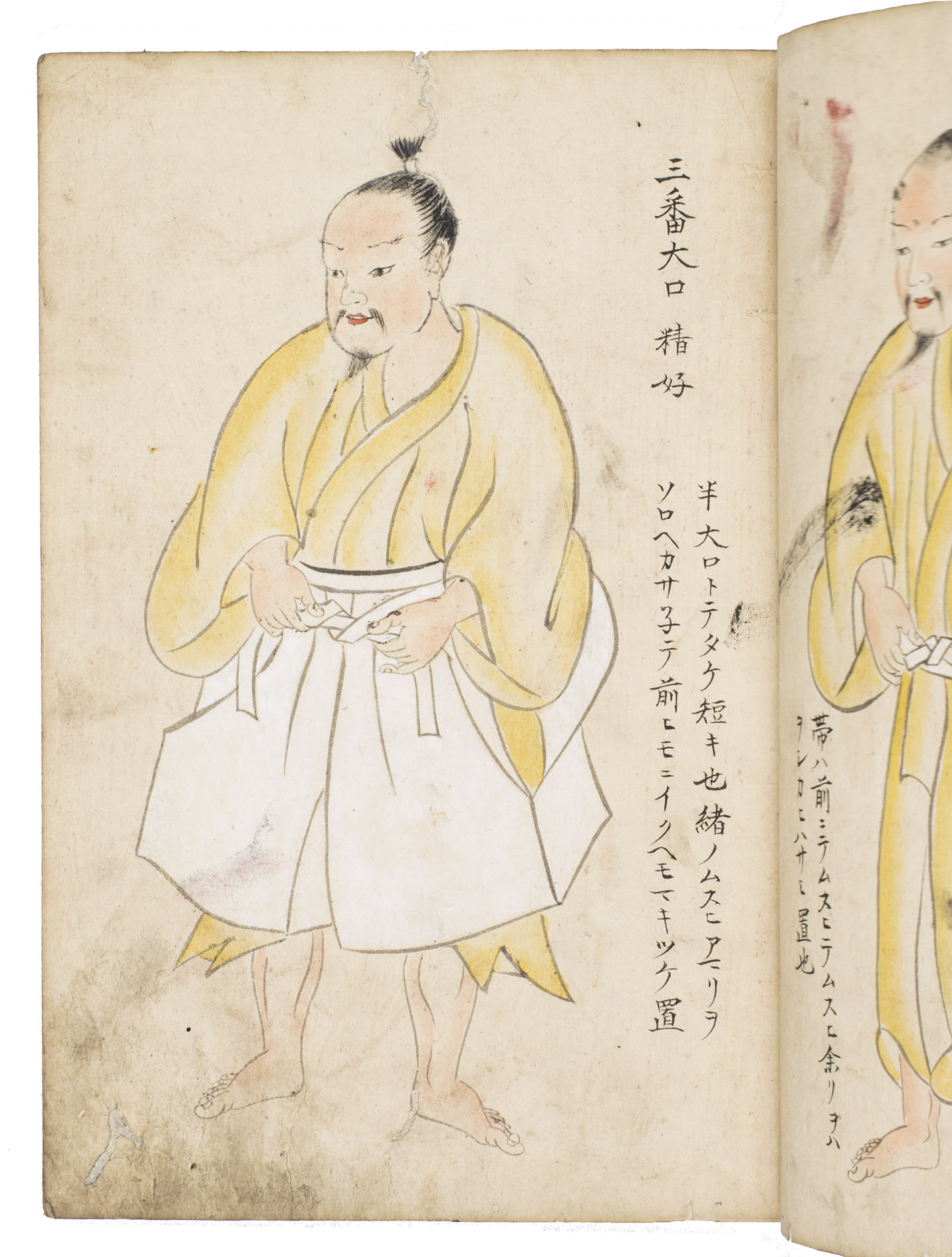
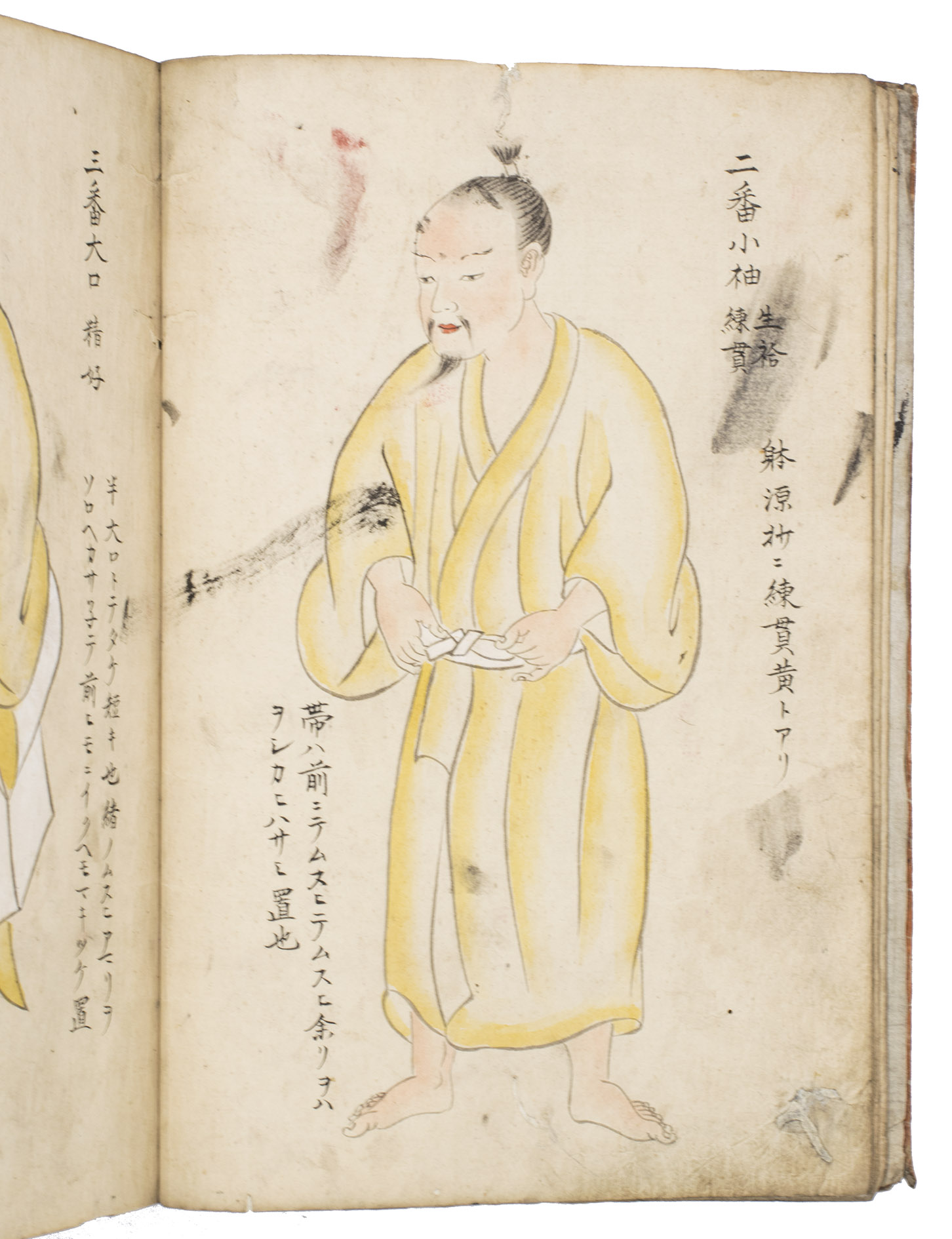
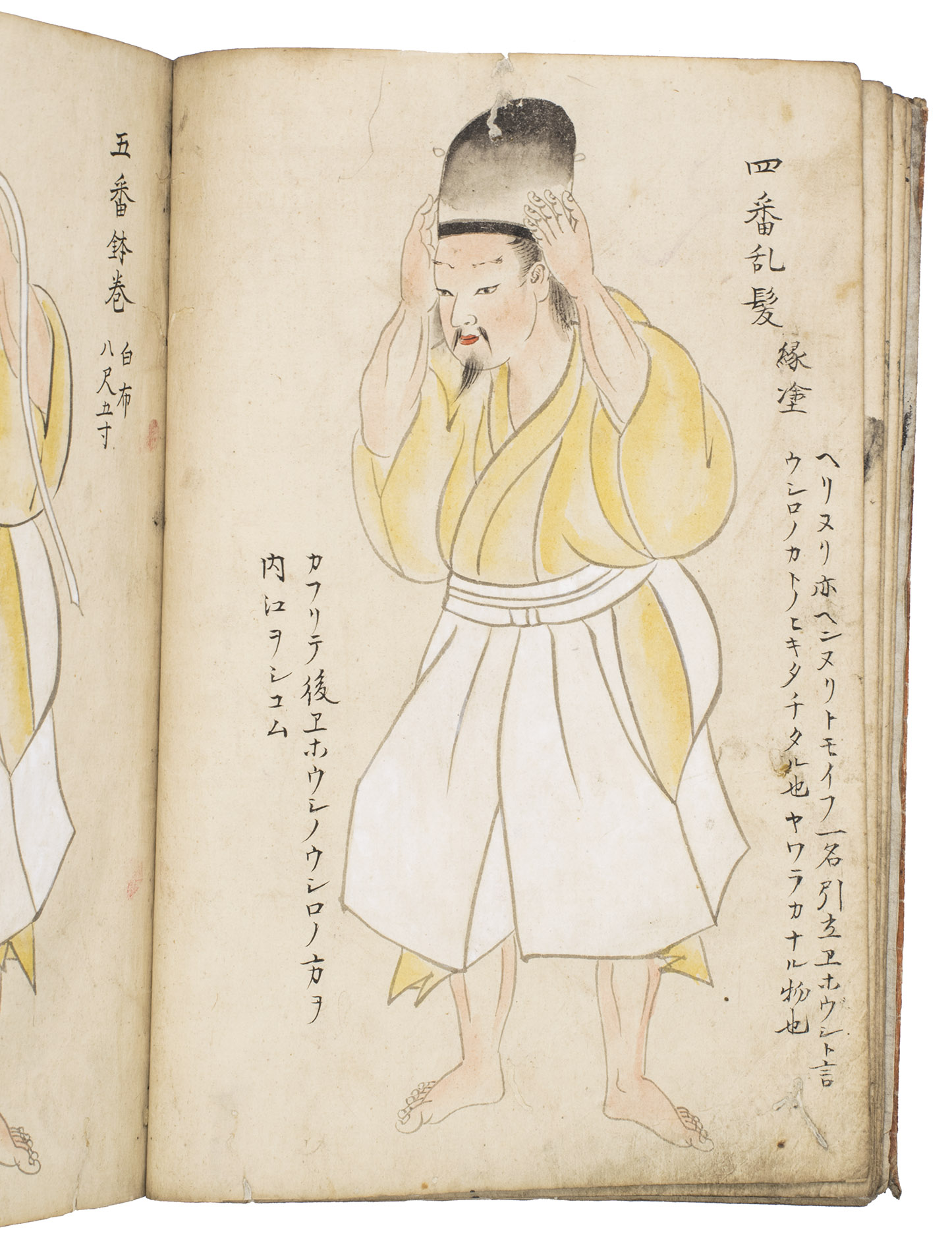
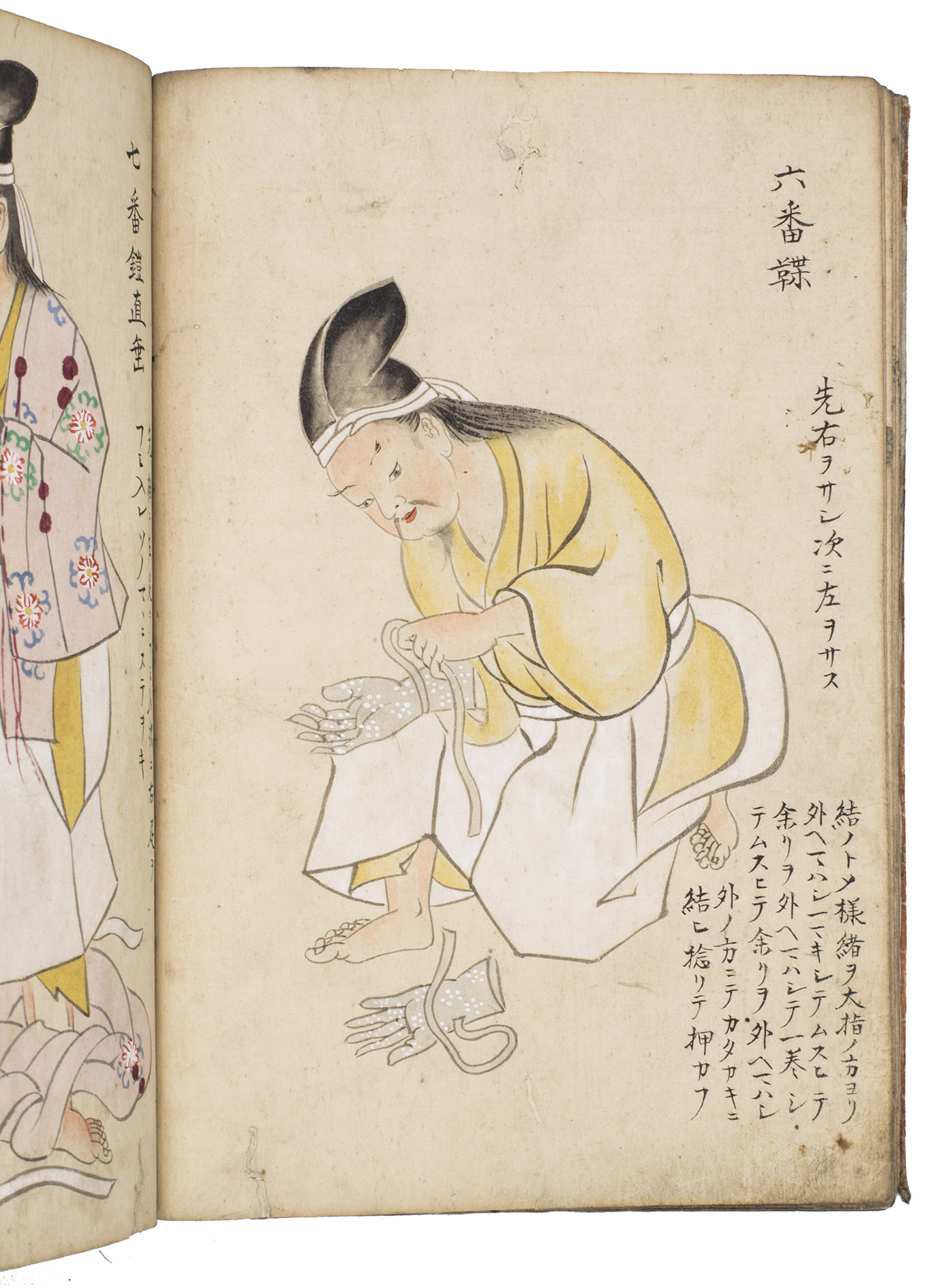
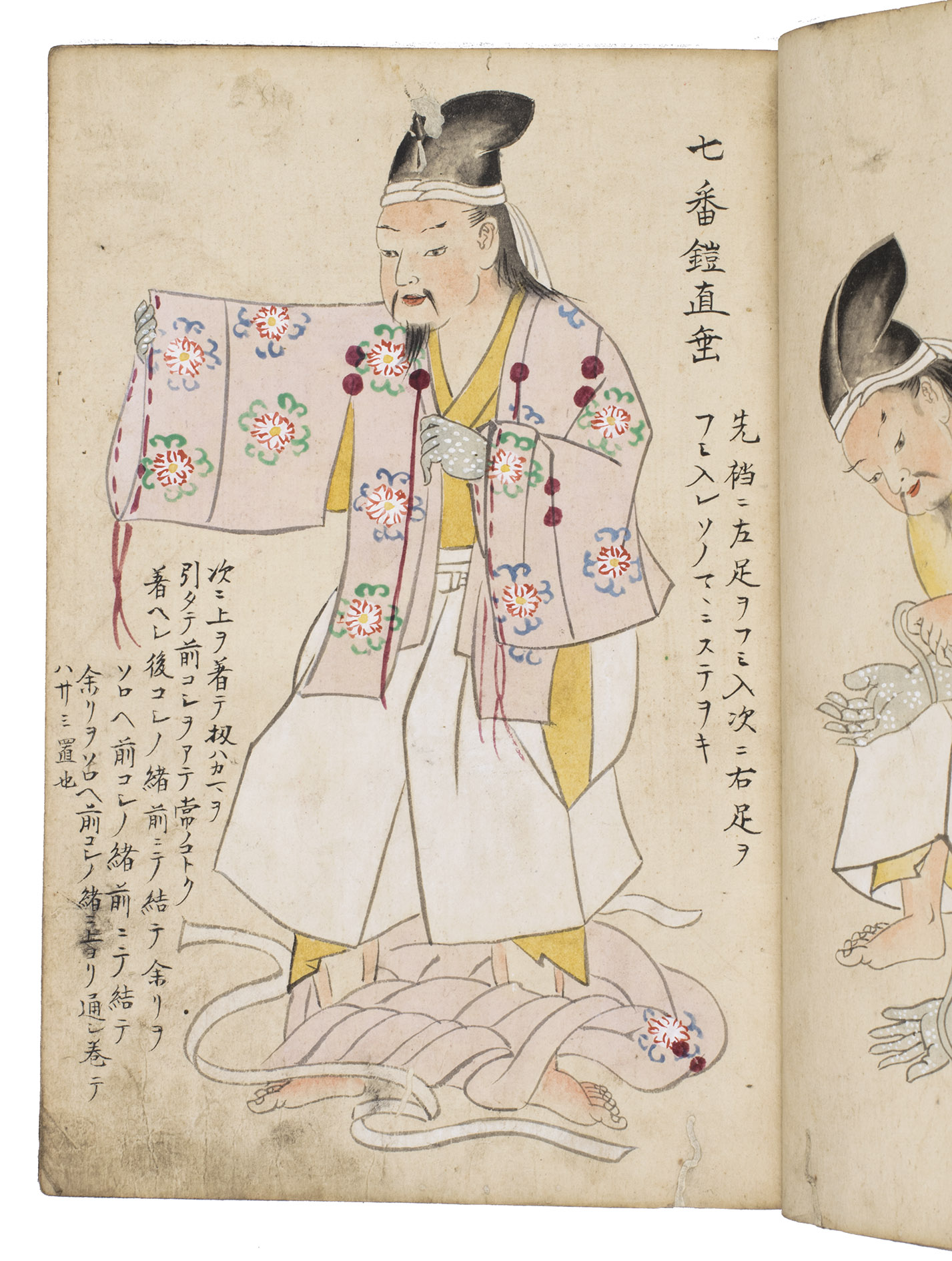
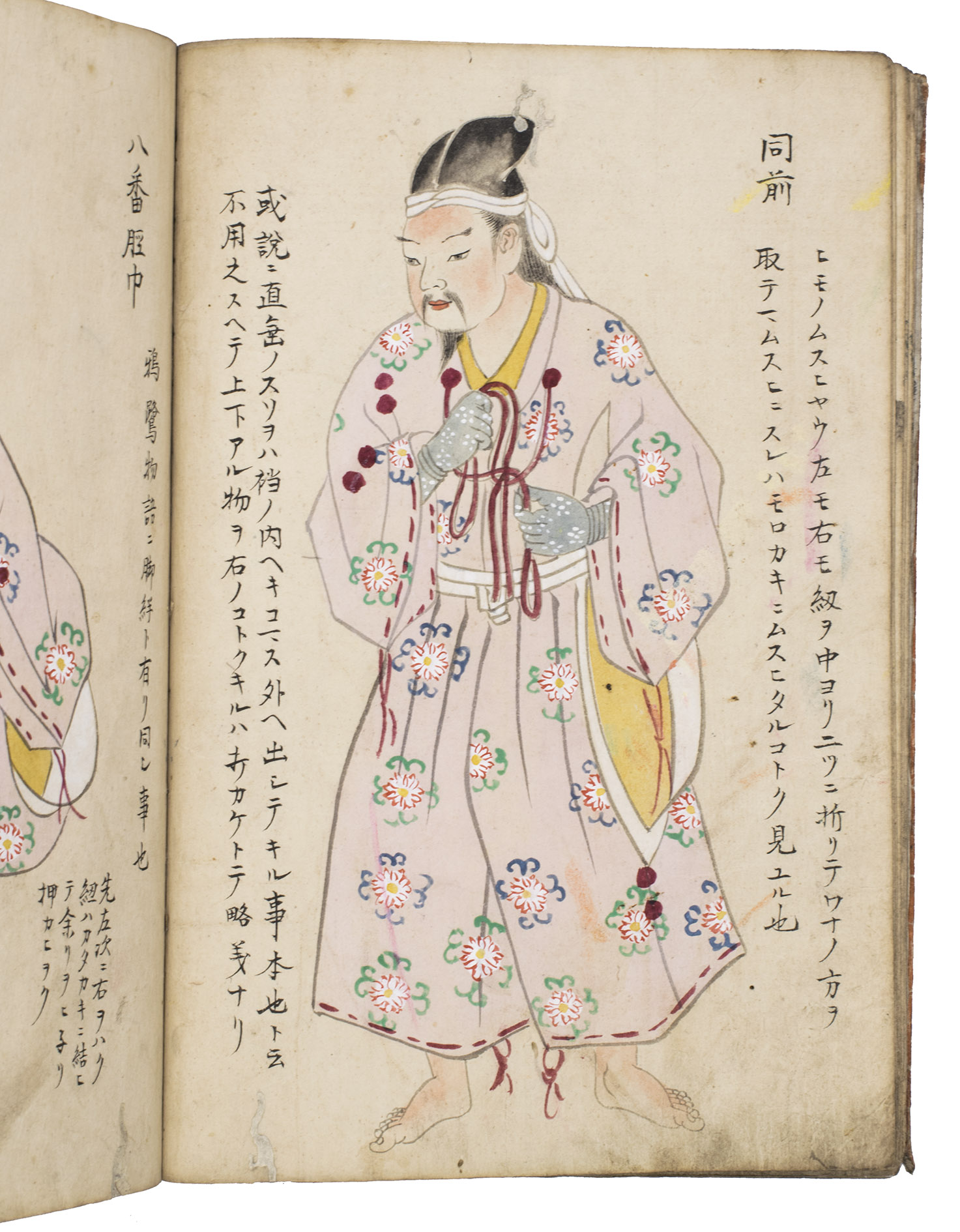
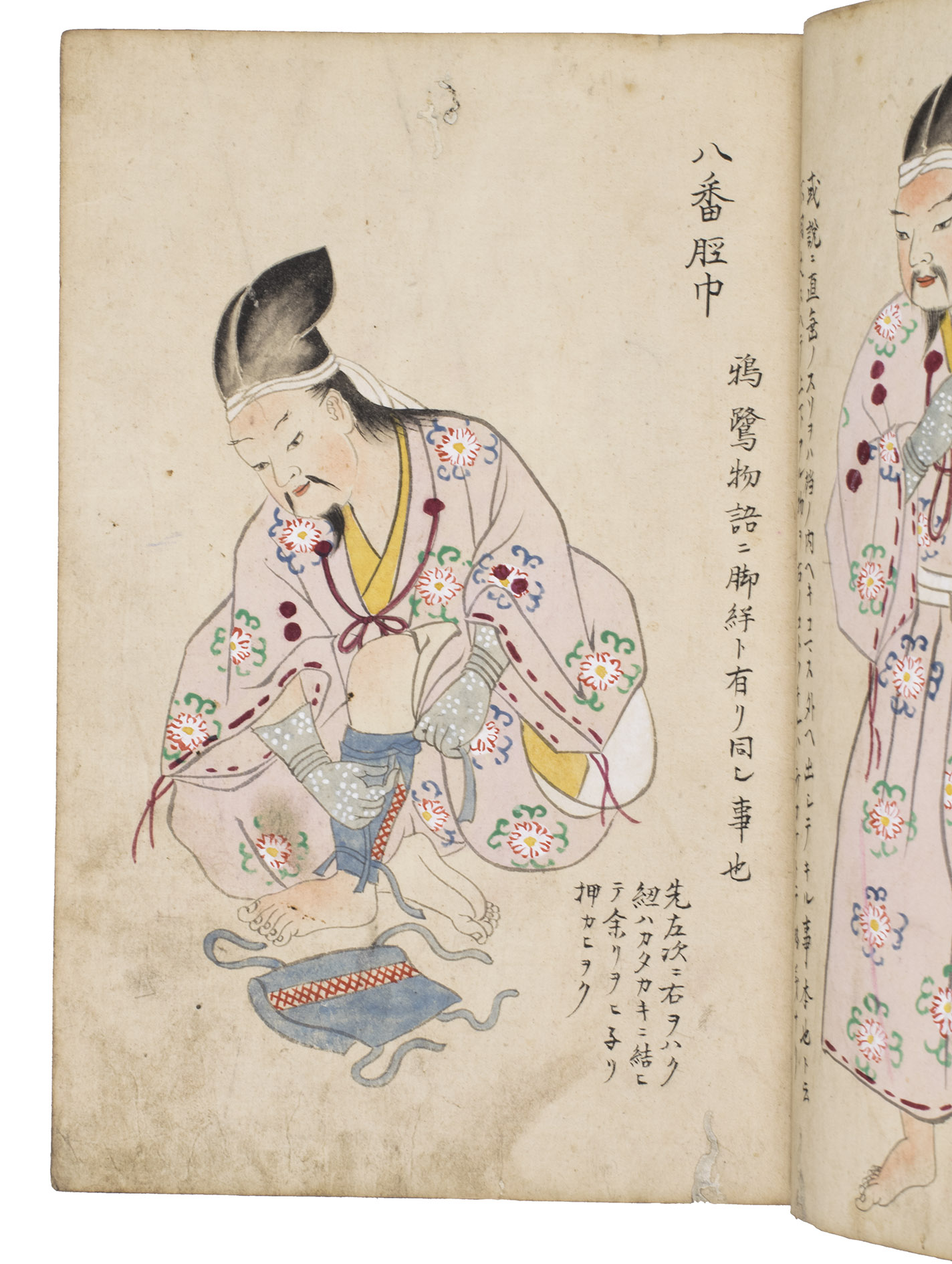
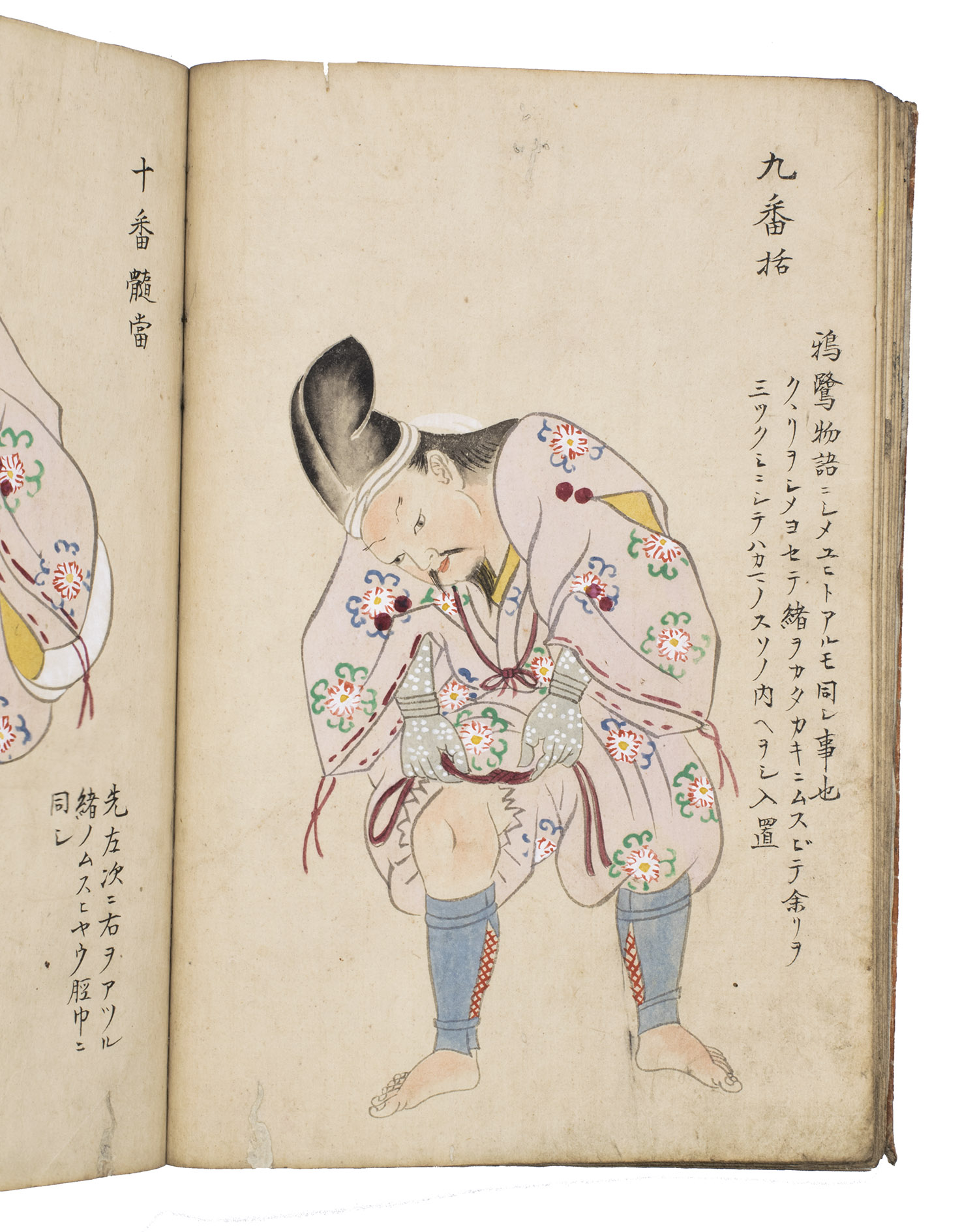
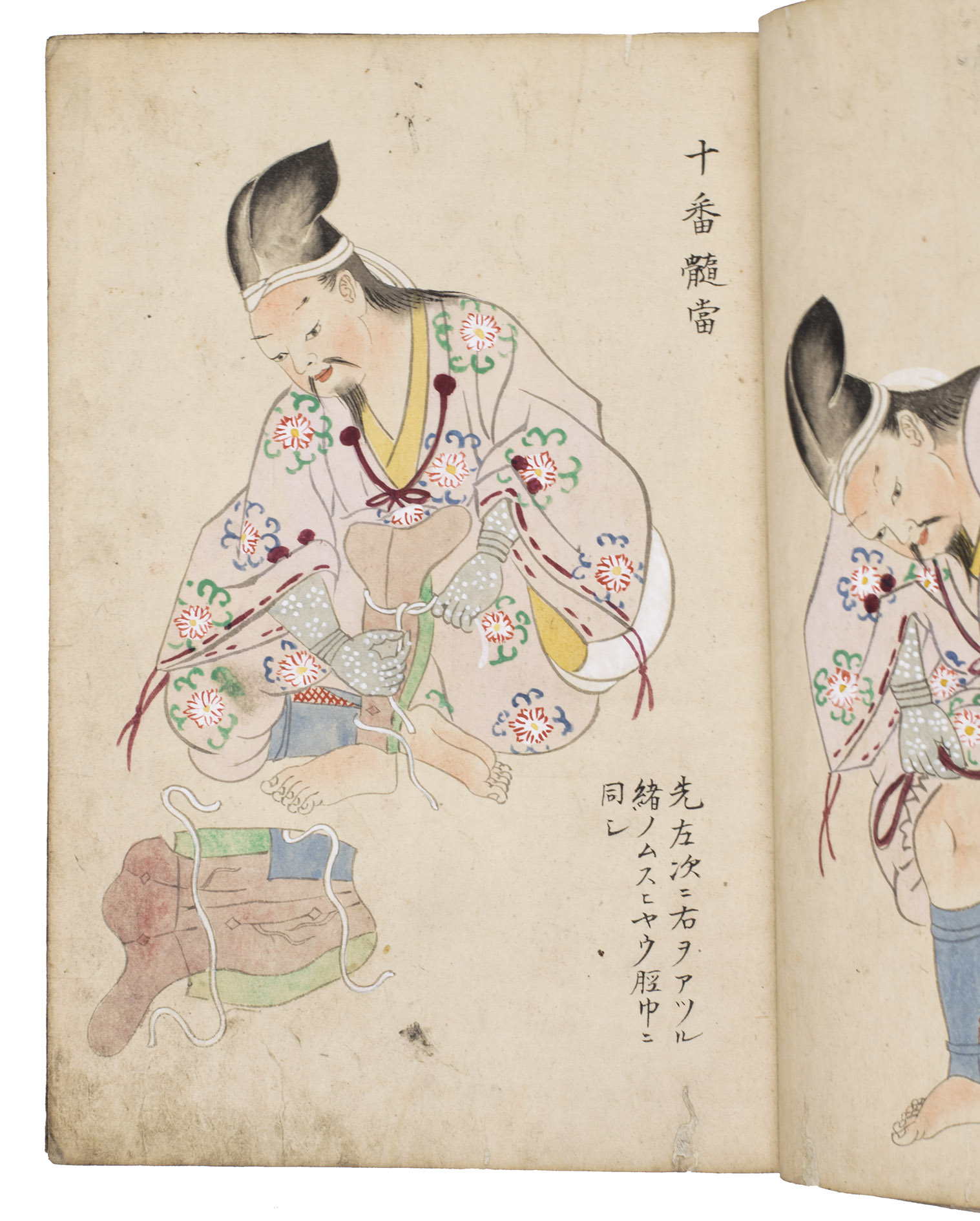
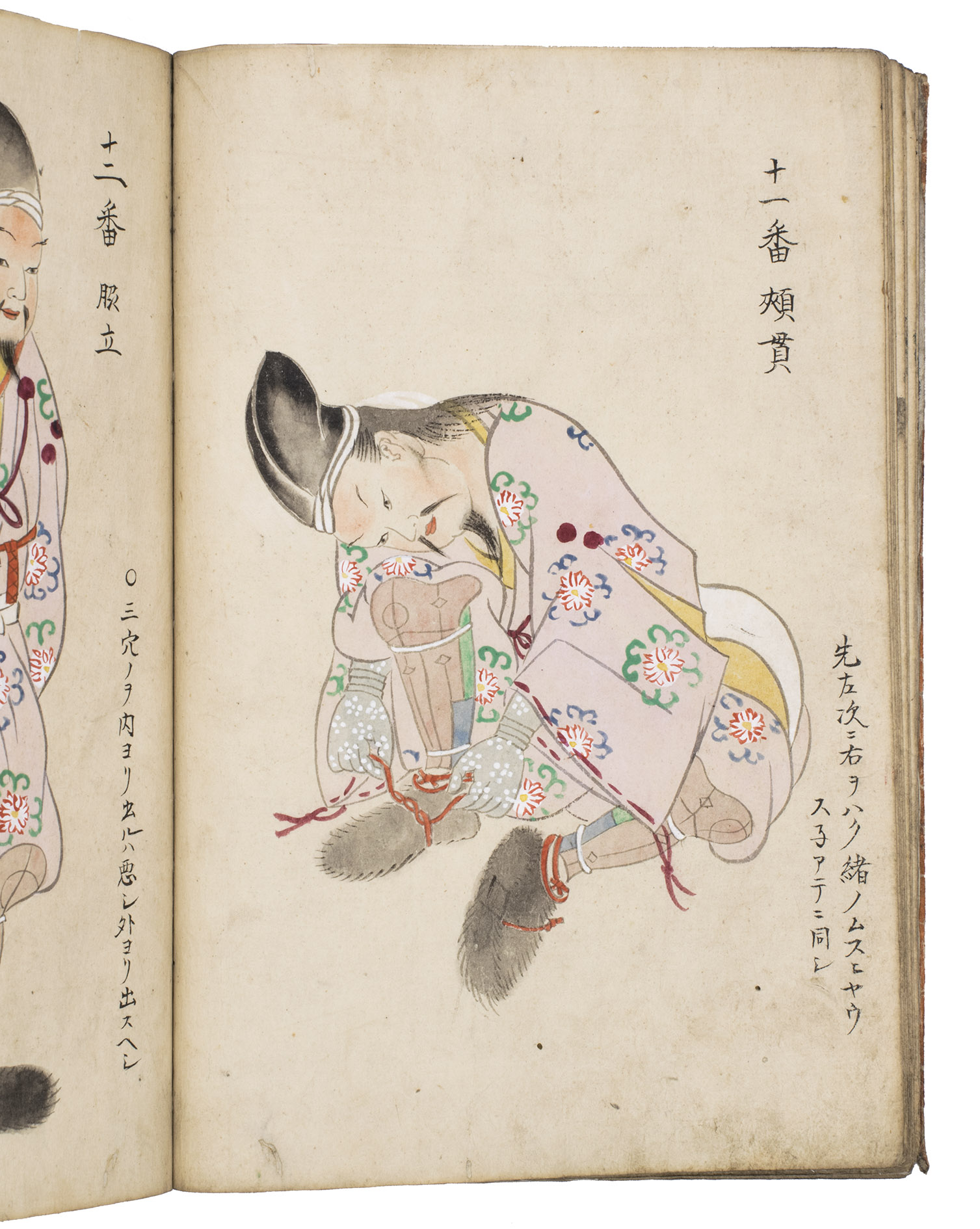
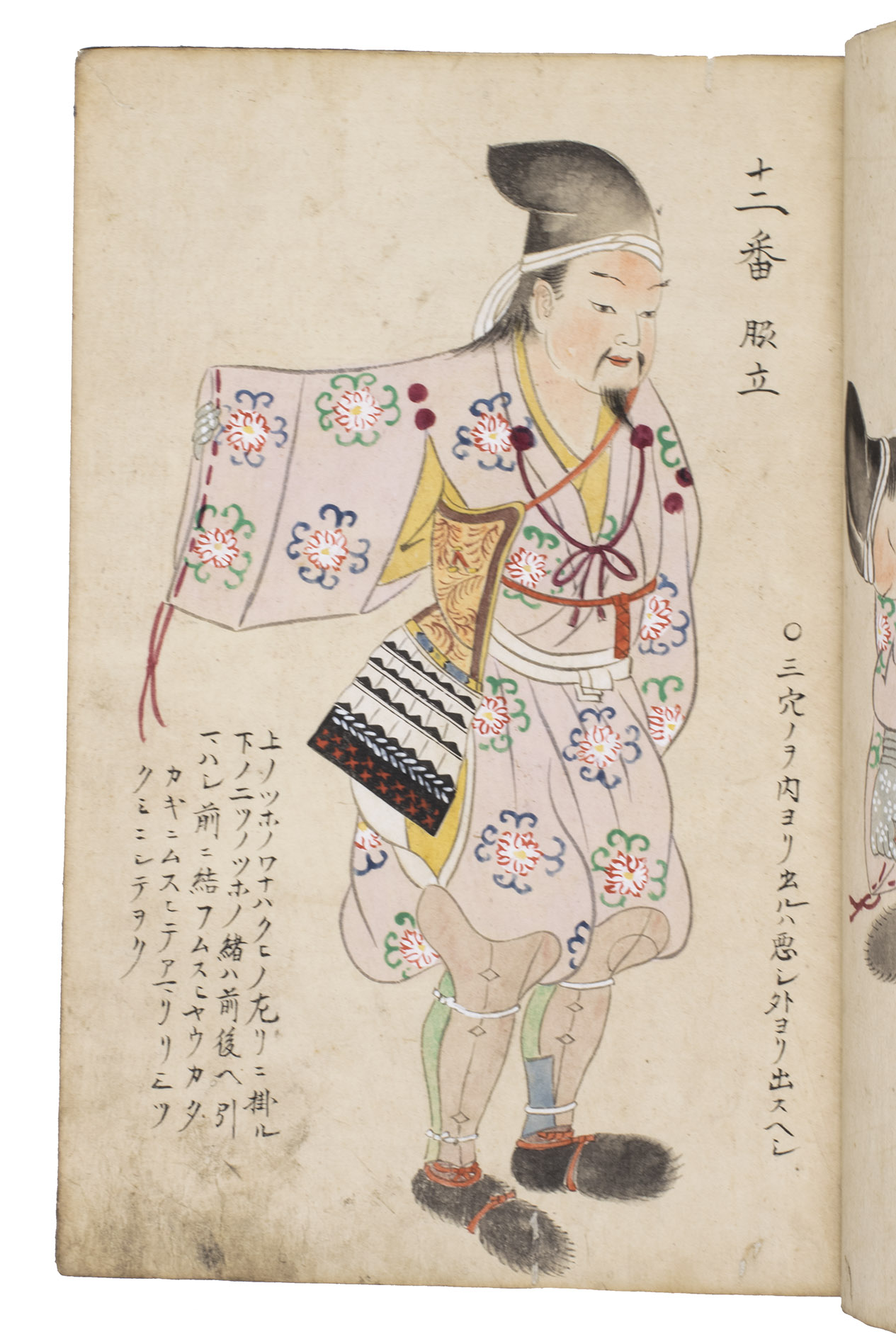
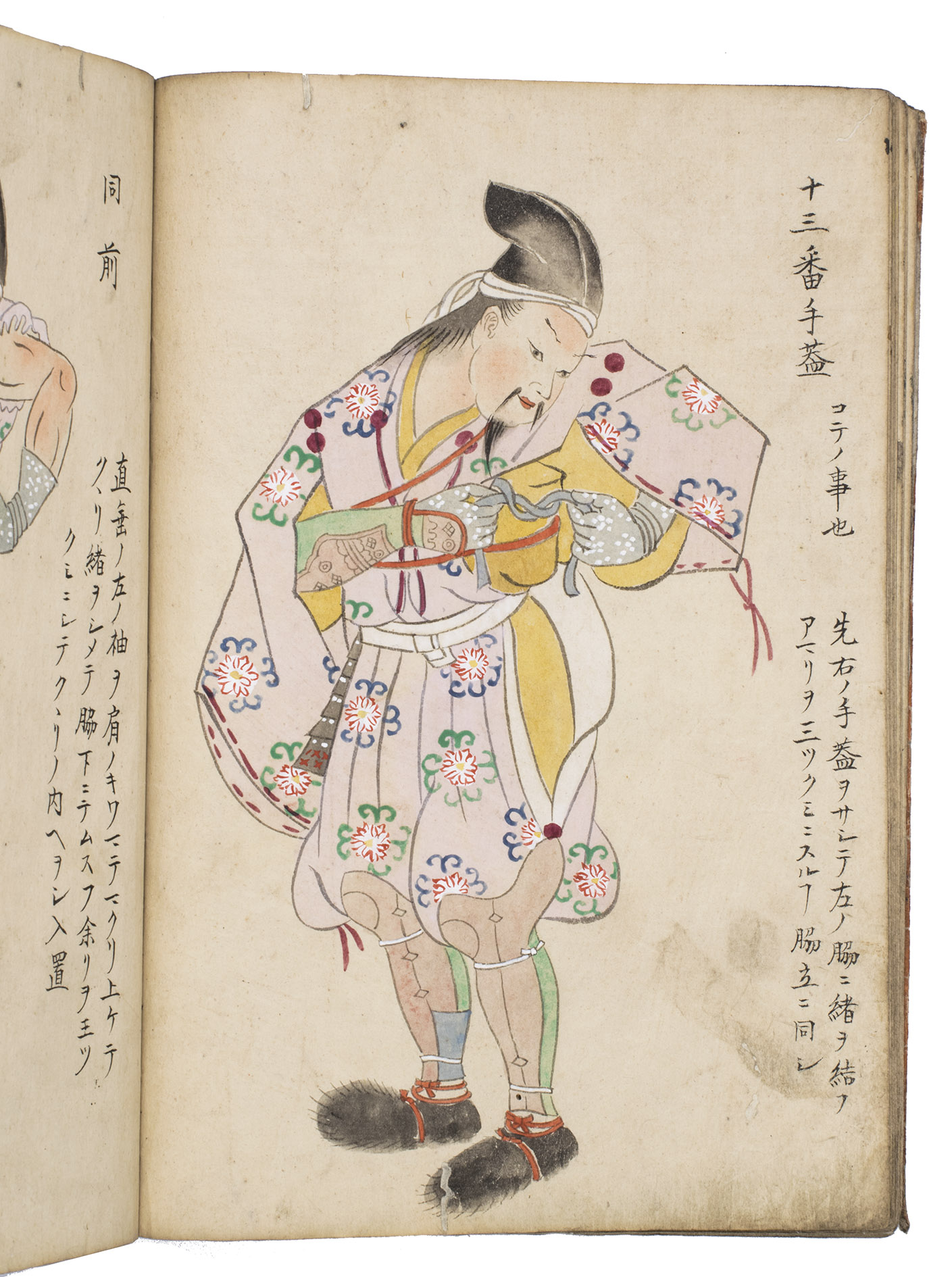
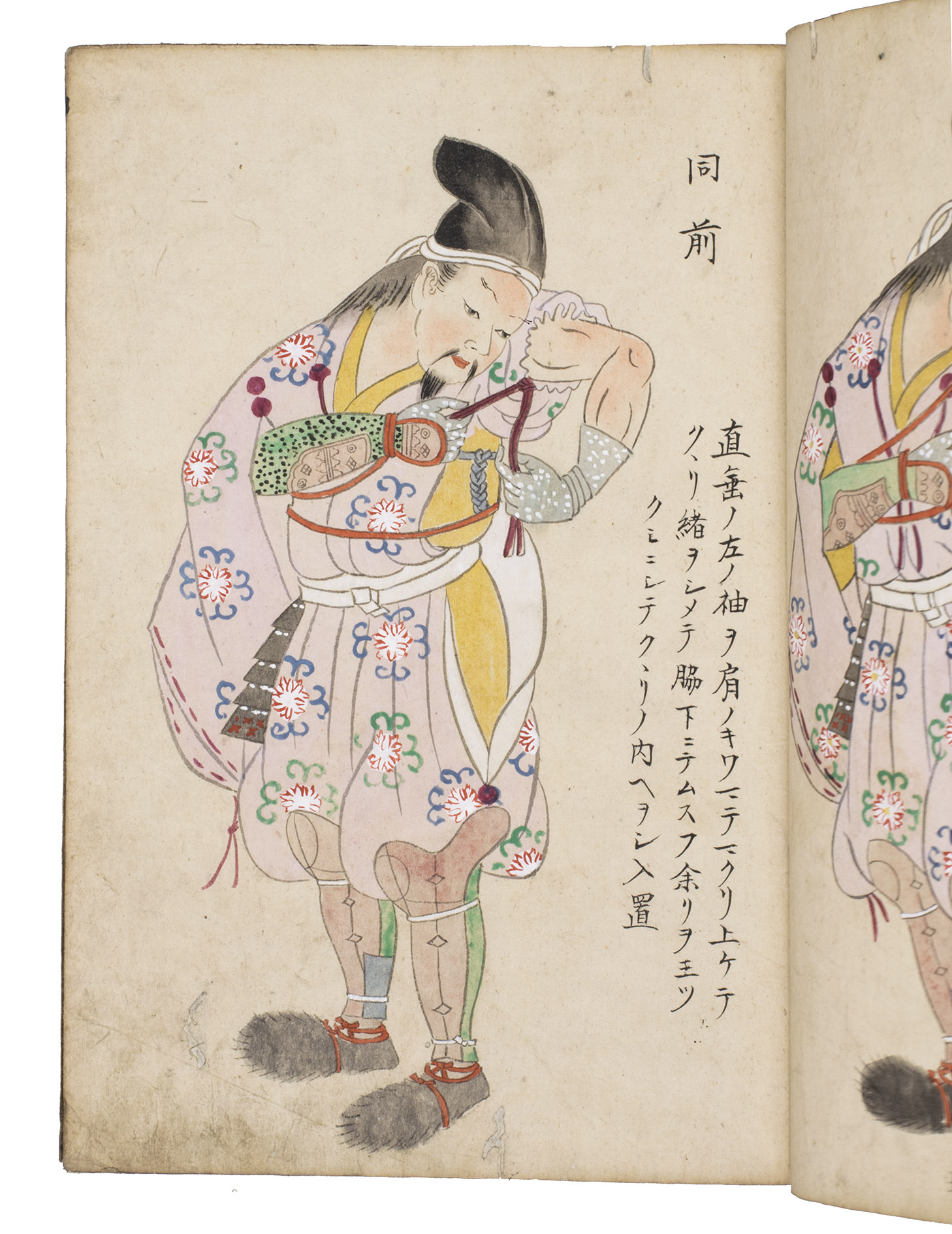
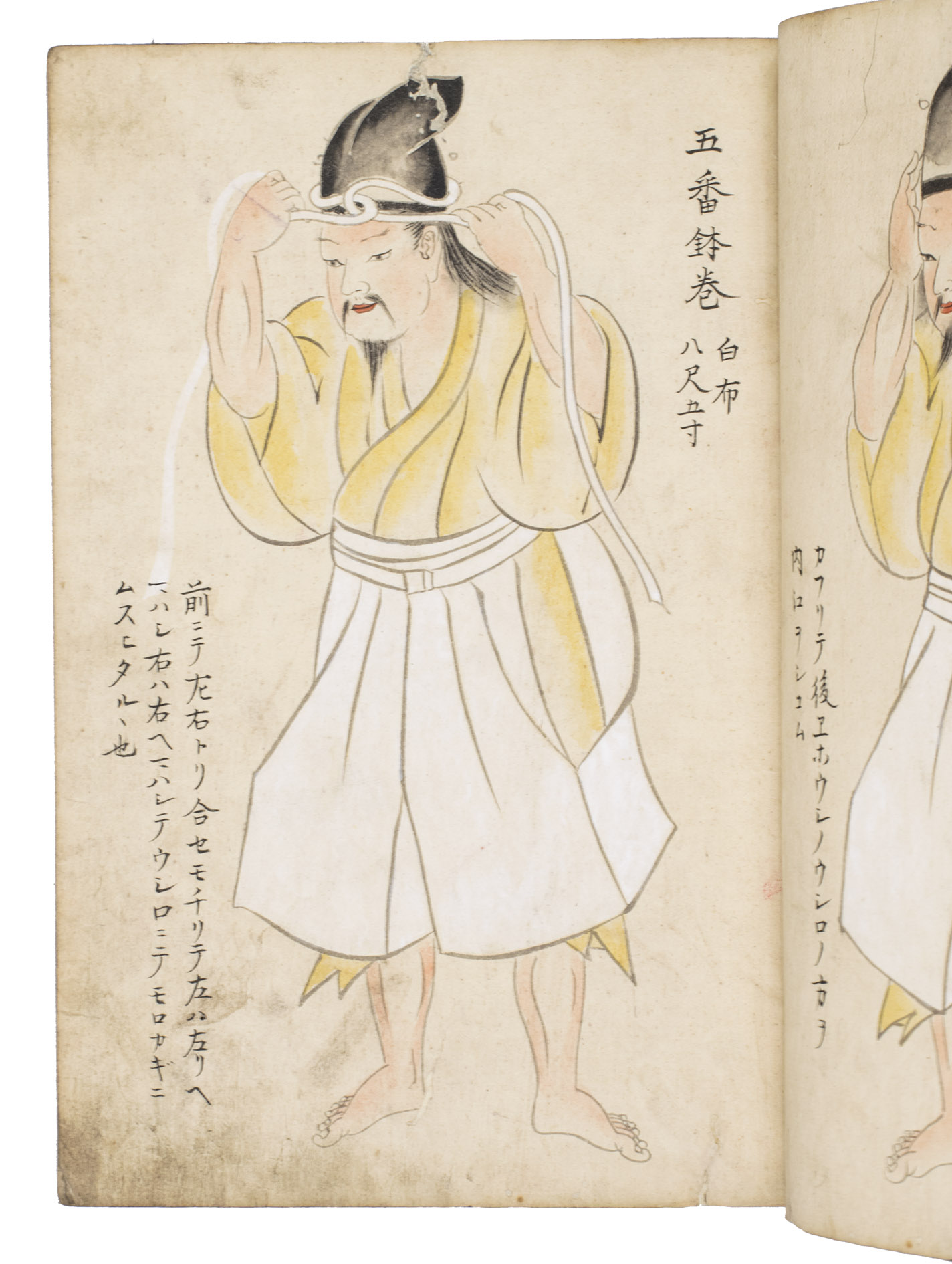
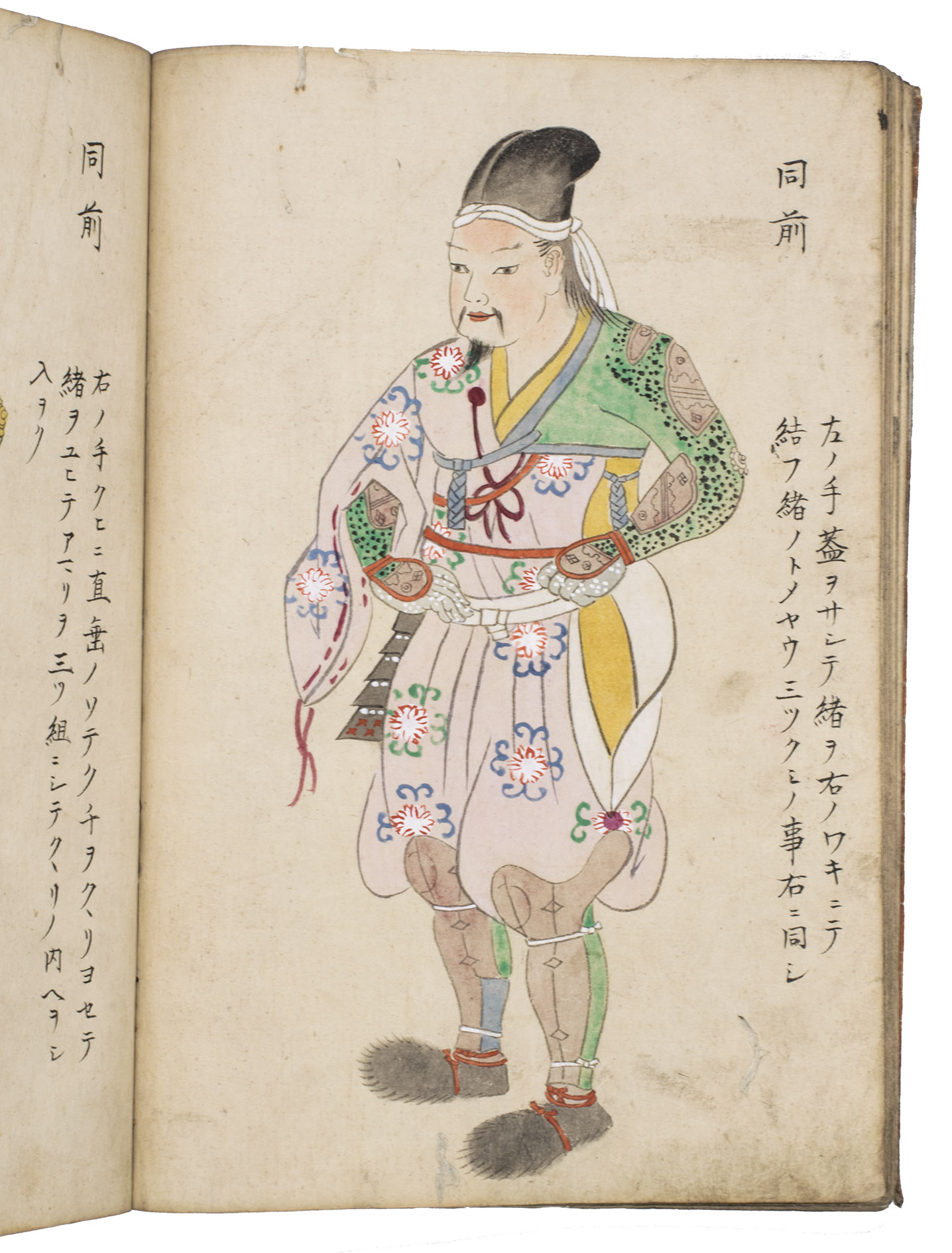
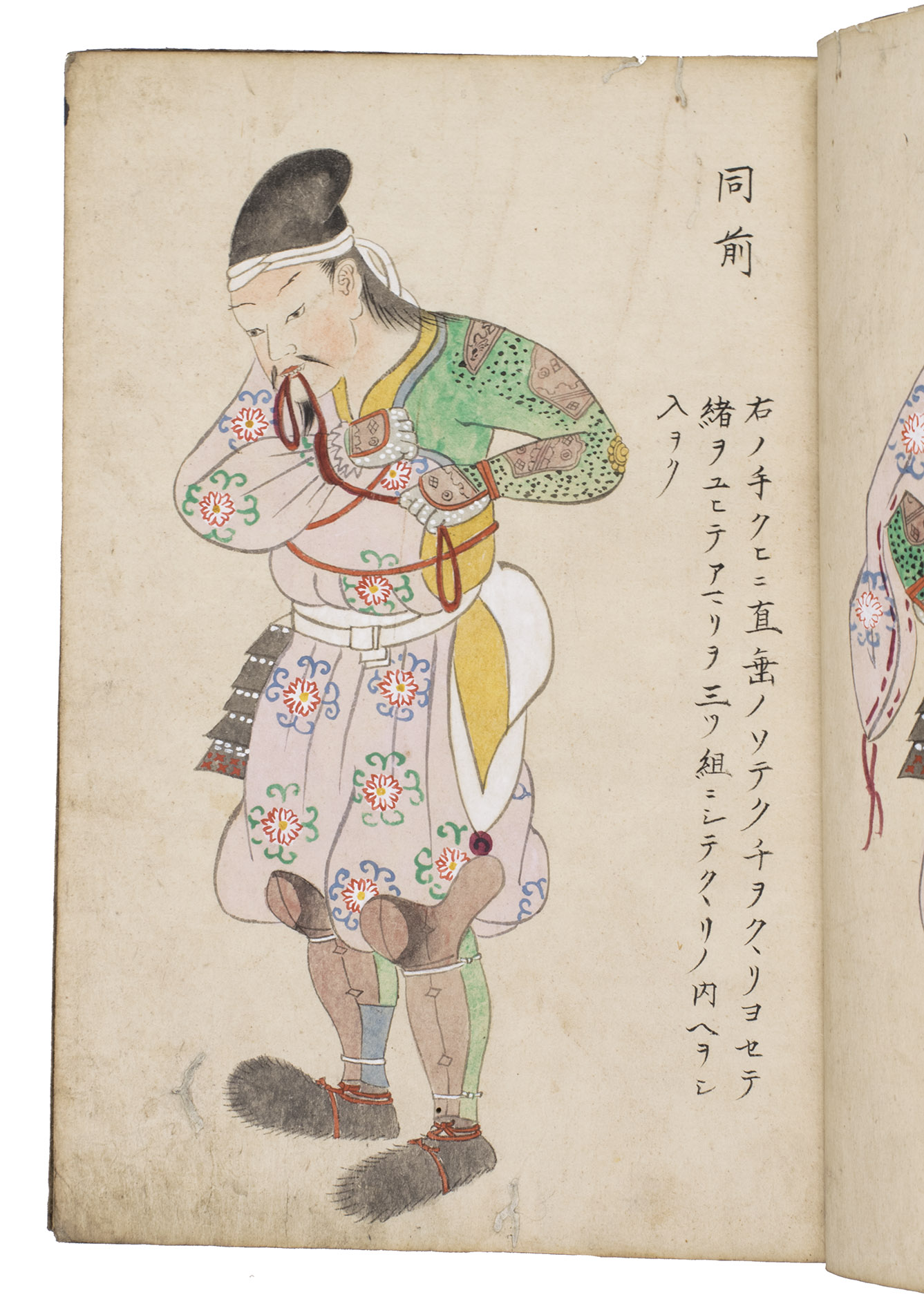
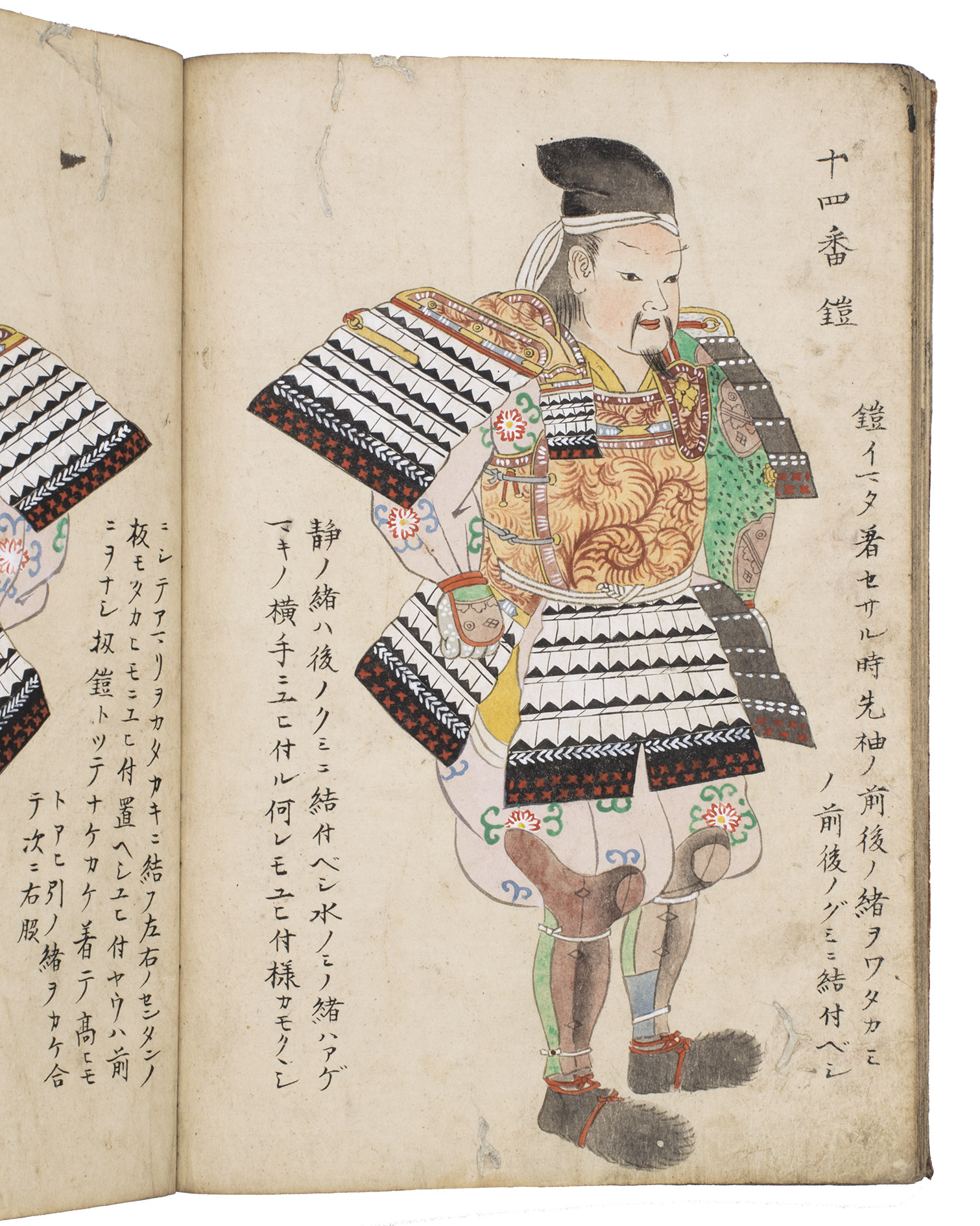
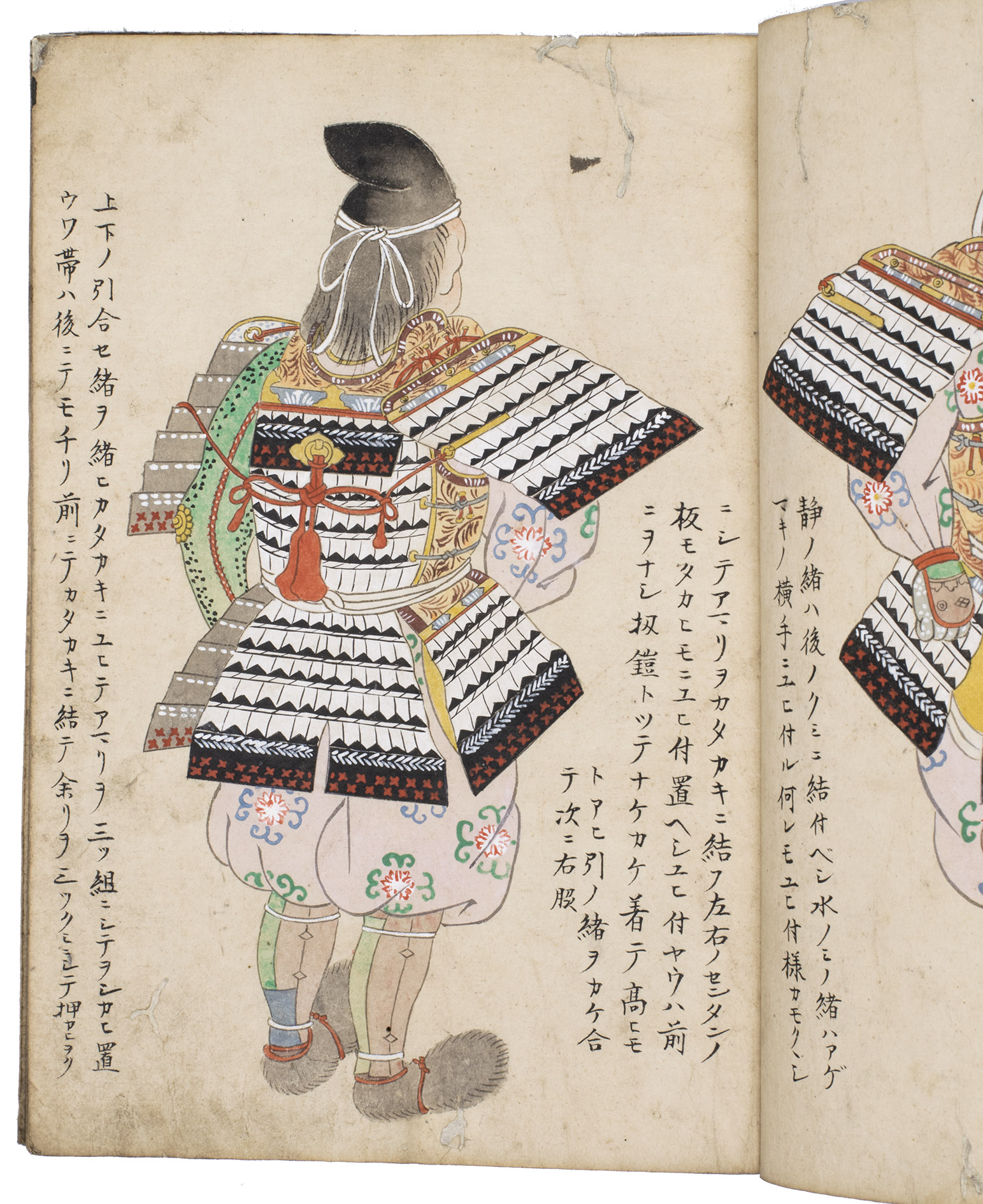
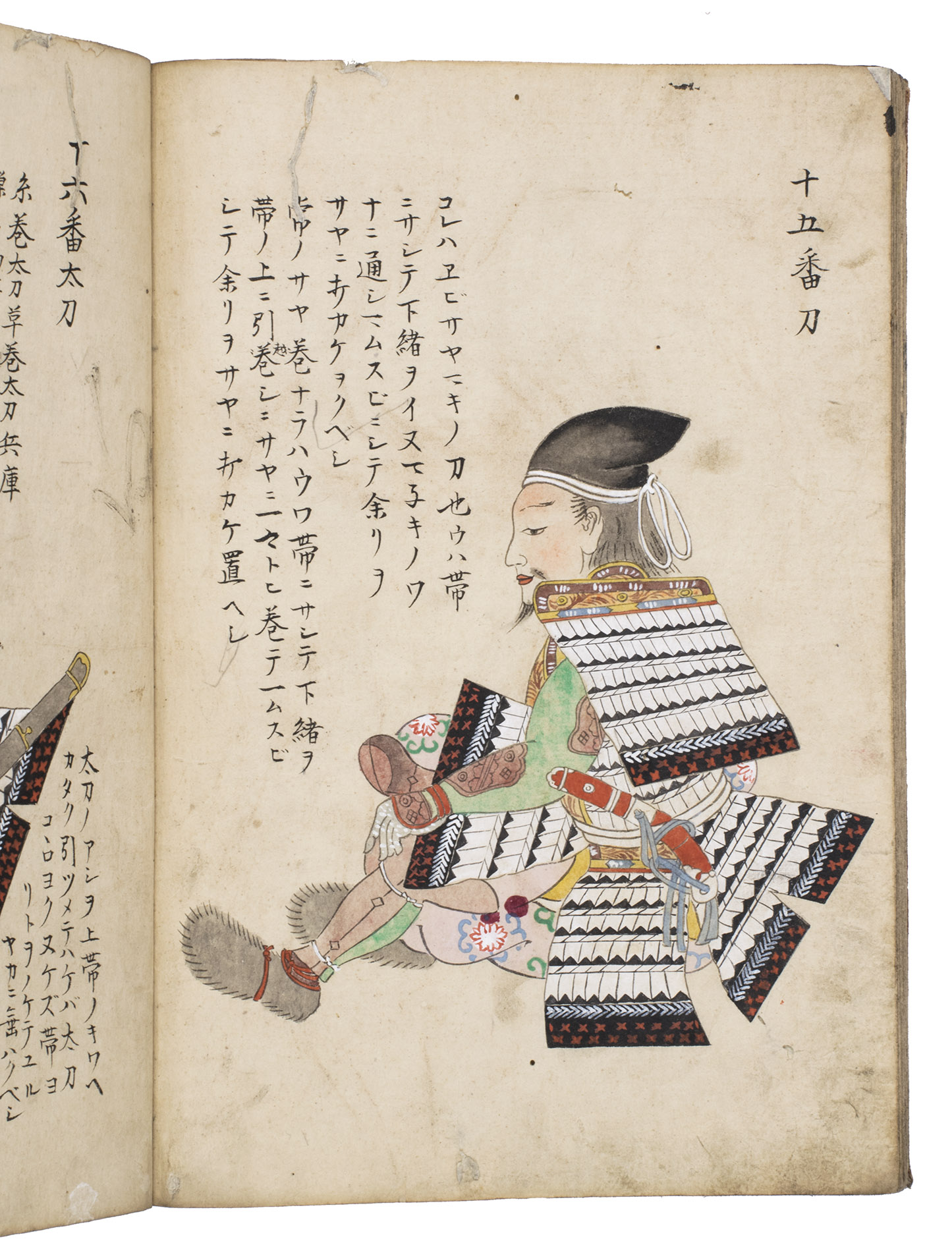
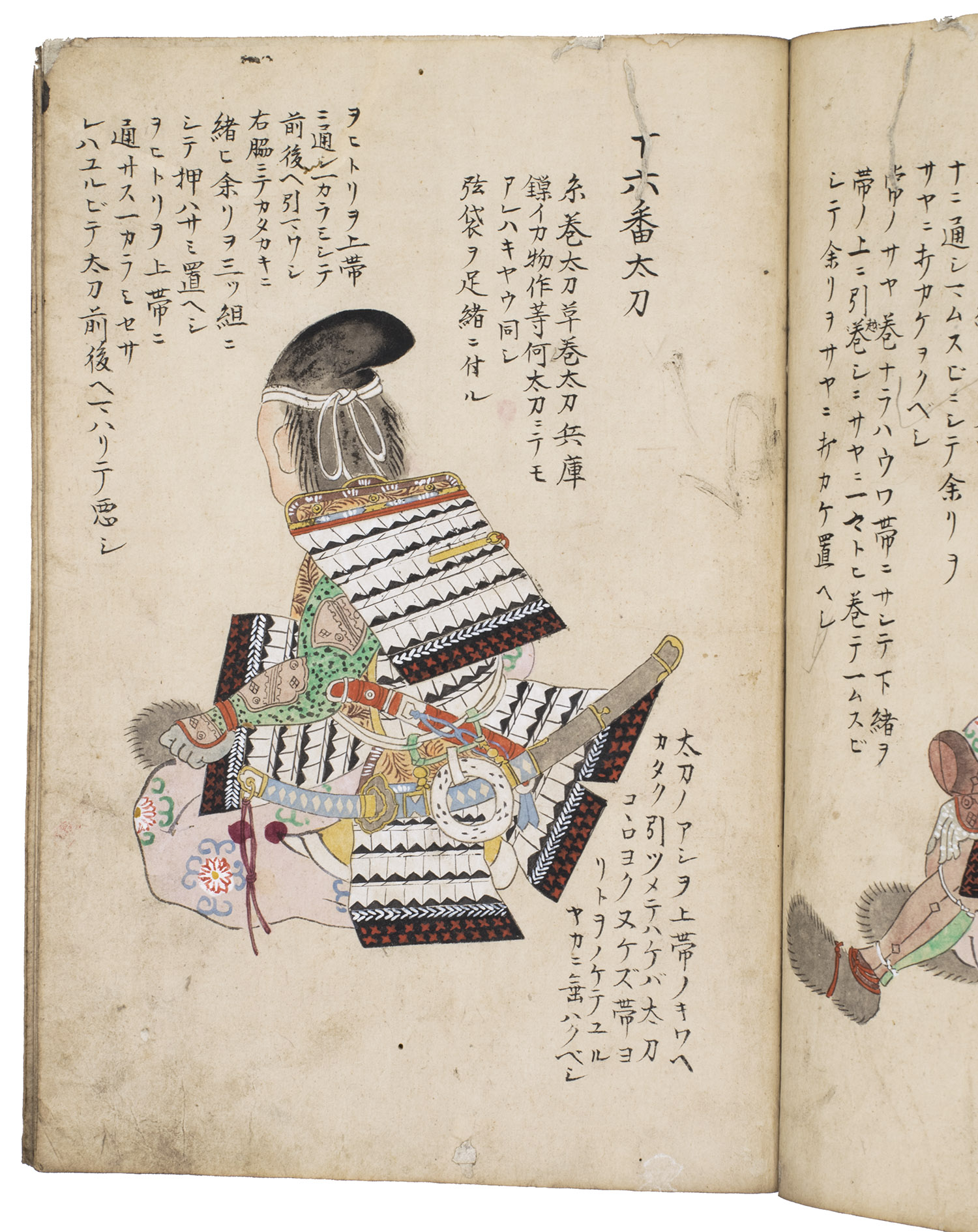
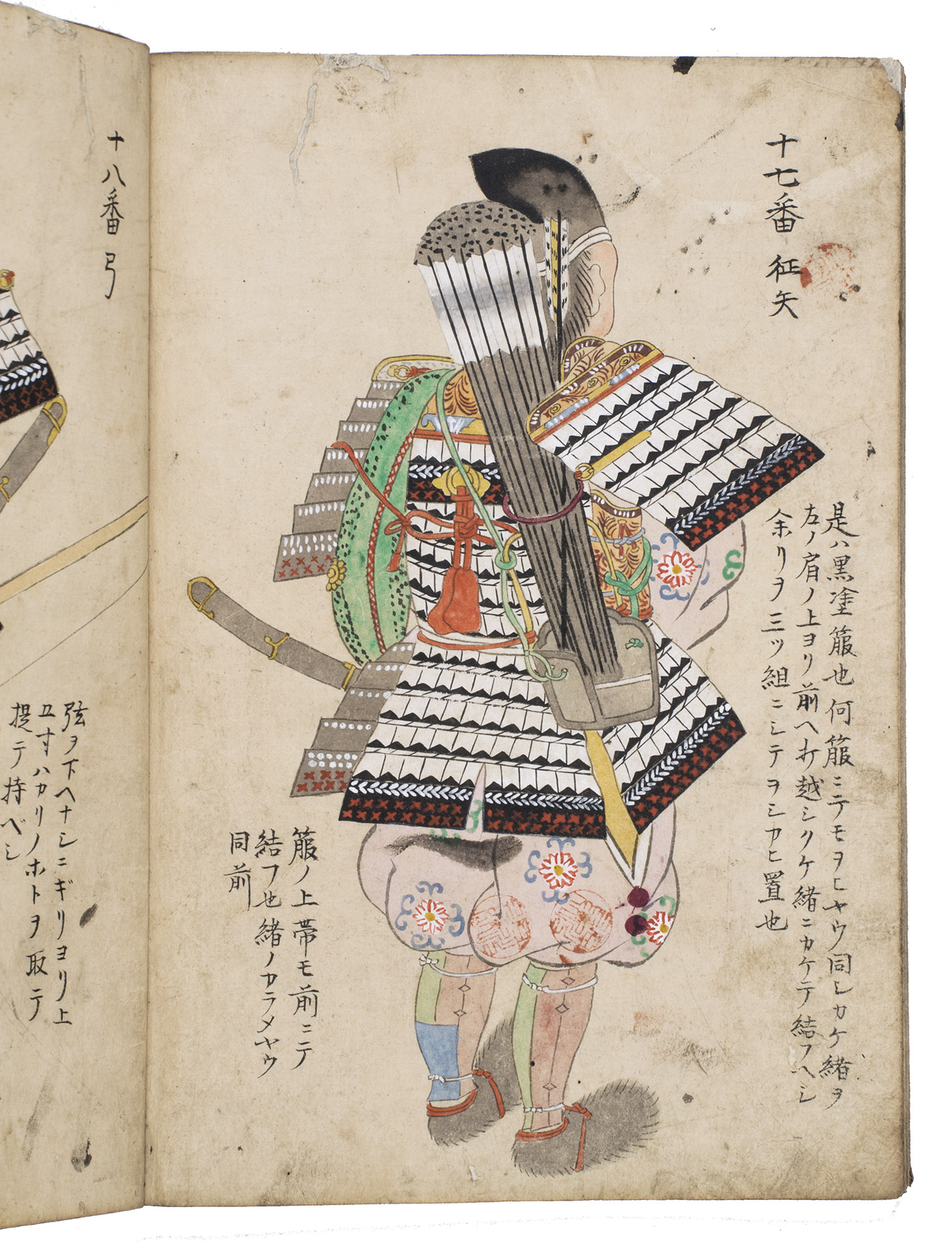
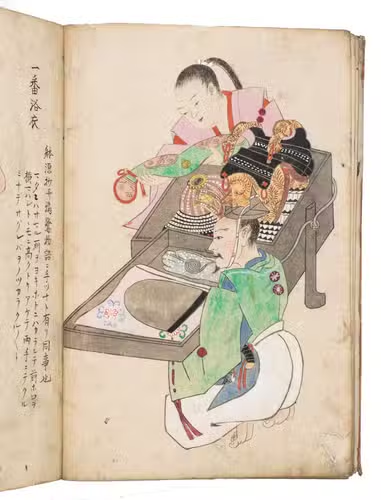
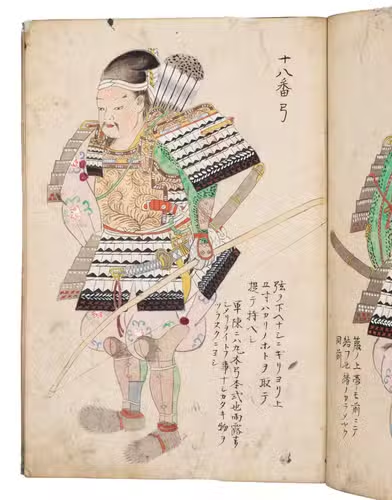
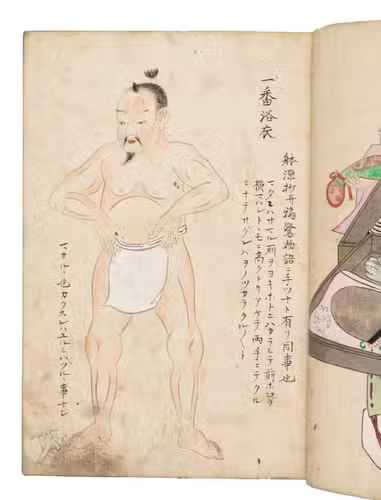
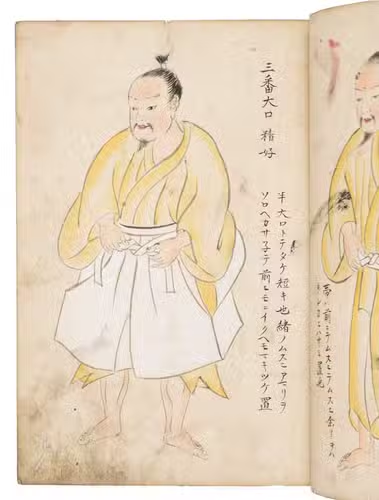
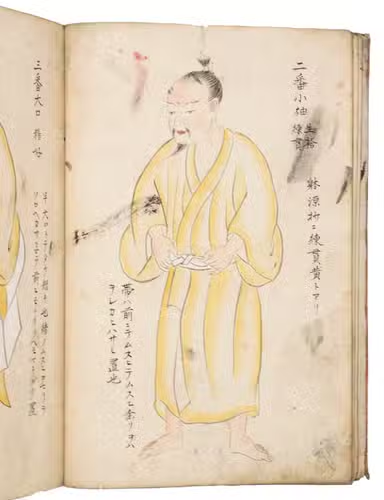
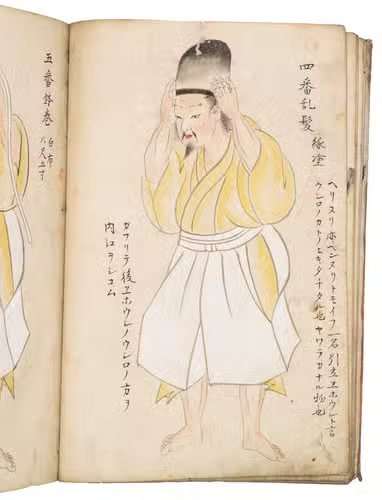
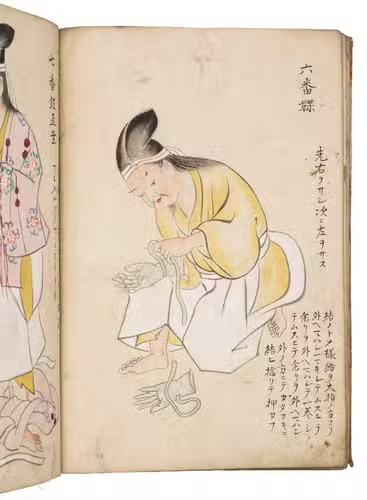
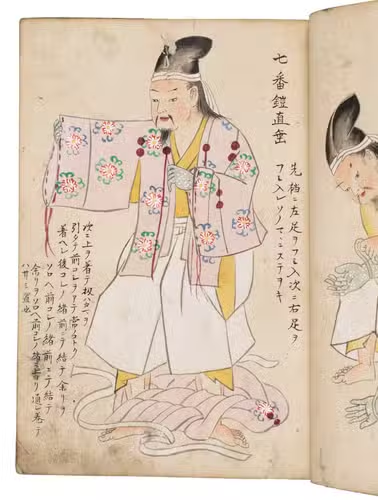
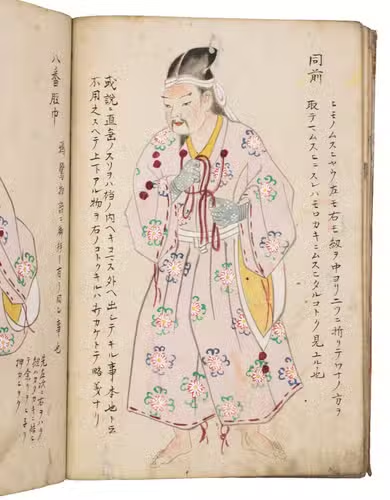
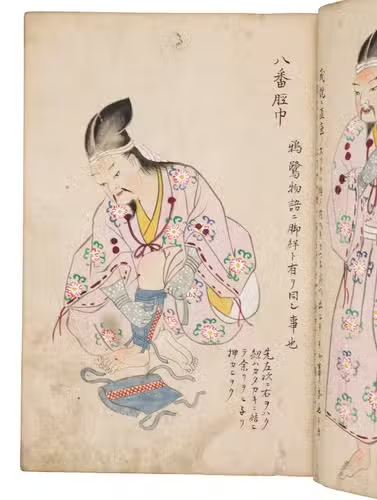
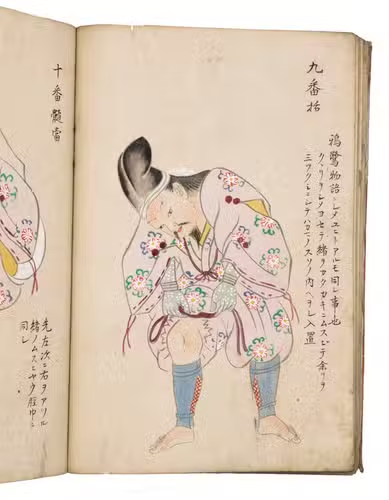
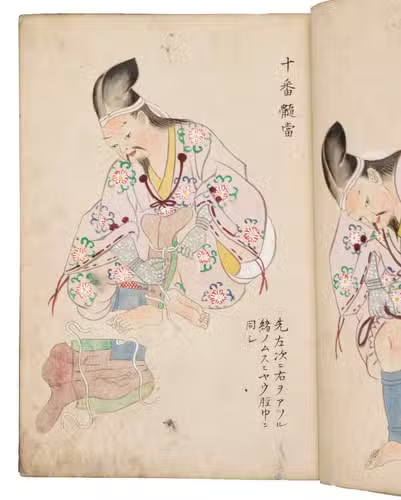
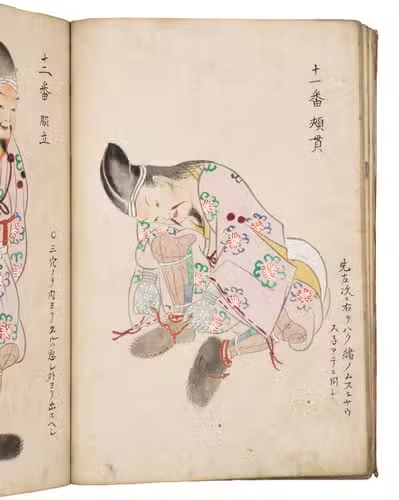
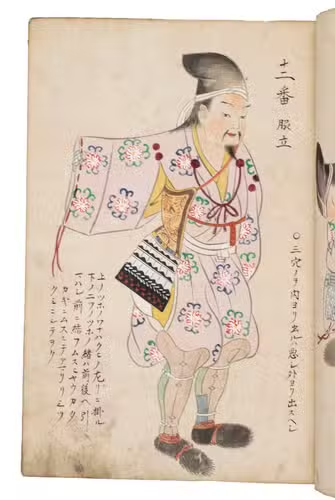
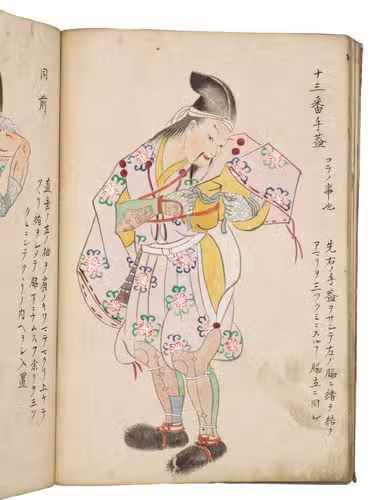
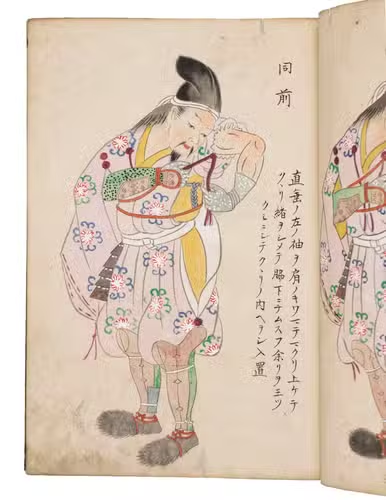
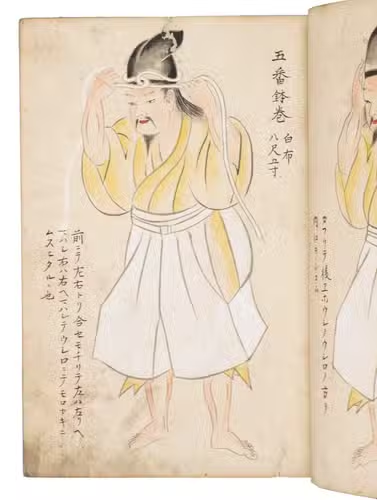
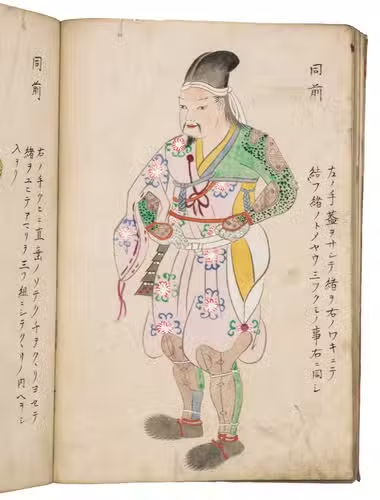
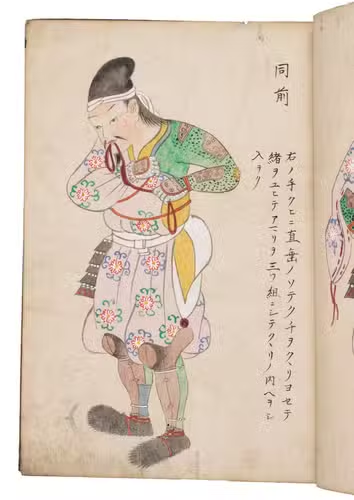
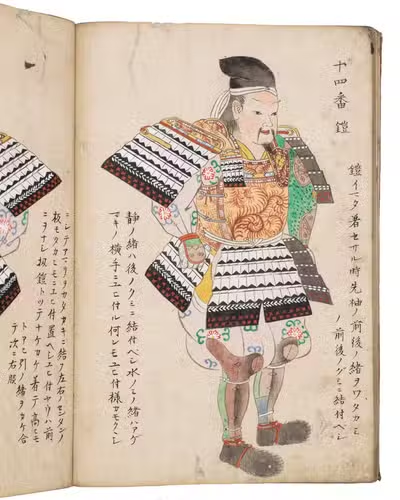
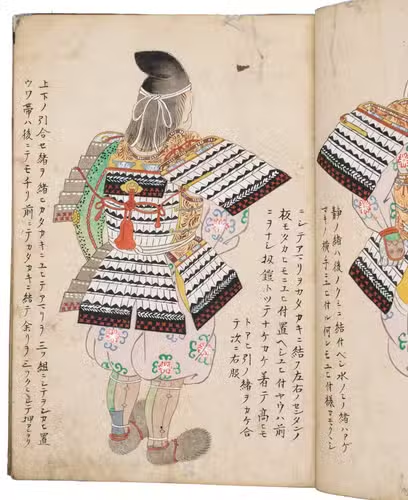
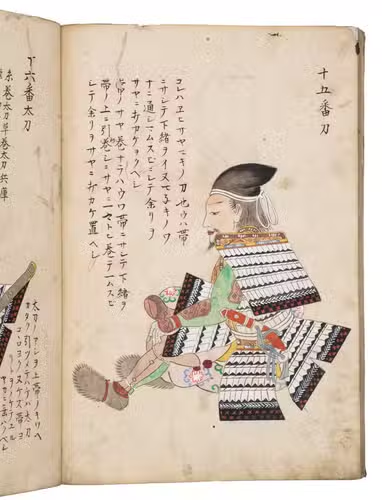
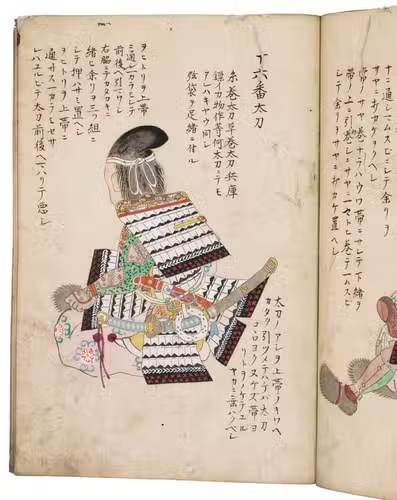
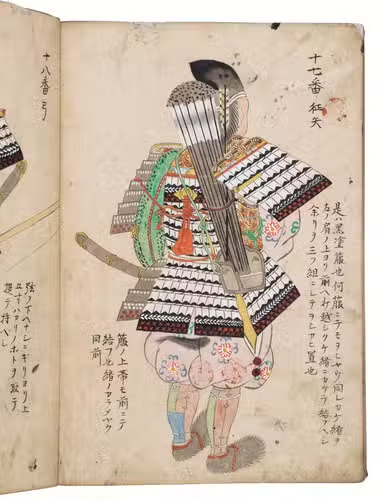
Finely illustrated Japanese manuscript showing the eighteen stages in dressing the celebrated warrior Minamoto no Yoshiie (1039-1106) in traditional armour. Compiled by the samurai scholar Ise Sadatake (1717-1784), the work describes how to don the classical ō-yoroi, beginning with the undergarments and successive layers of clothing and armour and ending with the weapons. The text is accompanied by 24 finely drawn watercolour illustrations showing the different stages in detail.
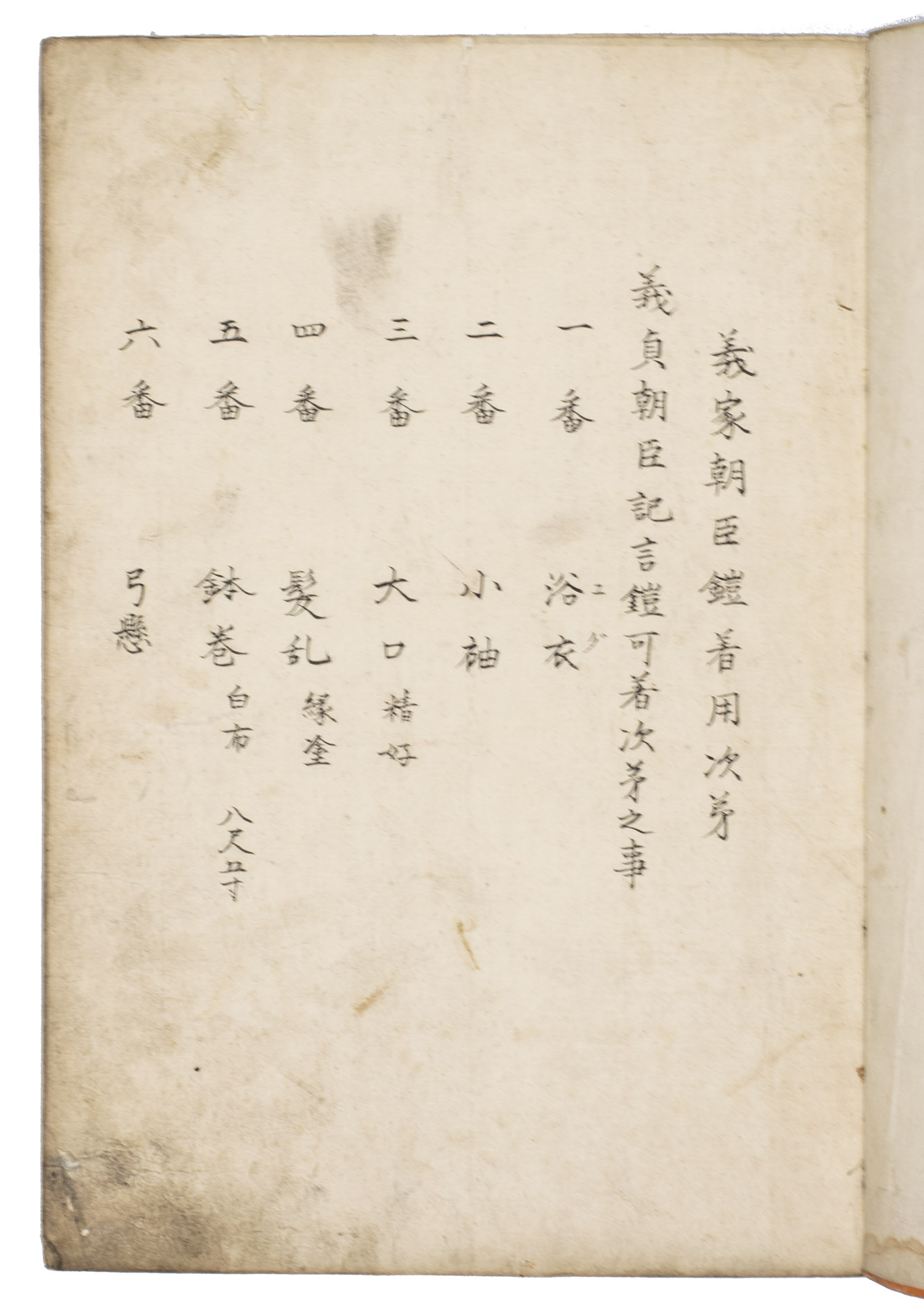
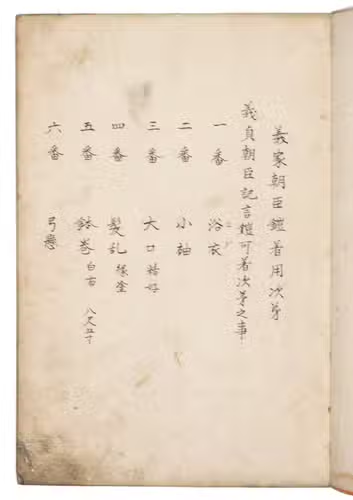
The work opens with an introduction listing the eighteen stages in order. It begins with an under-robe (yukata) and short-sleeved robe (kosode), followed by wide trousers (ōguchi), a headband (hachimaki) and an archer's glove (yugake). The next stages include the armour robe (yoroi hitatare), leg wrappings, and other protective elements before the armour (yoroi) itself is put on. The final four stages add the sword (katana), long sword (tachi), war arrows (soya) and, finally, the bow (yumi). Each stage is illustrated and accompanied by instructions explaining how the garments, armour and weapons had to be worn or carried. A note at the end of the work states that the illustrations were made by the author.
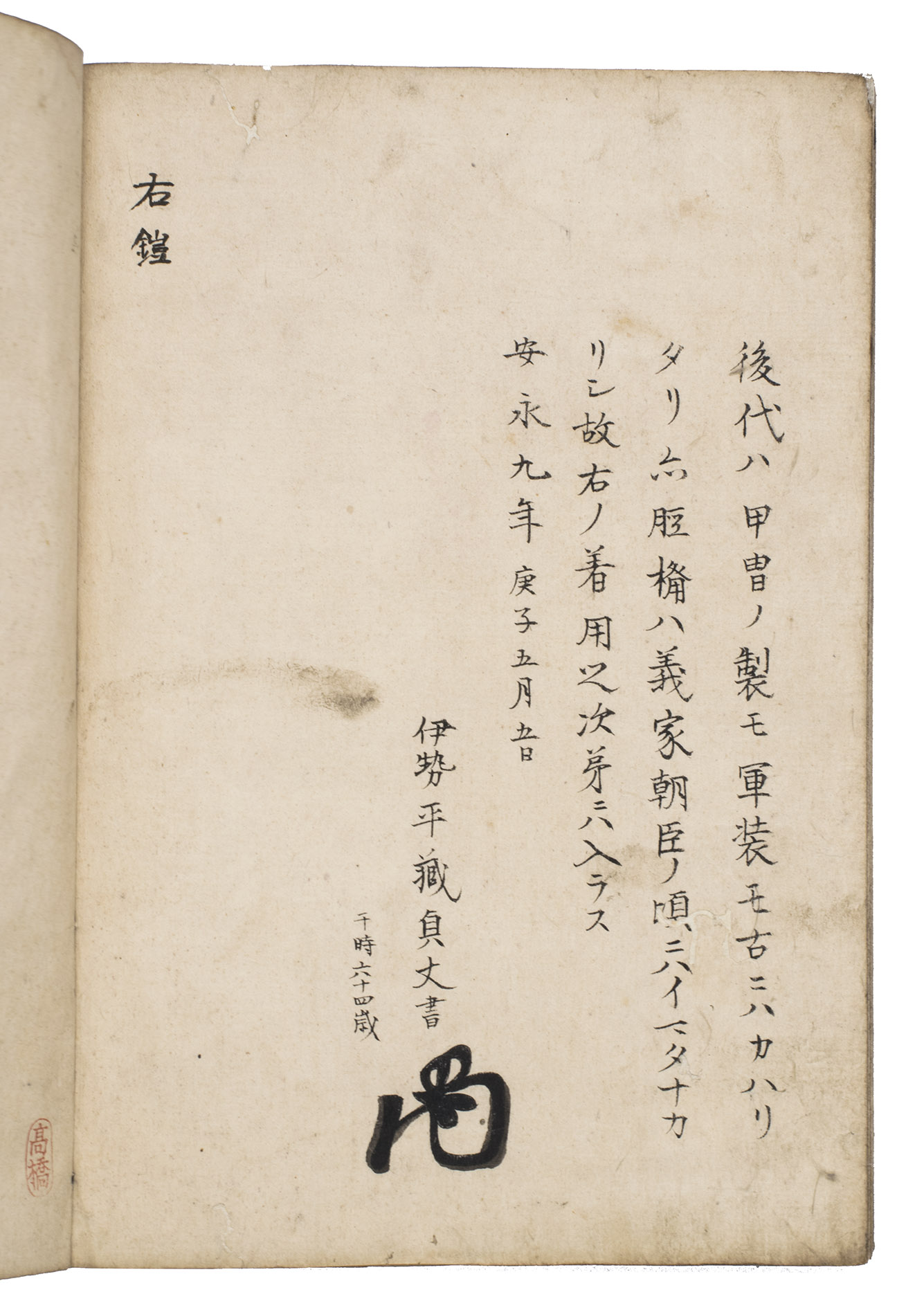
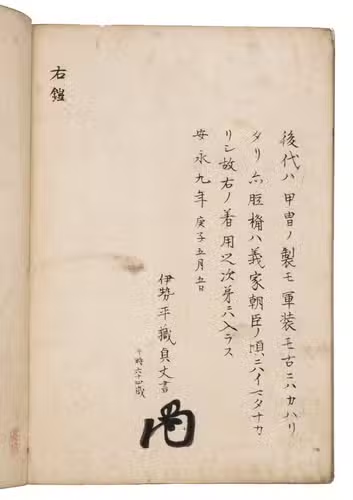
Sadatake was a scholar and samurai in the service of the shogun who wrote extensively on traditional court and warrior customs. In the present work, he attempted to reconstruct an older form of samurai armour and the ceremonial rules surrounding its use, taking the famous eleventh-century warrior Minamoto no Yoshiie as his model. His note at the end dates the work to 5 May 1780. However, the work was frequently copied, usually without changing Sadatake's note, making extant copies difficult to date. An inscription on the rear wrapper of the present manuscript ("Tenmei"), however, suggests that it was produced during the Tenmei era (1781-1789).
With a note from a previous owner on the back (trans. "Tenmei"), indicating the Tenmei era (1781-1789), a red stamp on the inside of the back wrapper. The wrappers are creased, remnants of a paper label on the front, a faded annotation on the back. Some staining and soiling, repaired wormholes in the margins, occasionally affecting the illustrations. Otherwise in good condition.
Related Subjects: