LEMNIUS, Levinus.
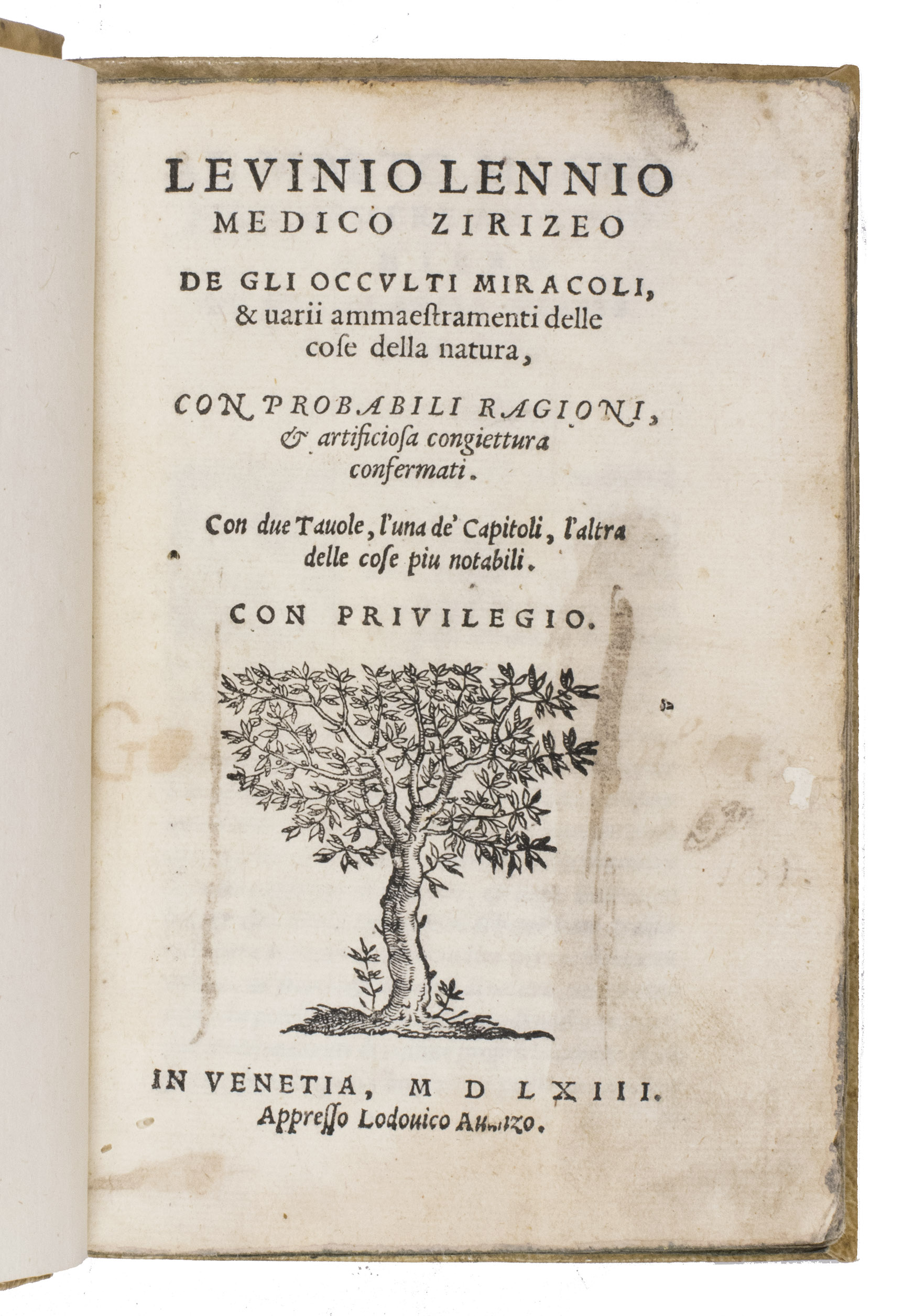
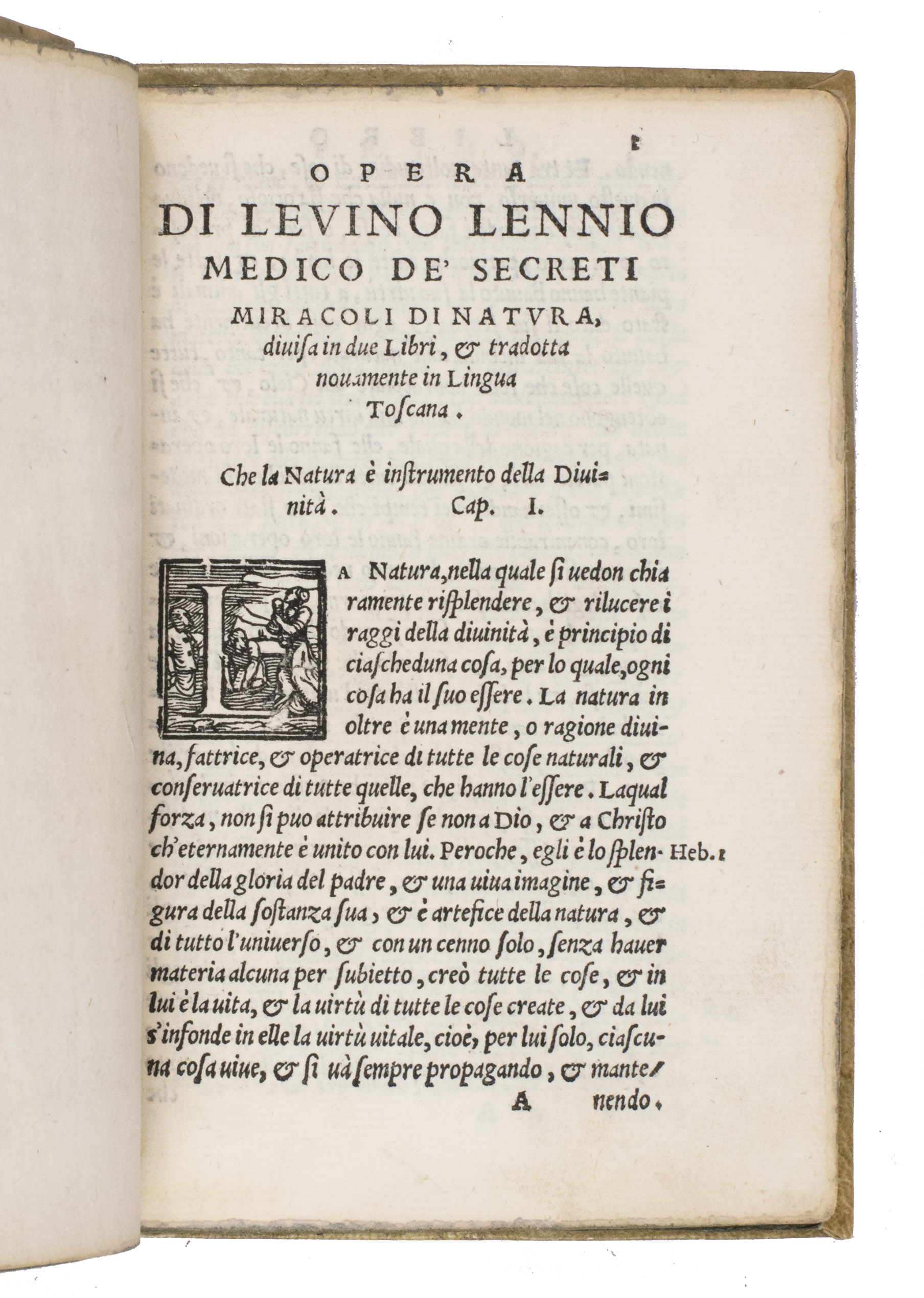
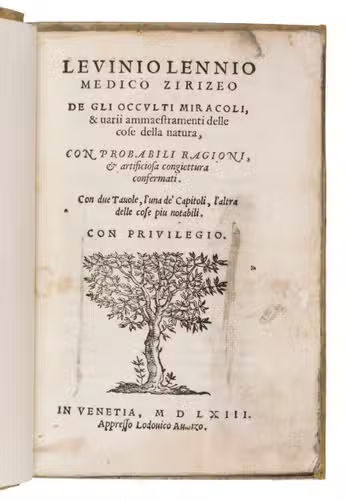
De gli occulti miracoli, & uarii ammaestramenti delle cose della natura, con probabili ragioni, et artificiosa congiettura confermati.
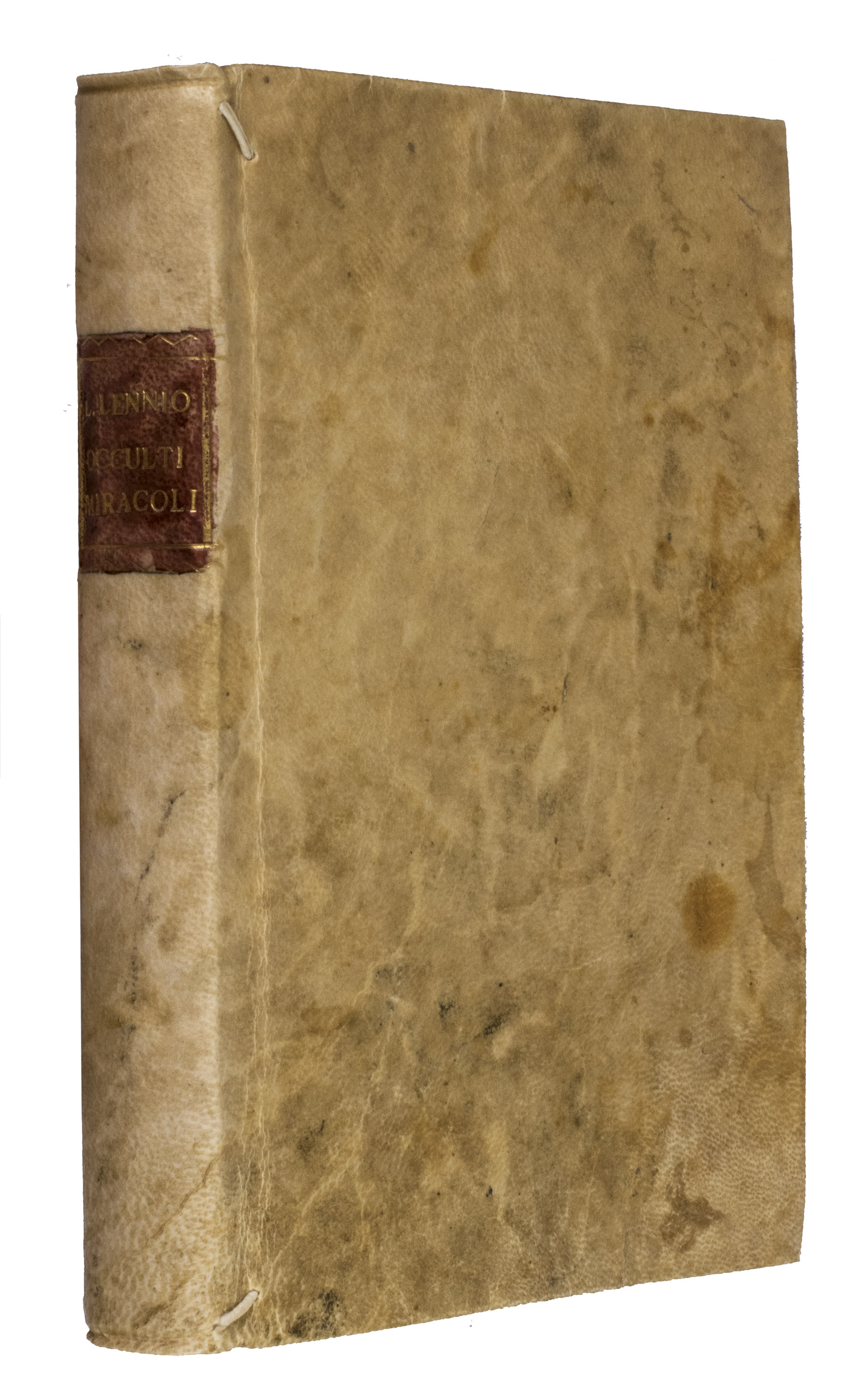
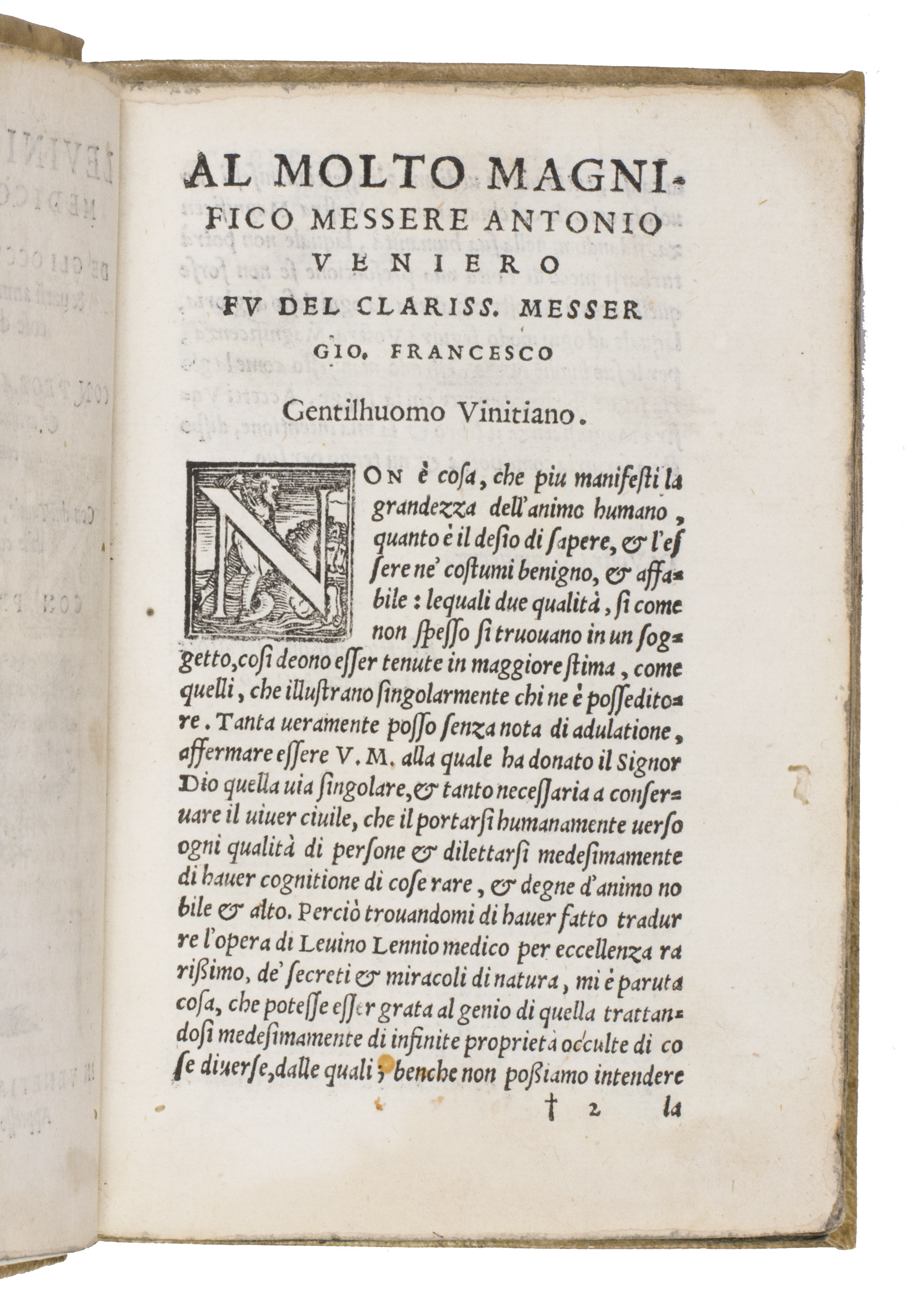
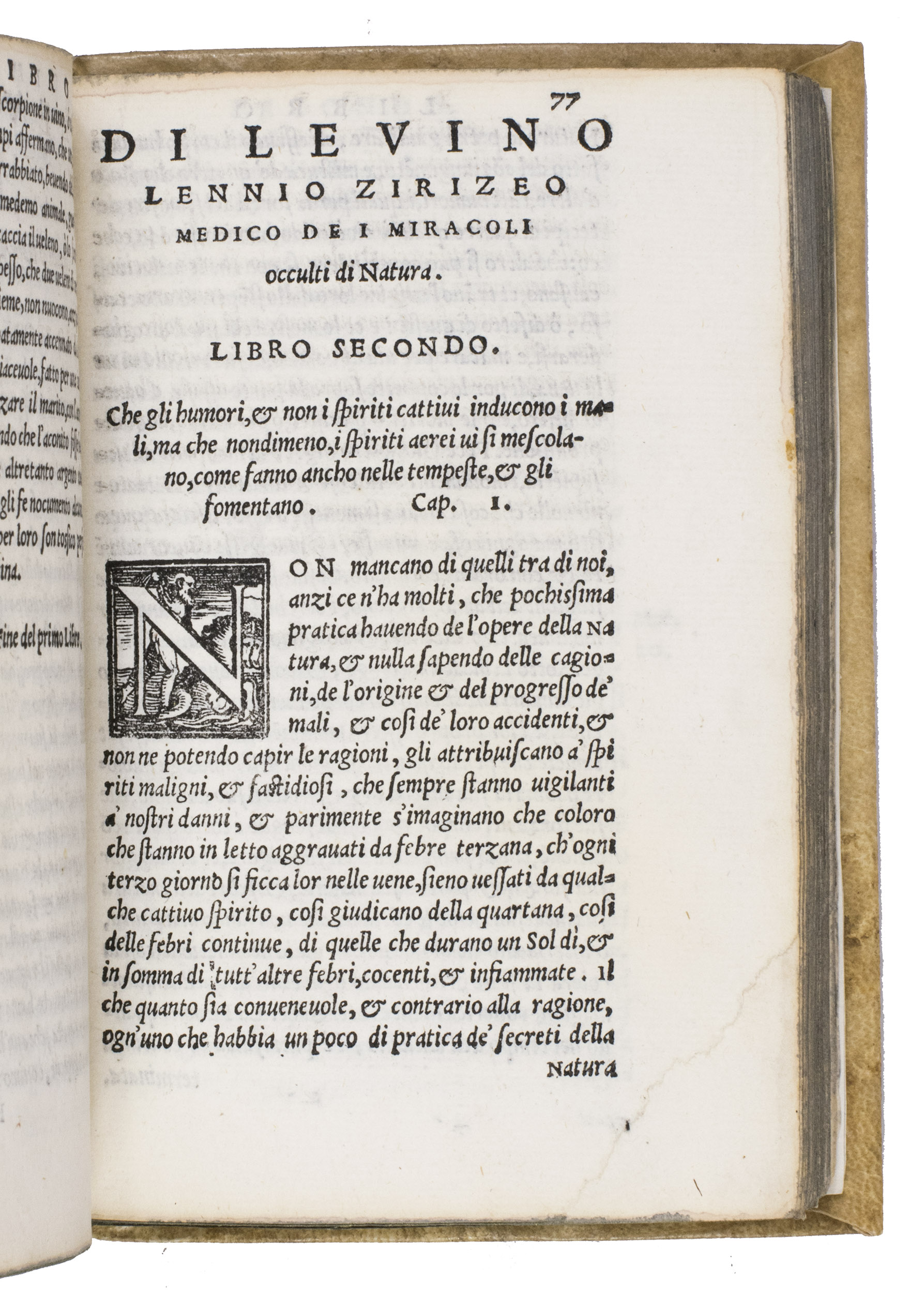
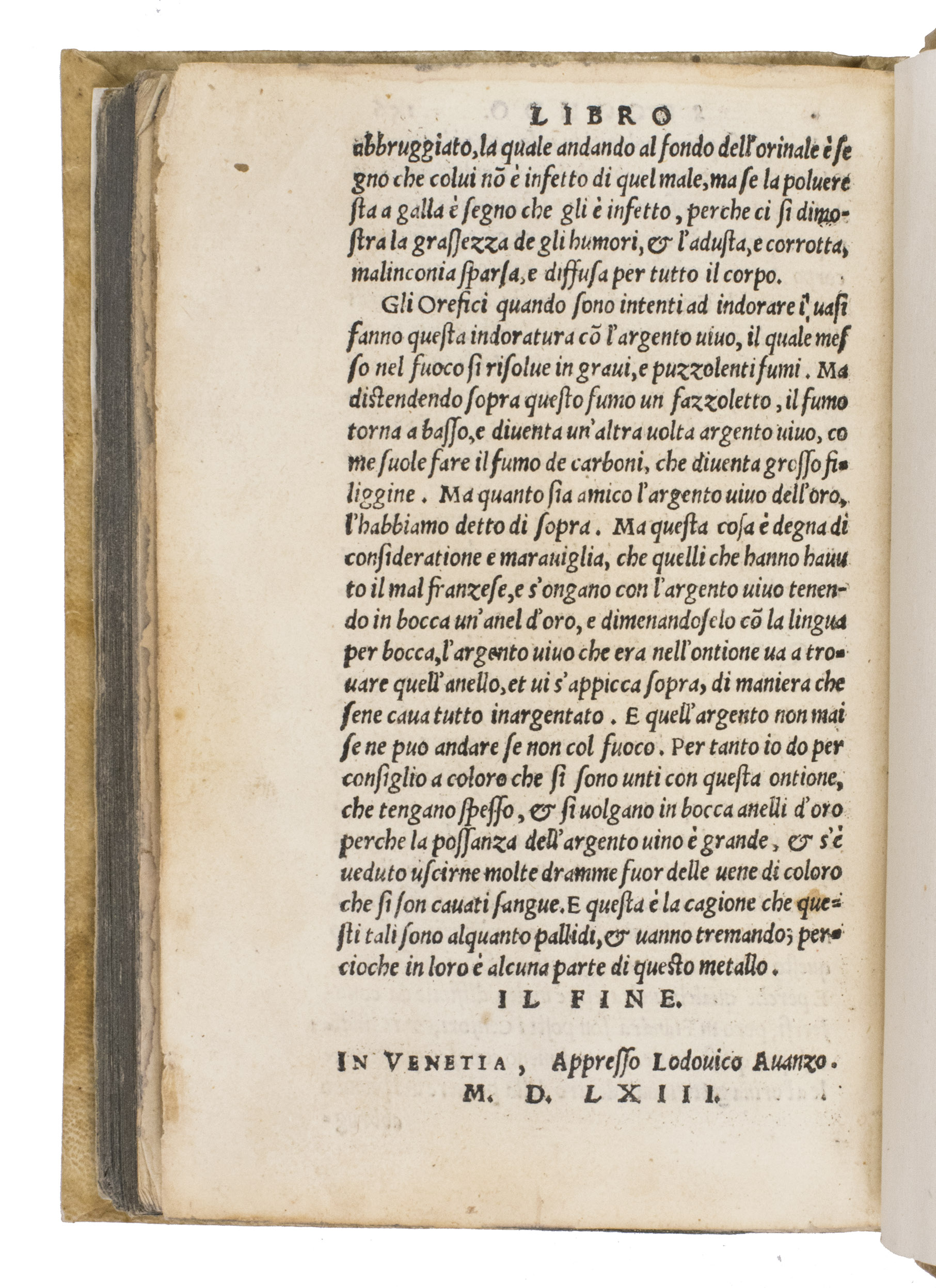
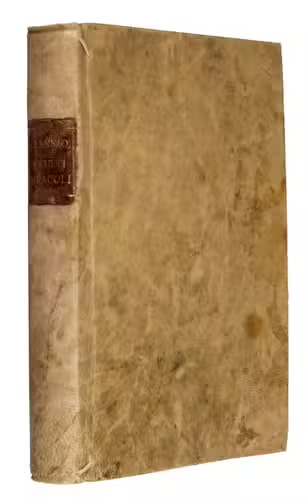
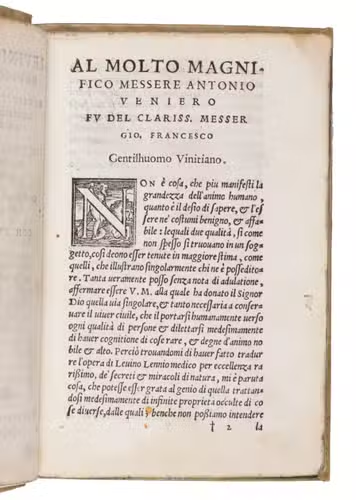
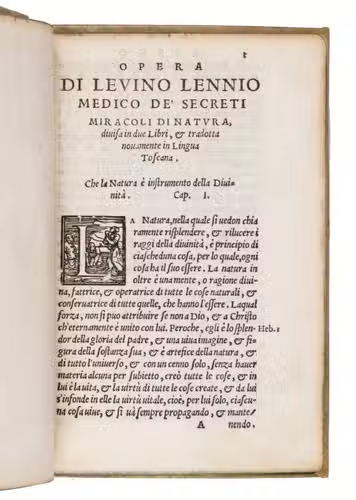
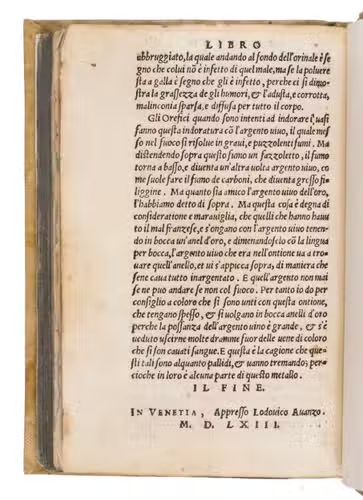
Venice, Lodovico degli Avanzi, 1563. 8vo. With a woodcut device on the title page, and some woodcut initials. Near-contemporary limp vellum. [15], [1 blank], 156 ll.
€ 1,250
Second Italian edition of the celebrated work by the Dutch physician Levinus Lemnius (1505-1568). First published in 1559 under the title Occulta naturae miracula, the work occupies an intriguing position between Renaissance natural philosophy, medicine, and moral reflection. Rather than presenting a systematic account of nature, Lemnius examines phenomena that appeared mysterious or "occult" to his contemporaries, those hidden qualities of nature that seemed to resist immediate explanation. Drawing on classical learning and personal observation, he offers probable reasons and ingenious conjectures for a remarkable variety of subjects.
Among the topics discussed are heredity, human reproduction, sleepwalking, epilepsy, dreams, melancholy, and the effects of diet and environment on health. Lemnius also considers the virtues of plants and wine, unusual physiological phenomena, and curious questions about the natural world. Particularly striking is his attempt to explain many conditions traditionally attributed to demons or witchcraft through natural causes such as bodily humours or disturbances of the imagination. In this respect, his work helped shift medical thinking away from supernatural explanations toward physiological ones.
The present Italian translation made Lemnius ideas accessible to a broader readership beyond the learned Latin community, contributing to the dissemination of Renaissance medical and natural-philosophical thought in the vernacular. It quickly gained wide circulation across Europe and was translated into several languages.
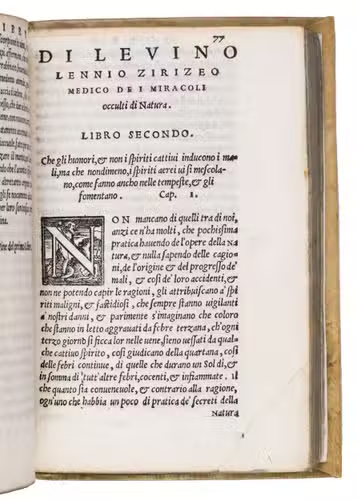
Leaves 50v-52v contain an annotation, "dele", a Latin term meaning "delete" or "destroy", commonly used in editing as an instruction to remove text. Some staining to the title page, minor worming to the first few leaves, minor damp-staining to the upper margin, some occasional staining, and p. 77 with a tear to the outer margin (not affecting the text). Otherwise in good condition. BM STC Italian p. 374; Durling 2779; EDIT16 29950; EEB (Proquest), hin-wel-all-00002237-001; OPAC SBN, BVEE004802; Simon, Bibl. Bacchica II, p. 111 no. 401; USTC 837829; Wellcome 3707; not in Adams; Caillet; cf. NBW VIII, 1029-1031.
Related Subjects: