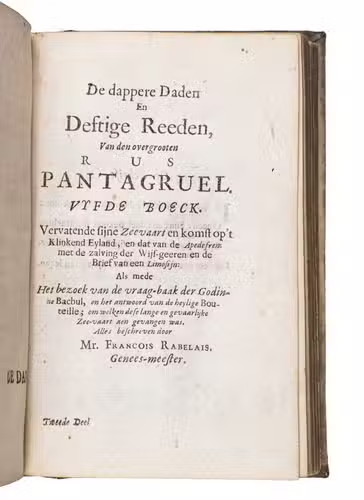
RABELAIS, François.
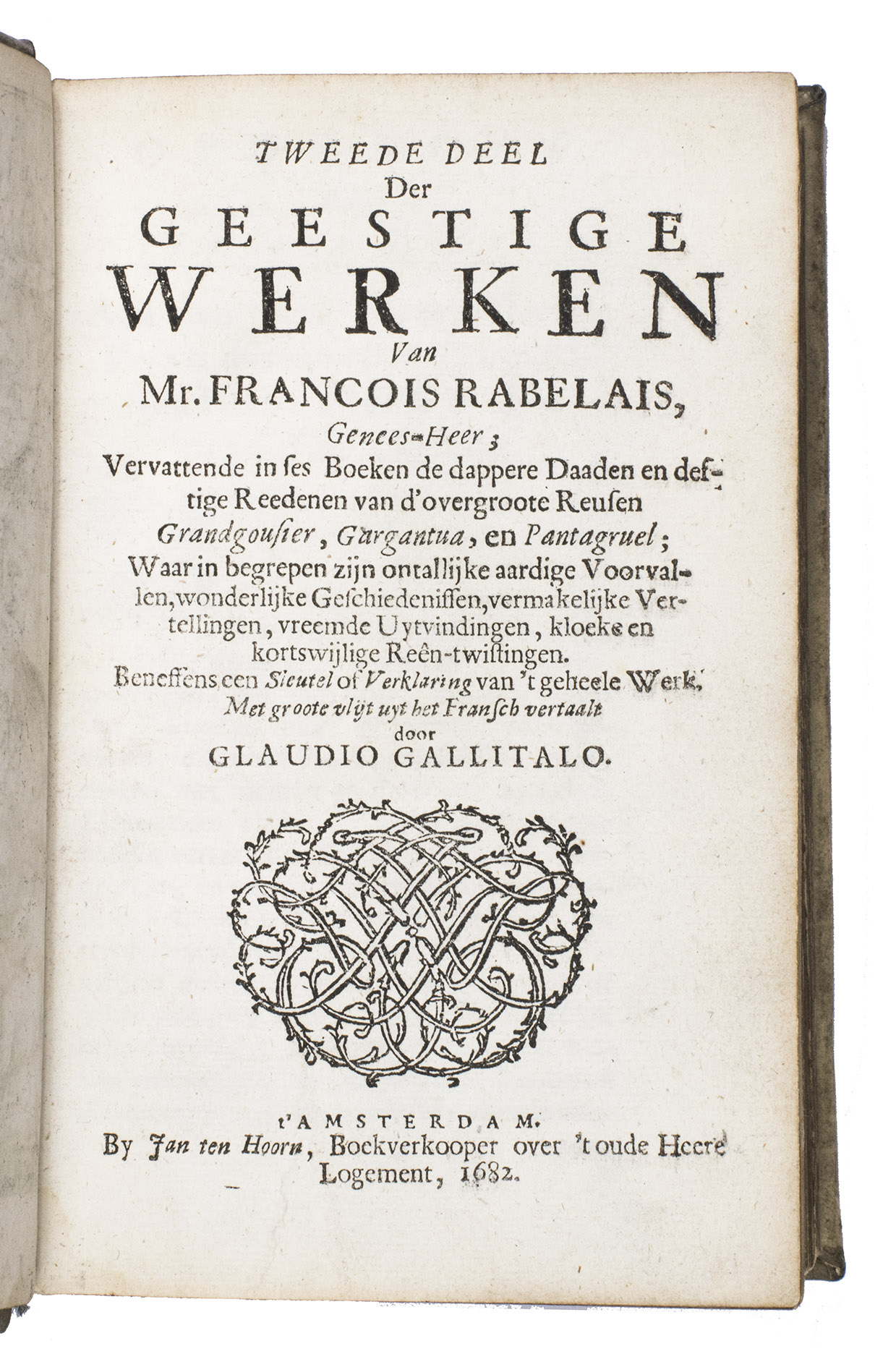
Alle de geestige werken ... vervattende in ses boeken de dappere daaden en deftige reedenen van dovergroote reusen Grandgousier, Gargantua, en Pantagruel ... uyt het Fransch vertaelt door Claudio Gallitalo.
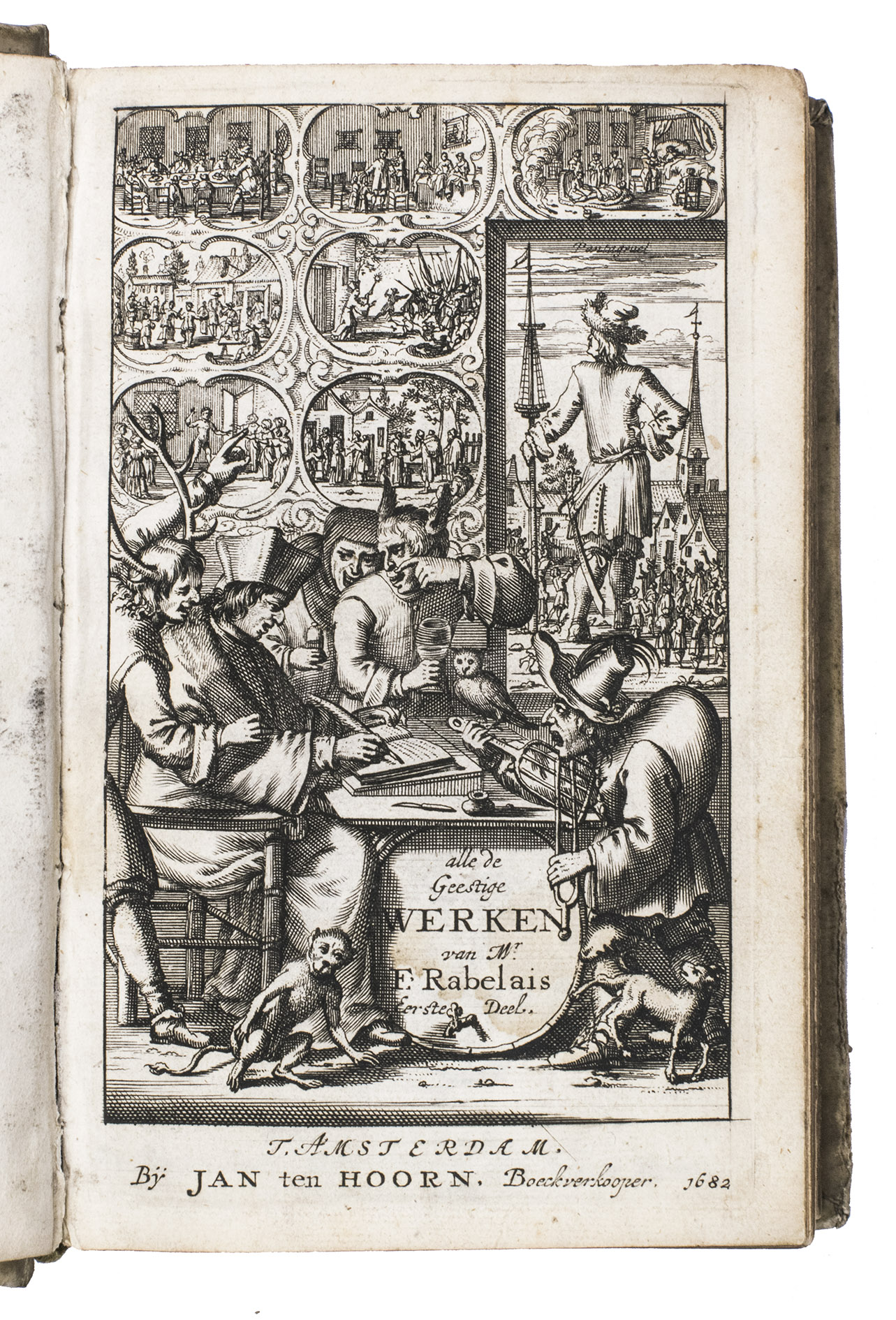
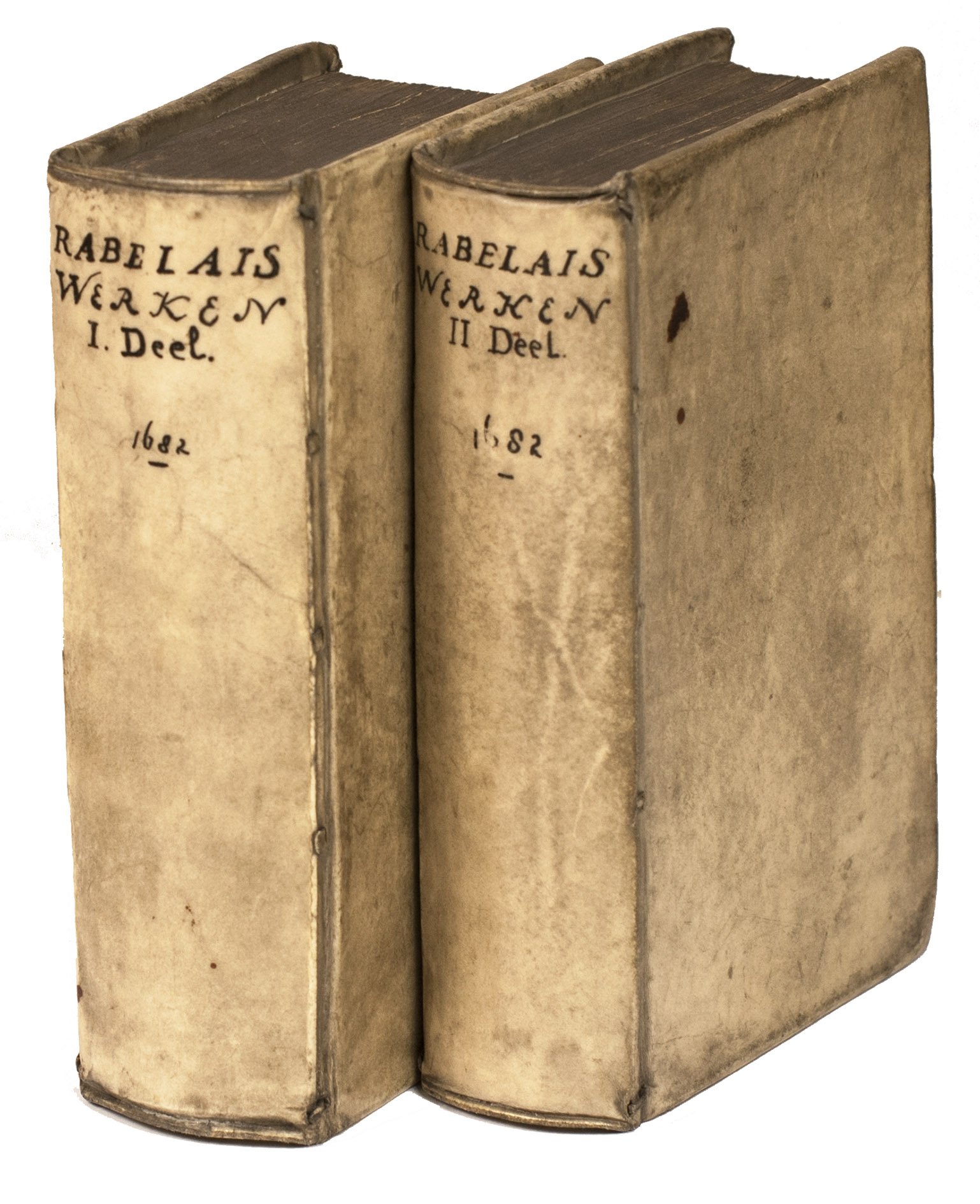
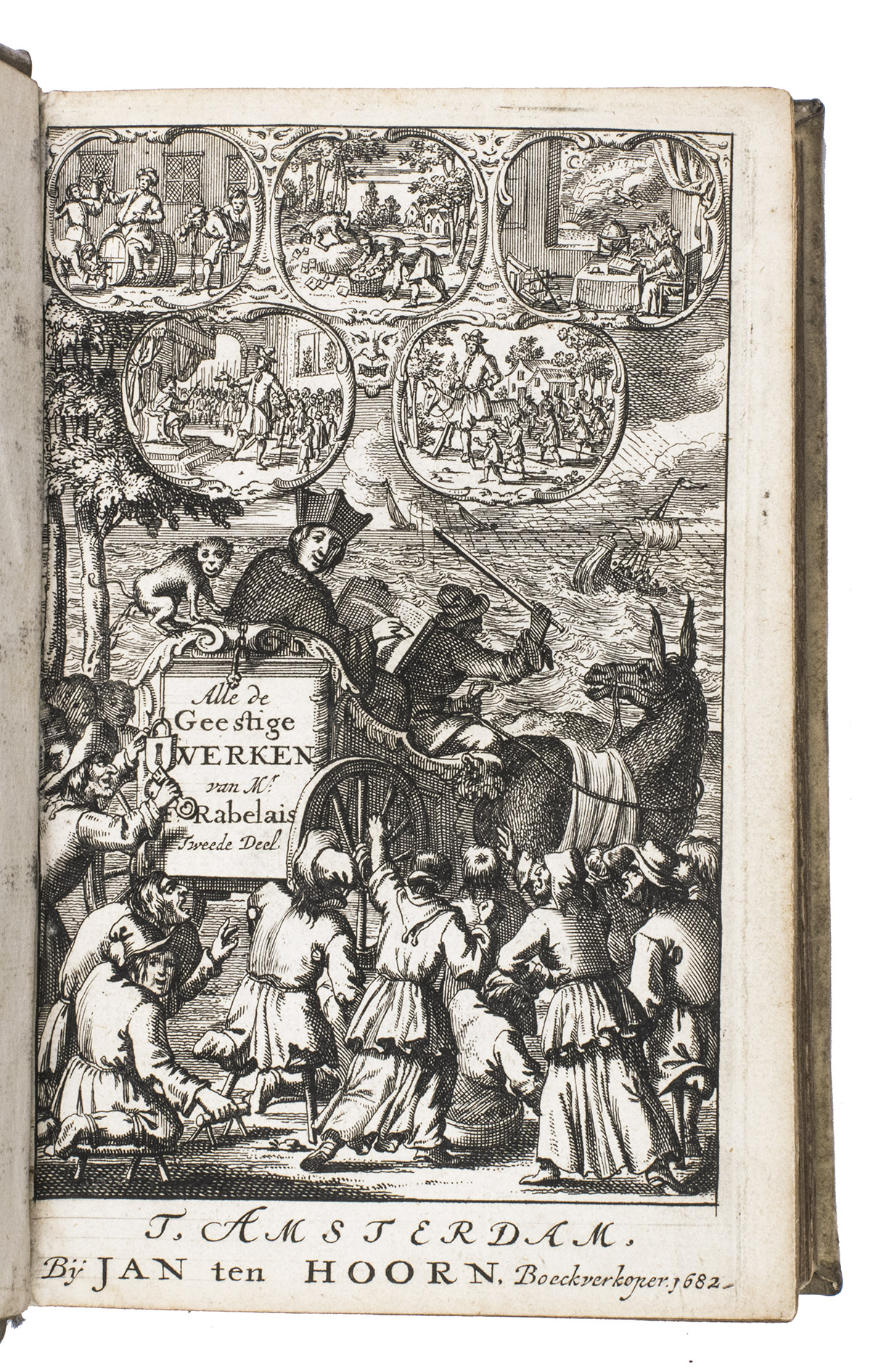
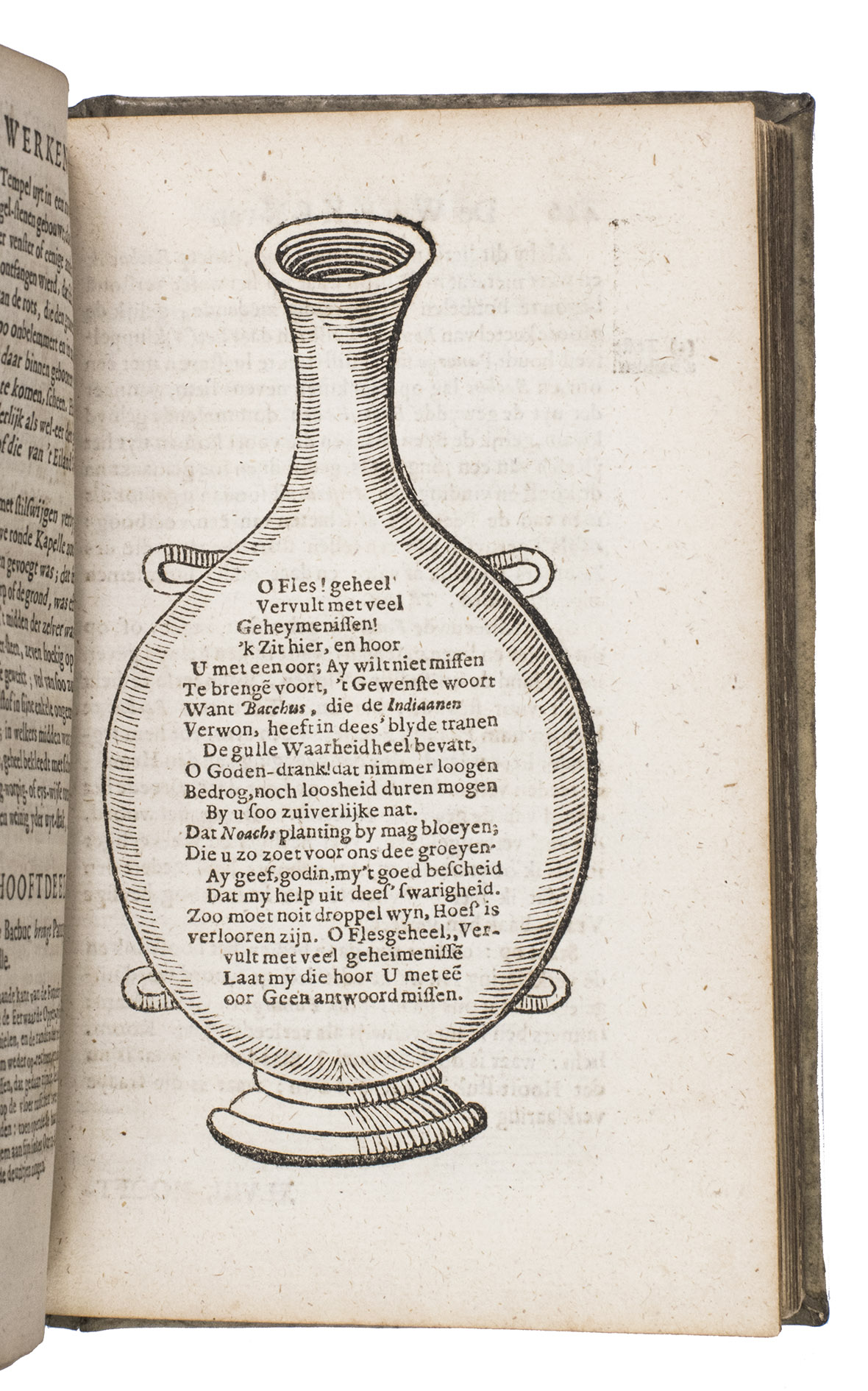
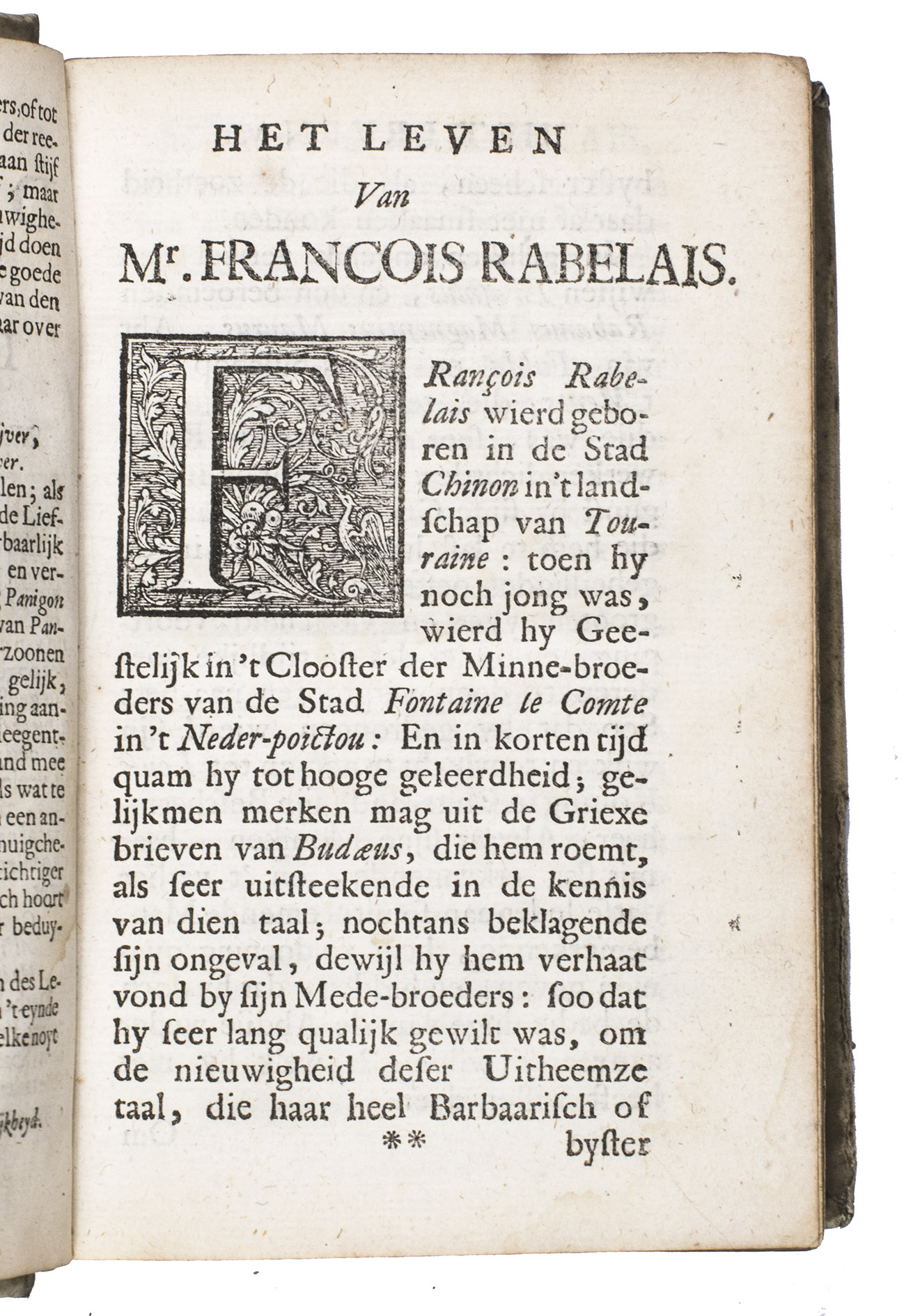
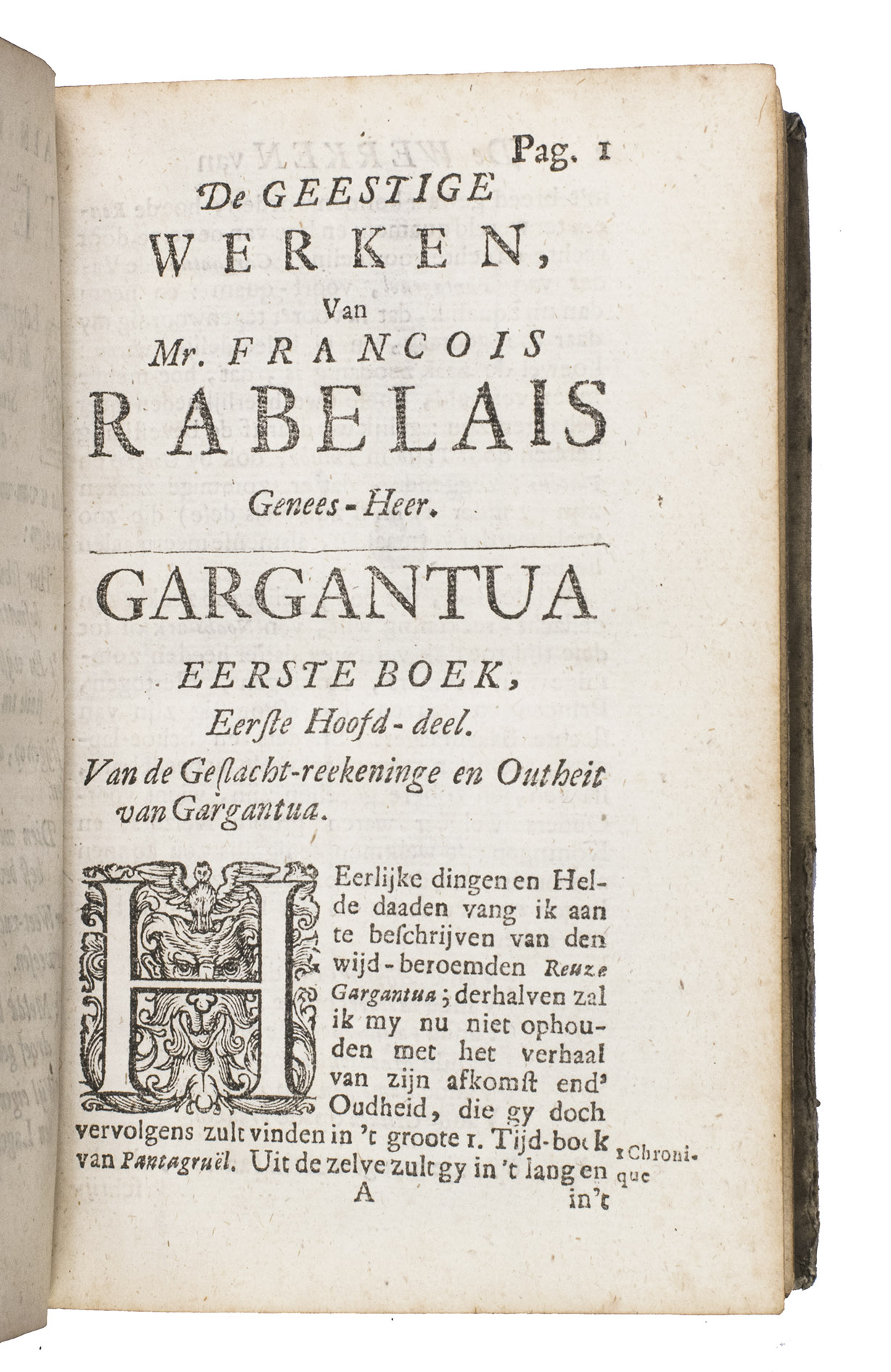
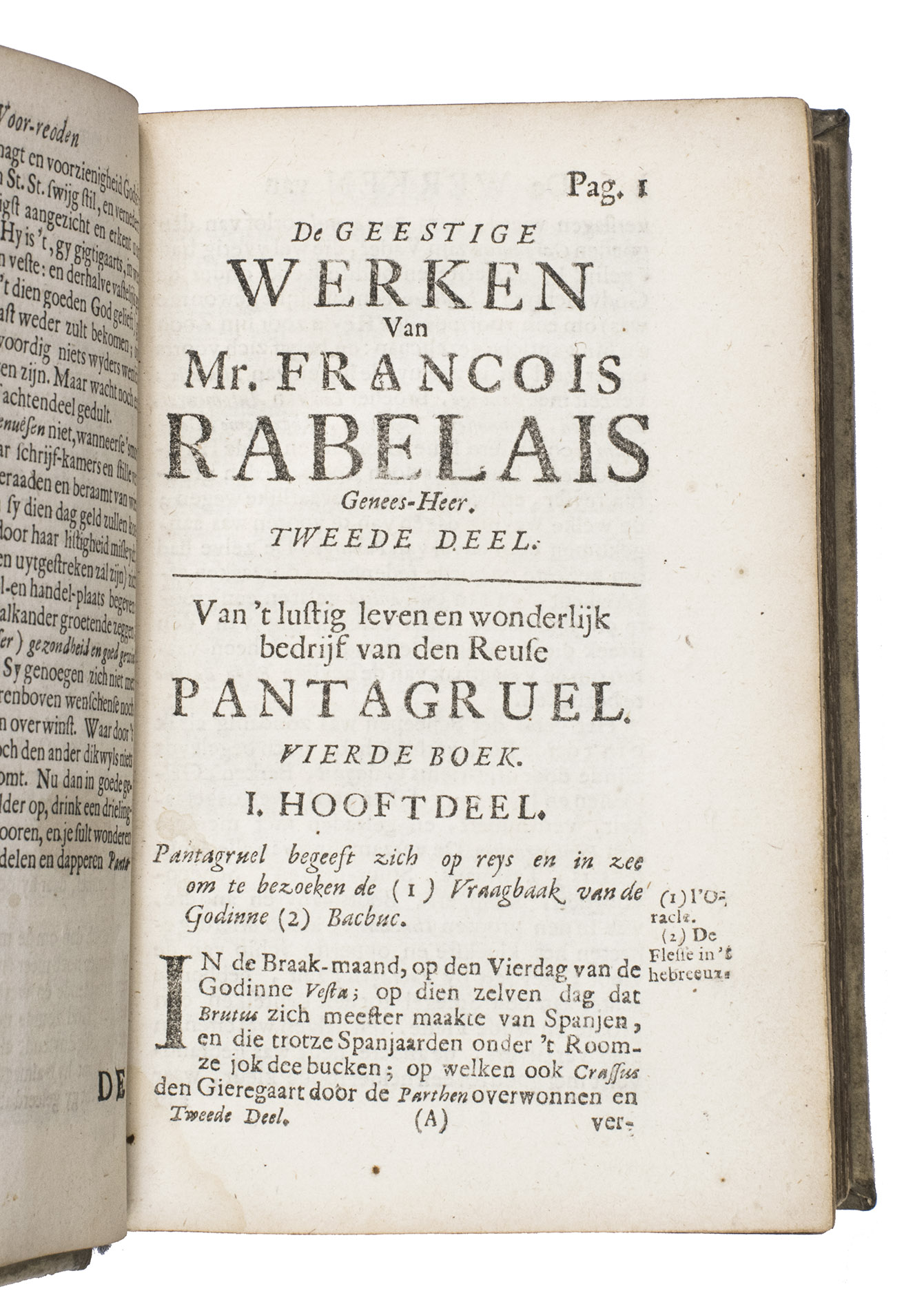
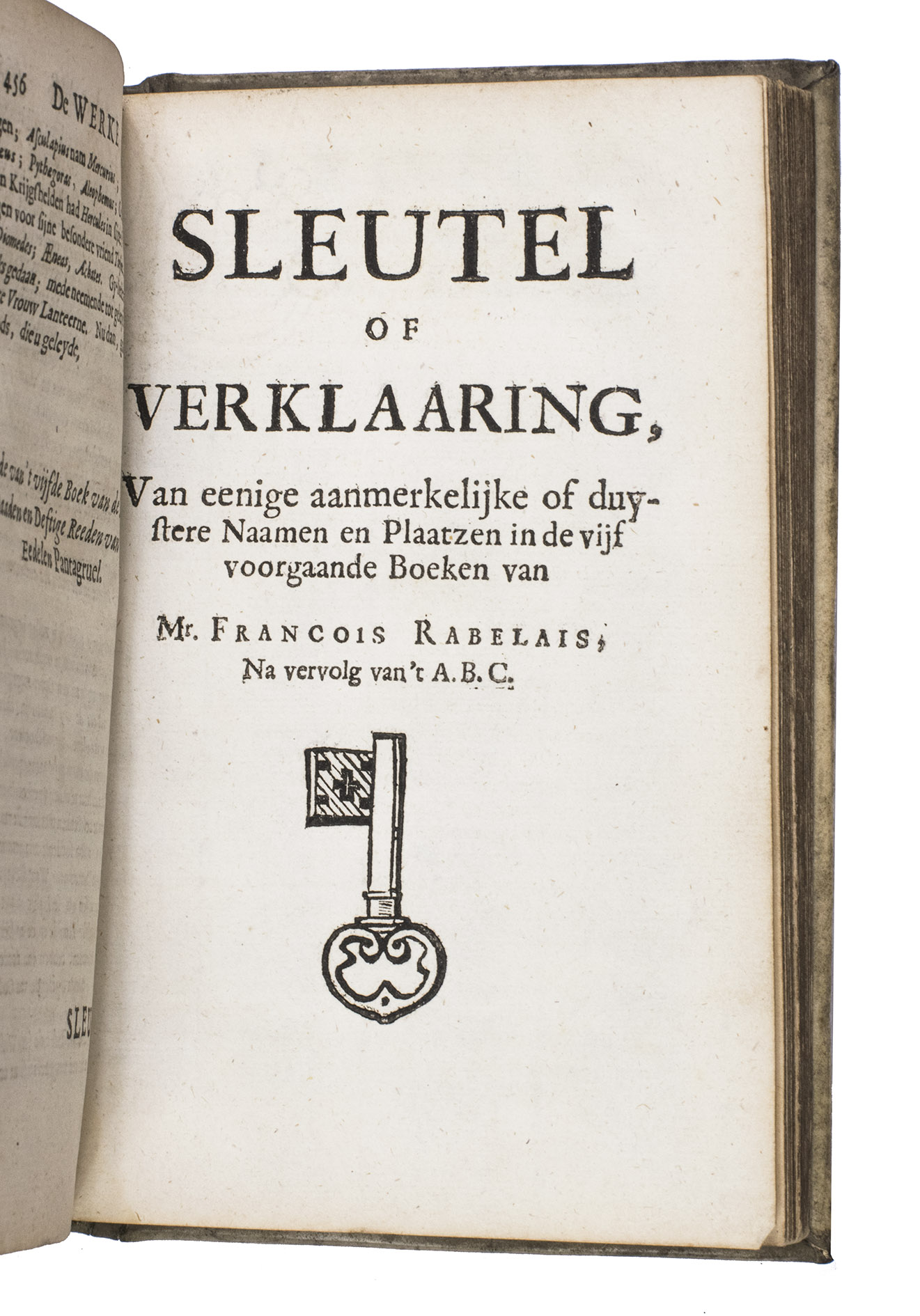
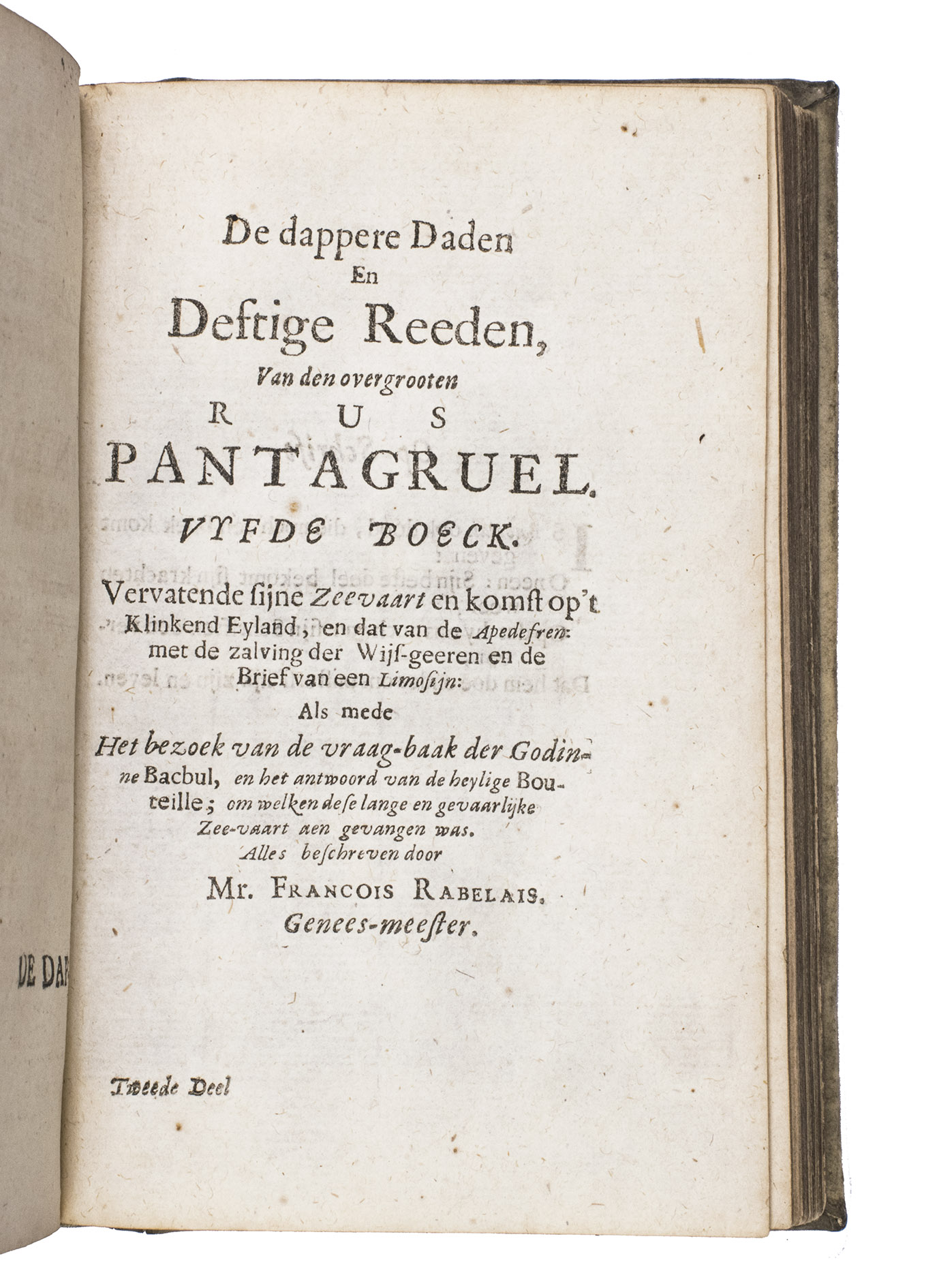
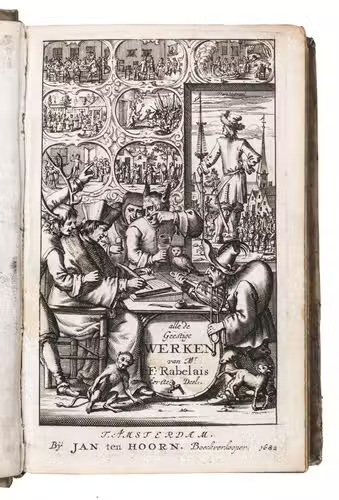
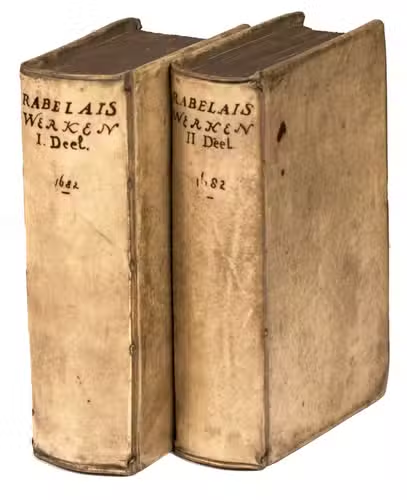
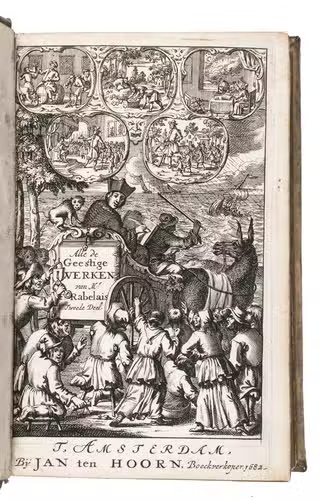
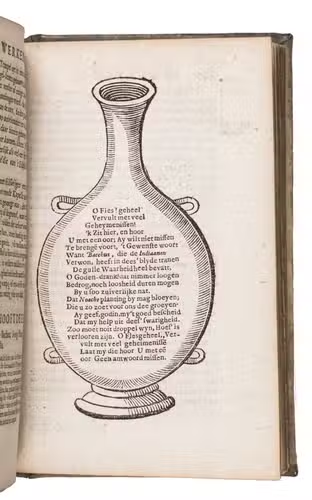
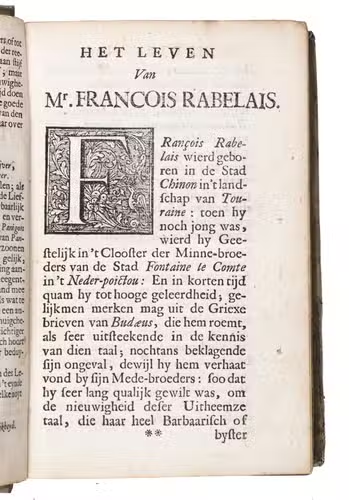
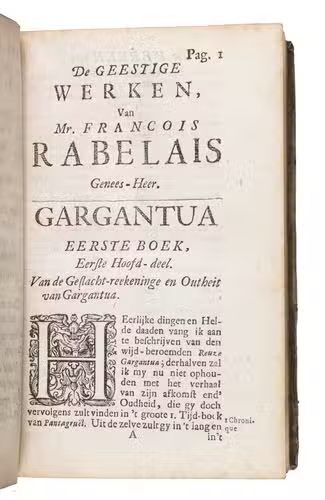
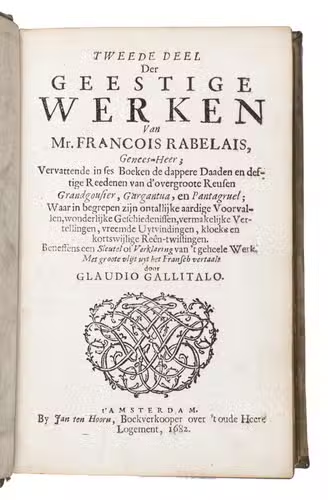
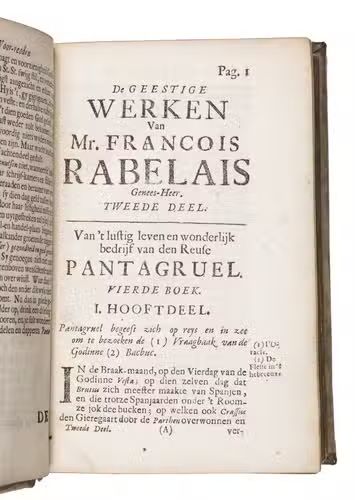
Amsterdam, Jan Claesz. ten Hoorn, 1682. 2 volumes. 8vo. With an engraved allegorical title page and a letterpress title page to each volume, and several decorated woodcut initials. Contemporary vellum. [40], 717, [3 blank], [8]; [32], 456, [30], [2 blank], 136, [8] pp.
€ 2,500
First and only edition of the translation into Dutch of Gargantua and Pantagruel, one of the most comical and at the same time philosophical works ever written. As an admirer of Erasmus, and undoubtedly also inspired by his Praise of folly, the author fights for the Renaissance values in a satirical way with its unique thinking, joking, fantasies and absurdities, criticising the abuses of princes, rulers, and the prelates of the Church, scholasticism and monasticism, and promoting "the real wisdom", and an open and humble Christian faith, certainly not unlike Erasmus. The work was also in its turn influential for Voltaire, Diderot, Sterne e tutti quanti.
François Rabelais (ca. 1490-1553), one of the great writers of world literature, physician, humanist, Greek scholar and monk, is primarily famous for his "modern", satirical, grotesque and absurd style. His Gargantua and Pantagruel, published in five books between 1532 and 1564, is his main work. It relates adventures of the giant Gargantua (book 1) and his son Pantagruel (book 2-5). The amusing, absurd work features much vulgarity, erudition and wordplay, and introduced many new words to the French language. As such, it was a great challenge for any translator. The Dutch language is highly indebted to the translator of Rabelais work into Dutch, Nicolaas Jachirides Wieringa (under his pseudonym Claudio Gallitalo), one of the best translators of the Dutch Golden Age. Through his prolific and lively translation, based on a profound knowledge of the circumstances and context of the 16th century, Wieringa has enriched the Dutch language with a real treasury of many unprecedented beautiful, ugly, funny, original, and silly words, and a till then totally unknown idiom. He also has added a sixth book to the complete translation, which includes many of Rabelais letters on the important political issues of the mid-16th century.
With the bookplate of the Buijnsters-Smets collection mounted on the front pastedown of both volumes. The vellum is somewhat soiled. The work is lightly browned throughout. Otherwise in good condition. Scheepers II, 670; STCN 850584000 (8 complete copies); USTC 1818187 (8 copies); Waller 1401.
Related Subjects: