BURMAN, Johannes.
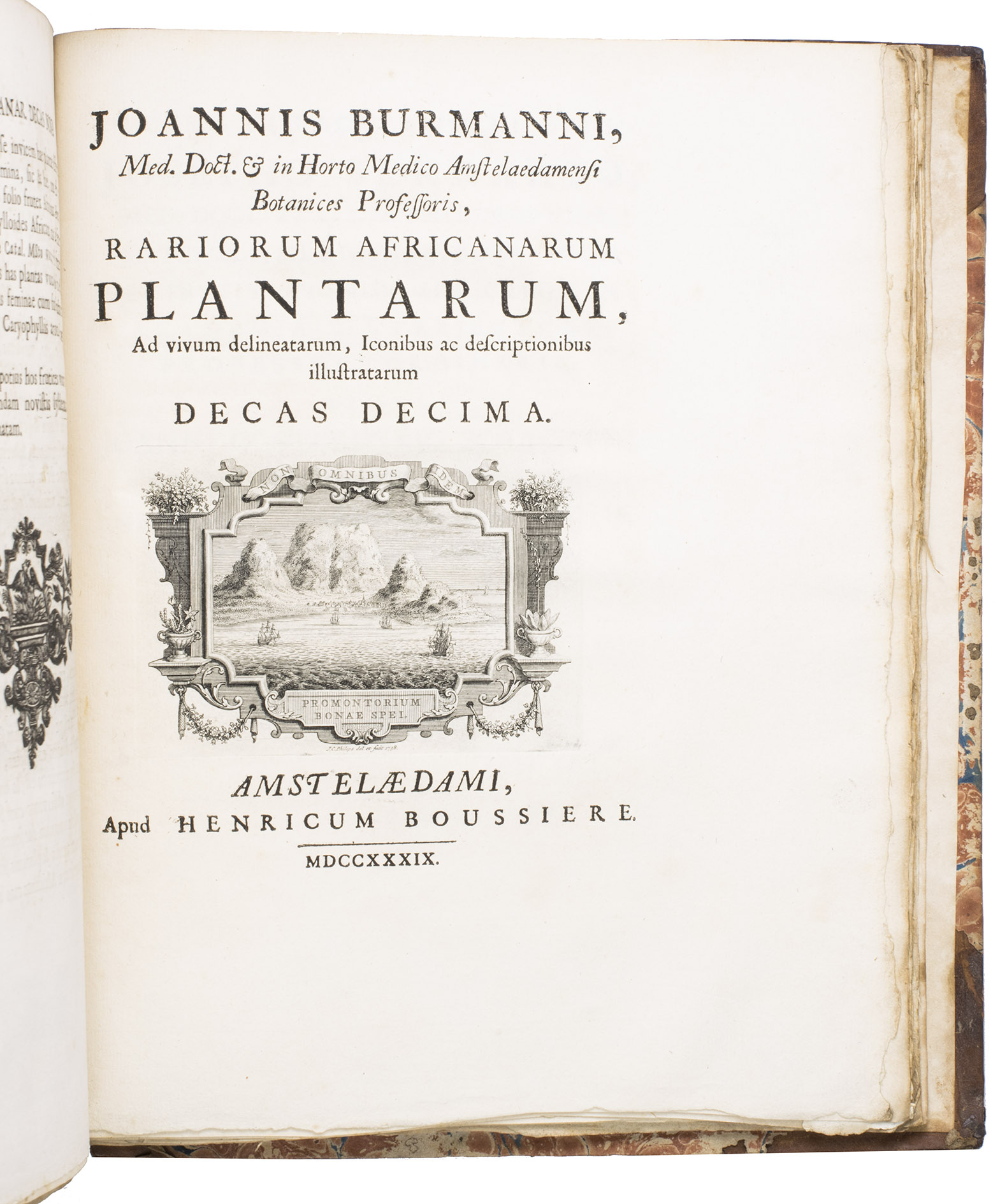
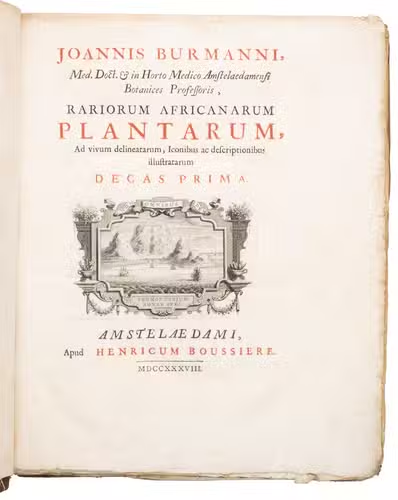
Rariorum Africanarum plantarum, ad vivum delineatum, iconibus ac descriptionibus illustraturum, decas prima [-decima].
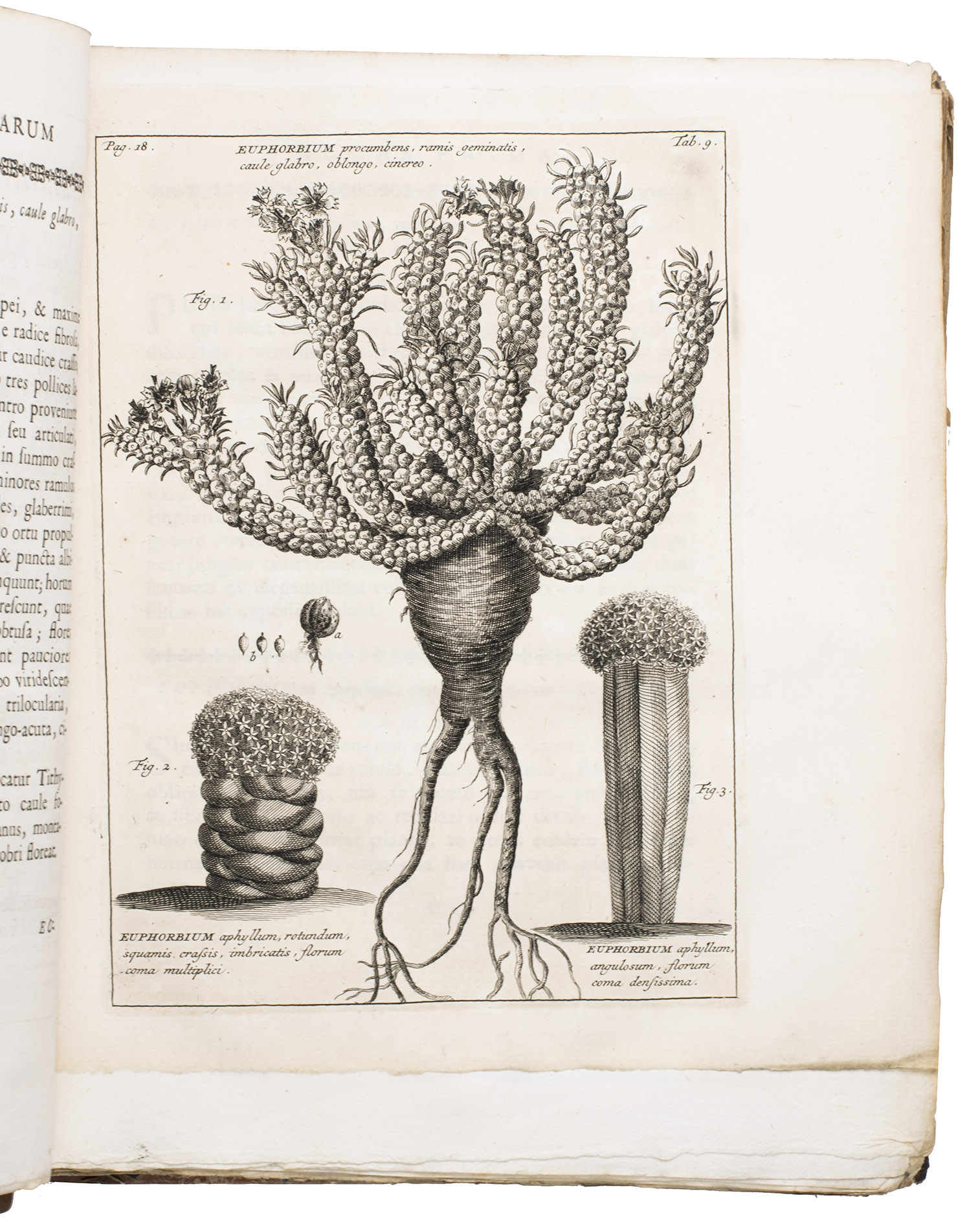
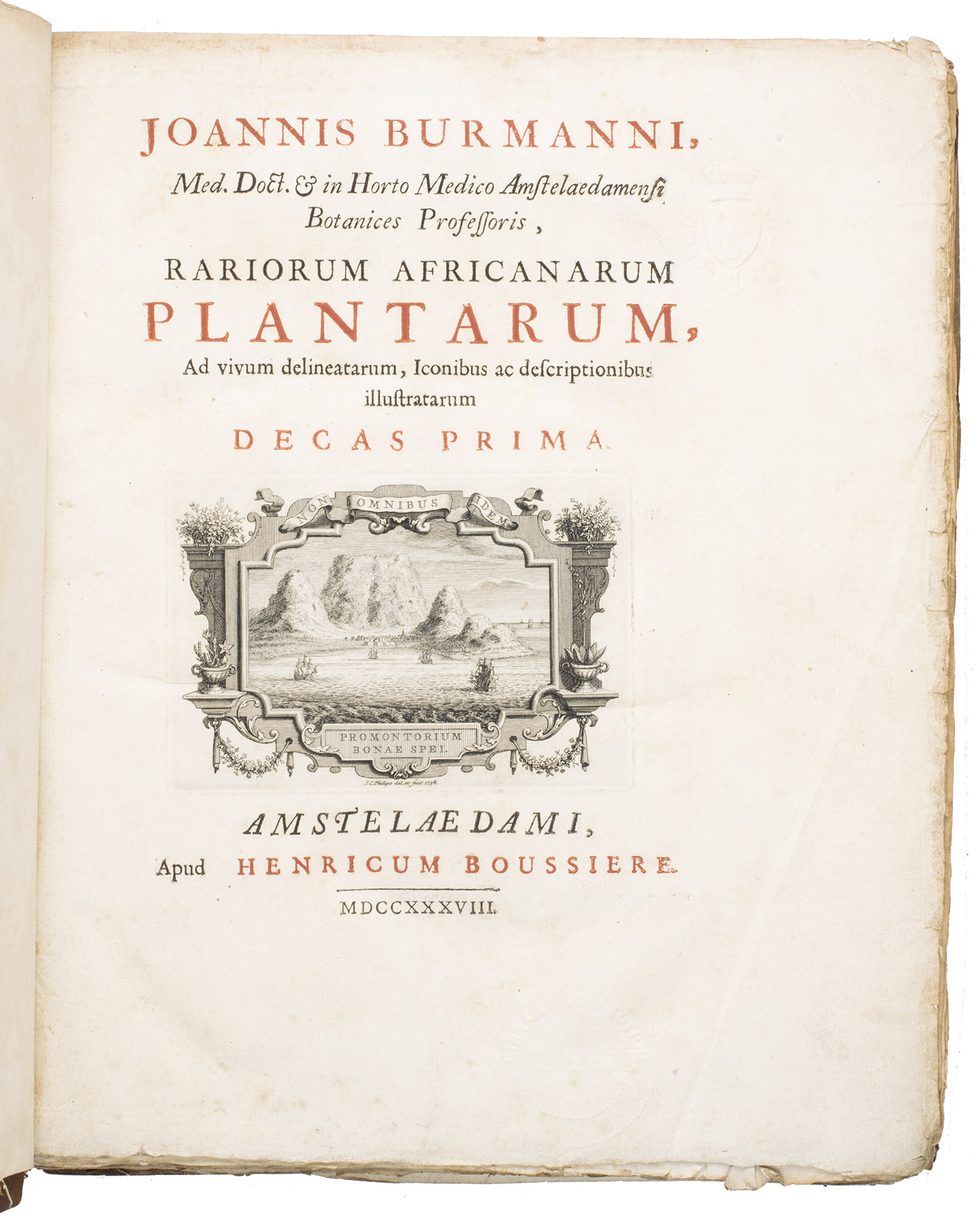
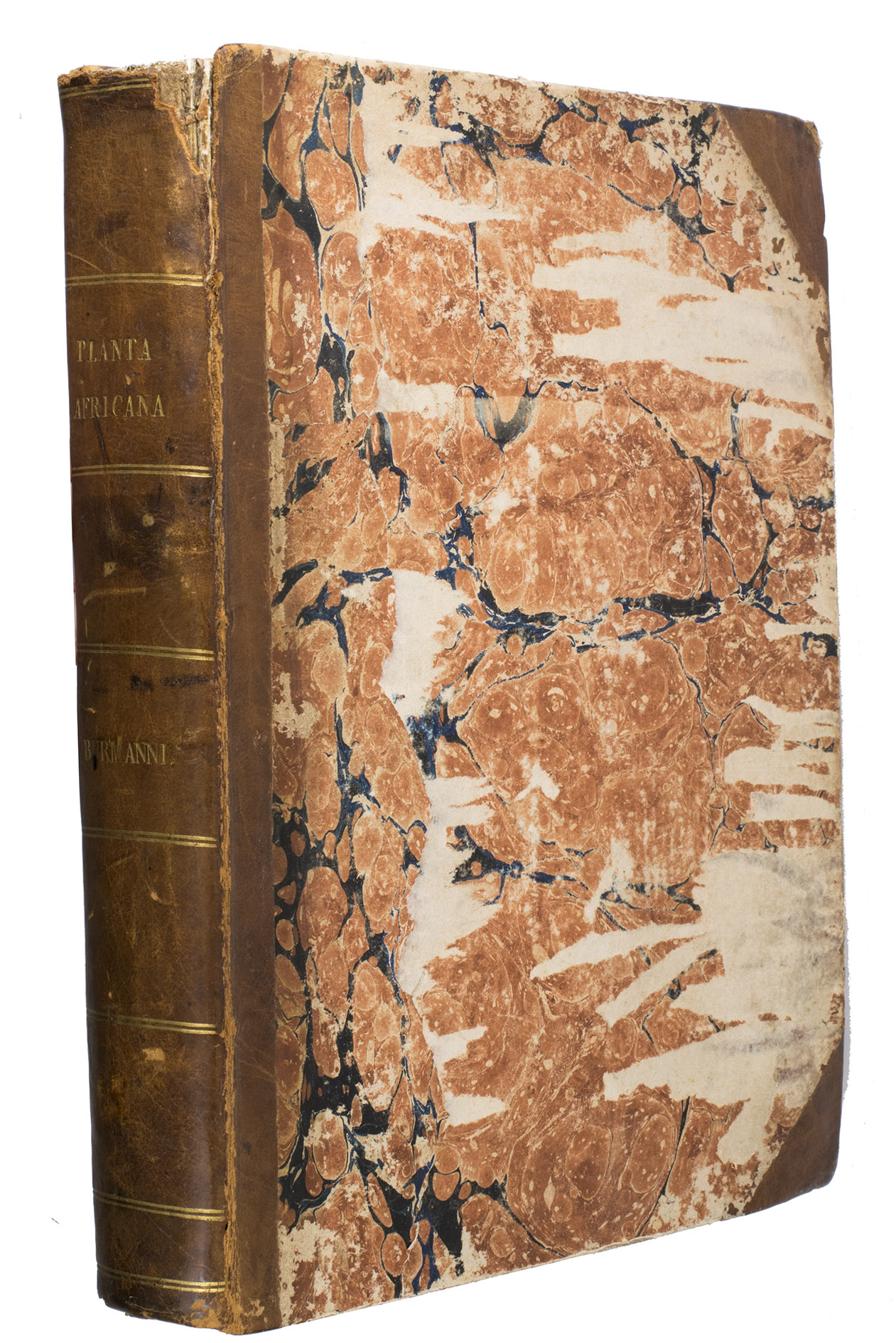
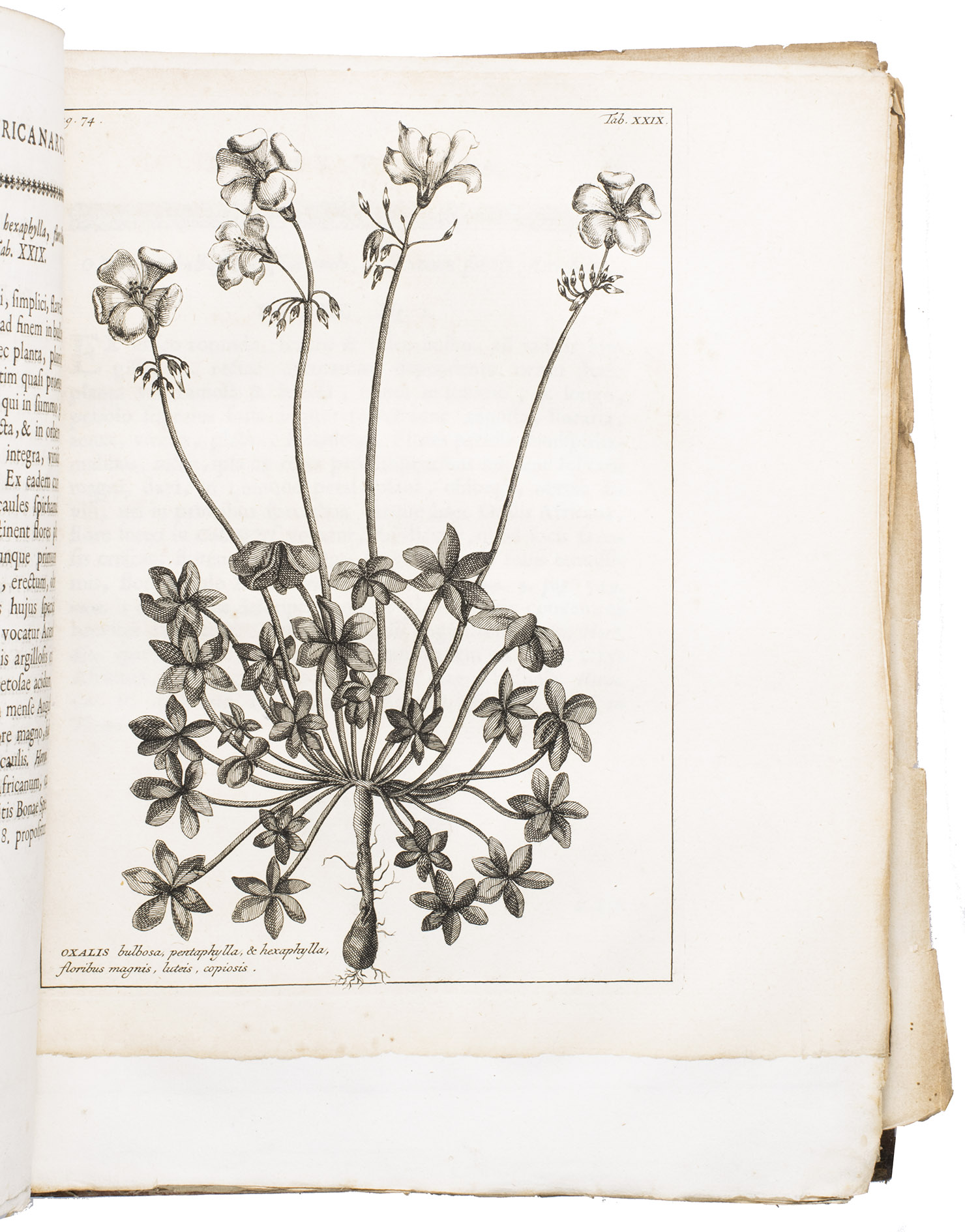
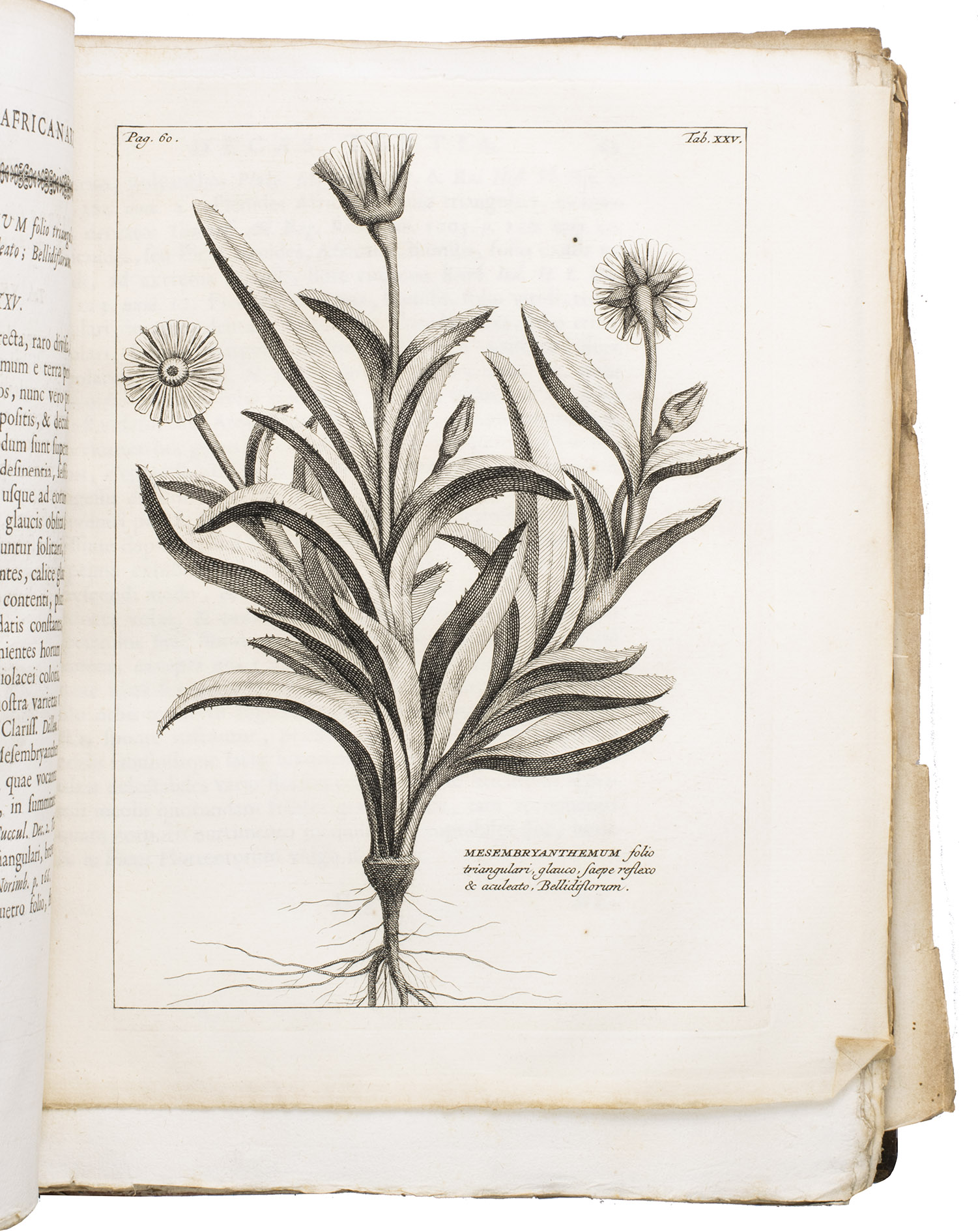
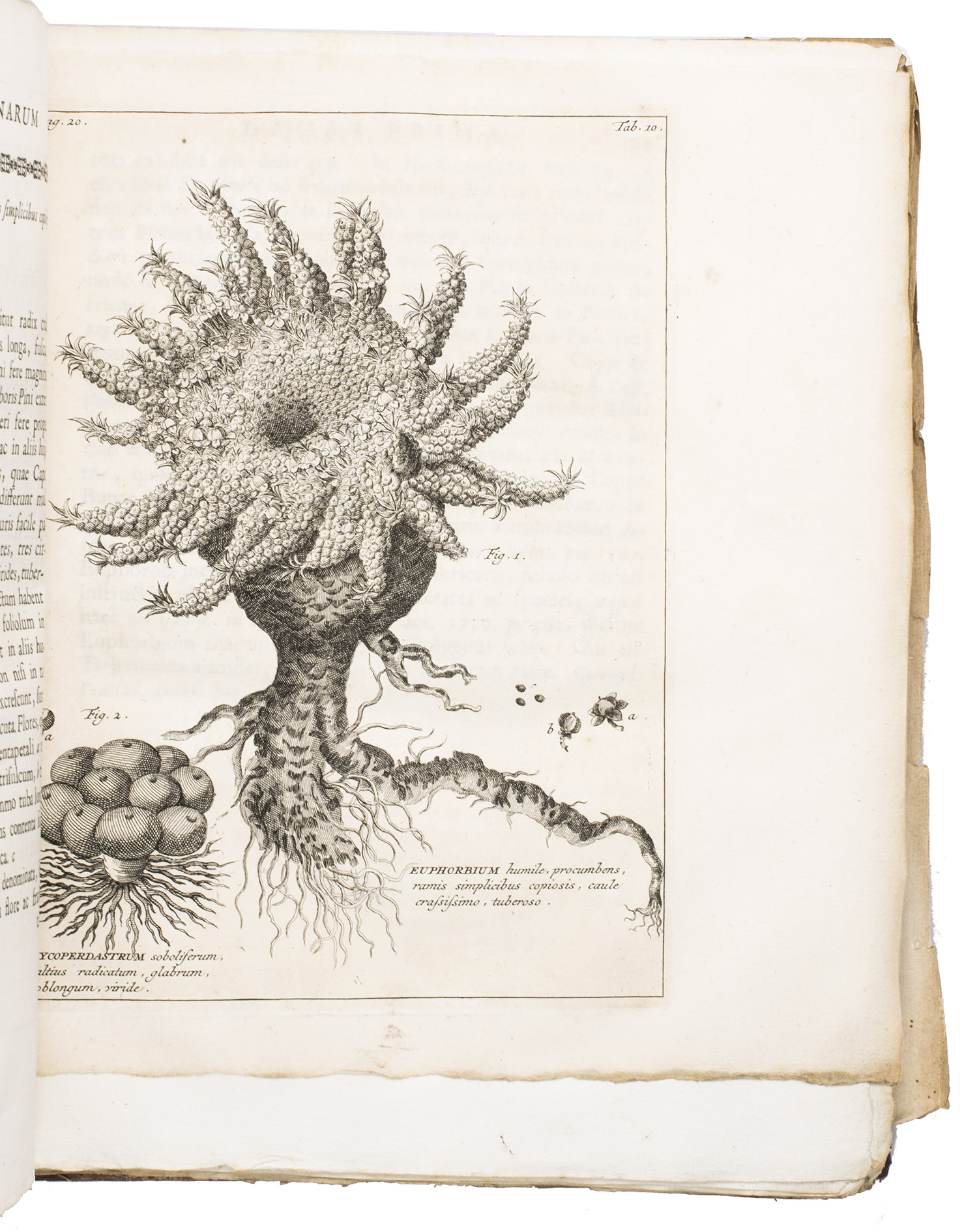
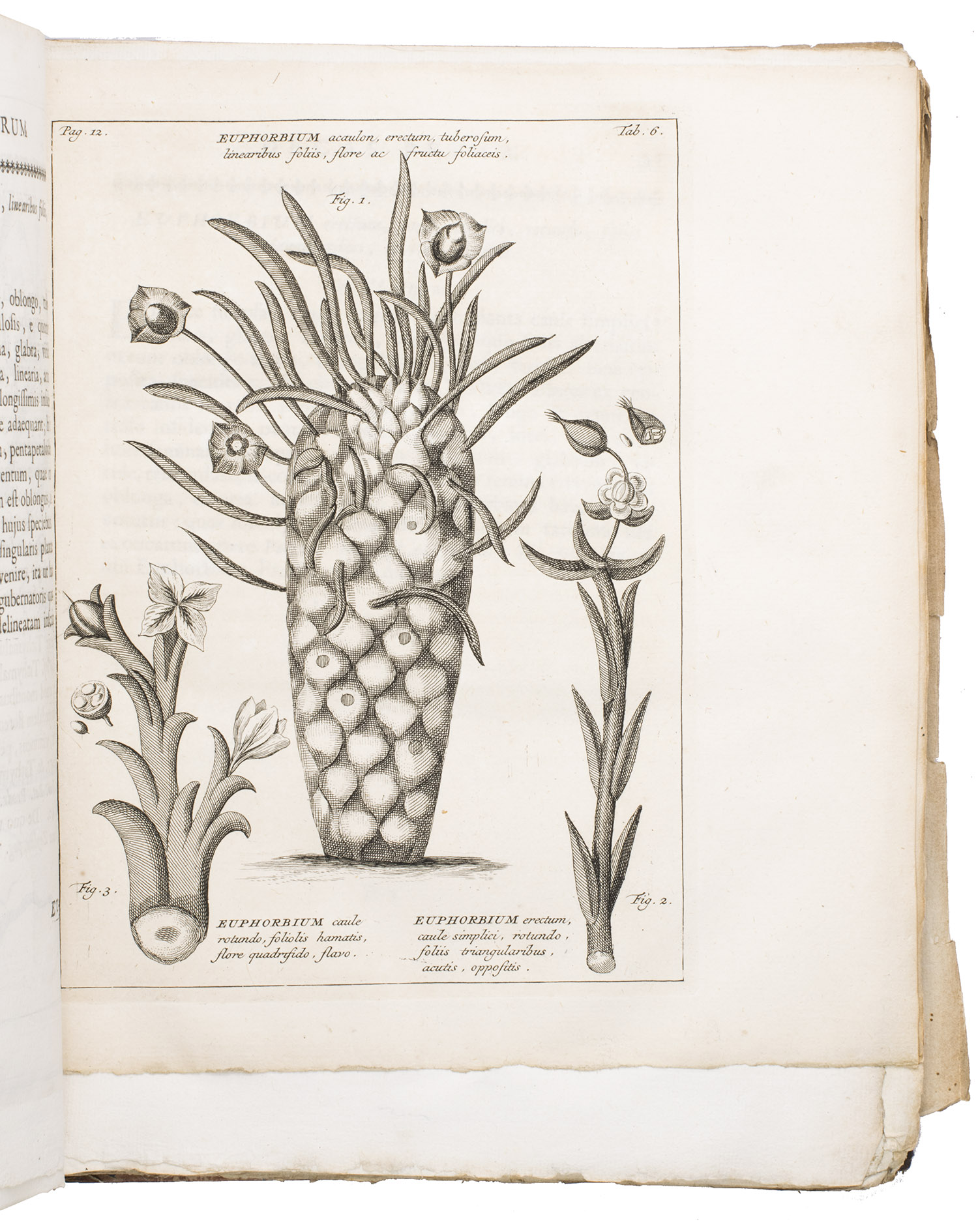
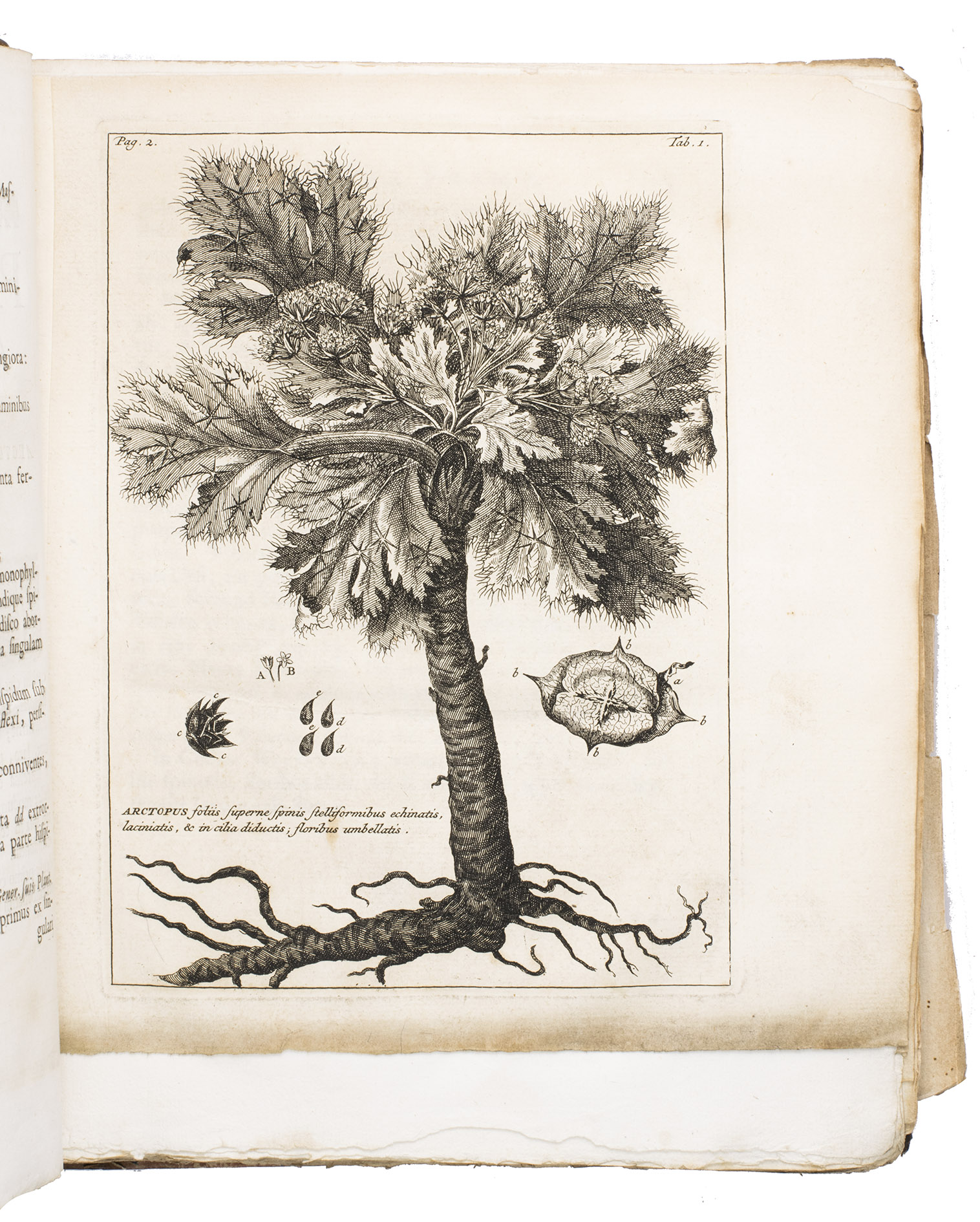
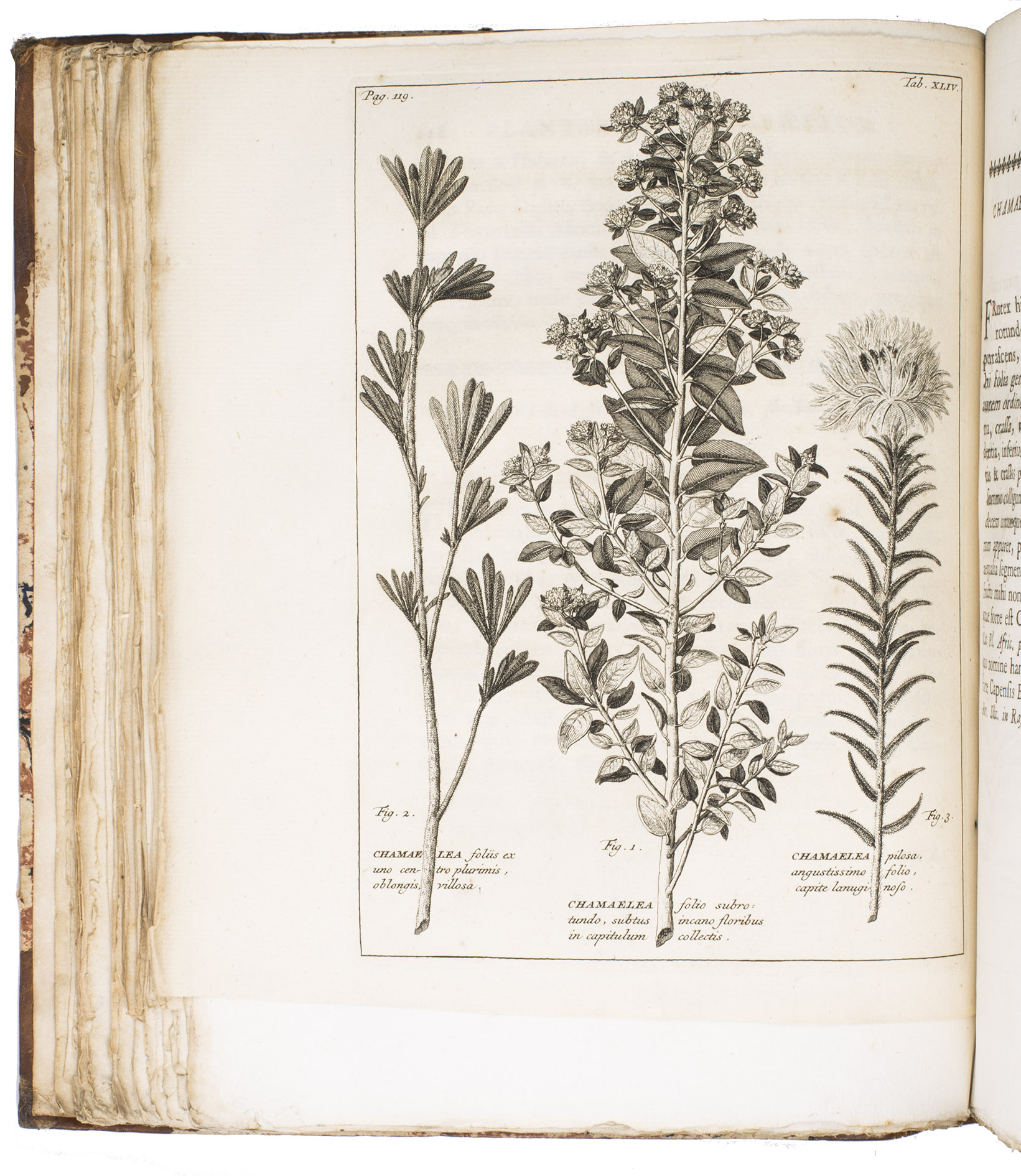
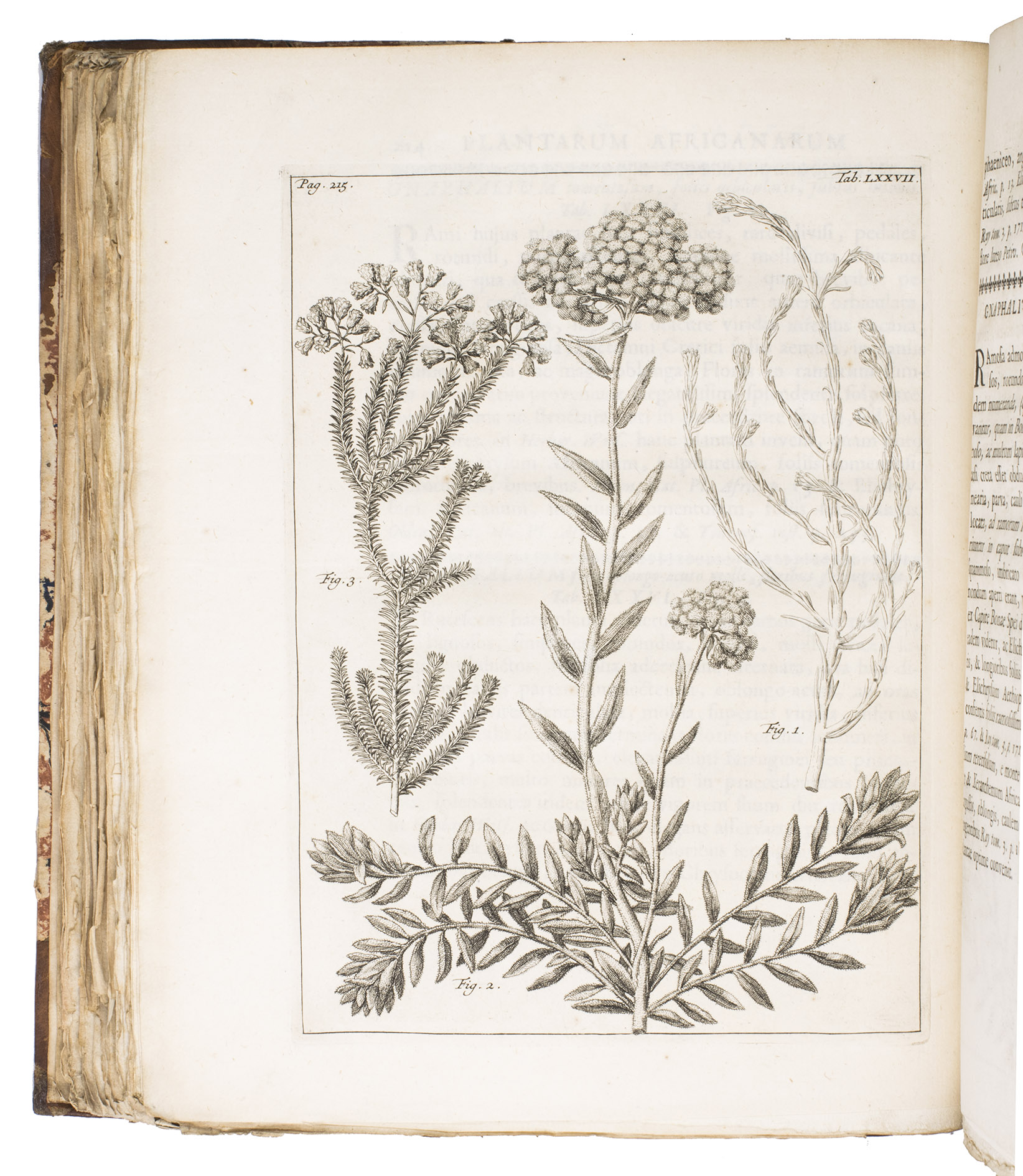
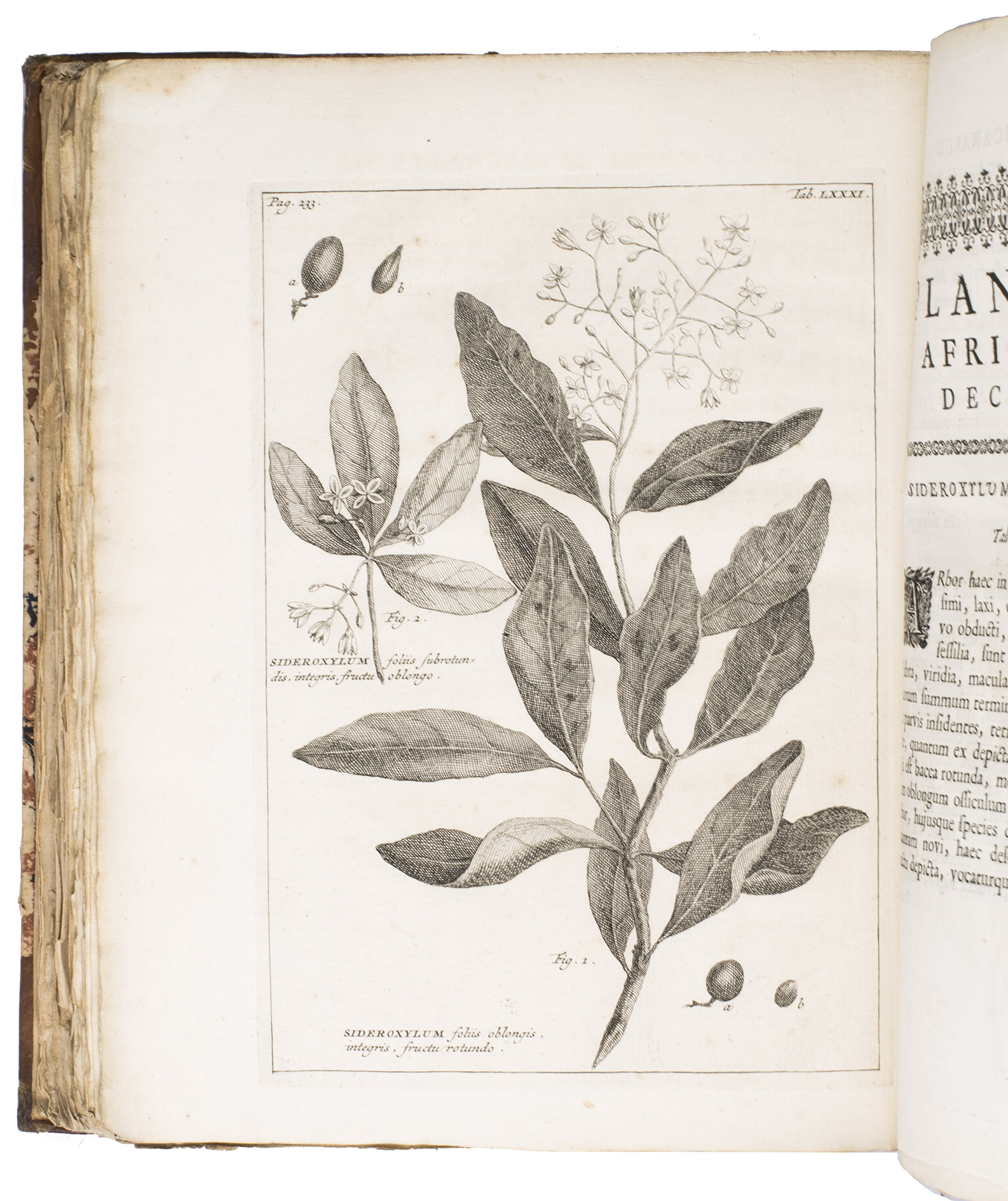
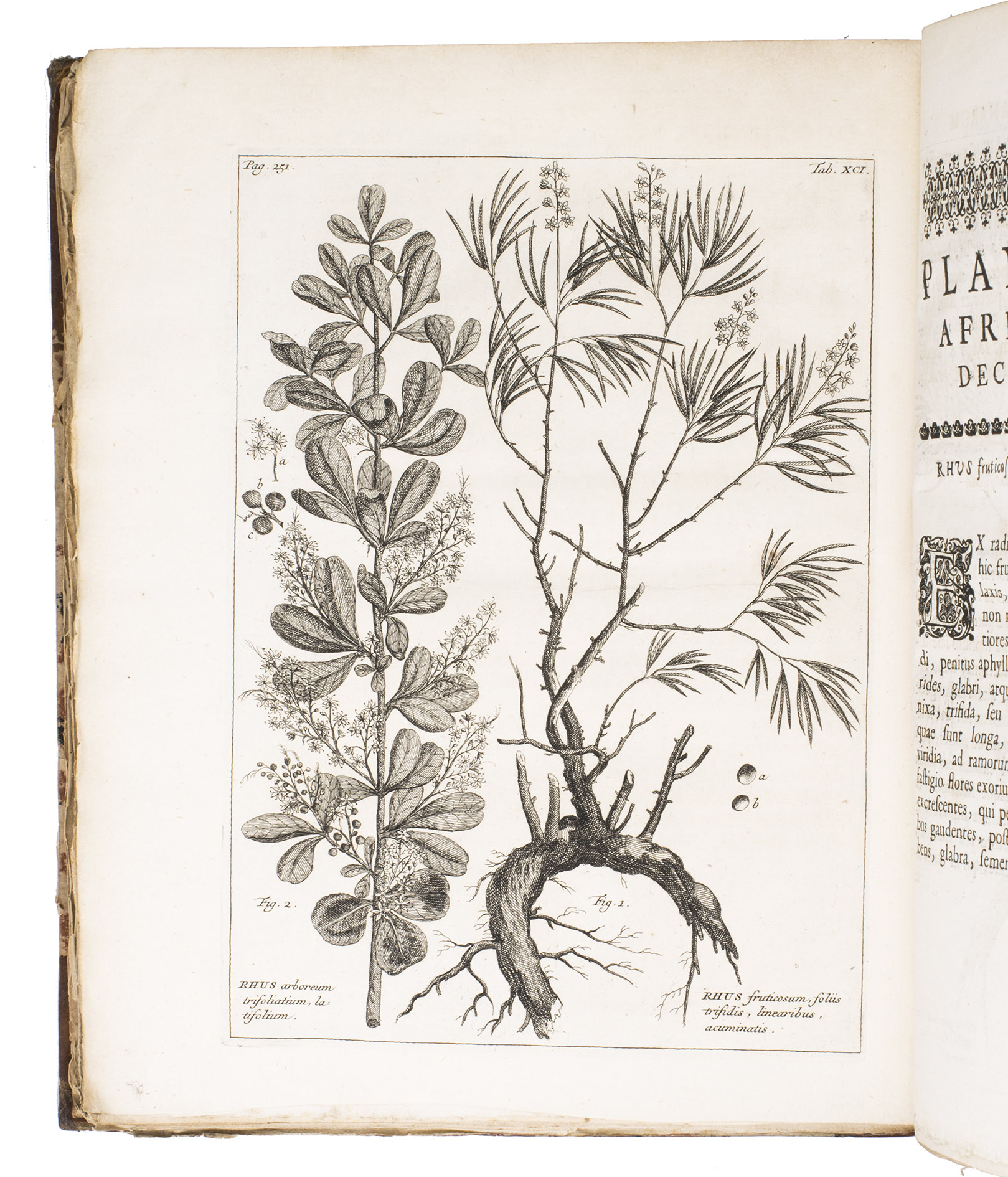
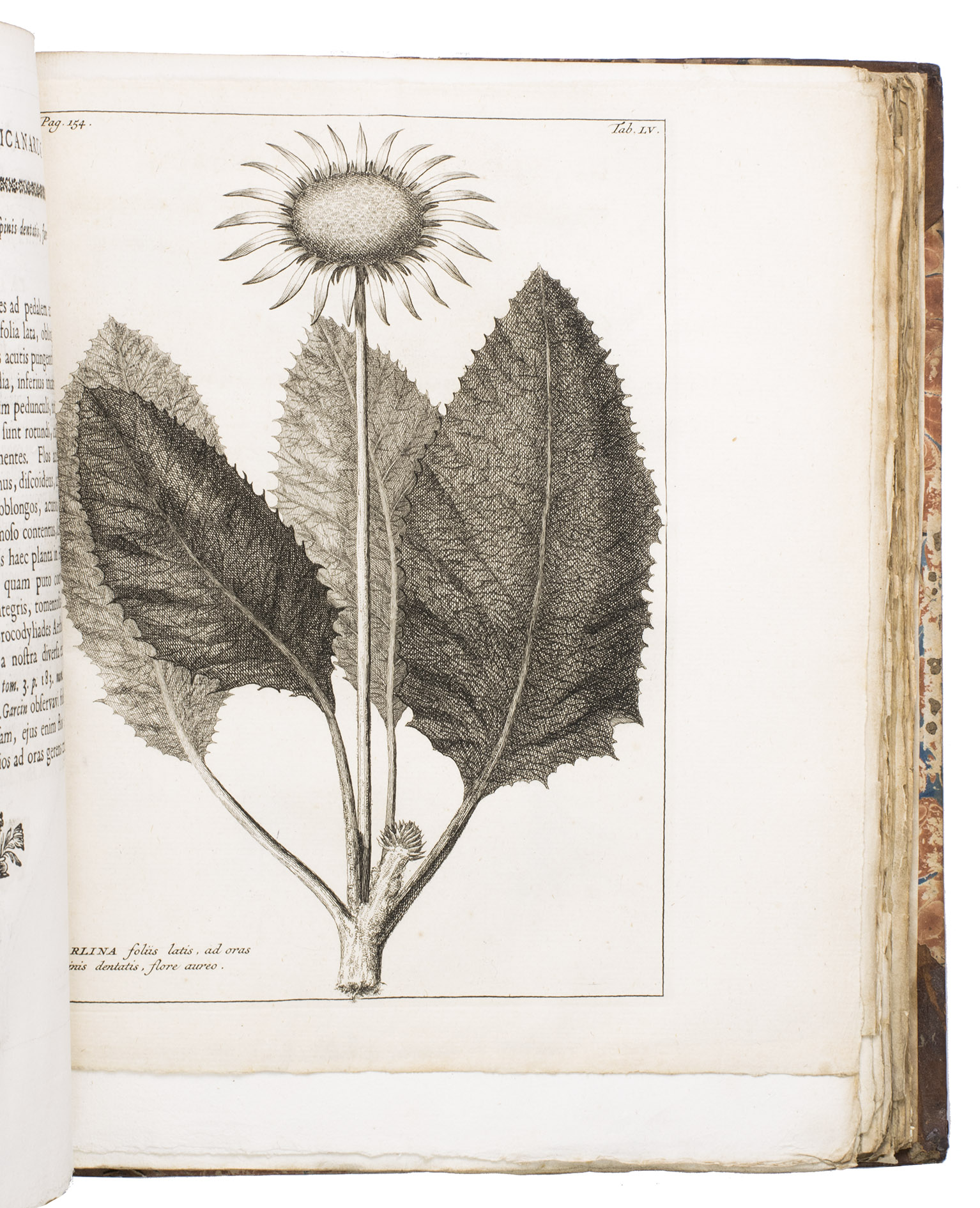
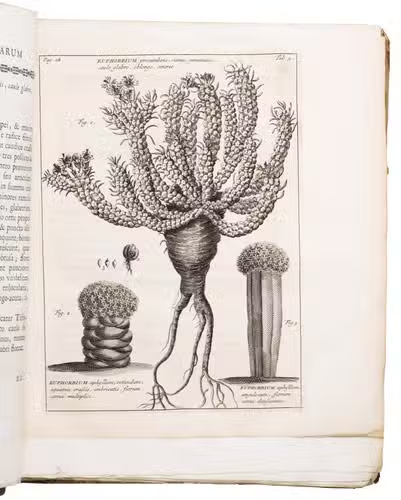
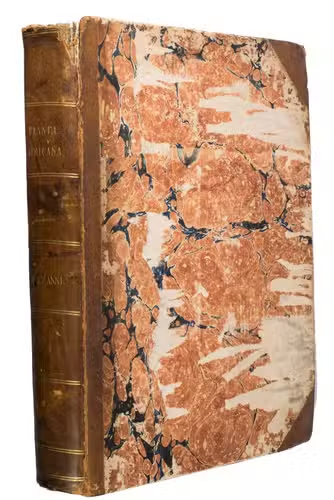
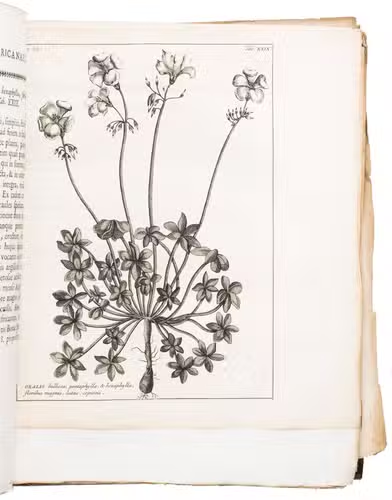
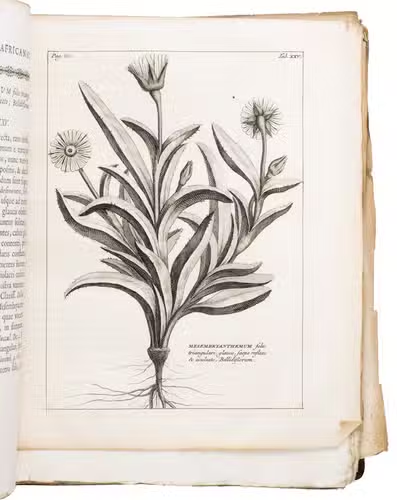
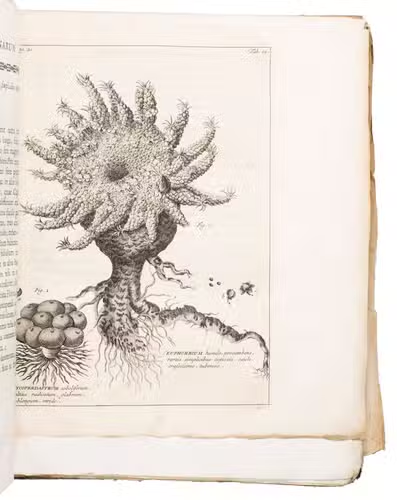
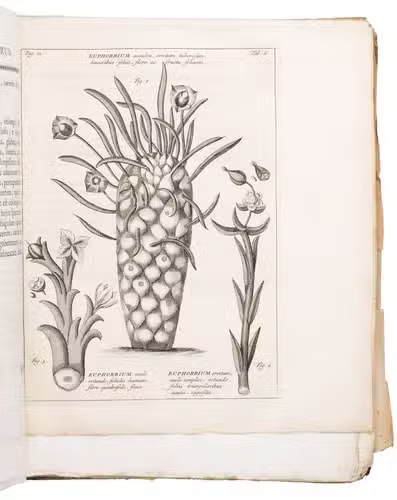
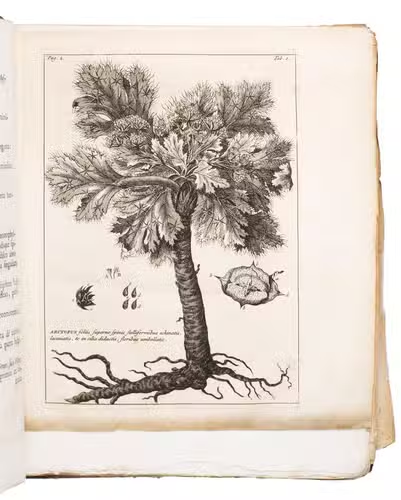
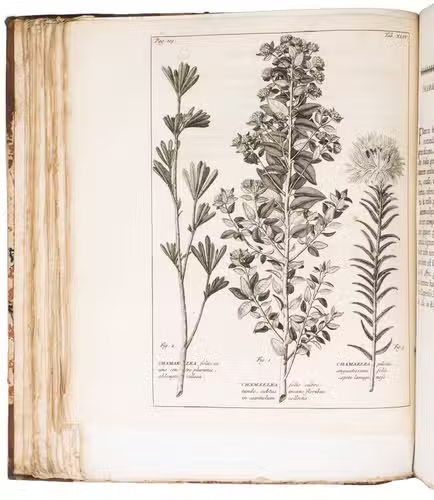
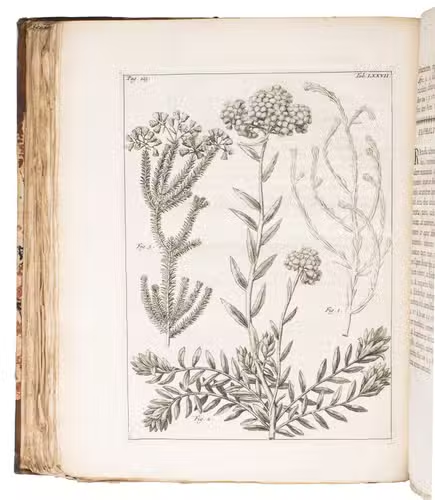
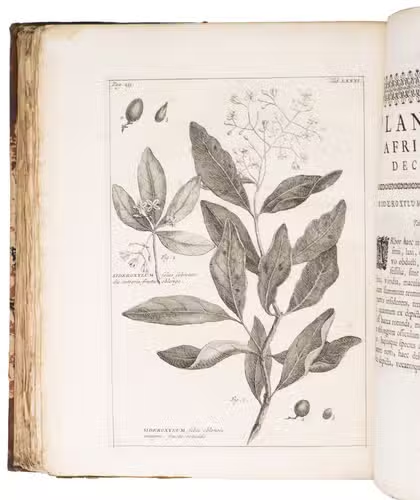
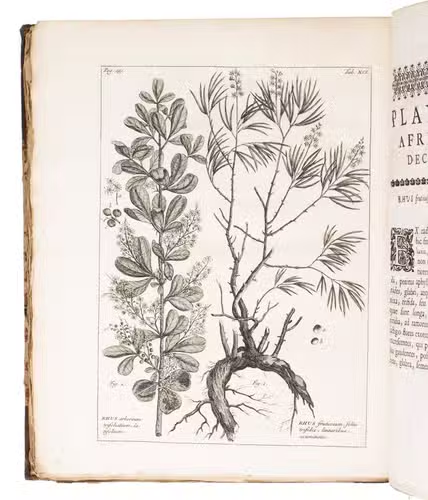
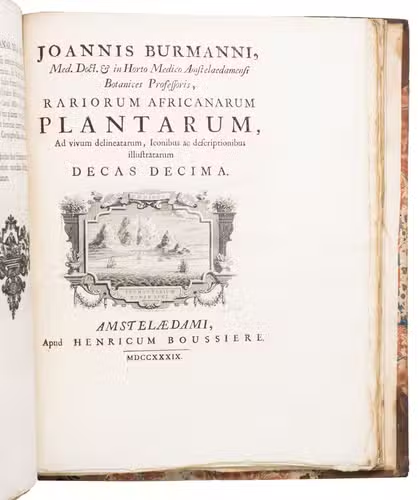
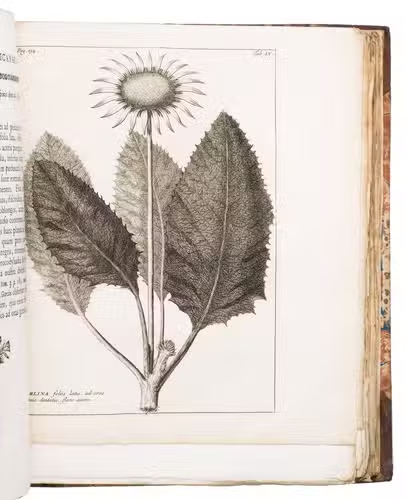
Amsterdam, Henricus Boussiere, 1738-1739. 10 parts in 1 volume. 4to. With 100 finely engraved plates probably after Hendrik Claudius (1655-1697), depicting South African plants. With the same engraved vignette on each of the 10 divisional title pages, by Jan Caspar Philips (1700-1775), showing Cape Town and Table Mountain seen from the water. First title printed in red and black, and with some woodcut initials, head- and tailpieces throughout. Contemporary half calf. VIII, "268" [= 280], [2] pp.
€ 3,500
Rare first and only edition of a foundational work on the flora of South Africa, particularly the Cape of Good Hope, by the Dutch physician and botanist Johannes Burman (1706-1779). This present work is notable for being among the earliest to illustrate many Cape plants and for employing Linnaean nomenclature, reflecting Burman's adoption of Linnaeus' generic reforms.
The plates are chiefly derived from 3 important sources, the Codex Simon van der Stel, the Herbarium Witsenianum, and the Codex Witsenii. The artist was most likely Hendrik Claudius of Breslau (ca. 1655-1697), a physician and botanical illustrator who arrived in Cape Town in 1682 and is thought to have accompanied Simon van der Stel (1639-1712) on his 1685-1686 expedition to Namaqualand. Copies of Claudius' drawings were acquired by Nicolaes Witsen (1641-1717), burgomaster of Amsterdam, and formed the basis for the engravings in Burman's work.
In total, Burman incorporated 159 plants from these sources, presenting some of the earliest known illustrations of Cape flora. The work is especially important as Burman, though he never visited the Cape himself, compiled descriptions and illustrations from the herbaria of Hermann, Oldenland, Hartog, and Auge, creating a comprehensive and pioneering treatment of the region's botany.
Burman, a professor of botany in Amsterdam, was influential in European botanical circles, hosting Carl Linnaeus (1707-1778) during his visit to the Netherlands in 1735 and introducing him to George Clifford III (1685-1760). Burman introduced the plant genus Pelargonium, and was later honoured by having the genus Burmannia and the family Burmanniaceae named after him.
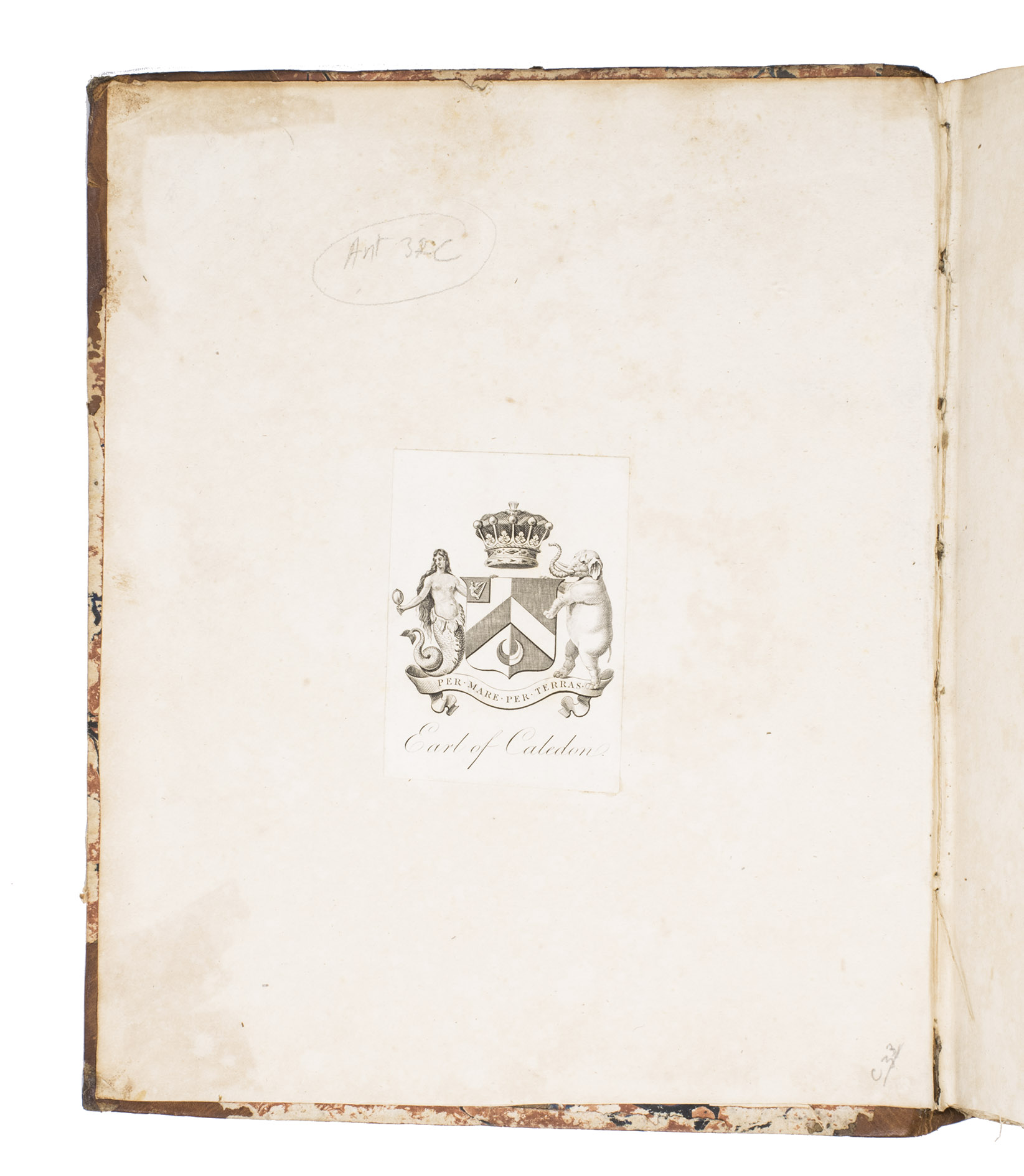
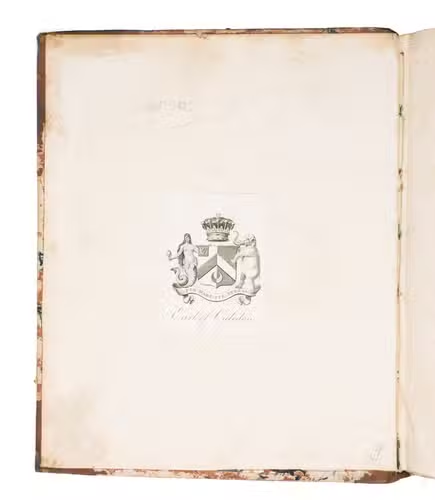
With the engraved armorial bookplate of the Earl of Caledon (Alexander family), an Anglo-Irish aristocratic family ennobled in 1800, prominent in political and colonial administration. A blind-stamp on the title page "Heirlooms Caledon" according to the Cambridge University Library Provenance index possibly from James Du Pre Alexander, 3rd Earl of Caledon (1812-1855). Another blind-stamp "Library Collections" on the title page. The binding shows some wear, the boards are rubbed, the spine is slightly cracked, and the top of the spine is rubbed. Pp. 143-144 are unbound and loosely inserted. There is a tear in the outer margin of p. 194, a tear in the lower margin of p. 264, and a tear in the outer margin of p. 265. Without the frontispiece portrait (as usual), uncut copy with some leaves unopened. Otherwise in good condition. Burdet, Ouvrages bot. anciens 457; Hunt 508; Mendelssohn I, p. 229; Nissen, BBI 302; Stafleu & Cowan 929; cf. for the Caledon blind-stamp: Cambridge University Library Provenance index: S735.e.80.13
Related Subjects: