FILELFO, Francesco.
Satyrarum hecatostichon prima decas.
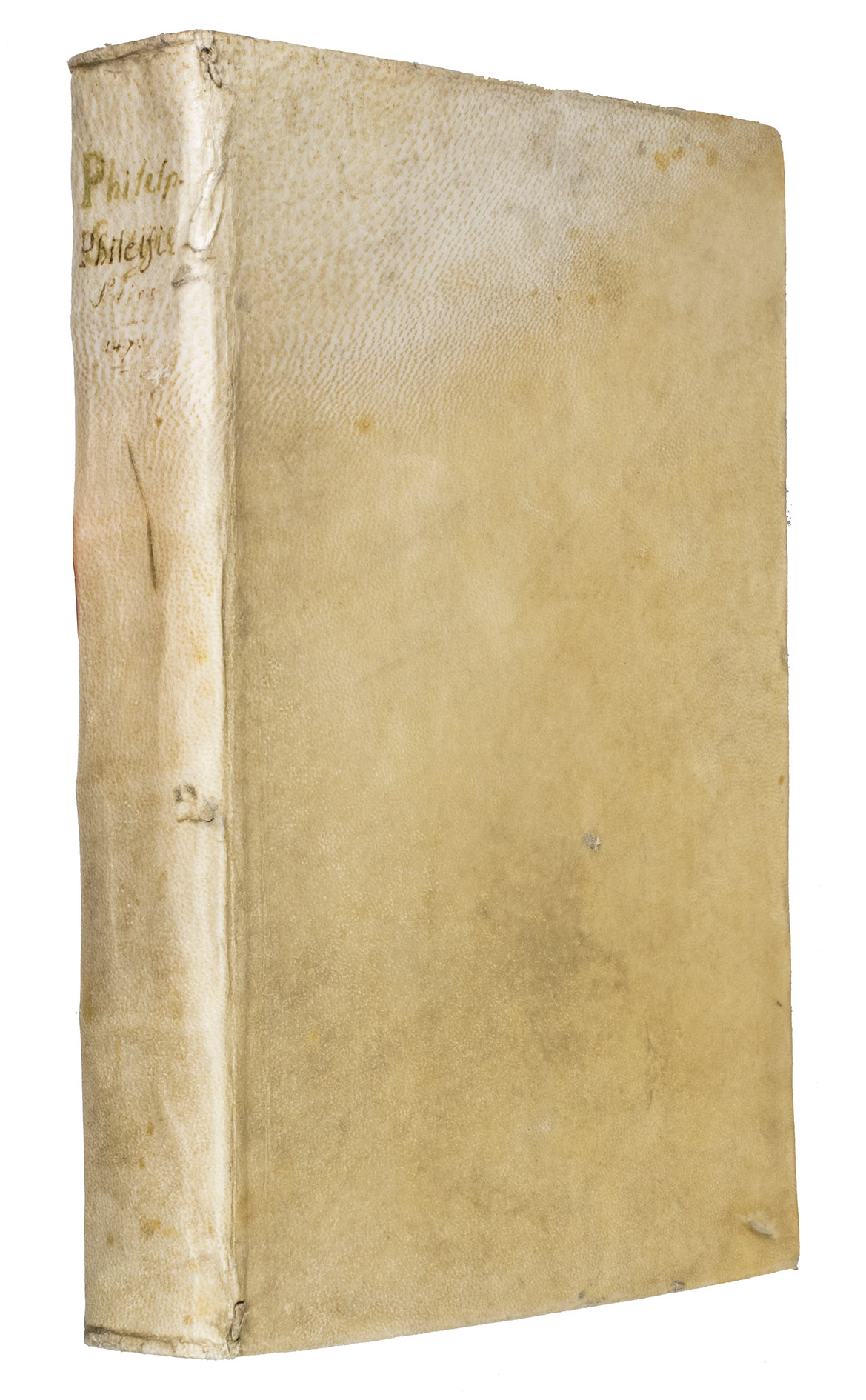
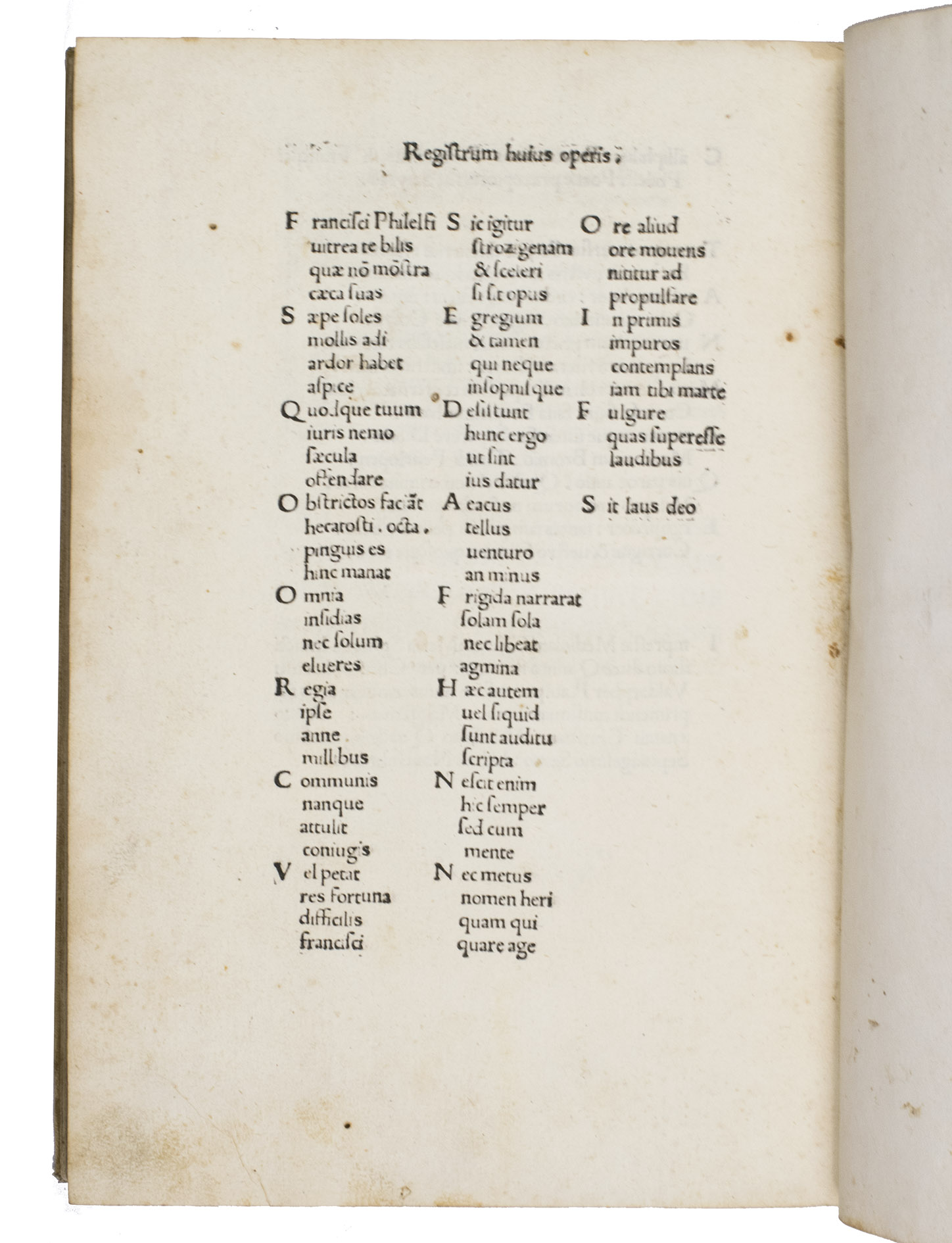
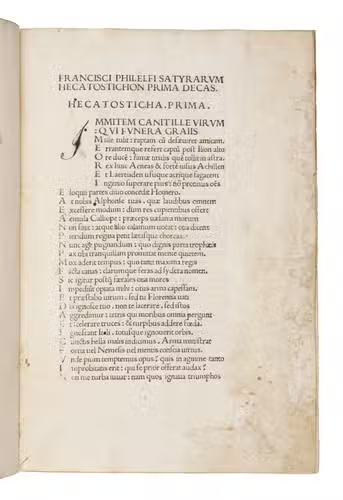
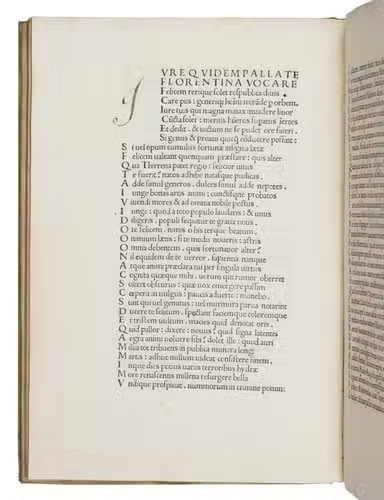
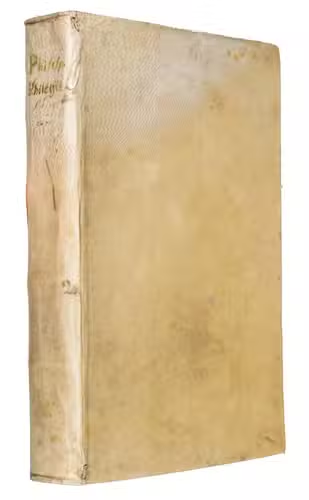
(Colophon:) Milan, Christophorus Valdarfer, 13 November 1476. 4to. With most of the initial spaces filled with simple manuscript initials in brown ink. 19th-century vellum. [149] ll.
€ 16,000
First and only incunable edition of Francesco Filelfos Satyrae, a landmark collection of early Renaissance satire. Written in the 1430s and 1440s and circulated privately during the authors lifetime, the Satyrae offer a strikingly personal and politically charged window onto 15th-century Italy.
Francesco Filelfo (in Latin: Franciscus Philelphus, 1398-1481) was as notorious for his volatile temperament as he was celebrated for his learning. Born into modest circumstances, he rose through intellect and eloquence. His tenure at the University of Florence ended abruptly in 1434 after fierce attacks on the ruling Medici faction, attacks that earned him exile shortly after he survived an assault he attributed to a Medici agent. Filelfo composed the biting satires contained in this work while in refuge in Siena, directing them chiefly against Cosimo de Medici (1389-1464) . From 1440 he made Milan his base under Visconti patronage, becoming a prominent figure among the citys humanists and an enthusiastic supporter of the emerging craft of printing.
In Milan he proved indispensable to his patrons, lecturing daily, producing epics, panegyrics and invectives, and continuing his prodigious work as a translator. Despite generous stipends, he lived extravagantly and wrote with tireless intensity, whether in praise, scholarship, or denunciation. His final years took him to Rome under Sixtus IV and, in 1481, back to Florence, reconciled at last with De' Medici, he died there a fortnight after his return.
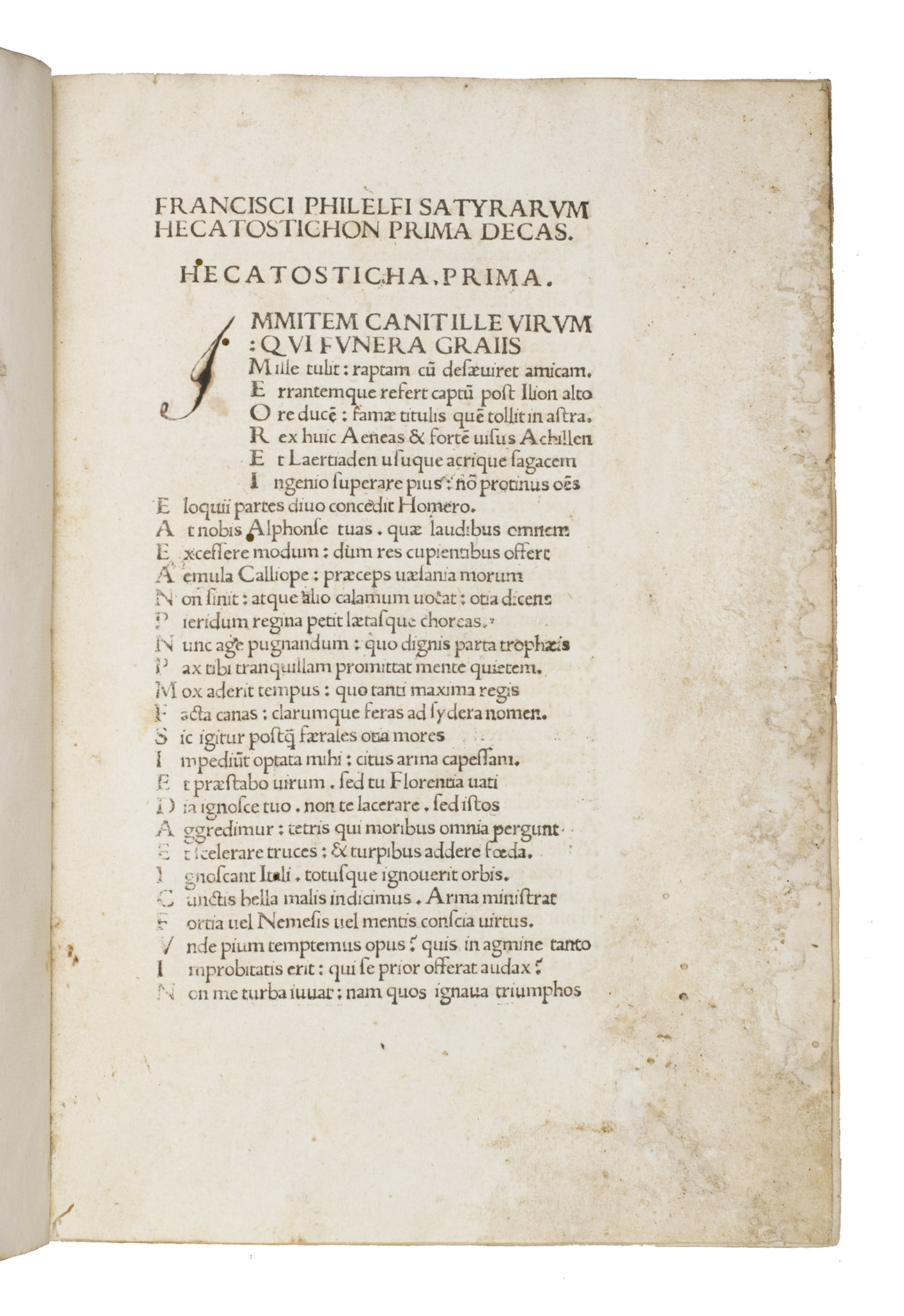
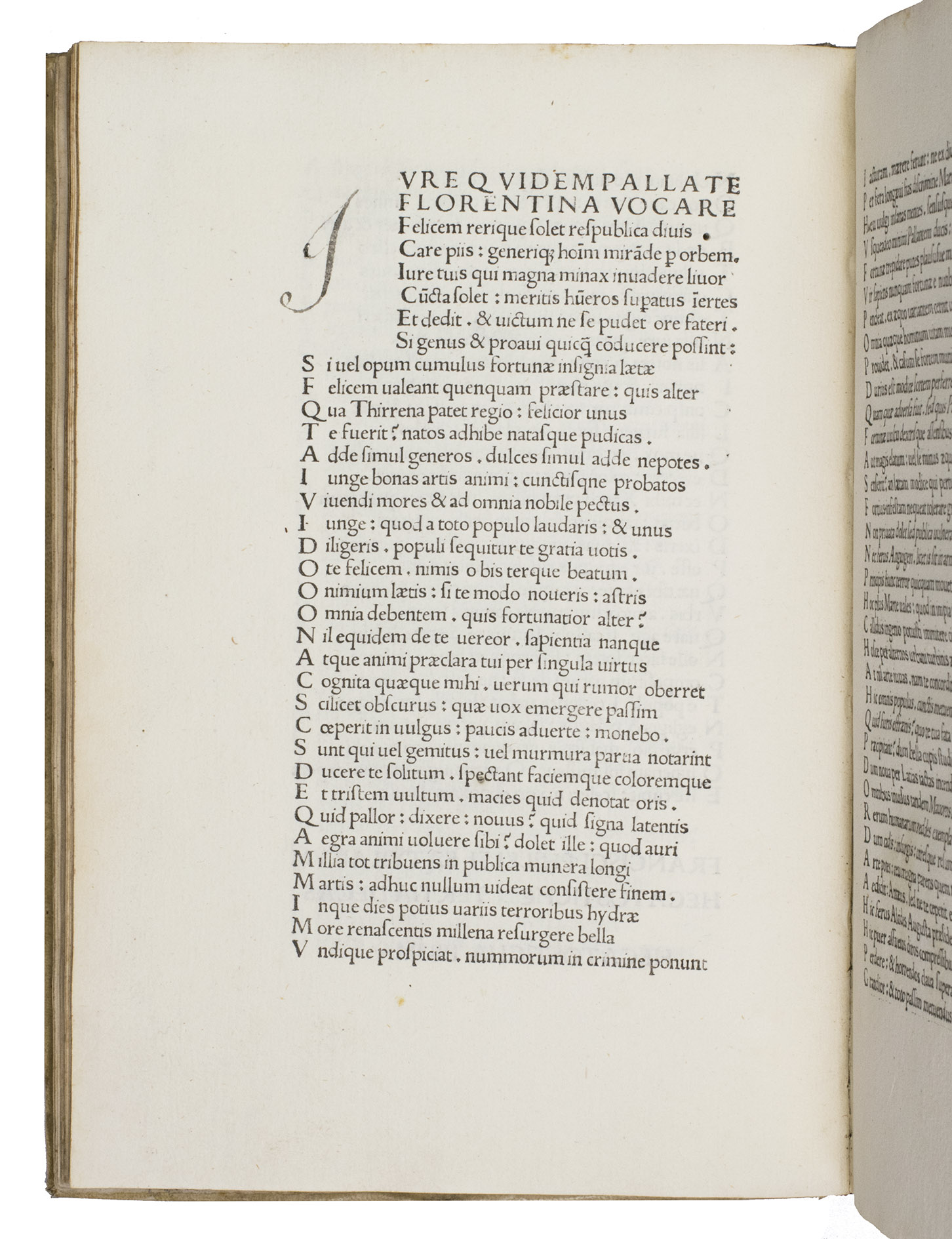
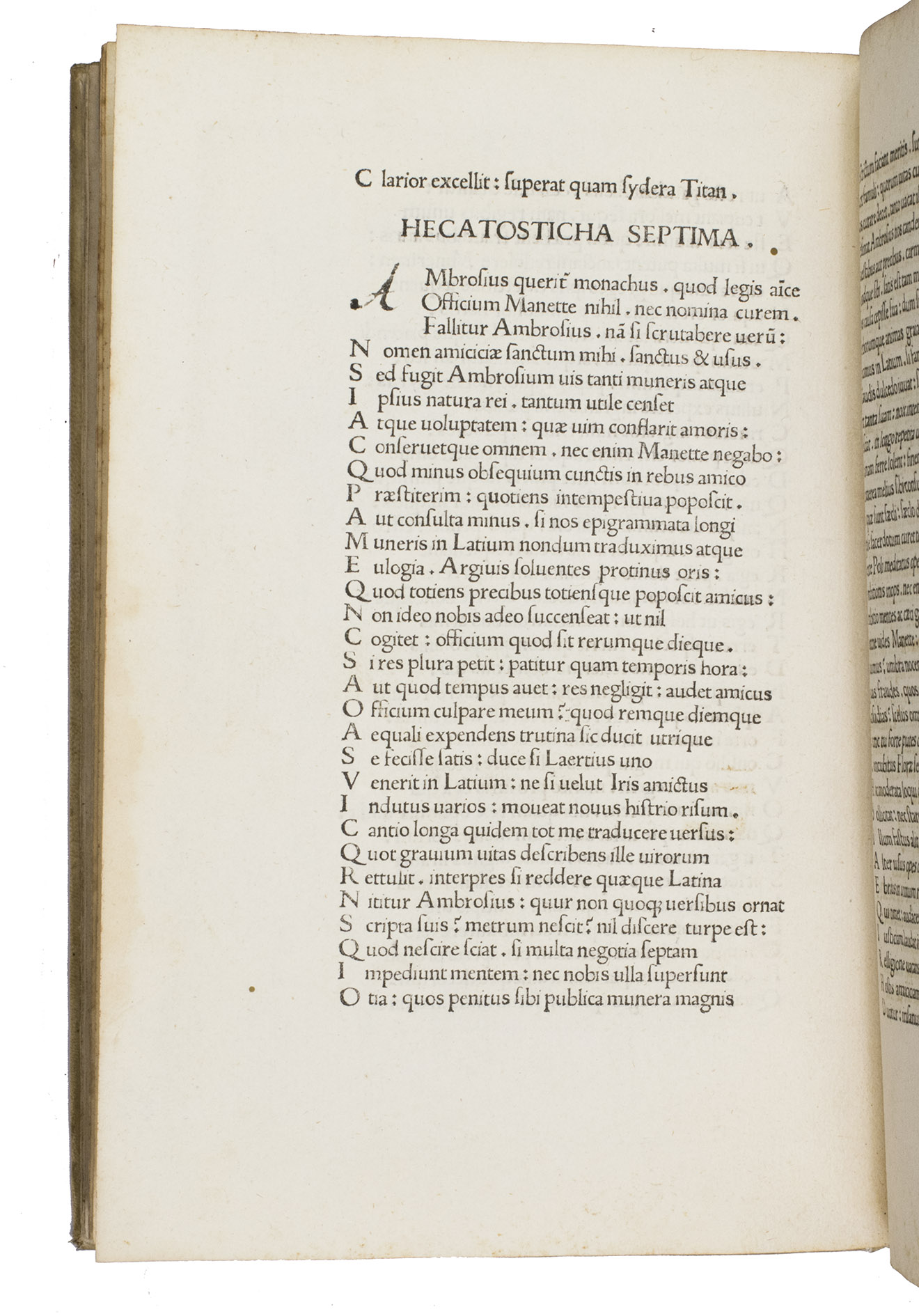
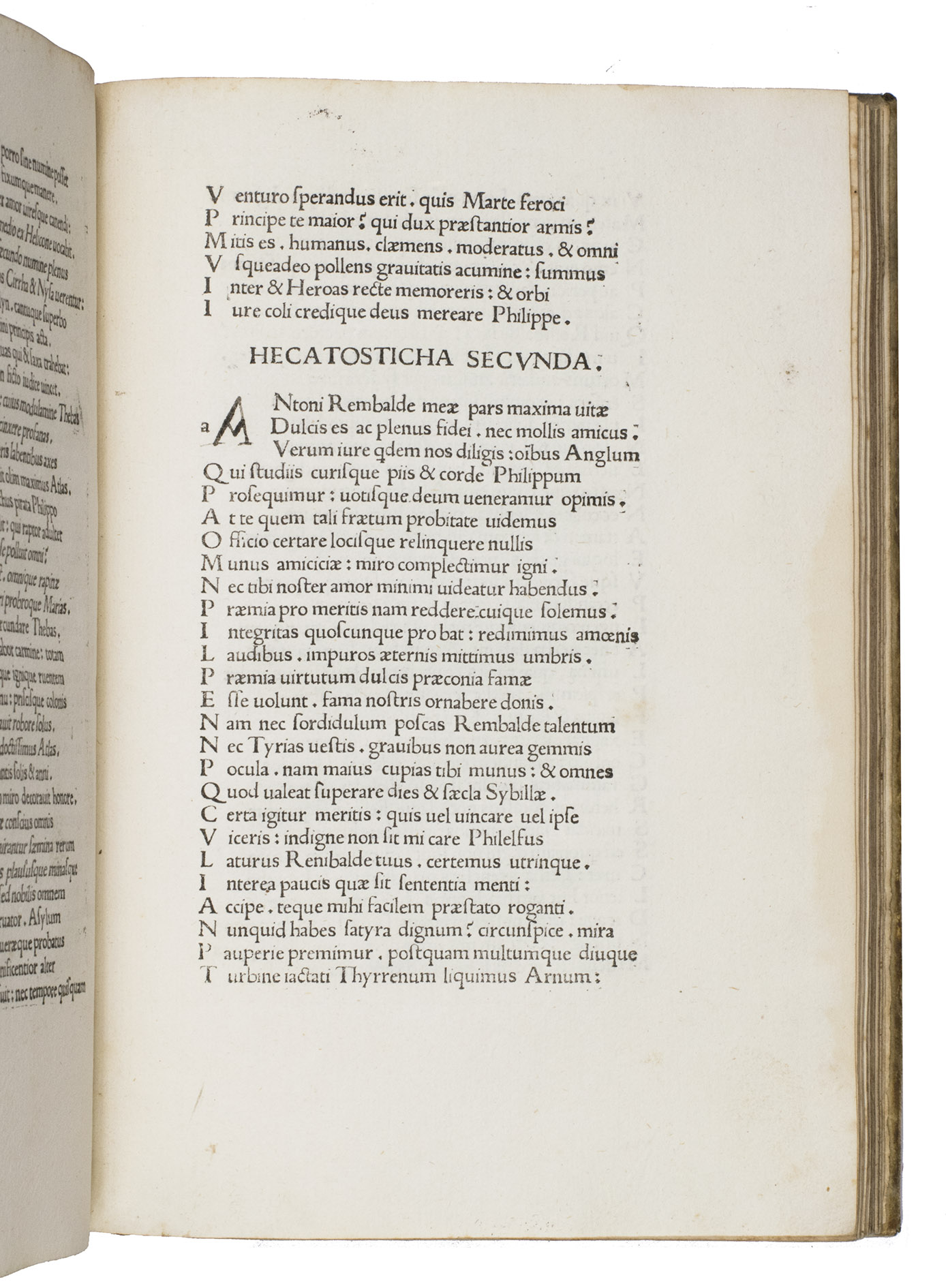
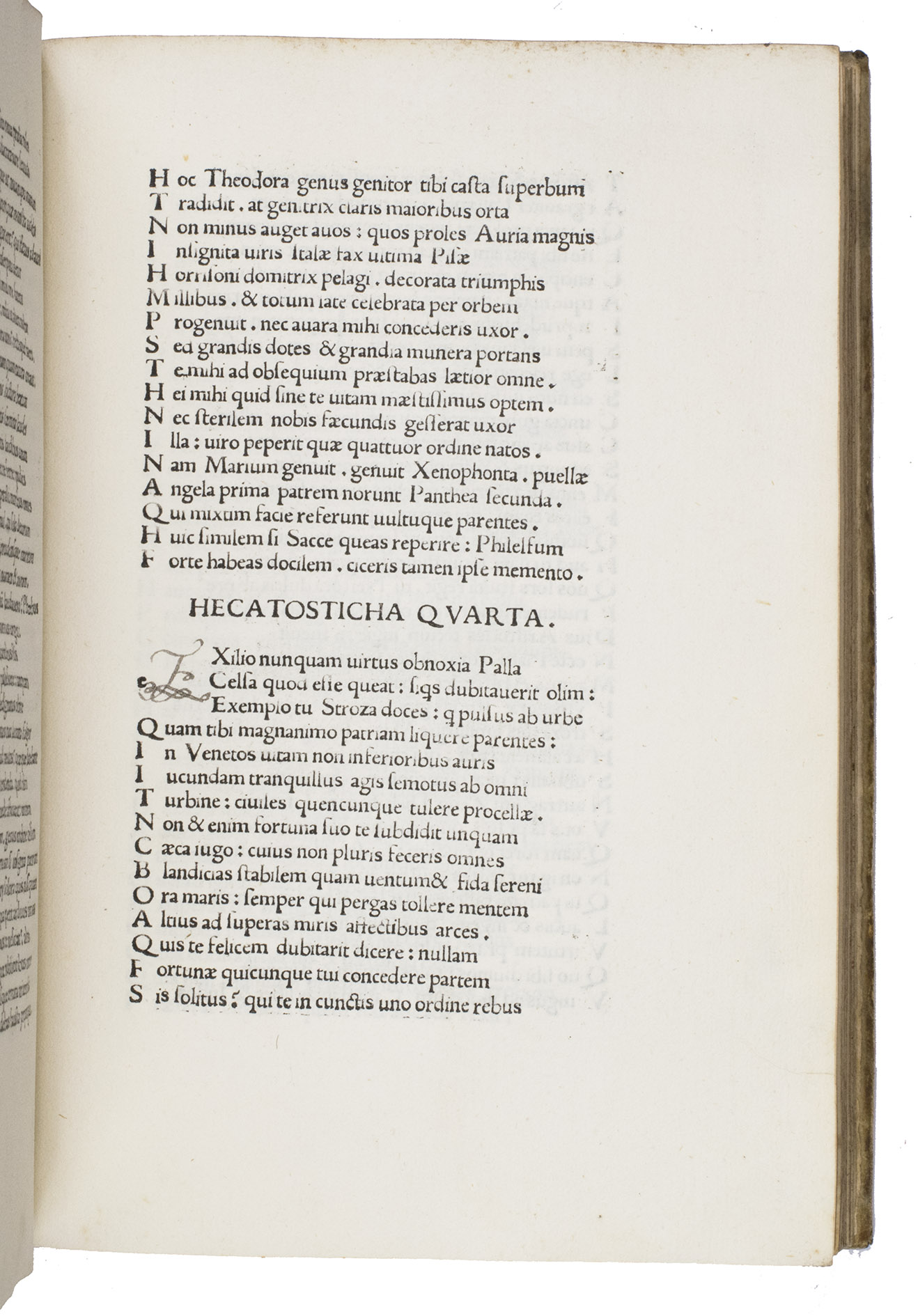
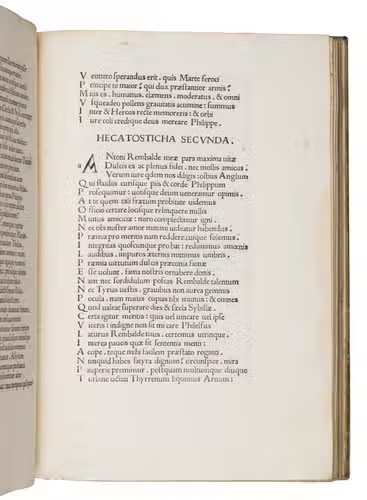
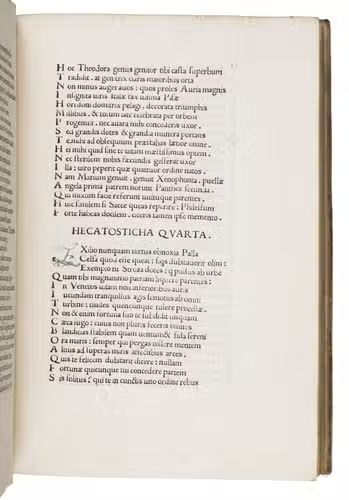
The present work was printed by Christophorus Valdarfer, a printer from Regensburg, Germany, whose career was marked by ambition, discernment, and at times financial risk. Active in Venice in 1470-1471, he printed around ten works before political and economic pressures compelled his departure. By 1473, Valdarfer had established himself in Milan in partnership with the publisher Filippo da Lavagna. Supplied with new presses and freshly cast type, he entered a productive new phase, and the Satyrae, set in 35 lines, with elegant Roman type and ample spaces for initials, beautifully demonstrates his technical skill.
The Satyrae comprise one hundred Latin poems of one hundred hexameters each. Drawing on classical models including Horace, Persius, and Juvenal, Filelfo reshapes the satire into a sharp commentary on the political, intellectual, and personal conflicts of 15th-century Italy.
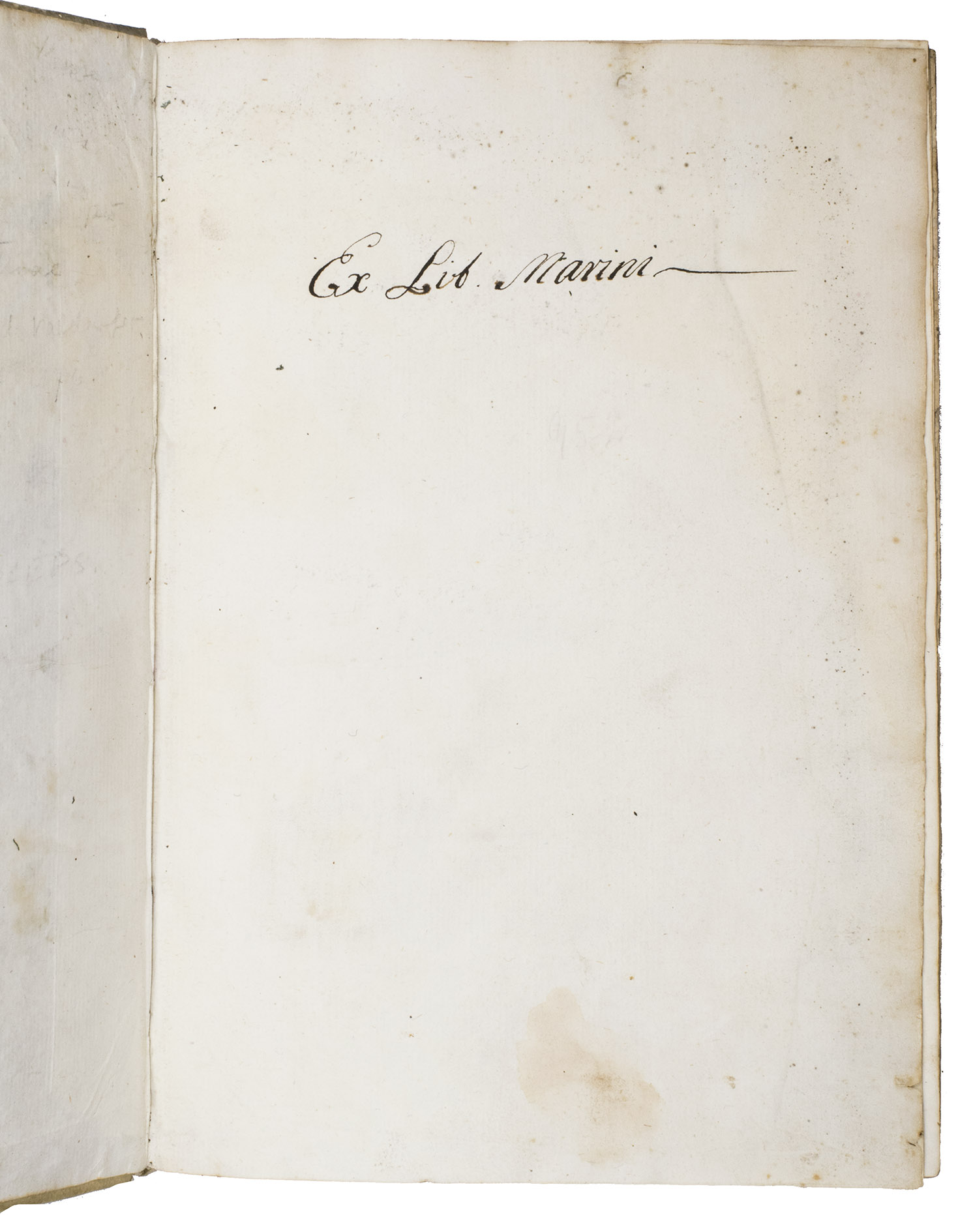
With a 19th-century bookplate on the front pastedown of Franz Pollack-Parnau. A Jewish Viennese collector of considerable means, he assembled a legendary library in the family palace at Schwarzenbergplatz 5 in Viennas 3rd district, built by his father on the eve of the First World War. With a small black half circular stamp on the bottom of the front pastedown. An ownership inscription ("Ex lib. Marini") on the first flyleaf. Some minor repairs to the outer margin of the opening leaf, which is somewhat stained (not affecting the text), a few small marginal wormholes (not affecting the text), some light marginal damp staining throughout. Otherwise in good condition. Adam, "Francesco Filelfo at the court of Milan (1439-1481)", (1974); BMC VI, 726; De Rosmini, "Vita di Francesco Filelfo da Tolentino", (1808); Goff P 615; GW M33062; Graziano, "Assimilation' and 'Disjunction' in Francesco Filelfo's 'Satire' 2.5", (2028); Hain 12917; ISTC ip00615000; Olocco, "Christophorus Valdarferss roman types and their imitations", 2021, Gutenberg-Jahrbuch; Proctor 5881; USTC 992070.
Related Subjects: